Getting into an accident doesn’t have to mean watching your insurance rates skyrocket for years. Auto insurance with accident forgiveness protects drivers from premium increases after their first at-fault claim.

We at Direct Insurance Services see many Utah drivers who could benefit from this coverage but don’t fully understand how it works. This protection can save you hundreds of dollars over time while providing valuable peace of mind on the road.

What Does Accident Forgiveness Actually Cover

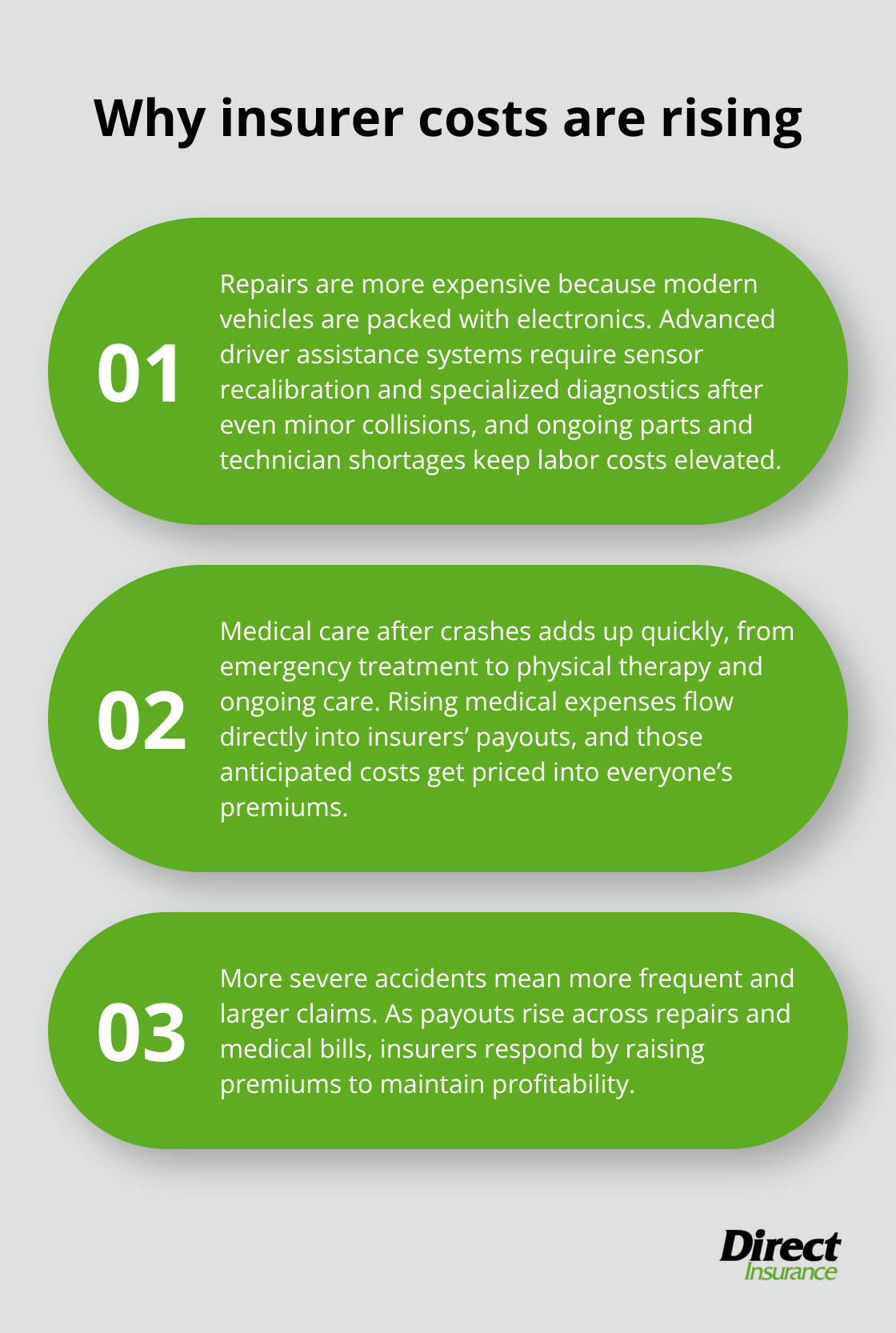
Accident forgiveness prevents your insurance rates from rising after your first at-fault accident. Standard auto insurance typically raises premiums by 48% on average after an at-fault claim, according to industry data. This coverage acts as a shield against these rate hikes and keeps your premium stable even when you file a claim for damage you caused.

Pie chart showing 48% average premium increase after an at-fault claim without accident forgiveness

The Cost Difference From Regular Coverage

Without accident forgiveness, drivers face significant premium increases after an at-fault accident. Progressive automatically includes Small Accident Forgiveness for claims under $500 at no extra cost in most states, while larger accident protection requires specific eligibility criteria. Liberty Mutual offers accident forgiveness after five years of clean driving and applies the benefit to all household drivers including teenagers. This differs dramatically from standard policies where any at-fault accident immediately triggers premium increases that persist for three to six years on your record.

Program Types Available Today

Insurance companies offer two main accident forgiveness structures. Earned forgiveness requires you to maintain a clean record for three to five years before you qualify, while purchased forgiveness can be added immediately for an additional premium. GEICO provides free accident forgiveness after five years of safe driving but allows drivers over 21 to purchase it earlier. Nationwide sells accident forgiveness after six months of coverage and permits two at-fault accidents every three years without rate increases.

Reset Requirements and Limitations

State Farm takes the longest approach and requires nine years of safe driving before it grants free forgiveness. Each program resets after use and typically requires another three to five years of accident-free driving before the benefit becomes available again. Most insurers apply forgiveness per policy rather than per individual driver, though specific terms vary between providers.

The next consideration involves understanding exactly who qualifies for these programs and what restrictions apply to your specific situation.

How Much Your Rates Actually Increase

An at-fault accident without forgiveness coverage raises your auto insurance premiums by an average of $1,127 annually according to Insurance Information Institute data. This increase typically persists for three to six years on your record, which means a single accident costs you $3,381 to $6,762 in additional premiums over time. These numbers explain why accident forgiveness becomes financially attractive even when it costs $100 to $200 extra per year upfront.

Ordered list chart showing the financial impact of an at-fault accident without forgiveness coverage over time - auto insurance with accident forgiveness

The Three-Year Premium Impact Reality

Your rate increase depends heavily on your insurance company’s specific policies and your state’s regulations. Allstate customers see average increases of 40% after their first at-fault claim, while Progressive’s data shows smaller increases for drivers with longer tenure. The severity matters too – a $15,000 property damage claim triggers larger premium hikes than a $2,000 fender bender (though both accidents stay on your record for the same duration).

State Rules That Change Everything

California prohibits accident forgiveness programs entirely, while Utah allows insurers to offer these benefits with different terms. Some states require insurers to reduce surcharges over time, but others permit companies to maintain higher rates for the full penalty period. Massachusetts drivers face different rules than Utah residents, which makes it essential to understand your local regulations before you purchase coverage.

Premium Calculation Factors

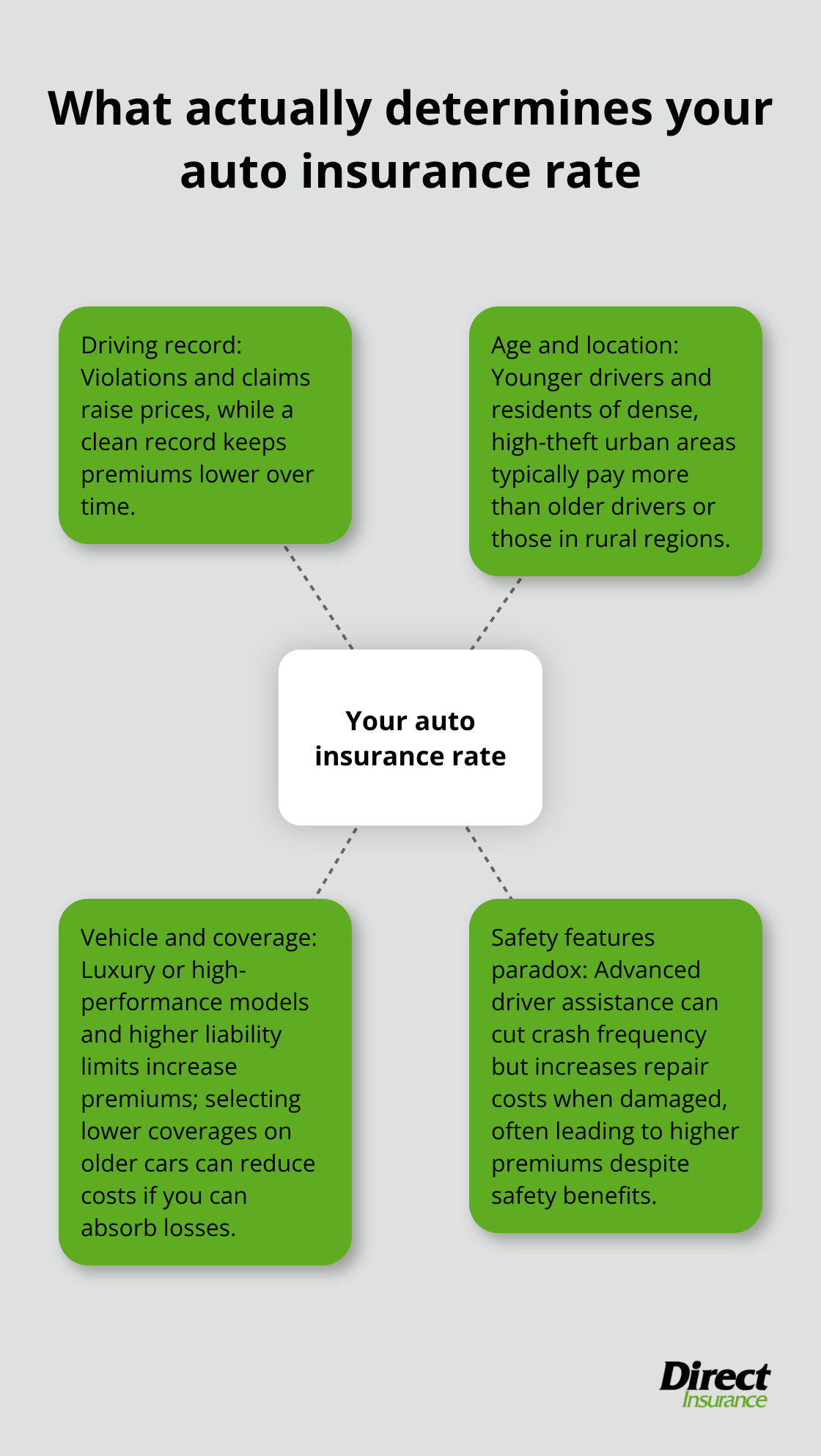
Insurance companies consider multiple factors when they calculate your post-accident rates. Your age, location, and previous claims history all influence the final increase percentage. Drivers under 25 typically face steeper penalties than experienced drivers (sometimes 60% or higher increases). The type of accident also matters – rear-end collisions often result in different rate adjustments than intersection accidents or single-vehicle crashes.

Understanding these rate structures helps you evaluate whether accident forgiveness eligibility requirements make financial sense for your specific situation.

Who Actually Qualifies for Accident Forgiveness

Most insurers demand a spotless record for three to five years before they grant accident forgiveness eligibility. Liberty Mutual requires five consecutive years without accidents or violations, while GEICO sets the same five-year standard but allows drivers over 21 to purchase coverage earlier based on their history. Progressive takes a different approach and requires only six months of continuous coverage to qualify for their small accident forgiveness program, though their large accident forgiveness demands five years of accident-free status. Nationwide permits drivers to purchase accident forgiveness after just six months of coverage, which makes them one of the most accessible options for newer customers.

Hub and spoke chart illustrating eligibility requirements for accident forgiveness across different insurers - auto insurance with accident forgiveness

Policy Duration Standards Across Major Insurers

State Farm sets the highest bar with nine years of safe operation required before they provide free accident forgiveness coverage. Erie Insurance requires three years as a customer before accident forgiveness becomes available, then offers complete forgiveness of all at-fault accidents after 15 years of loyalty. Travelers permits one accident and one minor violation every three years under their Responsible Driver plans, but you must maintain their coverage continuously to keep these benefits active. These loyalty requirements mean that you lose your eligibility timeline completely when you switch insurers (which makes accident forgiveness a strong retention tool for insurance companies).

Coverage Restrictions That Limit Protection

Accident forgiveness applies per policy rather than per individual driver in most cases, though Liberty Mutual extends coverage to all household members once the primary policyholder qualifies. The benefit typically covers only one accident every three to five years and companies often exclude drivers from safe driving discounts even when they forgive the rate increase. GEICO and Progressive limit their initial forgiveness programs to claims under $500, which requires additional tenure for larger accident protection. Most importantly, accident forgiveness does not cover your deductible costs and only prevents premium increases – you still pay out-of-pocket expenses when you file claims.

Age and Experience Requirements

Drivers under 25 face stricter qualification standards across most insurance companies. GEICO requires drivers to be over 21 before they can purchase accident forgiveness early, while other insurers may demand longer clean records for younger drivers. Some companies require at least six years of total experience before they consider any accident forgiveness benefits (regardless of how long you’ve held their specific policy). These age restrictions reflect the higher risk profile that insurers assign to younger drivers.

Final Thoughts

Auto insurance with accident forgiveness delivers substantial financial protection for Utah drivers who maintain clean records. This coverage prevents premium increases that average $1,127 annually after at-fault accidents and saves you thousands over three to six years. The protection becomes particularly valuable when you consider that 70% of drivers never experience accidents (which makes the upfront cost worthwhile for most responsible drivers).

The financial math works best for drivers who qualify for earned forgiveness after they maintain clean records for three to five years. Immediate purchase makes sense if you drive frequently or have teenage drivers on your policy who face higher risk profiles. Drivers with recent violations or claims should focus on record rebuilding before they invest in this coverage.

We at Direct Insurance Services help Utah families evaluate accident forgiveness options across multiple carriers to find the best fit for their specific situations. Our independent agency approach means we compare programs from different insurers and identify which eligibility requirements and benefits align with your history and budget. Contact Direct Insurance Services today to review your current coverage and explore accident forgiveness options that protect your financial future on Utah roads.

Property owners often ask: “Do I need both homeowners insurance and landlord insurance?” The answer depends on how you use your property.

We at Direct Insurance Services see many clients who own multiple properties or transition between living in and renting out their homes. Understanding when dual coverage makes financial sense can save you thousands in potential losses.

What Makes These Insurance Types Different

Property owners face significant financial losses when they confuse homeowners and landlord insurance, with 5.3 percent of insured homes filing claims annually. These two insurance types serve completely different purposes and protect against distinct risks.

Pie chart showing 5.3% of insured homes file claims annually

Homeowners insurance protects owner-occupied properties where you live full-time. This coverage includes your personal belongings, liability for guest injuries, and additional expenses if you need temporary housing. The policy assumes you maintain the property regularly and control who enters your home.

The moment you rent out your property-even to family members-homeowners insurance becomes invalid. Insurance companies deny claims on rental properties covered under homeowners policies because the risk profile changes completely.

Owner-Occupied Property Protection

Homeowners insurance covers structural damage from fire, storms, and theft, plus your personal belongings up to policy limits. The average homeowners policy provides $300,000 in liability coverage and costs $1,200 annually nationwide.

Personal property coverage extends to furniture, electronics, and clothing. Replacement cost coverage adds roughly 10% to your premium but pays current replacement value rather than depreciated worth. Medical payments coverage handles small injuries to guests without lawsuits, typically providing $1,000 to $5,000 per incident.

Standard homeowners policies also cover additional expenses if you must live elsewhere temporarily after covered damage (like hotel costs while repairs happen).

Rental Property Requirements

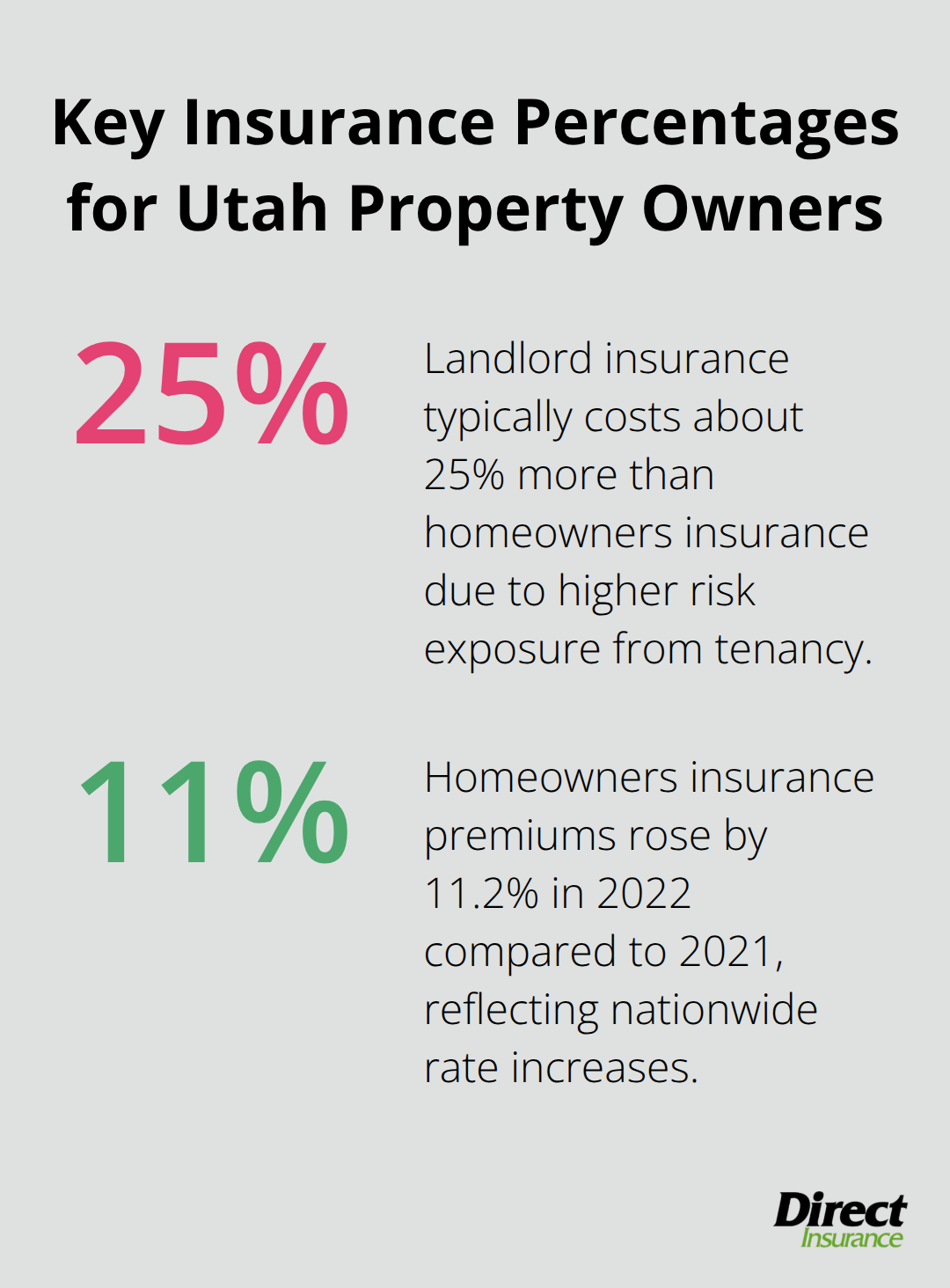
Landlord insurance costs 25% more than homeowners insurance but addresses entirely different risks. This policy protects the building structure, provides liability coverage for tenant and visitor injuries, and includes loss of rental income when properties become uninhabitable.

Personal property coverage applies only to items you provide-appliances, lawn equipment, or furnished rental items. Tenant belongings require separate renters insurance that tenants must purchase themselves.

Most landlord policies exclude normal wear and tear but cover sudden damage from tenant negligence. Typical liability limits start at $1 million per occurrence, reflecting the higher lawsuit risk from rental properties.

These fundamental differences mean you cannot substitute one policy type for another. Each property type requires its specific insurance approach to avoid dangerous coverage gaps.

When You Need Both Insurance Types

Property owners need both homeowners and landlord insurance when they own multiple properties with different occupancy statuses or operate mixed-use buildings. The National Association of Insurance Commissioners reports that 23% of property owners maintain dual policies to protect varied property uses.

You need homeowners insurance for your primary residence and landlord insurance for any rental properties you own simultaneously. This dual approach prevents coverage gaps that could cost tens of thousands in unprotected losses.

Hub and spoke chart showing scenarios requiring both homeowners and landlord insurance - do i need both homeowners insurance and landlord insurance

Mixed-Use and Multi-Unit Buildings

Mixed-use properties require both insurance types because different sections serve different purposes. If you live in one unit of a duplex and rent the other, you need homeowners coverage for your residence and landlord coverage for the rental unit.

The Insurance Information Institute confirms that single policies cannot adequately cover both scenarios. Multi-unit buildings where you occupy one unit follow the same rule – your unit needs homeowners insurance while rental units require landlord policies.

Property owners who ignore this distinction face claim denials when incidents occur in improperly covered areas.

Property Status Changes

Property owners must change insurance immediately when they transition from owner-occupied to rental status. Homeowners insurance becomes invalid the moment you move out and begin to rent, even if the transition takes months.

Smart property owners maintain both policies during transition periods to avoid coverage gaps. Dual coverage provides wise protection during property status changes.

Insurance companies typically allow 30-day grace periods for transitions, but they void your protection completely if you extend beyond this timeframe without proper landlord coverage.

Temporary Rental Situations

Short-term rental hosts face unique insurance challenges that standard homeowners policies don’t address. Properties rented through platforms like Airbnb or Vrbo require specialized coverage that bridges the gap between homeowners and landlord insurance.

Regular short-term hosts may need commercial insurance policies instead of standard residential coverage. The frequency of rental activity determines whether you need occasional rental endorsements or full commercial protection.

Understanding these premium differences and coverage requirements helps you make informed decisions about your insurance investment strategy.

Cost Analysis and Coverage Gaps

Landlord insurance premiums run 25% higher than homeowners policies, with the average landlord policy costing $1,500 annually compared to $1,200 for homeowners coverage. This $300 difference reflects the elevated risks that rental properties face from tenant-related damage, higher liability exposure, and increased vacancy periods.

Ordered list chart comparing homeowners and landlord insurance costs and coverage - do i need both homeowners insurance and landlord insurance

Property location drives the biggest cost variations. Landlord policies in high-risk areas like coastal Florida can reach $4,000 annually while rural Midwest properties may cost only $800. The amount you choose for coverage, deductible level, and liability limits directly impact your premium (with $1 million liability coverage adding roughly $150 to your annual cost).

Coverage Gaps Cost More Than Premium Differences

Property owners who switch from homeowners to landlord insurance face dangerous coverage gaps that create expensive blind spots. Standard homeowners policies immediately void coverage when you start to rent, which leaves a window where you have zero protection during the transition period.

Personal property coverage drops significantly. Your homeowners policy might cover $150,000 in belongings while landlord insurance typically covers only $10,000 in landlord-owned items like appliances. Loss of use coverage changes completely too, shifting from additional expenses for you to lost rental income protection.

The biggest gap involves liability claims, as homeowners policies exclude rental-related incidents entirely. This potentially leaves you exposed to six-figure lawsuit settlements.

Premium Factors That Drive Costs

Insurance companies calculate landlord premiums based on specific risk factors that differ from homeowner calculations. Property age affects rates significantly – buildings over 30 years old face 15-20% higher premiums due to outdated electrical and plumbing systems.

Tenant demographics influence costs too. Properties in college towns or high-turnover areas command higher rates because frequent tenant changes increase damage risks. The number of units you own also matters (multi-property owners often qualify for portfolio discounts of 10-25%).

Smart Insurance Strategies

Purchase landlord insurance before your first tenant moves in, not after problems arise. Insurance companies require 30-60 days processing time for new policies, and gaps in coverage void your protection completely.

Bundle multiple rental properties with the same insurer to secure 10-15% multi-policy discounts. Maintain your homeowners policy with the same company for additional savings. Set appropriate coverage limits by calculating your property value plus one year of rental income – underinsurance saves money upfront but costs exponentially more during claims.

Review coverage annually because property values and rental rates change, which affects your insurance needs and potential savings opportunities.

Final Thoughts

The question “Do I need both homeowners insurance and landlord insurance?” has a straightforward answer: yes, when you own both your primary residence and rental properties. Each property type demands its specific coverage to protect against distinct risks and liability exposures. Property owners who attempt to save money with incorrect insurance types face devastating financial consequences.

Homeowners policies become void the moment you rent out a property, while landlord insurance cannot adequately protect your personal residence. Independent insurance agents understand the nuances between policy types and help you avoid costly coverage gaps during property transitions. They provide access to multiple carriers and create tailored solutions for complex property portfolios.

The cost difference between proper coverage and inadequate protection remains minimal compared to potential losses from uninsured claims (often reaching six figures for major incidents). We at Direct Insurance Services help property owners navigate these insurance complexities with experienced guidance. Contact us today to protect your property investments with the right insurance strategy.

Picking what deductible for auto insurance can save you hundreds of dollars annually or cost you thousands when accidents happen. Most drivers choose their deductible without understanding the real financial impact.

We at Direct Insurance Services see clients struggle with this decision daily. The right deductible balances your monthly budget with your ability to handle unexpected repair costs.

How Auto Insurance Deductibles Actually Work

Your auto insurance deductible represents the amount you pay before your insurance company covers the remaining repair costs after an accident. When you file a claim for $3,000 in damage and carry a $500 deductible, you pay $500 and your insurer pays $2,500. The Insurance Information Institute reports that 80% of drivers have comprehensive coverage, with average auto insurance expenditure reaching $1,127 in 2022.

Pie chart showing 80% of drivers have comprehensive auto insurance coverage - what deductible for auto insurance

Coverage Types That Include Deductibles

Deductibles apply to collision coverage when you hit another vehicle or object, and comprehensive coverage for theft, vandalism, or weather damage. Your liability coverage never includes a deductible because it pays for damage you cause to others. Some states require deductibles for uninsured motorist property damage and personal injury protection (PIP). Progressive and other major insurers offer identical deductible amounts across both collision and comprehensive coverage, though you can select different amounts for each type.

Premium Impact of Deductible Changes

When you raise your deductible from $500 to $1,000, you typically reduce your collision and comprehensive premiums by 10% to 30% according to industry data. A driver who pays $1,200 annually could save $120 to $360 per year with this change. However, you must pay the higher deductible every single time you file a claim that qualifies. NerdWallet research shows that drivers who increase their deductible to $1,000 break even after they file one claim every three to four years, which makes higher deductibles profitable for safe drivers.

How Claims Work With Your Deductible

Insurance companies deduct your deductible amount from the total claim payout after they approve your claim. You either pay the repair shop directly for your deductible portion, or your insurer handles all payments after you settle your deductible with them. Each claim you file under comprehensive or collision coverage requires you to meet your deductible again (there’s no annual limit like health insurance). Your choice of deductible amount directly affects both your monthly costs and your financial exposure when accidents occur.

What Makes the Right Deductible Choice

Your emergency fund should contain at least three times your chosen deductible amount before you consider anything above $500. The National Association of Insurance Commissioners found that 29% of Americans cannot cover a $400 emergency expense, which means these drivers should stick with $250 or $500 deductibles regardless of premium savings. Financial advisors recommend you keep your deductible at an amount you can pay immediately without borrowing money or using credit cards. If you have $3,000 in emergency savings, a $1,000 deductible becomes reasonable, but anything higher puts you at financial risk.

Hub and spoke chart showing key factors in choosing auto insurance deductibles - what deductible for auto insurance

Your Driving Record Determines Your Risk Level

Drivers with clean records who haven’t filed a claim in five years should choose higher deductibles because they statistically won’t need them. Insurance Research Council data shows that drivers over 50 with no recent violations file 60% fewer claims than younger drivers with tickets. If you’ve had two or more at-fault accidents in three years, select the lowest deductible available because you’re likely to file future claims. Urban drivers face higher accident rates than rural drivers (city dwellers experience 2.3 times more fender-benders according to Highway Loss Data Institute research).

Vehicle Value Changes Everything

Never choose a deductible higher than 10% of your car’s current market value because you’ll lose money on total loss claims. A 2015 Honda Civic worth $12,000 shouldn’t have a deductible above $1,200, while a 2023 BMW worth $45,000 can handle a $2,000 deductible without problems. Cars older than eight years depreciate rapidly, which makes high deductibles counterproductive when repair costs approach the vehicle’s actual cash value.

Luxury vs Economy Vehicle Considerations

Luxury vehicles with expensive parts should use lower deductibles because even minor repairs often exceed $2,000. Basic economy cars can justify higher deductibles due to affordable replacement parts and lower repair costs. Mercedes-Benz and BMW owners typically pay 40% more for parts than Honda or Toyota owners (according to automotive repair industry data). This cost difference affects how you should structure your deductible choice based on your specific vehicle make and model.

The most common deductible amounts range from $100 to $2,000, and each option creates different financial scenarios that you need to understand before making your final decision.

What Do Different Deductible Amounts Actually Cost?

Most insurers offer standard deductible amounts of $250, $500, $1,000, and $2,000, with $500 being the most popular choice among drivers nationwide. The Insurance Information Institute reports that drivers who switch from a $250 to $1,000 deductible can reduce their collision and comprehensive premiums by up to 40% annually. A driver who pays $800 per year for full coverage could save $320 annually with this change, but would pay $750 more out-of-pocket when they file a claim.

Premium Savings Break Down by Amount

When you raise your deductible from $500 to $1,000, you typically save $200 to $400 per year (depending on your location and record). The jump from $1,000 to $2,000 produces smaller savings of $100 to $200 annually because insurers view both amounts as high-risk tolerance levels. Progressive data shows that drivers who choose a higher deductible save an average of $600 annually compared to $250 deductibles, but this choice only makes financial sense if you avoid claims for more than three years.

Ordered list chart comparing effects of various auto insurance deductible amounts

Urban vs Rural Driver Differences

Rural drivers in low-traffic areas benefit most from high deductibles because they experience crash deaths at a rate of 1.65 per 100 million miles traveled compared to 1.07 in urban areas according to 2023 data. City drivers face more fender-benders and parking lot incidents, which makes lower deductibles more practical despite higher premiums. The frequency of minor claims in urban areas often outweighs the premium savings from higher deductibles.

Real Cost Scenarios Show the Truth

A driver with a $250 deductible who files one claim every two years pays $400 more in premiums annually but only $250 per claim, which creates a net loss of $150 yearly compared to a $1,000 deductible option. Accident-prone drivers who file claims annually should choose $250 deductibles because they’ll pay $750 less per incident despite higher premiums. The math changes completely for luxury vehicle owners where repair costs often exceed $5,000, which makes the difference between a $500 and $2,000 deductible relatively small compared to total claim amounts.

Final Thoughts

You must balance your monthly budget against potential out-of-pocket costs when you decide what deductible for auto insurance works best. The optimal choice exists where your premium savings justify the financial risk you accept. Drivers with strong emergency funds and clean records benefit from higher deductibles, while those with limited savings or frequent claims need lower amounts.

You should review your deductible annually when your policy renews, especially after major life changes like job loss, salary increases, or vehicle purchases. Your financial situation and risk tolerance change over time, which means your optimal deductible amount shifts too. Market conditions and insurance rates fluctuate, which creates opportunities to adjust your coverage for better value.

We at Direct Insurance Services help you find deductible options that match your specific circumstances and budget constraints (through our independent agency network). Our approach means we compare rates across different insurers to identify the best combination of premium costs and deductible amounts for your situation. Professional guidance helps you avoid costly mistakes when you select coverage that protects both your vehicle and your financial stability.

Pet ownership in rental properties creates complex legal questions that affect millions of tenants nationwide. Can a landlord require pet insurance as a condition of your lease agreement?

We at Direct Insurance Services see these disputes regularly, and the answer varies significantly by state and local jurisdiction. Understanding your rights and obligations helps both landlords and tenants navigate this evolving area of rental law.

What Laws Actually Allow Pet Insurance Requirements?

State Law Variations Create Uneven Protection

Most states grant landlords broad authority to set lease terms, including pet insurance requirements. Oklahoma allows landlords to charge pet rent, though tenants with emotional support animals are exempt from pet fees or deposits under state ESA laws. Virginia represents the majority approach and allows landlords to include pet insurance clauses as standard contractual conditions. This state-by-state patchwork means your rights depend entirely on your zip code.

Chart showing 40% of pet-friendly leases require pet insurance in states with fewer tenant protections, compared to 15% in tenant-favorable jurisdictions. - can a landlord require pet insurance

Cities with rent control like San Francisco and New York impose additional restrictions on insurance-related fees, though landlords can still require coverage itself. Research from landlord associations shows that states with fewer tenant protections see pet insurance requirements in approximately 40% of pet-friendly leases, compared to just 15% in tenant-favorable jurisdictions.

Fair Housing Laws Protect Service Animals

The Fair Housing Act creates a clear distinction between pets and service animals that landlords frequently misunderstand. Service animals and emotional support animals cannot be subject to pet insurance requirements, pet deposits, or pet fees under federal law. Landlords who attempt to impose these requirements on disability-related animals face significant legal liability.

Pet ownership itself receives no Fair Housing protection, which means landlords can legally deny applications based solely on pet ownership. This fundamental difference explains why landlords maintain extensive breed restriction lists while simultaneously being required to accommodate service animals regardless of breed.

Contract Enforceability Depends on Local Standards

Lease agreements function as contracts, which makes pet insurance clauses generally enforceable if properly written. Courts consistently uphold these requirements when they specify coverage amounts, acceptable insurance providers, and clear consequences for non-compliance. The average required liability coverage ranges from $100,000 to $300,000, with some high-value properties demanding $500,000 or more.

Vague language weakens enforceability significantly. Clauses that state tenants must maintain adequate pet coverage without defining specific amounts or requirements face challenges in court. Insurance professionals recommend landlords specify exact coverage types, minimum limits, and require tenants to name the landlord as an additional insured party for maximum legal protection.

Implementation Varies by Property Type

Single-family rental homes typically see different pet insurance requirements than large apartment complexes. Individual landlords often accept basic renters insurance with pet liability coverage (around $100,000), while corporate property management companies frequently demand higher limits and specific policy features. Luxury properties commonly require umbrella policies that extend coverage beyond standard limits.

The practical implementation of these requirements affects how landlords monitor compliance and what happens when tenants fail to maintain coverage.

What Pet Insurance Do Landlords Actually Require?

Landlords typically demand standard renters insurance with pet liability coverage rather than standalone pet insurance policies. The distinction matters significantly for cost and coverage scope. Renters insurance with pet liability averages $15 to $20 monthly and includes $100,000 to $300,000 in liability protection, while separate pet insurance focuses solely on veterinary expenses and provides no property damage coverage. The Insurance Information Institute reports that dog bite claims cost homeowners insurers $1,570 million in 2024, which makes liability coverage the primary concern for property owners.

Hub and spoke chart illustrating the impact of $1,570 million in dog bite claims on various aspects of pet insurance in rental properties.

Coverage Amounts Reflect Property Values

Most landlords require liability limits between $100,000 and $300,000, though luxury properties often demand $500,000 or umbrella policies that extend beyond standard limits. Corporate property management companies frequently specify that tenants name the landlord as an additional insured party (which costs nothing extra but provides direct claim notification). High-value properties may require separate animal liability insurance for restricted breeds like Pit Bulls or Rottweilers that standard policies exclude.

Pet Deposits Remain the Preferred Alternative

Pet deposits and monthly pet rent generate immediate revenue without insurance complications. Monthly pet fees typically range from $25 to $75 per pet, while deposits average $200 to $500. These alternatives appeal to landlords who want guaranteed compensation rather than reliance on insurance claims processes. However, non-refundable pet fees face prohibition in many states, which makes refundable deposits tied to actual damages the legally safer option for property owners who seek predictable pet-related income.

Policy Exclusions Create Coverage Gaps

Standard renters insurance excludes certain dog breeds and exotic pets from liability coverage. Companies like Progressive and State Farm maintain breed restriction lists that exclude Pit Bulls, Rottweilers, and Doberman Pinschers from standard policies. Tenants with restricted breeds must purchase separate animal liability insurance or seek coverage from companies without breed restrictions (such as Auto-Owners, Chubb, or USAA). These exclusions force landlords to either accept higher risk or require additional specialized coverage that costs tenants significantly more.

The complexity of these insurance requirements creates practical challenges for both landlords and tenants that extend far beyond simple policy selection.

Who Really Benefits From Pet Insurance Requirements

Landlord Protection Shows Measurable Results

Landlords who require pet insurance gain concrete protection against expensive liability claims. The Insurance Information Institute data shows dog bite claims averaged $64,555 in 2023, with thousands of total claims nationwide. Property damage from pets extends beyond bite incidents to include scratched hardwood floors, chewed trim, and carpet damage that security deposits rarely cover completely.

Corporate property management companies report 35% fewer pet-related disputes when insurance requirements exist, according to landlord association surveys. The insurance requirement creates accountability that reduces problematic pet behavior, as tenants with coverage maintain better control over their animals. Properties with mandatory pet insurance also see higher tenant retention rates among pet owners, who view the requirement as a sign of professional property management rather than an unreasonable restriction.

Chart showing 35% reduction in pet-related disputes when insurance requirements exist in rental properties. - can a landlord require pet insurance

Tenant Costs Create Housing Barriers

Pet insurance requirements add $180-240 annually to rental costs, which represents a significant burden for lower-income tenants. Tenants with restricted dog breeds face even higher expenses, as specialized animal liability policies cost $300-500 yearly compared to standard renters insurance. These additional costs effectively price out responsible pet owners who cannot afford both rent increases and insurance premiums (particularly in tight rental markets where pet-friendly properties command premium rents).

Coverage limitations create frustration for tenants who discover their policies exclude specific situations. Standard renters insurance covers guest injuries from pet incidents but excludes damage to the tenant’s own property or injuries to household members. Noise complaints from barking dogs typically fall outside coverage scope, which leaves tenants vulnerable to lease violations despite maintaining required insurance.

Market Impact Reduces Pet-Friendly Options

Insurance requirements effectively reduce the supply of truly accessible pet-friendly housing. Landlords who implement these policies often combine them with breed restrictions, monthly pet fees, and higher security deposits (creating multiple financial barriers). This layered approach pushes pet owners toward a shrinking pool of properties willing to accept animals without extensive requirements.

The concentration of pet owners in fewer properties drives up rents in the remaining pet-friendly segment by 15-20% above comparable non-pet properties. Many responsible pet owners find themselves forced to choose between their animals and affordable housing, particularly in markets where landlords maintain strict insurance requirements alongside other pet-related fees.

Final Thoughts

The question “can a landlord require pet insurance” has no universal answer due to state laws and local regulations that vary significantly. Most states allow these requirements as standard lease conditions, while places like Oklahoma and rent-controlled cities impose specific limitations. Courts consistently uphold properly written clauses that specify coverage amounts and policy requirements, which clearly favors landlord authority in most jurisdictions.

Smart landlords focus on liability coverage rather than veterinary pet insurance and typically require $100,000 to $300,000 in renters insurance with pet liability protection. This approach provides meaningful protection against the average $64,555 dog bite claim while tenants can afford the monthly premiums. Successful implementation requires clear lease language, specific coverage amounts, and landlords must be named as additional insured parties.

Tenants should understand that service animals remain exempt from all pet-related fees and insurance requirements under federal law. The rental market continues to evolve toward more sophisticated pet policies that balance landlord protection with housing accessibility. We at Direct Insurance Services help property owners and tenants navigate these complex insurance requirements through personalized coverage solutions that protect both parties.

Owning rental property comes with unique risks that standard homeowners insurance won’t cover. Landlord home insurance protects your investment from tenant-related damages, liability claims, and lost rental income.

We at Direct Insurance Services see property owners face costly surprises when they rely on inadequate coverage. The right policy safeguards both your physical property and your rental business income.

Why Landlord Insurance Differs From Regular Homeowners Coverage

Homeowners insurance becomes inadequate the moment you rent out your property. Standard policies explicitly exclude coverage for tenant-related damages, liability claims from renters, and business activities like rent collection. The Insurance Information Institute reports that 41% of renters lack insurance, which leaves landlords exposed to significant financial risks when tenant belongings cause damage or liability issues arise.

Pie chart showing 41% of renters lack insurance, leaving landlords exposed to financial risks - landlord home insurance

Property Damage Protection Beyond Basic Coverage

Landlord insurance covers intentional and accidental tenant damage that homeowners policies reject. Your standard policy might cover a kitchen fire from faulty wiring, but it won’t pay for tenant-caused grease fires or damage from unauthorized pets. Property owners face repair bills that average $3,000 to $8,000 for tenant damage that homeowners insurance won’t touch. Dwelling coverage in landlord policies specifically addresses wear and tear from multiple occupants (something residential policies consider normal use exclusions).

Loss of Rental Income Coverage Protects Your Cash Flow

Landlords frequently experience rental income loss due to property damage. Landlord policies include coverage for lost rent when your property becomes uninhabitable from covered perils. If a pipe burst makes your rental unlivable for two months, this coverage pays your mortgage and expenses while repairs happen. Standard homeowners insurance provides zero protection for lost rental income, which leaves property owners to absorb these costs entirely.

Liability Coverage Handles Tenant and Guest Injuries

Liability limits in landlord policies start at $100,000, but experts recommend $1 million coverage minimum. When tenants or their guests suffer injuries on your property, landlord insurance covers medical expenses and legal fees. A slip-and-fall lawsuit can easily exceed $50,000 in medical costs alone (homeowners policies may deny these claims entirely if they determine the incident relates to your rental business rather than personal residence use).

These coverage differences highlight why landlords need specialized protection, but the specific types of coverage within your policy determine how well your investment stays protected.

Essential Coverage Types for Rental Properties

Landlord policies contain three essential coverage components that determine whether your rental investment survives major incidents or drains your finances. Each coverage type addresses specific risks that property owners face when they rent to tenants.

Hub and spoke chart showing three essential coverage types for rental properties: Dwelling Coverage, Personal Property Coverage, and Liability Coverage

Dwelling Coverage Protects Your Physical Structure

Dwelling coverage protects the physical structure and represents your largest coverage need. Most policies require limits between 80% and 100% of your property’s replacement cost. Insurers typically use replacement cost coverage rather than actual cash value, which means you receive funds to rebuild without depreciation deductions.

Properties built before 1980 often need building code upgrade coverage since current construction standards differ significantly from older requirements. This endorsement covers the additional costs to bring damaged structures up to current codes (which can add $50,000 or more to reconstruction expenses). Modern fire safety requirements, electrical codes, and accessibility standards create substantial upgrade costs that basic dwelling coverage won’t address.

Personal Property Coverage for Landlord-Owned Items

Personal property coverage protects appliances, fixtures, and furnishings you provide as the landlord. Standard limits start around $10,000, but property owners with furnished rentals need much higher limits. A fully furnished rental can contain $25,000 to $40,000 in landlord-owned items that tenant damage or theft can destroy.

This coverage excludes tenant possessions entirely, which makes tenant insurance requirements non-negotiable for your protection. Smart landlords require proof of tenant insurance before lease execution and add themselves as additional interested parties to receive cancellation notices.

Liability Coverage Determines Your Financial Protection

Liability coverage handles lawsuits from injuries on your property, with recommended minimums starting at $100,000 per occurrence. Legal defense costs alone average $15,000 to $25,000 per claim according to industry data, even when you win the case.

Medical payments coverage provides immediate payment for minor injuries without fault determination. This coverage typically handles amounts between $1,000 and $5,000 per person and prevents small incidents from escalating into major lawsuits since injured parties receive prompt medical expense reimbursement.

Properties with swimming pools, trampolines, or other attractive nuisances need higher liability limits since these features increase injury risks substantially. The cost differences between adequate and inadequate liability coverage pale compared to the financial devastation a single lawsuit can create.

Your premium costs depend on multiple factors that insurers evaluate when they price your specific policy.

What Drives Your Landlord Insurance Costs

Insurance companies analyze multiple risk factors when they price landlord policies. Property owners who understand these variables make strategic decisions that reduce premiums. Location stands as the most significant cost driver, with properties in high-crime areas carrying higher premiums than identical properties in safer neighborhoods.

Chicago landlords face average premiums between $2,400 and $6,600 for a three-unit property according to Steadily, while similar properties in lower-risk areas cost substantially less. Crime statistics, natural disaster frequency, and local lawsuit trends all influence regional models that insurers use to calculate base rates.

Property Type and Unit Count Impact Premium Structure

Single-family rentals typically cost 25% more than homeowners insurance. The Insurance Information Institute reports average landlord premiums at $1,478 versus $1,192 for homeowners coverage. Multi-unit properties face exponentially higher costs because each additional unit multiplies liability exposure and damage potential.

Chart showing landlord insurance premiums are 25% higher than homeowners insurance premiums - landlord home insurance

Older buildings built before 1980 carry premium surcharges of 15% to 30% due to outdated electrical systems, plumbing, and building materials that increase claim frequency. Properties with swimming pools, detached structures, or commercial spaces within residential buildings face additional premium increases that reflect their elevated risk profiles.

Tenant Screening Practices Reduce Insurance Costs

Insurers reward landlords who implement thorough tenant screening with premium discounts of 5% to 15%. Properties with consistent long-term tenants demonstrate lower claim rates than those with frequent turnover, which creates opportunities for rate reductions during policy renewals.

Professional property management companies often negotiate group discounts with carriers, though self-managed properties can achieve similar savings through proactive maintenance documentation and tenant insurance requirements that demonstrate risk management commitment to underwriters.

Safety Features Lower Premium Costs

Property owners who install security systems, smoke detectors, and central monitoring systems can reduce premiums by 10% to 20% according to claims data from major insurers. Hardwired smoke detectors save landlords between 5% to 20% on their insurance premiums based on industry data.

Upgrading roofs to impact-resistant materials can potentially lead to premium savings of 10% to 20% by reducing storm damage risk. These safety investments pay for themselves through reduced premiums while protecting your property investment.

Final Thoughts

Landlord home insurance delivers protection that standard homeowners policies cannot match. Property owners who invest in proper coverage shield themselves from tenant damage, liability lawsuits, and lost rental income that can devastate their financial stability. The specialized coverage components work together to protect your investment from risks that regular policies exclude entirely.

Independent agents offer access to multiple carriers and can compare coverage options that captive agents cannot provide. They understand local market conditions and can identify discounts for safety features, tenant screening practices, and bundled policies that reduce your overall costs. Professional guidance helps you avoid coverage gaps that leave your rental property exposed to financial losses.

We at Direct Insurance Services work with top-rated carriers to find comprehensive insurance solutions that fit your specific property needs and budget. Our independent approach means you receive unbiased advice without pressure to accept inadequate coverage. Document your property value, rental income, and current safety features, then contact an independent agent to review quotes from multiple carriers and identify the coverage limits that protect your investment.

As landlords, protecting your assets is paramount. Landlord umbrella insurance offers an extra layer of security beyond standard policies, safeguarding your investments from unexpected liabilities.

At Direct Insurance Services, we’ve seen how this specialized coverage can make a crucial difference for property owners. In this post, we’ll explore the benefits of landlord umbrella insurance and why it’s a smart choice for many rental property investors.

What Is Landlord Umbrella Insurance?

Extended Coverage Beyond Standard Policies

Landlord insurance provides an additional layer of liability protection that activates when your standard landlord policy reaches its limits. This type of insurance safeguards your assets from large-scale lawsuits or catastrophic events that could otherwise deplete your savings and investments.

Unlike basic landlord insurance (which typically caps liability coverage at $1 million), umbrella policies still have coverage limits. They aren’t unlimited insurance policies, but they can offer protection beyond standard policies. This extra cushion becomes essential for landlords with multiple properties or high-value assets. Consider this scenario: a tenant suffers a severe injury on your property and sues for $2 million. Your standard policy might cover the first $1 million, but without umbrella coverage, you’d be personally liable for the remaining amount.

Legal Defense and Judgment Protection

One of the most valuable aspects of landlord umbrella insurance is its coverage of legal fees. The National Association of Insurance Commissioners reports that these costs can quickly escalate, often surpassing the actual damages awarded in a lawsuit. Umbrella policies typically cover these expenses without depleting your coverage limits, which ensures your protection throughout lengthy legal battles.

A hub and spoke chart showing the key aspects of landlord umbrella insurance with legal defense at the center

Broad Range of Covered Incidents

Landlord umbrella insurance extends beyond typical property-related incidents. It can cover claims of libel, slander, or invasion of privacy – situations that might arise from disputes with tenants or neighbors. For example, if someone sues you for defamation after you leave a negative review about a problematic tenant, your umbrella policy could cover the legal costs and potential damages.

Peace of Mind for Property Investors

While landlord umbrella insurance represents an additional expense, the comprehensive protection it offers makes it an essential consideration for serious property investors. This type of policy can save landlords from financial ruin in scenarios ranging from multi-million dollar injury lawsuits to complex property damage claims.

Customizable Coverage Options

Insurance providers (like Direct Insurance Services) offer customizable umbrella policies to fit the unique needs of different landlords. You can adjust your coverage limits based on factors such as the number of properties you own, their locations, and your overall asset portfolio. This flexibility allows you to tailor your protection to your specific risk profile.

As we move forward, let’s explore the key benefits of landlord umbrella insurance in more detail, including how it can protect you across multiple properties and provide peace of mind in high-risk situations.

Why Landlord Umbrella Insurance Is a Game-Changer

Unmatched Liability Protection

Standard landlord policies typically provide between $500,000 and $1 million of liability coverage. While this might seem sufficient, it often falls short in today’s litigious society. Umbrella insurance picks up where your standard policy ends, providing coverage that can extend to $5 million or more. This extra cushion becomes essential when facing large lawsuits that could otherwise wipe out your personal assets.

A tenant who suffers a severe injury on your property could sue for millions. Without umbrella coverage, you’d be personally responsible for any amount exceeding your standard policy limit. This scenario isn’t just hypothetical-property owners have faced multimillion-dollar lawsuits that far exceeded their basic coverage.

Legal Defense Without Coverage Depletion

One often-overlooked benefit of umbrella insurance is its approach to legal fees. Unlike many standard policies, umbrella insurance typically covers legal expenses without reducing your policy limit. This means you receive protection not just from the potential judgment, but also from the often-substantial costs of defending yourself in court.

The average hourly rate for attorneys in the U.S. is around $300 (according to a survey by Clio, a legal software company). A complex lawsuit could easily accumulate tens of thousands in legal fees before you even step foot in a courtroom. With umbrella insurance, these costs won’t eat into your coverage limit, ensuring you have the full amount available for any potential judgment.

An ordered list chart showing key points about legal costs in landlord insurance claims, including the average hourly rate for attorneys in the U.S.

Simplified Protection for Multiple Properties

For landlords with multiple properties, umbrella insurance offers a streamlined solution. Instead of managing multiple policies with varying limits, you can cover all your properties under a single umbrella policy. This not only simplifies your insurance management but can also prove more cost-effective.

Consider this scenario: You own three rental properties, each with a $1 million liability limit on its standard policy. An umbrella policy could provide an additional $5 million in coverage that applies to all three properties. This comprehensive protection ensures you receive coverage for major incidents, regardless of which property they occur on.

Customizable Coverage Options

Insurance providers offer customizable umbrella policies to fit the unique needs of different landlords. You can adjust your coverage limits based on factors such as the number of properties you own, their locations, and your overall asset portfolio. This flexibility allows you to tailor your protection to your specific risk profile.

As your assets grow, so does your potential liability. Umbrella insurance ensures your protection scales with your success, providing peace of mind and financial security in an unpredictable world. The next section will explore specific situations where landlord umbrella insurance becomes particularly valuable, highlighting its role in protecting high-value properties and mitigating risks in challenging scenarios.

When Landlord Umbrella Insurance Becomes Essential

High-Value Properties and Multiple Units

Landlord umbrella insurance transforms from a luxury to a necessity for many property owners. This extra layer of protection can save landlords from financial ruin in specific scenarios. If you own high-value rental properties, your risk exposure increases significantly. The global luxury real estate market size was valued at approximately USD 289.6 billion in 2023 and is projected to reach around USD 515.3 billion by 2032. A standard policy might not suffice when you deal with properties worth millions. For example, a fire in a luxury rental could lead to damages far exceeding typical policy limits. Umbrella insurance fills this gap, providing the extra coverage needed for substantial claims.

An ordered list chart showing the projected growth of the global luxury real estate market from 2023 to 2032 - landlord umbrella insurance

Managing multiple properties multiplies your risk. Each additional unit increases the chance of a liability claim. With umbrella insurance, you can secure higher limits that cover all your properties under one policy. This approach simplifies your insurance management and ensures comprehensive protection.

High-Risk Locations

Some areas are more prone to natural disasters or have higher crime rates, which increases the likelihood of property damage or liability claims. For example, coastal properties face heightened risks from hurricanes and flooding. Standard policies often fall short in covering such extensive damages, making umbrella insurance essential.

Urban areas with high foot traffic also present increased liability risks. A passerby slipping on ice outside your rental property could result in a lawsuit exceeding standard policy limits. Umbrella insurance provides the extra cushion needed in these high-risk scenarios.

Tenants with High-Risk Activities

Certain tenant activities can significantly increase your liability as a landlord. If you rent to a tenant who frequently hosts large gatherings, the risk of injury claims rises. Similarly, properties with amenities like pools or trampolines face higher liability risks.

In these cases, umbrella insurance becomes vital. It covers you when a tenant’s guest gets injured on your property, protecting you from potentially bankrupting lawsuits. As a landlord, you can be held liable for injuries occurring on your property, even if you’re not directly at fault.

Assessing Your Need for Umbrella Coverage

To determine if landlord umbrella insurance is right for you, consider factors like property value, location risks, and tenant profiles. Don’t wait for a catastrophic event to realize the importance of comprehensive protection. Explore how umbrella insurance can safeguard your rental property investments and potentially save you from financial ruin. Landlord insurance can be a cost-effective way to protect your assets, especially when compared to standard homeowners coverage.

Final Thoughts

Landlord umbrella insurance provides essential protection for property owners against potentially devastating liability claims and legal expenses. This specialized coverage extends far beyond standard policies, offering a critical safeguard for your financial future and hard-earned investments. When selecting a policy, you must assess your unique risk profile, including property values, locations, and tenant activities.

Direct Insurance Services offers tailored insurance solutions to meet your specific needs as a landlord. We work with top-rated carriers to provide the best coverage options for your rental properties. Our experienced team can guide you through the process of choosing the right landlord umbrella insurance policy, ensuring you have the protection you need at a competitive price.

Don’t wait for a catastrophic event to occur before securing comprehensive coverage for your assets. Take action today to protect your rental properties and gain peace of mind. With the right landlord umbrella insurance policy in place, you can manage your properties with confidence, knowing you’re protected against unforeseen circumstances.

Auto liability insurance covers the essentials when it comes to protecting yourself financially on the road. But what exactly does it include?

At Direct Insurance Services, we often encounter confusion about the specifics of auto liability coverage. This blog post will clarify what’s covered, what’s not, and why understanding your policy is crucial for every driver.

What Is Auto Liability Insurance?

The Foundation of Car Insurance

Auto liability insurance forms the core of your car insurance policy. It pays for damages you cause to others in an accident where you’re at fault. This coverage protects drivers financially in case of unfortunate incidents on the road.

Key Components of Auto Liability Coverage

Auto liability insurance includes two main parts:

Hub and spoke chart showing Auto Liability Insurance as the central concept, with Bodily Injury Liability, Property Damage Liability, and State-Specific Requirements as the three main components.
  1. Bodily Injury Liability: This covers medical expenses, lost wages, and legal fees if you injure someone in an accident.
  2. Property Damage Liability: This pays for repairs or replacement of other people’s property you damage with your vehicle.

State-Specific Legal Requirements

Almost all states require a minimum amount of liability insurance. The minimum coverage amounts vary significantly across states.

It’s worth noting that these minimums often fall short in serious accidents.

Understanding Liability vs. Full Coverage

While liability insurance is required by law in most states, full coverage remains optional (though often recommended). Full coverage typically includes:

  1. Liability insurance
  2. Collision coverage (for damage to your own car in an accident)
  3. Comprehensive coverage (for non-collision related damage like theft or natural disasters)

How to Select the Right Coverage

When you decide on your coverage limits, you should consider your assets and potential risks. A useful guideline is to have liability coverage at least equal to your net worth. This strategy protects your assets if a lawsuit follows a serious accident.

Insurance professionals can help you navigate these decisions. They ensure you have adequate protection without overpaying by analyzing your specific situation and recommending coverage that balances protection and affordability.

As we move forward, let’s explore the different types of auto liability coverage in more detail. Understanding these distinctions will help you make informed decisions about your insurance needs.

Key Types of Auto Liability Coverage

Auto liability insurance is not a one-size-fits-all solution. Different coverage types can significantly impact your financial protection. Let’s examine the main components of auto liability coverage to help you make informed decisions.

Bodily Injury Liability: Protecting Others’ Health

Bodily injury liability covers medical expenses, lost wages, and legal fees if you injure someone in an at-fault accident.

Consider this scenario: You cause an accident resulting in the other driver needing surgery and physical therapy. Your bodily injury liability would cover these costs up to your policy limit. Without this coverage, you could face personal liability for tens of thousands of dollars.

Property Damage Liability: Safeguarding Others’ Assets

Property damage liability pays for repairing or replacing property you damage with your vehicle. This extends beyond other cars to include buildings, fences, and personal property.

Picture accidentally driving into someone’s living room. Property damage liability would cover the cost to repair their house, replace damaged furniture, and potentially even temporary housing. Without this coverage, you’d pay all these expenses out of pocket.

Split Limits vs. Combined Single Limit: Choosing Your Coverage

When selecting liability coverage, you’ll encounter two main types of limits: split limits and combined single limits (CSL).

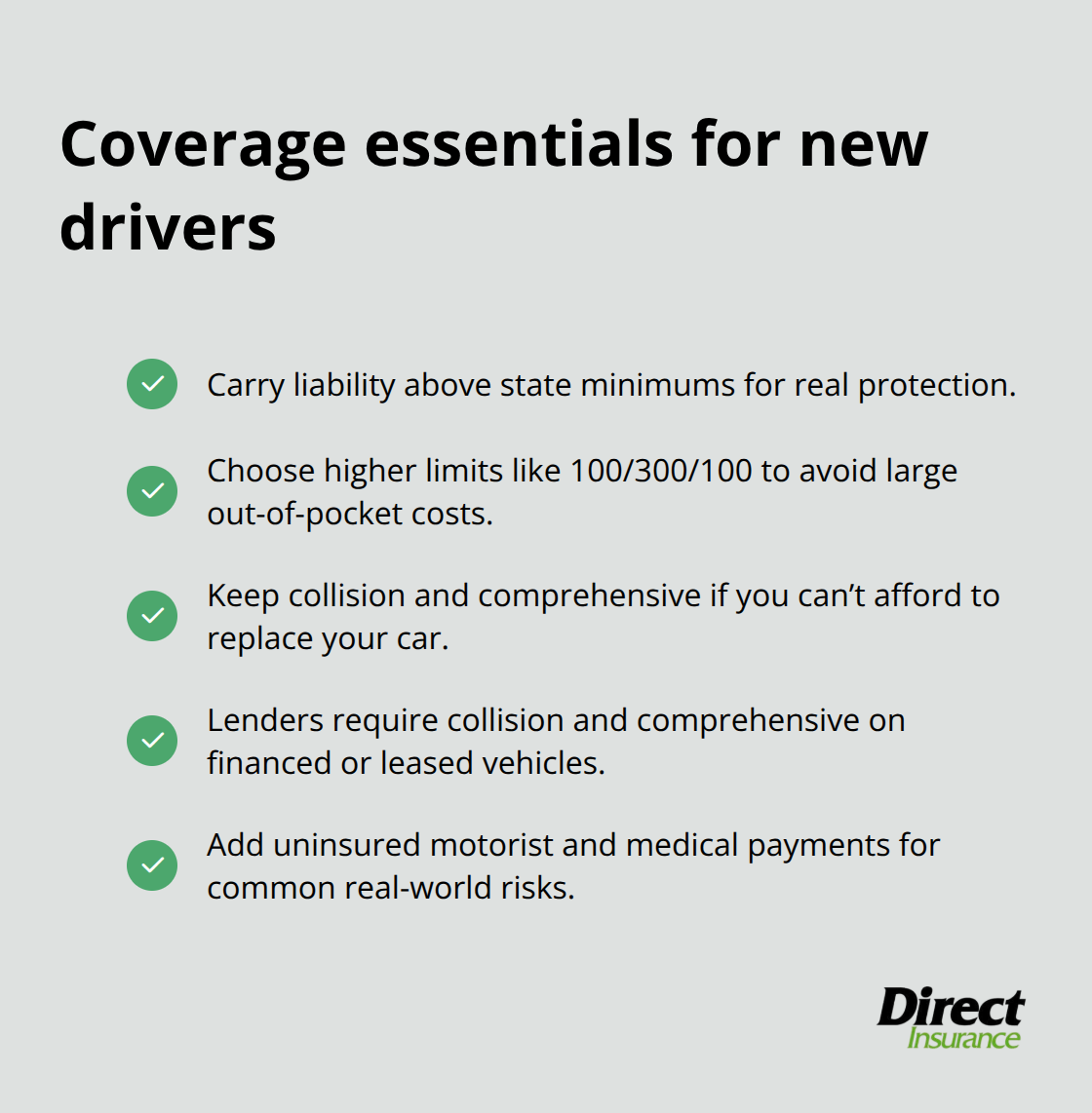
Split limits appear as three numbers, like 100/300/100. This means:

  • $100,000 bodily injury coverage per person
  • $300,000 bodily injury coverage per accident
  • $100,000 property damage coverage per accident

A CSL policy might appear as 300 CSL, indicating a single $300,000 limit for bodily injury or property damage claims in any combination.

CSL policies often provide more flexibility. For instance, if you cause an accident with $250,000 in property damage and $50,000 in bodily injury, a 300 CSL policy would cover it all. With a 100/300/100 split limit policy, you’d fall $150,000 short on the property damage coverage.

Ordered list chart comparing split limits and combined single limit (CSL) policies, highlighting their key features and differences. - auto liability insurance covers

Understanding these distinctions helps you choose the right coverage for your needs and budget. While state minimums exist, they often fall short in serious accidents. Consider your assets and potential risks when selecting your coverage limits.

As we move forward, it’s important to understand what auto liability insurance doesn’t cover. This knowledge will help you identify potential gaps in your coverage and make informed decisions about additional protection you might need.

What Auto Liability Insurance Doesn’t Cover

Auto liability insurance forms the foundation of your car insurance policy, but it has limitations. At Direct Insurance Services, we often encounter clients who express surprise about the gaps in their coverage. Let’s explore the areas auto liability insurance doesn’t protect and why understanding these limitations matters for comprehensive protection.

Checkmark list chart showing five key areas that auto liability insurance doesn't cover. - auto liability insurance covers

Personal Injuries and Vehicle Damage

Auto liability insurance excludes coverage for your own injuries and vehicle damage. If you cause an accident, your liability insurance won’t pay for your medical bills or repairs to your car. Medical payments can help pay for medical expenses resulting from an accident. PIP can help cover medical expenses resulting from an accident as well.

Theft, Vandalism, and Acts of Nature

Your liability coverage falls short when it comes to non-collision related incidents. If someone steals your car, vandalizes it, or natural disasters like floods or hailstorms damage it, liability coverage won’t help.

Uninsured and Underinsured Motorists

Liability-only coverage leaves a critical gap in protection against uninsured or underinsured motorists. If one of these drivers hits you, your liability insurance won’t cover your damages. Adding uninsured motorist coverage to your policy can safeguard you against this risk.

Rental Car Coverage

Standard auto liability insurance often doesn’t extend to rental cars. This gap can leave you financially exposed if you rent a vehicle and get into an accident. Many people assume their personal auto policy covers rental cars, but this isn’t always the case. You should check your policy or speak with an insurance professional to understand your coverage for rental vehicles.

Rideshare Activities

If you use your personal vehicle for rideshare services like Uber or Lyft, your personal auto liability insurance likely won’t cover you during these activities. Rideshare companies typically provide some coverage, but it may not be comprehensive. You might need a special rideshare insurance policy to fill this gap and ensure full protection while driving for these services.

Final Thoughts

Auto liability insurance covers essential aspects of potential accidents, but it has limitations. You must understand what’s included and what’s not to make informed decisions about your coverage needs. Your assets and potential risks should guide your choice of coverage amount, as state minimums often fall short in serious accidents.

We recommend you review your policy regularly and adjust your coverage as your circumstances change. Life events such as buying a home, starting a business, or having children can significantly impact your insurance needs. You should seek professional advice when evaluating your coverage options.

At Direct Insurance Services, we help individuals, families, and businesses find the right auto insurance coverage. Our team of experienced professionals can guide you through the complexities of insurance (ensuring you have the protection you need without overpaying). We work with top-rated carriers to offer a range of options tailored to your specific situation.

At Direct Insurance Services, we understand the challenges new drivers face when seeking affordable auto coverage.

Finding cheap auto insurance for new drivers can seem daunting, but it’s not impossible.

This guide will explore cost-effective options and strategies to help inexperienced motorists secure budget-friendly policies without compromising on essential protection.

Why New Drivers Pay More for Insurance

The Risk Factor

Insurance companies base their rates on statistical risk, and the numbers paint a clear picture. The Insurance Institute for Highway Safety reports that the fatal crash rate per mile driven for 16-19 year-olds is nearly 3 times the rate for drivers ages 20 and older. This elevated risk directly translates to higher premiums for new drivers.

Chart showing that the fatal crash rate for 16-19 year-olds is nearly 3 times higher than for drivers 20 and older - cheap auto insurance for new drivers

Lack of Driving History

New drivers start with a blank slate in terms of their driving record. This absence of historical data makes it challenging for insurers to assess risk levels accurately. As a result, companies tend to err on the side of caution by setting higher rates. It typically takes about three years of clean driving for premiums to decrease significantly.

Common Misconceptions

Many new drivers hold the belief that turning 25 will automatically slash their insurance rates. While age does factor into premium calculations, it’s not a magic number. Your driving record, vehicle choice, and even credit score (in most states) play significant roles in determining your premium costs.

The Vehicle Factor

The car you select can significantly impact your insurance costs. New drivers often gravitate towards sportier models, which can cause premiums to skyrocket. Opting for a vehicle with high safety ratings and lower repair costs (such as a mid-size sedan or a compact SUV) can lead to more affordable coverage.

Geographic Considerations

Your location also plays a crucial role in determining insurance rates. Urban areas typically see higher premiums due to increased traffic density and higher accident rates. Conversely, rural areas might offer more affordable rates. It’s important to consider how your location affects your insurance costs when budgeting for a new policy.

At Direct Insurance Services, we understand the unique challenges new drivers face when seeking affordable coverage. While factors like age and experience can’t change overnight, there are strategies to help mitigate these high costs. In the next section, we’ll explore cost-effective insurance options tailored specifically for new drivers, including usage-based programs and available discounts that can make a significant difference in your premium.

Cost-Effective Insurance Options for New Drivers

At Direct Insurance Services, we understand the challenges new drivers face when seeking affordable coverage. While inexperience often leads to higher premiums, several innovative options can help reduce costs.

Usage-Based Insurance: Pay As You Drive

Usage-based insurance programs offer a promising solution for budget-conscious new drivers. These policies use telematics devices or smartphone apps to monitor driving habits, including mileage, speed, and braking patterns. Safe drivers can earn significant discounts on their premiums.

Progressive has cheaper average rates than State Farm for usage-based insurance. However, car insurance rates are personalized to each driver based on factors like location and driving habits. These programs not only save money but also encourage safer driving habits-a win-win for new drivers and insurers alike.

Telematics: Your Digital Driving Coach

Telematics systems do more than just track; they provide valuable feedback to help new drivers improve their skills. Many insurance companies offer apps that score your driving and provide tips for improvement. This real-time feedback can prove invaluable for inexperienced drivers who want to build good habits and lower their risk profile.

Allstate’s Drivewise program, for instance, not only offers potential savings but also provides personalized driving challenges to help users become safer drivers. This gamification approach can particularly engage younger drivers.

Checklist of insurance discounts available for new drivers, including good student, driver's education, safe driver, low mileage, and multi-policy discounts - cheap auto insurance for new drivers

Discounts Tailored for New Drivers

Insurance companies offer various discounts specifically designed for new and young drivers. These can significantly reduce premiums:

  1. Good Student Discount: Maintaining a B average or higher can lead to savings with some insurers.
  2. Driver’s Education Discount: Completing an approved driver’s education course can result in premium reductions.
  3. Safe Driver Discount: While it takes time to build, a clean driving record can lead to substantial savings over time.
  4. Low Mileage Discount: If you don’t drive much, you might qualify for reduced rates. This particularly benefits college students who leave their cars at home.
  5. Multi-Policy Discount: Bundling auto insurance with renters or other policies can lead to savings.

The Power of Comparison Shopping

One of the most effective ways to find affordable coverage involves comparing quotes from multiple providers. Rates can vary significantly between companies, even for the same coverage.

Price shouldn’t serve as the only factor in your decision. Consider the company’s reputation, customer service, and claims process. A slightly higher premium from a reputable insurer with excellent service could save you headaches (and money) in the long run.

These cost-effective options can help new drivers find affordable coverage that provides the protection they need. As you explore these strategies, you’ll also want to consider additional tips to further lower your insurance premiums. Let’s examine some practical ways to reduce your costs even more.

How New Drivers Can Slash Their Insurance Premiums

At Direct Insurance Services, we’ve observed many new drivers grapple with high insurance costs. However, several effective strategies can reduce these premiums. Let’s explore practical ways to save money without compromising essential coverage.

Complete Driver Education Courses

State-approved driver’s education courses can lead to significant savings. These courses teach valuable skills that make you a safer driver, which insurers reward with lower rates. The National Safety Council reports that their defensive driving course can reduce premiums by 5-10%. Check with your local DMV for approved course providers.

Capitalize on Academic Success

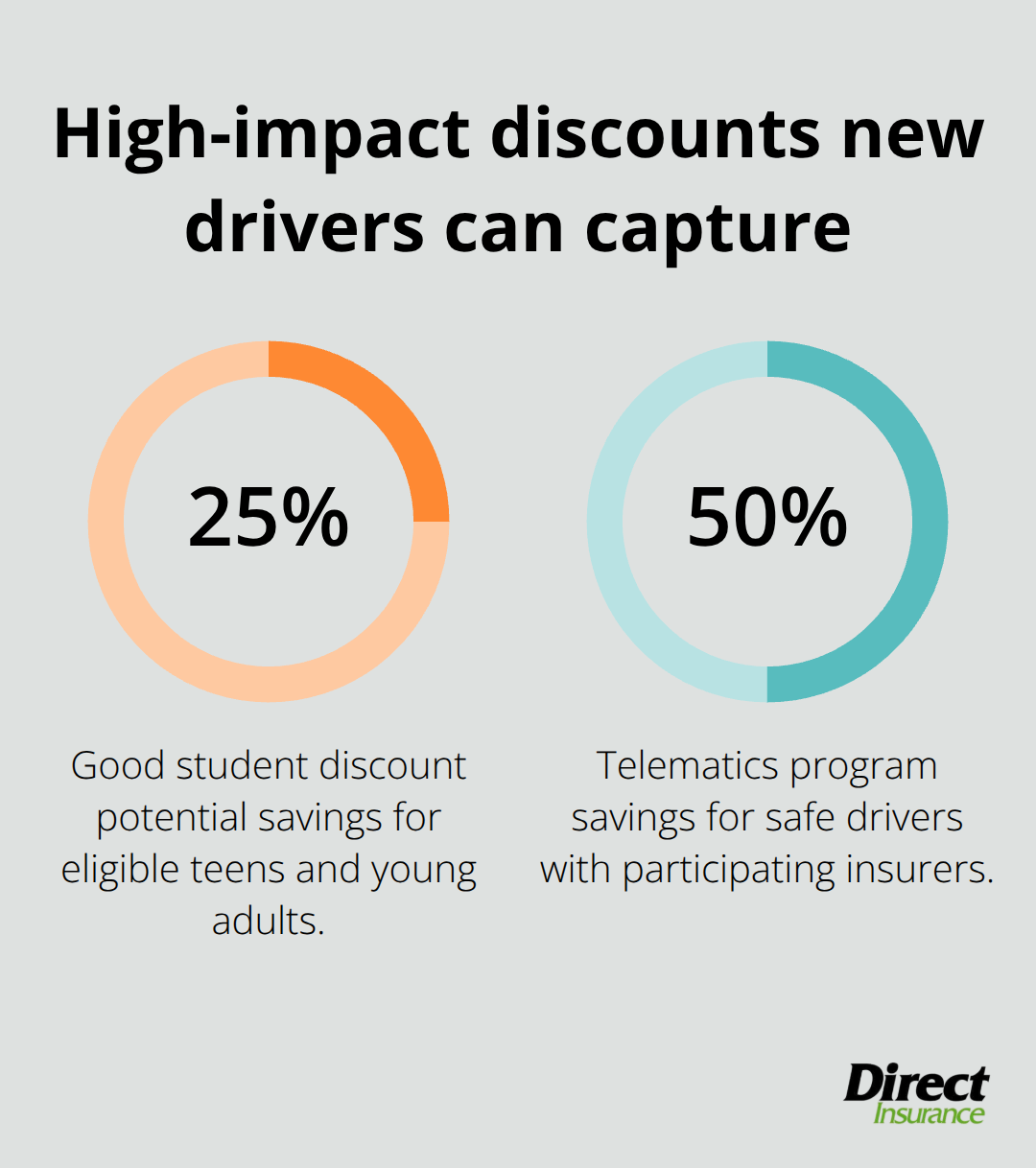
Many insurers offer good student discounts for young drivers who maintain high grades. Some companies provide up to 25% off for students with a B average or better. This discount often applies until age 25, offering substantial long-term savings. Keep your report cards handy when you shop for insurance.

Hub and spoke chart showing six strategies for new drivers to reduce their insurance premiums, including completing driver education courses, maintaining good grades, choosing the right vehicle, joining a family policy, using telematics, and increasing deductibles

Select Your Vehicle Strategically

Your choice of car significantly impacts your insurance costs. Sports cars and luxury vehicles cost more to insure, especially for new drivers. Instead, choose vehicles with high safety ratings and lower repair costs. A mid-size sedan or small SUV with advanced safety features can help keep your premiums manageable.

Consider a Family Policy

Adding a new driver to an existing family policy often costs less than getting a separate policy. This strategy allows you to benefit from multi-car discounts and the primary policyholder’s driving history. However, be aware that this can increase the family’s overall premium (we can help you calculate whether this option makes financial sense for your situation).

Use Technology to Your Advantage

Many insurers now offer usage-based insurance programs that use telematics to monitor driving habits. These programs can lead to significant discounts for safe drivers. Those with younger drivers on their policy saved the most money on their annual premium-a median savings of $245. While they may feel intrusive, the potential savings can be substantial for cautious new drivers.

Increase Your Deductibles

Raising your deductibles can significantly lower your premiums. For instance, increasing your auto insurance deductible from $500 to $1,000 could lead to noticeable savings on your car insurance costs. However, make sure you can afford the higher out-of-pocket expense in case of a claim.

Final Thoughts

New drivers face challenges in finding affordable auto insurance, but cost-effective options exist. We explored strategies like usage-based insurance, telematics, and discounts for good grades to help reduce premiums. Choosing the right vehicle and considering family policies can also lead to significant savings.

At Direct Insurance Services, we recommend regular reassessment of your coverage and comparison of quotes. Insurance needs and rates change over time, so what was once the best option may no longer be the most cost-effective solution. We work with multiple top-rated carriers to help you find suitable and cheap auto insurance for new drivers.

Don’t let high insurance costs deter you from driving. With careful planning and smart choices, you can find a policy that protects you without breaking the bank. Invest time in research and comparison now to enjoy substantial savings and peace of mind on the road.

As landlords, protecting your investment is paramount. At Direct Insurance Services, we often hear the question: “Does landlord insurance cover eviction?” It’s a critical concern for property owners facing the challenging process of removing problematic tenants.

Let’s explore the intricacies of landlord insurance and how it relates to eviction coverage, ensuring you’re well-informed to safeguard your rental property.

What Does Landlord Insurance Actually Cover?

Property Protection

Standard landlord insurance policies typically include two different types of coverage: property and liability protection. The property protection covers the physical structure of your rental property against perils like fire, wind, hail, and vandalism. This protection extends to permanent fixtures and fittings, such as built-in appliances and carpeting. However, it’s important to note that flood and earthquake damage usually require separate policies.

Liability Coverage

Another key component is liability protection. This covers legal expenses and medical costs if a tenant or visitor sustains an injury on your property due to negligence. For example, if someone slips on an icy walkway you failed to salt, your policy could cover the resulting lawsuit.

Loss of Rental Income

Many landlords overlook this vital aspect. If your property becomes uninhabitable due to a covered event (like a fire), your policy may reimburse you for lost rent during repairs. This can provide a financial safety net, especially for those who rely on rental income to cover mortgage payments.

What’s Not Covered

It’s equally important to understand what standard policies don’t cover. Eviction costs, for instance, are typically excluded.

Infographic showing the range of average eviction costs for landlords, from $3,500 to $10,000

According to the National Apartment Association, the average eviction can cost between $3,500 and $10,000 (accounting for legal fees, lost rent, and property turnover expenses).

Tenant’s personal property is also not covered under your policy. We recommend that you encourage your renters to obtain their own renters insurance to protect their belongings.

The Importance of Policy Review

Insurance needs can change as your property portfolio grows or local regulations evolve. An annual review of your policy will ensure it still meets your needs. This proactive approach can prevent costly coverage gaps.

For example, if you’ve recently upgraded your rental with high-end appliances or added a pool, your current coverage limits may no longer suffice. Similarly, if you’ve started offering short-term rentals, your policy may need adjustments to maintain proper protection.

As we move forward, it’s essential to consider how landlord insurance addresses specific scenarios, such as tenant evictions. Let’s explore this topic in more detail in the next section.

Does Landlord Insurance Cover Eviction Costs?

Eviction presents a challenging and often costly process for landlords. While standard landlord insurance policies typically don’t cover eviction expenses, options exist to protect yourself financially during this difficult situation.

Legal Expenses Coverage

Some insurers offer legal expenses coverage as an add-on to your landlord policy. This can help offset the costs associated with eviction proceedings, including attorney fees and court costs. The low-end average cost of eviction in legal fees is $500. Legal expenses coverage can significantly reduce this financial burden.

We’ve observed an increasing number of landlords opt for this additional protection. Coverage limits typically range from $5,000 to $25,000, so it’s important to assess your potential needs when choosing a policy.

Loss of Rent Coverage

Landlords often face a loss of rental income while evictions progress. Some specialized landlord policies offer coverage for lost rent during the eviction process. However, this is not standard and usually comes with strict conditions.

For instance, many policies only cover lost rent if the eviction results from property damage that makes the unit uninhabitable. Evictions due to non-payment or lease violations may not receive coverage. It’s important to carefully review policy terms and discuss your specific needs with your insurance provider.

Additional Coverage Options

Hub and spoke chart illustrating additional coverage options for landlords, including malicious damage, vandalism protection, and clean-up costs - does landlord insurance cover eviction

Landlords should consider additional coverage options to protect against eviction-related damages. These may include:

  1. Malicious damage coverage: This protects against intentional damage caused by tenants (unfortunately common during evictions).
  2. Vandalism protection: Some policies extend coverage to include damage caused by vandals during the eviction process.
  3. Clean-up costs: Certain insurers offer coverage for cleaning and debris removal after an eviction, which can be substantial if the property was left in poor condition.

When selecting additional coverage, it’s important to weigh the cost against the potential risks.

Every landlord’s situation is unique. We recommend working closely with your insurance provider to assess your specific risks and identify appropriate coverage options. Tailoring your insurance package to include eviction-related protections can significantly reduce the financial impact of this challenging process.

The best defense against eviction costs remains prevention. Thorough tenant screening, clear lease agreements, and prompt communication can help minimize the likelihood of evictions. However, the right insurance coverage provides an essential safety net when prevention isn’t enough.

As we move forward, it’s important to understand how various factors can affect your eviction coverage. Let’s explore these elements in the next section to ensure you have a comprehensive understanding of your policy’s protections.

What Impacts Your Eviction Coverage?

State and Local Eviction Laws

Eviction laws differ across states and local jurisdictions. These laws affect both the eviction process and your insurance coverage. In California, the eviction process can take 3-4 months due to tenant-friendly laws, which increases costs for landlords. Texas, however, has a more streamlined process, often completing evictions in 3-4 weeks.

Landlords in states with longer eviction processes often choose higher coverage limits to account for extended periods of lost rent and legal fees. You should familiarize yourself with your local laws and adjust your coverage accordingly.

Ordered list comparing the eviction process duration and implications in California and Texas - does landlord insurance cover eviction

Lease Agreement Specifics

Your lease agreement determines the strength of your eviction case and, consequently, your insurance coverage. A well-drafted lease outlines grounds for eviction clearly, which makes it easier to prove your case in court and potentially reduces legal costs.

Work with a legal professional to craft a comprehensive lease agreement. Include specific clauses about rent payment deadlines, property maintenance expectations, and prohibited activities. This clarity can streamline the eviction process if needed and may impact your insurance premiums favorably.

Reasons for Eviction

The reason behind an eviction affects your insurance coverage. Most policies distinguish between evictions due to non-payment of rent and those resulting from property damage or illegal activities.

Evictions due to non-payment are often not covered under standard policies. However, if you evict a tenant for causing significant property damage, your policy may cover both the eviction costs and the repairs needed.

Some insurers offer specialized coverage for high-risk scenarios. If you operate in an area with a history of problematic tenants, discuss additional protection options with your insurance provider.

Tenant Screening Processes

Implementing thorough tenant screening processes can significantly reduce the likelihood of evictions. Use comprehensive background checks and credit reports to vet potential tenants. This proactive approach can help you avoid problematic tenants and potentially lower your insurance premiums.

Policy Limits and Deductibles

Your policy limits and deductibles play a significant role in your eviction coverage. Higher limits provide more protection but come with higher premiums. Lower deductibles mean you pay less out-of-pocket during a claim, but they typically result in higher monthly costs.

Review your policy limits and deductibles annually to ensure they align with your current needs and risk tolerance. Consider factors such as the value of your property, local eviction laws, and your financial situation when setting these amounts.

Some landlord insurance policies may also cover lost rental income if your property becomes uninhabitable, providing additional financial protection during challenging times.

Final Thoughts

Landlord insurance policies do not automatically cover eviction costs. You must review your current policy and identify protection gaps. Add-ons like legal expenses coverage or loss of rent protection during evictions can provide essential financial safeguards.

Strong preventive measures minimize eviction risks. Conduct thorough tenant screenings, maintain clear communication, and create comprehensive lease agreements. Even with the best precautions, evictions can still occur, making proper insurance coverage vital.

We at Direct Insurance Services understand the unique challenges landlords face. Our experienced team can help you navigate landlord insurance intricacies (including eviction coverage). We offer tailored solutions that fit your specific needs and budget, ensuring your rental property investments remain protected.

Are you tired of paying high premiums for your auto and home insurance? At Direct Insurance Services, we understand the importance of finding affordable coverage without sacrificing protection.

In this guide, we’ll show you how to secure the cheapest auto and homeowners insurance bundle that meets your needs. We’ll explore the benefits of bundling, factors affecting pricing, and practical tips to help you save money on your policies.

What’s an Insurance Bundle?

At Direct Insurance Services, we often recommend insurance policy bundling to our clients. But what exactly is an insurance bundle? Let’s break it down.

Definition and Mechanics of Bundling

An insurance bundle is a package deal where you purchase multiple insurance policies from the same provider. The most common bundle combines auto and homeowners insurance, but other combinations exist too.

When you bundle policies, you consolidate your insurance needs under one roof. This approach streamlines your coverage and often leads to cost savings. For example, if you bundle your auto and home insurance, you’ll likely see a reduction in your overall premiums compared to purchasing these policies separately.

Financial Benefits of Bundling

The primary benefit of bundling is the potential for savings. While specific savings can vary, bundling policies can often lead to reduced premiums compared to purchasing separate policies.

Chart showing potential premium reduction from bundling insurance policies

But the advantages don’t stop at your wallet. Bundling also simplifies your insurance management. Instead of juggling multiple policies from different providers, you’ll have a single point of contact for all your insurance needs. This can prove particularly helpful when you file claims or make policy changes.

Typical Components of a Bundle

While auto and home insurance are the most common components of a bundle, there’s flexibility in what you can include. Various combination options exist. For instance, you might bundle your auto insurance with renters insurance if you’re not a homeowner. Or, if you own a boat or RV, you could add those to your package.

A typical auto and home insurance bundle might include:

  1. Auto coverage: Liability, collision, comprehensive, and personal injury protection.
  2. Home coverage: Dwelling protection, personal property coverage, liability protection, and additional living expenses.

It’s important to note that while bundling often leads to savings, it’s not always the cheapest option for everyone. That’s why it’s crucial to understand your unique situation and shop around with top-rated carriers to find the best deal for you.

The goal isn’t just to find the cheapest bundle, but the one that provides the right coverage at the best value. Now that we’ve covered the basics of insurance bundles, let’s explore the factors that affect bundle pricing in the next section.

What Impacts Your Bundle Price?

Insurance bundle pricing isn’t a one-size-fits-all equation. Multiple factors influence the cost of your auto and homeowners insurance bundle. Understanding these elements will help you make informed decisions and potentially reduce your expenses.

Hub and spoke chart illustrating key factors that affect insurance bundle pricing - cheapest auto and homeowners insurance

Location Influences Rates

Your address plays a significant role in determining your bundle price. Urban areas often come with higher rates due to increased traffic and crime. For example, Salt Lake City residents might face higher auto insurance premiums compared to those in rural Utah. Homes in areas prone to natural disasters (like wildfires or floods) may also incur higher homeowners insurance rates.

Personal Profile Affects Premiums

Your personal history and characteristics heavily impact your bundle price. Drivers with better driving records typically enjoy lower auto insurance rates. If you’ve had accidents or serious traffic violations, it’s likely you’ll pay more than if you have a clean record.

Credit scores also factor into pricing. A Federal Trade Commission study found that consumers with lower credit scores tend to file more claims, leading insurers to charge higher premiums. Improving your credit score from “poor” to “good” could potentially slash your insurance costs by hundreds of dollars annually.

Property and Vehicle Details Matter

The specifics of what you’re insuring greatly affect your bundle price. For homeowners insurance, factors like your home’s age, construction materials, and proximity to the nearest fire station can impact rates. Homes with outdated electrical systems might face higher premiums due to increased fire risk.

For auto insurance, your vehicle’s make and model matter. Sports cars and luxury vehicles typically cost more to insure due to higher repair costs and theft rates. On the flip side, vehicles with advanced safety features might qualify for discounts.

Discounts and Loyalty Programs

Many insurers offer discounts that can significantly reduce your bundle price. Common discounts include:

  • Multi-policy discounts (for bundling)
  • Safe driver discounts
  • Home security system discounts
  • Good student discounts (for young drivers)

Some companies also offer loyalty programs that provide increasing benefits the longer you stay with them. These programs can include accident forgiveness, vanishing deductibles, or additional discounts over time.

Now that you understand the factors influencing your bundle price, let’s explore strategies to find the most affordable options without compromising on coverage.

How to Slash Your Bundle Costs

At Direct Insurance Services, we want to help you find the most affordable insurance bundle without compromising on coverage. Here are some proven strategies to reduce your costs:

Compare Multiple Quotes

Don’t settle for the first quote you receive. Get at least three quotes from different insurers. Each company uses its own formula to calculate premiums, so prices can vary significantly. Comparing quotes can save you an average of 16% on your premiums when bundling home and auto insurance policies, according to the Insurance Information Institute.

Chart showing average savings on premiums when comparing quotes for bundled home and auto insurance - cheapest auto and homeowners insurance

Tailor Your Coverage

Review your policies and adjust coverage levels to match your current needs. For instance, if you drive an older car, you might consider dropping comprehensive coverage. However, be cautious not to underinsure. Find the sweet spot between adequate protection and affordability.

Raise Your Deductibles

Increase your deductibles to lower your premiums. For example, raising your auto insurance deductible from $500 to $1,000 could reduce your car insurance costs by 10% or more. Just make sure you can comfortably afford the higher out-of-pocket expense if you need to file a claim.

Enhance Home Security

Install security devices to earn significant discounts. Many insurers offer up to 15% off for adding smoke detectors, burglar alarms, or deadbolt locks. Some companies even provide discounts for smart home devices that detect water leaks or carbon monoxide.

Boost Your Credit Score

Your credit score plays a key role in determining your insurance rates. Pay bills on time, reduce debt, and check your credit report regularly for errors.

Inquire About Lesser-Known Discounts

Many insurers offer discounts that aren’t widely advertised. These might include savings for being claim-free, paying your premium in full, or even for your occupation (e.g., teachers or military personnel). Ask about every possible discount to maximize your savings.

The cheapest bundle isn’t always the best. It’s about finding the right balance between cost and coverage. Navigate these options to find a bundle that provides robust protection at a price that fits your budget. If you’re looking to save even more, consider exploring options for auto insurance with no money down.

Final Thoughts

Finding the cheapest auto and homeowners insurance bundle requires understanding and action. You must know the factors that influence your premiums and take steps to optimize your policies. Regular policy reviews will help you identify new savings opportunities and ensure your protection remains adequate as your life circumstances change.

We at Direct Insurance Services work with top-rated carriers to provide options tailored to your unique needs and budget. Our experienced team will guide you through the process of bundling your auto and home insurance. We take time to understand your situation, explain your options clearly, and help you make informed decisions.

Don’t let high insurance premiums burden you. Take action today to review your coverage, explore bundling options, and uncover potential savings. Contact Direct Insurance Services to find comprehensive coverage that fits your budget and provides peace of mind.