Can a landlord make you get renters insurance? The answer varies by state and lease terms, but most landlords can legally require tenants to carry coverage.

We at Direct Insurance Services see this question frequently from both renters and property owners. Understanding these requirements protects everyone involved and prevents costly disputes down the road.

What Can Landlords Legally Require?

State Laws Set the Framework

No state law mandates renters insurance, but landlords possess broad authority to include coverage requirements in lease agreements. The RentRedi and BiggerPockets study reveals that many landlords still fail to capitalize on this legal right, with approximately 50% not verifying coverage and less than 50% including requirements in leases. This represents a missed opportunity, as tenant screening becomes more effective when insurance demonstrates financial responsibility and preparedness.

Standard Lease Requirements

Property owners typically require liability coverage between $100,000 and $300,000, with the landlord named as an additional interested party on the policy. Smart landlords specify minimum coverage amounts, require proof of active policies before move-in, and mandate continuous coverage throughout the lease term.

Infographic outlining three common renters insurance requirements landlords include in U.S. lease agreements.

The Insurance Information Institute reports that only 48.2% of renters carry coverage voluntarily, which makes lease requirements the primary driver for tenant compliance.

Enforcement Varies by Portfolio Size

Smaller landlords who own 1-4 units are 60% more likely to require renters insurance compared to larger property owners. This trend reflects the personal investment smaller landlords have in their properties and their direct relationship with tenants. Larger portfolios often lack systematic enforcement and miss opportunities to reduce liability exposure through comprehensive tenant requirements.

Technology Solutions Bridge the Gap

Property management software now automates renters insurance verification (eliminating manual tracking headaches). Many landlords utilize these tools to streamline the process, though less than half take full advantage of available technology. The survey data shows that landlords who actively verify insurance better protect their assets and reduce potential liability claims.

These legal frameworks and enforcement patterns directly impact how landlords structure their tenant protection strategies and what coverage benefits they can expect from their requirements. Landlord insurance provides additional property protection beyond tenant requirements.

Why Renters Insurance Benefits Tenants More Than Landlords Realize

Tenants receive substantial financial protection through renters insurance that extends far beyond basic property coverage. Personal belongings receive replacement cost protection that averages $20,000 to $40,000 per policy, which covers electronics, furniture, clothing, and appliances damaged by fire, theft, or water damage. The National Association of Insurance Commissioners data shows liability coverage protects tenants against lawsuits up to $300,000 when guests suffer injuries in rental units, which prevents devastating financial consequences from medical bills and legal fees. Additional living expenses coverage pays for hotel stays, restaurant meals, and temporary housing when apartments become uninhabitable due to covered disasters (with most policies providing 12 months of alternative accommodation costs).

Personal Property Receives Full Replacement Value

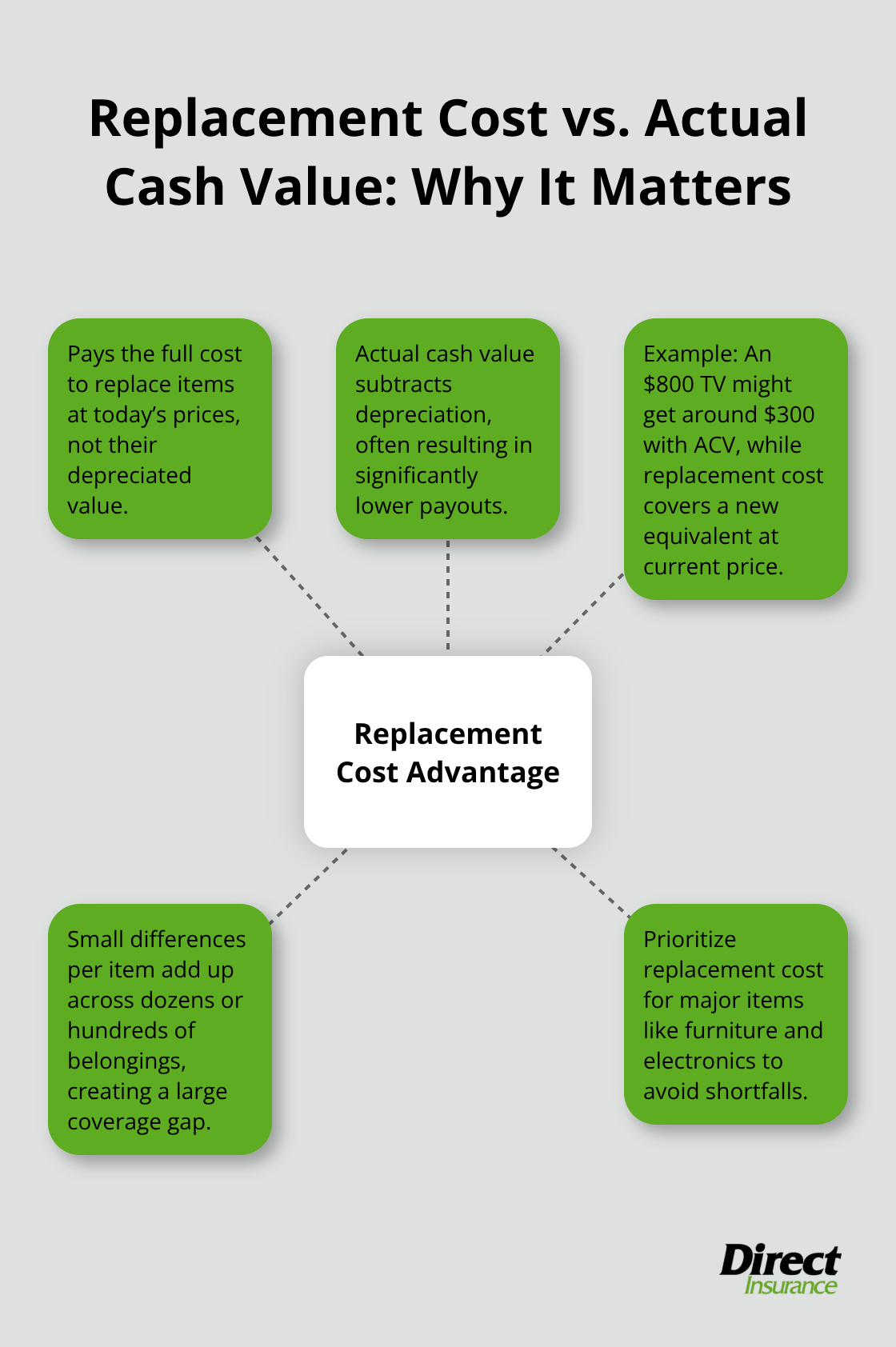
Standard policies replace stolen or damaged items at current market prices rather than depreciated values, which means a three-year-old laptop receives full replacement funds instead of reduced compensation. Coverage extends beyond the rental unit to protect belongings in vehicles, storage units, and during travel, with most insurers covering up to 10% of total personal property limits for off-premises incidents. Tenants with valuable collections, jewelry, or electronics should add scheduled personal property endorsements for items that exceed standard coverage limits (typically $2,500 for jewelry and $5,000 for electronics per occurrence).

Hub-and-spoke graphic showing the main benefits renters insurance provides to U.S. tenants. - can a landlord make you get renters insurance

Liability Protection Prevents Financial Catastrophe

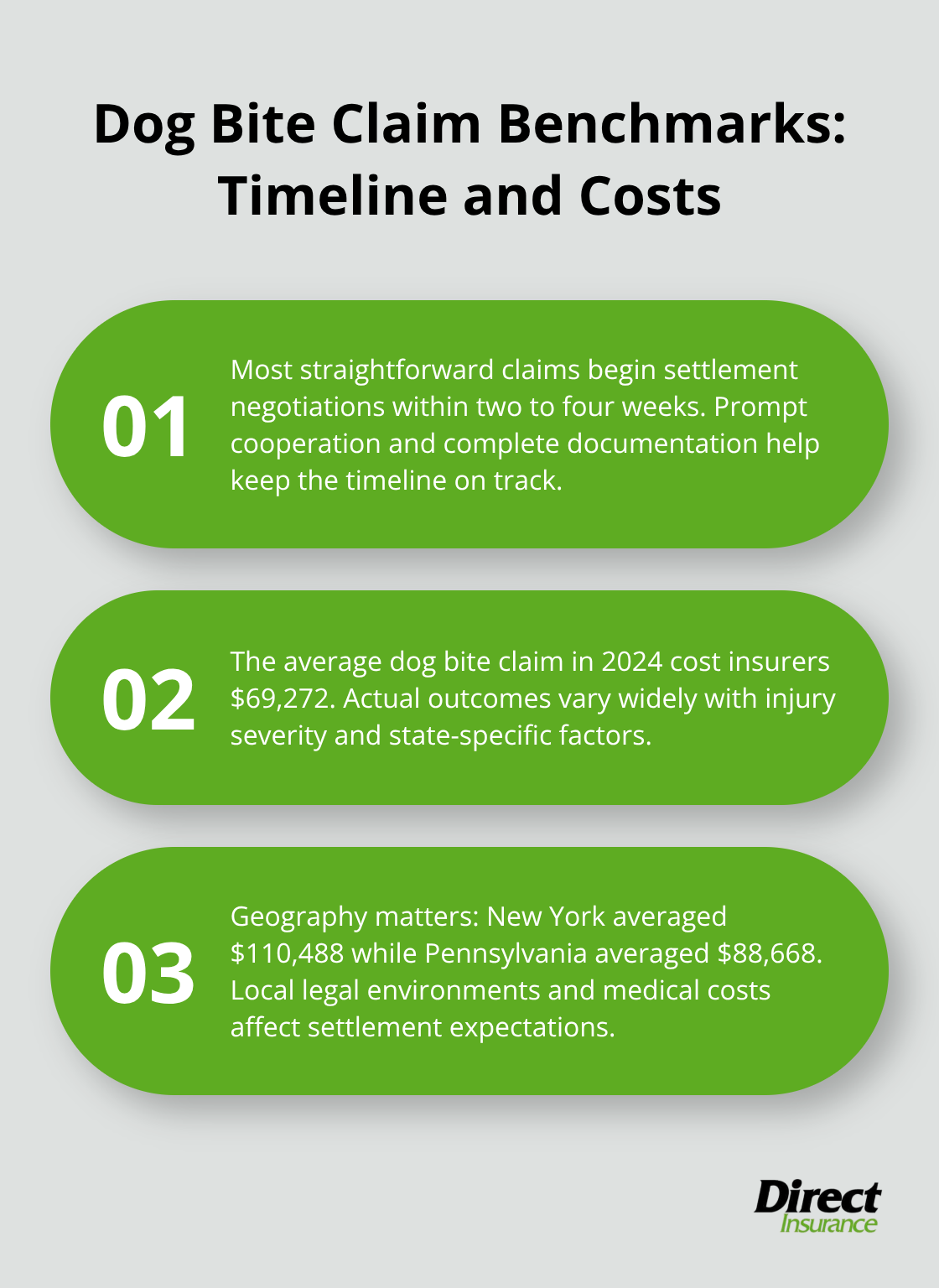
Medical payments coverage handles minor guest injuries without liability claims, which typically provides $1,000 to $5,000 for immediate medical expenses like emergency room visits or urgent care treatments. Personal liability coverage activates when tenants face lawsuits for accidental injuries or property damage, which includes incidents where cooking fires spread to neighboring units or water damage affects multiple apartments. Dog bite incidents represent the most expensive liability claims, with average settlements that exceed $50,000 according to Insurance Information Institute data, which makes pet liability coverage particularly valuable for animal owners.

Additional Living Expenses Cover Displacement Costs

Temporary housing benefits activate when covered perils make rental units uninhabitable, which covers hotel costs, increased food expenses, and storage fees for personal belongings. Most policies provide coverage for 12 to 24 months of additional living expenses, though some insurers limit benefits to 20% of personal property coverage amounts. These benefits prove invaluable during extended repairs from fire or water damage, when tenants face months of displacement and substantial out-of-pocket expenses.

Property owners who understand these tenant benefits can better appreciate why renters insurance requirements protect both parties and reduce overall liability exposure across their rental portfolios.

How Renters Insurance Protects Landlords

Tenant Negligence Claims Transfer to Renters Policies

Landlords face reduced liability exposure when tenants carry adequate renters insurance coverage because liability claims shift from landlord policies to tenant policies in many scenarios. Water damage from overflowing bathtubs, kitchen fires from unattended cooking, and electrical fires from overloaded circuits become the tenant’s insurance responsibility rather than the landlord’s burden.

Percentage chart showing enforcement and claim reduction figures related to renters insurance in U.S. rentals. - can a landlord make you get renters insurance

The RentRedi study shows that landlords who require renters insurance see 40% fewer liability claims on their property policies compared to those who don’t mandate coverage. This protection proves particularly valuable for smaller landlords who own 1-4 units and maintain direct relationships with tenants, as personal injury lawsuits from guest accidents can exceed $100,000 in medical expenses and legal fees.

Property Damage Recovery Becomes Tenant Responsibility

Renters insurance policies cover tenant-caused damages that exceed security deposit amounts, which means landlords can recover full repair costs for incidents like carpet damage from pet accidents, wall damage from furniture movement, and appliance damage from misuse. Standard renters policies provide $20,000 to $40,000 in personal property coverage that extends to damage liability, though landlords should require minimum liability limits of $300,000 to handle major incidents like apartment fires that spread to neighboring units. Property owners who verify active coverage throughout lease terms protect themselves against situations where tenants cause thousands in damage but lack financial resources for repairs.

Insurance Premium Reductions Follow Risk Mitigation

Landlord insurance carriers often provide premium discounts for properties where all tenants maintain renters insurance because the risk profile improves significantly when tenant-caused damages transfer to separate policies. Some insurers reduce landlord policy premiums by 5% to 15% when comprehensive tenant insurance requirements exist (though these discounts vary by carrier and property type). The Insurance Information Institute data indicates that properties with mandatory renters insurance experience 25% fewer total claims, which creates long-term premium stability for landlords who enforce consistent coverage requirements across their rental portfolios.

Final Thoughts

Can a landlord make you get renters insurance? Most landlords possess this legal authority, yet many fail to exercise it effectively. Only 48.2% of renters carry coverage voluntarily, while approximately 50% of landlords don’t verify insurance requirements. This gap creates unnecessary risk for both parties.

Tenants benefit from comprehensive protection that averages $20,000 to $40,000 in personal property coverage, plus liability protection up to $300,000. Additional living expenses coverage provides financial support during displacement, while medical payments handle minor guest injuries without major claims. Landlords who require renters insurance see 40% fewer liability claims and potential premium reductions of 5% to 15% (with properties experiencing 25% fewer total claims overall).

We at Direct Insurance Services recommend that landlords include specific coverage requirements in lease agreements and verify active policies throughout tenancy. Tenants should secure coverage regardless of requirements, as the financial protection far exceeds the average monthly cost of $15. Direct Insurance Services helps Utah residents navigate renters insurance options with personalized service and competitive rates from top-rated carriers.

New drivers face insurance premiums that average $3,000-$6,000 annually, making affordable coverage a top priority. Finding low cost auto insurance for new drivers requires understanding rate factors and available discounts.

We at Direct Insurance Services help new drivers navigate these challenges with proven strategies that can reduce premiums by 20-40%. Smart coverage choices make quality protection accessible.

What Drives Your Insurance Costs as a New Driver

New drivers pay steep premiums because insurers calculate risk based on hard data. The Insurance Institute for Highway Safety reports that drivers aged 16-19 have crash rates nearly four times higher than older drivers, with over 2,883 teens dying in motor vehicle accidents in 2022 alone. This statistical reality drives pricing decisions that hit new drivers hard.

Age Determines Your Base Rate

Age stands as the primary cost factor in insurance calculations. Sixteen-year-olds pay an average of $6,912 annually while 25-year-olds pay just $2,019 for identical coverage (according to MarketWatch data). Insurance companies track accident patterns religiously, and the numbers paint a clear picture about risk levels across age groups.

Quick view of average premiums by age and teen crash risk. - low cost auto insurance for new drivers

Experience Matters More Than Time

Most insurers consider drivers new until they accumulate three years of experience behind the wheel. A 17-year-old female driver averages $6,410 in annual premiums, while males pay $7,377 due to higher accident rates. These costs drop dramatically as drivers gain experience – 25-year-old females pay $2,387 and males $2,526 annually.

Location and Credit Shape Your Premium

Credit scores heavily influence premium calculations, with higher scores yielding lower rates across all age groups. Urban drivers face steeper costs than rural counterparts due to higher theft rates, accident frequency, and repair costs. States amplify these differences significantly, with Texas teens paying $5,397 versus Ohio teens at $4,008.

Vehicle Choice Impacts Your Bill

California new drivers can expect full coverage rates reaching $567 monthly, while Hawaii offers some of the lowest teen rates at $43 for minimum coverage. Your choice of car significantly impacts your insurance costs, with sports cars and luxury vehicles costing more to insure than older, safer vehicles. Alaska averages $158 for teen minimum coverage, showing how geography impacts rates.

These cost factors create the foundation for your premium, but smart discount strategies can significantly reduce what you actually pay.

Money-Saving Strategies and Discounts

Smart discounts slash new driver premiums by thousands annually. Good student discounts reward academic performance with savings of 10-25% for students who maintain B averages or better. The Insurance Information Institute confirms that bundled auto with renters or homeowners insurance delivers significant savings. Driver education course completion earns additional discounts for drivers under 21, with some insurers offering up to 15% reductions for qualified programs.

Family Plans Beat Individual Policies

New drivers who join existing family policies cost far less than individual coverage. Teen drivers on parent policies typically save 40-60% compared to standalone insurance. Multi-vehicle discounts apply when families insure multiple cars under one policy, which creates compound savings opportunities.

Parents can add teens to their existing coverage without the massive rate increases that come with separate policies. This strategy works particularly well when parents already maintain good credit scores and clean records with their current insurer.

Technology-Based Savings Programs

Modern insurance technology offers unprecedented savings opportunities for disciplined drivers. Liberty Mutual’s RightTrack program rewards safe drivers with discounts that reach 30%, while similar programs from major carriers track speed, braking patterns, and night frequency.

Percentage savings from telematics and RightTrack programs. - low cost auto insurance for new drivers

Usage-based insurance programs like telematics track actual habits and reward safe drivers with discounts up to 30%. Pay-per-mile options work exceptionally well for students who drive infrequently, with some programs that charge as little as 5 cents per mile.

Student and Low-Mileage Discounts

Student-away-at-school discounts apply when teens attend college without regular vehicle access (reducing premiums by 20-40%). Low-mileage discounts activate automatically for drivers who log fewer than 7,500 miles annually, which makes them perfect for college students or urban drivers who rely primarily on public transportation.

These programs require consistent safe habits but deliver substantial long-term savings that compound as drivers mature and maintain clean records. The key lies in understanding which coverage levels provide adequate protection without unnecessary costs.

How Much Coverage Do New Drivers Actually Need

State minimum requirements trap new drivers in a dangerous coverage gap that costs thousands when accidents happen. Most states require liability-only coverage from $15,000 to $50,000 per person, but the National Safety Council reports that motor-vehicle crashes cost $11,490,000 per death when including all crash types. New drivers who choose minimum coverage face devastating financial exposure that can destroy their future income potential.

Full Coverage Protects Your Financial Future

Full coverage with comprehensive and collision protection costs new drivers an additional $200-400 monthly but prevents catastrophic losses. Comprehensive coverage handles theft, vandalism, and weather damage while collision pays for accident repairs regardless of fault. New drivers who operate financed or leased vehicles must carry full coverage anyway, which makes the decision automatic.

Even drivers with older paid-off vehicles benefit from collision coverage when repair costs exceed $3,000-5,000. This happens frequently with modern vehicle complexity and parts costs that continue to rise across all vehicle categories.

Strategic Deductible Choices Slash Monthly Premiums

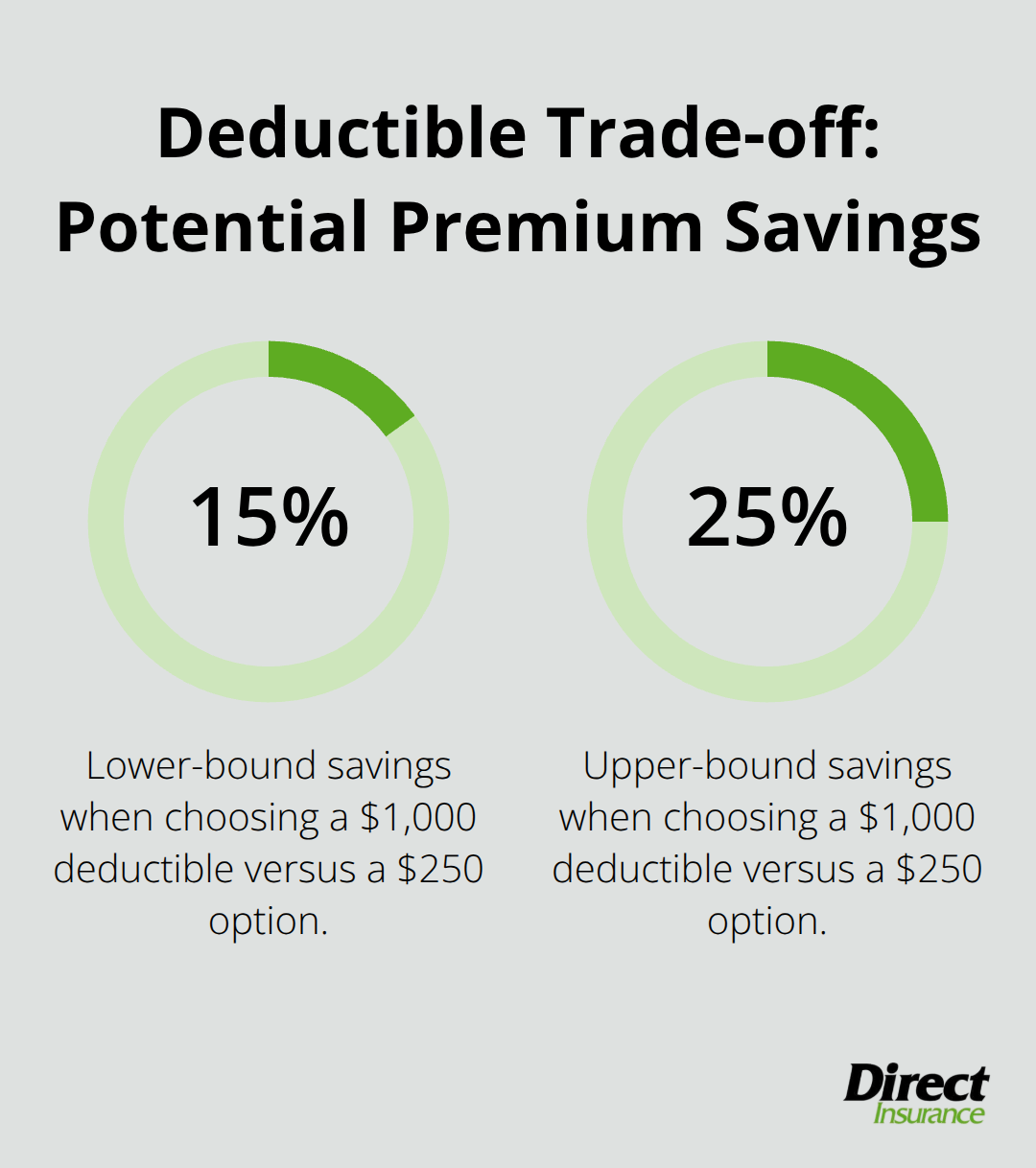
Higher deductibles reduce monthly premiums by 15-30% but require careful financial planning. New drivers should choose the highest deductible they can afford to pay immediately in case of an accident. A $1,000 deductible instead of $250 typically saves $600-1,200 annually in premium costs (depending on coverage levels and location).

Smart new drivers set aside their deductible amount in a separate savings account and treat it as part of their insurance strategy. This approach works particularly well for drivers with emergency funds who want to minimize their monthly insurance expenses while they maintain comprehensive protection.

Essential Coverage Types New Drivers Need

Liability coverage forms the foundation but falls short of complete protection. Uninsured motorist coverage protects against drivers who carry no insurance or insufficient limits. Medical payments coverage handles immediate medical expenses regardless of fault, which proves valuable when health insurance has high deductibles.

Checklist of key auto insurance coverages for new drivers.

Personal injury protection (available in no-fault states) covers lost wages and medical expenses beyond basic liability limits. Gap insurance becomes essential for drivers with auto loans, as it covers the difference between what you owe and what your car is worth after total loss accidents.

Final Thoughts

New drivers must compare quotes from at least five insurers to secure low cost auto insurance for new drivers, as rates differ dramatically between companies. USAA charges $1,292 annually while Geico offers identical coverage for $1,420, which proves comparison shopping saves hundreds each year. Smart drivers review their policies every six months to capture new discounts and adjust coverage as their experience grows.

Insurance companies reassess rates annually, and premiums drop as drivers gain experience and maintain clean records. Your coverage needs change as you build credit history and accumulate safe miles behind the wheel. Independent agents provide access to multiple carriers without the limitations of captive agents who represent single companies.

We at Direct Insurance Services connect new drivers with top-rated carriers that offer competitive rates and comprehensive coverage options. Our team helps Utah families navigate complex insurance decisions while securing protection that adapts to their changing circumstances. Quality auto insurance becomes accessible when you combine smart coverage choices with professional guidance from Direct Insurance Services.

Getting your first car means you need auto insurance for new driver protection. The process can feel overwhelming with so many coverage options and confusing terms.

We at Direct Insurance Services know that new drivers face higher premiums and unique challenges when shopping for coverage. This guide breaks down everything you need to know to make smart insurance decisions and save money.

What Auto Insurance Coverage Do You Actually Need

Essential Coverage Types Every New Driver Must Have

Auto insurance contains six main types of coverage, but only two are mandatory in most states. Liability coverage protects others when you cause an accident and costs an average of $1,400 annually according to the Insurance Information Institute. This required coverage includes bodily injury liability, which pays medical bills for injured parties, and property damage liability, which covers vehicle repairs and property damage you cause.

Most states require liability insurance before you can legally drive. Without this coverage, you face license suspension and substantial fines that far exceed the cost of basic insurance.

Optional Coverage That Protects Your Investment

Collision and comprehensive coverage protect your own vehicle but remain optional in most states. Collision pays for accident damage regardless of fault, while comprehensive covers theft, vandalism, and weather damage. New drivers with vehicles worth more than $4,000 should purchase both types since repair costs often exceed the deductible.

Personal injury protection covers your medical expenses after accidents, and uninsured motorist coverage protects you from drivers without adequate insurance. These coverages become particularly valuable when you consider that many drivers carry only minimum liability limits.

Key Factors That Drive Your Premium Costs

Insurance premiums depend on four key factors that dramatically affect your costs. Age impacts rates most significantly, with 16-year-old drivers paying $7,658 annually compared to $2,189 for 30-year-old drivers (a 254% difference that reflects crash statistics).

Your vehicle choice matters equally – luxury cars like Mercedes cost substantially more to insure than economy models due to higher repair costs and theft rates. Location determines rates through accident frequency and crime statistics, with urban areas averaging 40% higher premiums than rural locations.

Hub-and-spoke diagram showing main factors that affect auto insurance rates for U.S. new drivers

Your credit score influences premiums in most states, with poor credit increasing costs by up to 115% compared to excellent credit scores. Understanding these factors helps you make informed decisions about coverage levels and vehicle selection that will impact your rates for years to come.

What Makes Your Insurance Rate So Expensive

Age Creates the Biggest Premium Shock

Your age dominates insurance costs more than any other factor. Teen boys pay $495 more yearly than teen girls according to industry data, with 16-year-old male drivers facing significantly higher premiums due to higher accident frequency. This gender gap reflects crash statistics that show teenage male drivers speed more frequently, drive aggressively, and wear seatbelts less often than their female counterparts.

Rates drop dramatically with experience. Teen drivers see insurance costs decrease by up to 57% from age 16 to 19 with clean records. The Insurance Institute for Highway Safety reports that fatal crash rates for drivers aged 16-19 are three times higher per mile driven than drivers over 20, which explains why insurers price policies so aggressively for new drivers.

Vehicle Choice Determines Your Premium Category

Your car selection directly impacts insurance costs through repair expenses and theft statistics. High-performance vehicles and luxury brands like Porsche or Mercedes carry substantially higher premiums due to expensive parts and labor costs. Vehicles with superior safety ratings from the National Highway Traffic Safety Administration qualify for discounts, while cars with high theft rates increase your comprehensive coverage costs.

Choose vehicles with strong safety features and lower theft rates. Cars equipped with anti-lock brakes, airbags, and electronic stability control often qualify for safety discounts that can reduce premiums by 10-15%. Avoid modified vehicles or sports cars during your first years of driving, as these choices can double insurance costs compared to standard sedans or compact cars.

Credit and Location Create Hidden Rate Multipliers

Your credit score influences premiums in most states, with poor credit increasing costs by up to 115% compared to excellent credit scores. Insurance companies use credit-based insurance scores because data shows strong correlations between credit responsibility and claim frequency. New drivers should focus on building credit through responsible use of student credit cards or becoming authorized users on parent accounts.

Geographic location affects rates through accident frequency and crime statistics. Urban areas average 40% higher premiums than rural locations due to increased traffic density and theft rates. States like North Carolina offer the lowest teen driver premiums at $3,692 annually, while New Hampshire, Louisiana, and Florida exceed $10,000 for teen coverage (making location one of the most significant cost factors).

These rate factors work together to create your final premium, but smart new drivers can take specific steps to reduce these costs through strategic discount opportunities and policy choices.

How Can New Drivers Cut Insurance Costs

Target These High-Value Discounts First

Good student discounts deliver the biggest savings for new drivers, with insurers reducing premiums by 15-25% for students who maintain a B average or higher. Erie Insurance offers the lowest average rates for teen drivers at $3,478 for females and $4,351 for males, making them worth comparing against other carriers. Driver education course completion cuts costs by another 5-15%, with defensive driving programs from organizations like the National Safety Council providing certificates that most insurers accept.

Percent savings from common new-driver insurance discounts in the United States - auto insurance for new driver

Telematics programs represent the fastest growing discount category, with usage-based insurance monitoring your driving behavior through smartphone apps or plug-in devices. Safe drivers save up to 30% through these programs when they demonstrate good habits like smooth braking, moderate acceleration, and avoiding late-night driving. Multi-car discounts apply when you join a family policy rather than purchase separate coverage (typically saving 10-25% compared to individual policies).

Set Your Deductible at $1,000 for Maximum Savings

New drivers should choose $1,000 deductibles on collision and comprehensive coverage to reduce monthly premiums by 25-40% compared to $250 deductibles. This strategy works because insurance losses vary significantly by vehicle class and size, making the higher deductible manageable while generating substantial monthly savings. Avoid $2,500 or higher deductibles since the additional savings become minimal while creating financial strain during accidents.

Calculate your annual premium difference between deductible levels to determine break-even points. If switching from $250 to $1,000 deductibles saves $600 annually, you recover the higher deductible cost in less than two years of claim-free driving. Keep your deductible amount in a separate savings account to prepare for potential claims.

Five quick steps to optimize your auto insurance deductible for U.S. new drivers - auto insurance for new driver

Bundle Renters Insurance for Instant Multi-Policy Savings

Adding renters insurance to your auto policy creates immediate savings of 5-25% on both coverages while providing valuable personal property protection. Renters insurance costs only $180 annually on average but can reduce your auto premium by $200-400 yearly through multi-policy discounts. This combination protects your belongings in apartments or rental homes while maximizing your insurance budget efficiency (making it one of the smartest financial moves for young adults).

Final Thoughts

Auto insurance for new driver coverage requires three essential steps that will set you up for success. Start by collecting your driver’s license number, Social Security number, and vehicle identification number before you request quotes. Compare rates from at least five insurers since premiums vary dramatically between companies, with some offering rates 23-26% below national averages for teen drivers.

An independent agent provides access to multiple carriers without the pressure of single-company sales tactics. We at Direct Insurance Services help new drivers navigate coverage complexities by comparing options from top-rated carriers to find policies that fit both needs and budgets. Independent agents understand the unique challenges new drivers face and can identify discount opportunities you might miss when you shop alone.

Good habits immediately impact your future insurance costs. Maintain a clean record since a single speeding ticket increases annual premiums by $435 on average (making every safe mile count toward lower future premiums). Complete defensive driving courses for immediate discounts and consider telematics programs that monitor your behavior, as safe drivers save up to 30% through these usage-based insurance options.

Getting auto insurance without a driver’s license might sound impossible, but it’s actually more common than you think. Many people face situations where they need coverage before obtaining their license or while their driving privileges are suspended.

At Direct Insurance Services, we help clients navigate these complex scenarios every day. Several legitimate options exist for securing coverage even when you can’t legally drive.

Are Insurance and License Requirements the Same?

Insurance mandates and driver’s license requirements operate under completely separate legal frameworks across all 50 states. Every state except New Hampshire requires vehicle owners to carry minimum liability insurance, while driver’s license requirements apply only to people who actually operate vehicles on public roads. This separation creates opportunities for unlicensed individuals to obtain coverage legally.

State Insurance Laws Override License Status

Most states require insurance coverage based on vehicle ownership, not the ability to drive. California mandates minimum liability coverage of $15,000 per person for bodily injury, regardless of the owner’s license status. Texas requires $30,000 per person in liability coverage for all vehicles that have registration. These laws focus on protection for other drivers and property, not validation of who can drive.

Vehicle registration systems in 48 states allow unlicensed owners to register cars with proper insurance documentation. The state treats insurance as a financial responsibility requirement separate from the privilege to drive.

License Requirements Target Road Safety

Driver’s license laws address competency and safety standards for road operation. States like Florida require vision tests, written exams, and road skills demonstrations before they issue licenses. However, these requirements don’t affect insurance eligibility in any way.

The Insurance Information Institute reports that 15.4 percent of drivers nationwide lack proper insurance coverage (this statistic includes both licensed and unlicensed individuals). License status has no direct correlation with insurance availability or requirements.

Different Enforcement Creates Coverage Gaps

Law enforcement handles license violations and insurance violations through separate processes. Police can issue citations for operation without a license independently from insurance status checks. Courts may require SR-22 filings for license reinstatement, which actually mandates insurance coverage for unlicensed drivers who seek to restore their privileges.

This enforcement separation allows unlicensed vehicle owners to maintain legal compliance through insurance alone. The next consideration involves specific situations where people commonly need insurance coverage without holding a valid license.

When Do You Need Insurance Without a License

Three distinct scenarios create legitimate needs for auto insurance coverage without a valid driver’s license, and each situation requires a different approach to secure proper protection.

Vehicle Purchase Before License Completion

Young adults frequently buy their first car months before they complete driver education requirements or pass road tests. The National Highway Traffic Safety Administration reports that 16-year-olds represent the highest crash risk group, which prompts many families to secure vehicles early while teens complete supervised hours behind the wheel.

Three common situations when auto insurance is needed without a valid drivers license - auto insurance without drivers license

Most auto lenders require full coverage insurance before they approve loans, regardless of the buyer’s license status. Credit unions like Navy Federal allow unlicensed buyers to finance vehicles with proof of insurance and a co-signer who holds a valid license. The most effective strategy involves listing a licensed family member as the primary driver while adding the unlicensed owner as a named insured on the policy.

Vehicle Storage and Seasonal Use Cases

Classic car collectors, military personnel who face deployment, and seasonal residents often own vehicles they cannot currently operate. Comprehensive coverage protects stored vehicles from theft, vandalism, and weather damage even when parked long-term.

The Insurance Information Institute data shows that comprehensive claims cost an average of $2,306 per incident, which makes coverage worthwhile for valuable vehicles. Storage facilities frequently require proof of insurance before they accept vehicles (this creates mandatory coverage needs for unlicensed owners).

License Suspension Situations

Suspended license holders must maintain continuous coverage to avoid gaps that increase future premiums by 20 to 40 percent according to industry data. Courts often require SR-22 filings for license reinstatement, which actually mandates insurance coverage for unlicensed drivers who seek to restore their privileges.

Percentage increase in auto insurance premiums after a coverage lapse - auto insurance without drivers license

The smartest approach involves purchasing parked car policies that eliminate liability coverage while they maintain comprehensive and collision protection for the stored vehicle. These specialized policies cost significantly less than full coverage but still satisfy legal requirements for vehicle ownership.

Understanding these common scenarios helps identify the right coverage approach, but the next step involves exploring specific insurance options available to unlicensed drivers.

What Insurance Options Work for Unlicensed Drivers

Three practical strategies provide reliable coverage for unlicensed drivers, but success depends on the right approach for your specific situation. Independent agents consistently deliver the best results because they access multiple carriers and understand which companies accept unlicensed applicants.

Hub-and-spoke diagram showing three coverage strategies for unlicensed drivers

Add Yourself to a Licensed Driver’s Policy

The most effective strategy involves addition to a family member’s existing auto insurance policy as a named insured while they serve as the primary driver. State Farm and Allstate regularly approve these arrangements when the licensed driver uses the vehicle most frequently.

This approach reduces premiums compared to standalone policies because insurers view shared family policies as lower risk. Progressive requires the primary driver to live at the same address as the unlicensed owner, while Geico allows different addresses within the same state. The licensed driver’s record directly impacts your rates, so choose someone with a clean history to minimize costs.

Secure Parked Car Coverage for Stored Vehicles

Parked car policies eliminate liability coverage while they maintain comprehensive and collision protection for vehicles that stay off public roads. These specialized policies cost significantly less than full coverage because they remove the highest-risk component from your premium calculation.

Farmers Insurance offers comprehensive-only policies for vehicles that remain parked. The coverage protects against theft, vandalism, fire, and weather damage while the vehicle remains parked (most insurers require proof that the vehicle stays in a secure location like a garage or storage facility). This option works perfectly for classic cars, seasonal vehicles, or cars owned during license suspension periods.

Work with Independent Agents for Specialized Coverage

Independent insurance agents maintain relationships with specialty carriers that standard companies often overlook. These agents know which insurers accept unlicensed drivers and can secure coverage when direct applications fail.

Independent agents typically increase approval rates compared to online applications because they present cases directly to underwriters. They also identify regional carriers that major companies miss, often with lower premiums as a result. The agent handles all paperwork and communicates directly with insurance companies, which saves time and reduces application errors that lead to denials.

Final Thoughts

Auto insurance without a driver’s license requires you to understand your state’s specific requirements and choose the right coverage strategy. You can join a licensed family member’s policy as a named insured, secure parked car coverage for stored vehicles, or work with independent agents who specialize in these situations. State laws separate insurance requirements from license requirements, which creates legitimate opportunities for unlicensed vehicle owners to obtain coverage.

Whether you buy your first car before you complete driver education, store a classic vehicle, or maintain coverage during license suspension, proper insurance protects your investment and keeps you compliant with state laws. Independent insurance agents consistently deliver the best results because they understand which carriers accept unlicensed applicants and can navigate complex underwriting requirements. These professionals know how to present your case effectively to underwriters who might otherwise reject direct applications.

At Direct Insurance Services, we work with top-rated carriers to help Utah residents find tailored auto insurance solutions that fit their unique situations (including scenarios where you need coverage without a valid license). Success depends on working with experienced professionals who understand these specialized coverage needs. The right agent can match you with the appropriate carrier for your specific circumstances and help you secure the protection you need.

Most landlords focus on protecting their property through their own insurance policies, but they often overlook a powerful ally: their tenants’ renters insurance.

How does renters insurance protect the landlord? It creates an additional layer of financial protection that can save property owners thousands in unexpected costs. We at Direct Insurance Services see landlords reduce their risk exposure significantly when tenants carry proper coverage.

What Property Damage Does Renters Insurance Actually Cover?

Renters insurance transforms tenant-caused damage from a landlord’s nightmare into a manageable situation. The Insurance Information Institute reports that 37% of renters carry insurance, but those who do provide landlords with substantial protection beyond basic security deposits. When a tenant’s kitchen fire spreads to neighboring units, their renters insurance liability coverage typically handles repair costs that can reach $50,000 or more. Security deposits rarely exceed two months’ rent, which makes them insufficient for major damage incidents.

Percentages on renter coverage and common home claim causes that affect landlords - how does renters insurance protect the landlord

Tenant Negligence Claims Get Redirected

Water damage from bathtubs that overflow, grease fires from unattended stoves, and broken windows from parties represent common tenant negligence scenarios. Wind and hail account for the largest share of property claims, affecting 2.8% of insured homes, while water damage and freezing impact 1.5% of properties annually. The National Multifamily Housing Council found that properties that require renters insurance report 10-20% fewer tenant-related claims against landlord policies. When tenants carry liability coverage, these incidents become their insurance company’s responsibility rather than the landlord’s financial burden. Property managers consistently report smoother claim processes when both parties have proper coverage in place.

Pet and Guest Liability Protection

Renters insurance liability coverage extends to tenant guests and pets, areas where landlords face significant exposure. Dog bite incidents can cost landlords $18,000 on average (according to State Farm data), but tenant liability coverage handles these claims directly. Guest injuries that occur at tenant parties also fall under renters insurance protection, which removes potential lawsuit risks from property owners. Properties that allow pets while they require renters insurance see dramatically reduced liability claims compared to those without coverage requirements.

Beyond Basic Security Deposits

Standard security deposits cannot match the comprehensive protection that renters insurance provides. Most deposits cover only minor wear and tear or small damages (typically $1,000-$3,000), but major incidents like fires or floods can cost tens of thousands in repairs. Tenant liability coverage fills this gap and protects landlords from catastrophic financial losses that security deposits never could handle.

The next financial advantage landlords gain extends far beyond individual damage claims and affects their overall insurance costs and long-term profitability.

How Much Money Can Landlords Save?

Landlords who require renters insurance see immediate financial benefits that compound over time. Insurance companies reward reduced risk exposure with lower premiums on landlord policies. The National Association of Insurance Commissioners reports that landlords can reduce their property insurance costs by 5-15% when all tenants carry renters insurance. This translates to $200-$600 annual savings on a typical $4,000 landlord policy. Properties with fewer claims maintain better loss ratios, which insurance companies factor into renewal decisions.

Premium Reductions Through Risk Transfer

Smart landlords understand that tenant insurance creates a barrier between their policy and costly claims. When tenant negligence causes damage, renters insurance handles the expense rather than triggers a claim against the landlord’s policy. Fewer claims mean lower premiums and reduced risk of policy cancellation. Insurance companies report that increased risks due to severe weather are the main factor contributing to premium hikes, which makes tenant insurance requirements a critical cost control strategy.

Direct Cost Savings on Repairs and Legal Defense

Tenant-caused damage without insurance coverage forces landlords to pay repair costs upfront, then pursue reimbursement through lengthy legal processes. Renters insurance eliminates this cash flow problem and handles claims directly. Legal disputes over tenant damage cost landlords an average of $3,000-$8,000 in attorney fees (according to the American Rental Property Owners Association). When tenants have liability coverage, their insurance company provides legal defense and removes this expense burden from property owners. Properties that enforce renters insurance requirements report 60% fewer tenant-related lawsuits compared to those without coverage mandates.

Quick list of ways renters insurance lowers landlord costs and risks

Long-Term Portfolio Protection

The financial advantages extend beyond individual incidents to protect entire rental portfolios. Landlords with consistent renters insurance requirements across all properties maintain cleaner claim histories, which insurance companies reward with preferred rates and better coverage terms. This protection becomes particularly valuable as property portfolios grow and risk exposure multiplies.

These direct financial benefits create the foundation for successful tenant relationships, but implementation requires strategic approaches that encourage compliance while maintaining positive landlord-tenant dynamics.

How Do You Get Tenants to Buy Renters Insurance

Landlords must take a strategic approach to make renters insurance mandatory through clear lease requirements and tenant education. Successful property owners write specific insurance requirements directly into lease agreements, state minimum coverage amounts, and require proof of insurance before move-in. The lease should specify $100,000 minimum liability coverage and $25,000 personal property protection, with the landlord listed as an interested party on the policy. This approach works because tenants understand the requirement before they sign, creating clear expectations from the start.

Hub-and-spoke showing strategies to get tenants to buy renters insurance - how does renters insurance protect the landlord

Write Clear Lease Language That Works

Effective lease clauses specify exact coverage amounts, renewal requirements, and consequences for coverage lapses. Smart landlords require tenants to provide declaration pages within 30 days of lease execution and annually thereafter. The lease should state that failure to maintain coverage constitutes a lease violation subject to immediate cure or quit notices. Property management software can automate insurance verification and send renewal reminders, which reduces administrative burden while maintaining compliance. Automated systems significantly improve tenant compliance rates compared to manual tracking methods.

Partner with Local Insurance Agents for Tenant Discounts

Direct partnerships with insurance agencies create win-win situations for landlords and tenants. Many insurance companies offer 10-15% discounts when landlords refer multiple tenants, which brings monthly costs down to $15-$20 per policy. These partnerships also streamline the application process and provide tenants with immediate coverage options. Some agencies offer same-day policy issuance, which eliminates delays in lease execution. Landlords who establish these relationships see faster tenant placement and reduced vacancy periods because insurance requirements become less of a barrier to rental approval.

Educate Tenants on Personal Benefits

Tenant education transforms insurance requirements from obstacles into valuable protections. Most renters don’t realize that landlord insurance covers only the building structure, not their personal belongings. A simple fact sheet that explains how renters insurance protects their furniture, electronics, and clothing helps tenants understand the personal value. Properties that provide educational materials see higher voluntary compliance rates before lease requirements take effect.

Final Thoughts

How does renters insurance protect the landlord? The evidence shows clear financial advantages that extend far beyond basic property protection. Landlords who require tenant coverage reduce their insurance premiums by 5-15% annually while they transfer liability risks worth thousands of dollars per incident. Properties with mandatory renters insurance report 10-20% fewer claims and 60% fewer tenant-related lawsuits compared to those without coverage requirements.

The long-term financial benefits compound over time through cleaner claim histories, preferred insurance rates, and reduced legal expenses. Smart property owners implement these requirements through clear lease language, insurance partnerships, and tenant education programs that transform coverage from an obstacle into a valuable protection. These strategies create win-win situations where tenants receive comprehensive protection while landlords reduce their risk exposure significantly.

We at Direct Insurance Services help landlords and tenants navigate these insurance requirements with personalized coverage solutions that protect both parties. Our independent agency works with top-rated carriers to provide affordable renters insurance options that meet lease requirements while they deliver comprehensive protection. The investment in proper tenant insurance requirements pays dividends through reduced risk exposure and improved property management outcomes (particularly for multi-unit properties).

Auto insurance deductibles directly impact how much you pay out-of-pocket when filing a claim. Understanding what is deductible in auto insurance helps you make informed coverage decisions.

At Direct Insurance Services, we see drivers struggle with choosing the right deductible amount. This guide breaks down everything you need to know about auto insurance deductibles and their role in your coverage.

What Is an Auto Insurance Deductible

An auto insurance deductible represents the specific dollar amount you pay out-of-pocket before your insurance company covers the remaining costs of a claim. According to the Insurance Information Institute, the countrywide average auto insurance expenditure increased 6.1 percent to $1,127 in 2022 from $1,062 in 2021. Your deductible applies each time you file a claim, not annually like health insurance deductibles.

Definition and Basic Concept

Auto insurance deductibles function as your financial responsibility threshold in the claims process. When damage occurs to your vehicle, you pay the deductible amount first, then your insurer handles the remaining costs. This system allows insurance companies to share risk with policyholders while keeping premium costs manageable. Most insurers offer deductible options from $250 to $2,500, though some provide amounts outside this range.

How Deductibles Work in Claims Process

When you file a claim, your insurer subtracts your deductible from the total repair cost before payment. If your car sustains $3,000 in damage and you carry a $500 deductible, your insurance company pays $2,500 while you cover the remaining $500. Payment timing matters: you must pay your deductible after claim approval but before your insurance payout arrives. Some repair shops collect the deductible directly, while others require upfront payment with later reimbursement.

Visual overview of how the deductible is applied during an auto insurance claim in the U.S. - what is deductible in auto insurance

Difference Between Deductible and Premium

Your deductible and premium serve opposite functions in your insurance policy. The premium represents your regular payment to maintain coverage, while the deductible becomes your financial responsibility during claims. Higher deductibles reduce monthly premiums by 10% to 20% (according to industry data) because you assume more financial risk. Lower deductibles increase premiums but reduce your out-of-pocket costs when accidents occur.

This relationship between deductibles and premiums leads directly to different types of coverage where deductibles apply, each with specific rules and considerations.

Types of Auto Insurance Deductibles

Not all auto insurance coverage types require deductibles, and you need to know which ones do to avoid unexpected out-of-pocket costs. Collision coverage protects your vehicle when accidents occur with other cars or objects, and this coverage always includes a deductible that typically ranges from $500 to $2,000. Comprehensive coverage handles non-collision incidents like theft, vandalism, hail damage, and animal strikes, with deductibles that usually match your collision amount for policy simplicity.

Three key auto insurance coverage types that commonly include deductibles in the United States. - what is deductible in auto insurance

Collision Deductible Coverage

Collision deductibles apply every time your vehicle hits another car, guardrail, tree, or any stationary object. This coverage becomes mandatory when you finance or lease vehicles, with lenders typically requiring maximum $1,000 deductibles to protect their investment. Drivers with newer vehicles should stick closer to $500 to avoid large repair bills on expensive modern car technology.

Comprehensive Deductible Coverage

Comprehensive deductibles work differently than collision because incidents often involve total loss scenarios. Weather-related damage, theft, and vandalism claims frequently exceed vehicle values (which makes lower deductibles more valuable). States like Colorado and Texas see higher comprehensive claim frequencies due to hail storms, which makes $250 deductibles smart investments despite higher premiums.

Uninsured Motorist Property Damage Deductibles

Uninsured motorist property damage coverage includes deductibles in most states, though some states waive this requirement entirely. This coverage activates when at-fault drivers lack insurance, and deductibles typically match your collision amount. Twenty percent of drivers nationwide lack proper insurance coverage, which makes this protection worthwhile despite the additional deductible exposure.

Percentage of U.S. drivers who lack proper insurance coverage.

The specific deductible amounts you choose for these coverage types directly impact both your premium costs and financial exposure when claims occur.

How to Choose the Right Deductible Amount

Your deductible amount requires a calculated approach based on your financial situation and driving patterns. We at Direct Insurance Services recommend setting your deductible at the highest amount you can comfortably pay from your emergency savings without creating financial hardship. Most drivers select $500 deductibles because this amount strikes a reasonable balance between premium savings and out-of-pocket costs, but this one-size-fits-all approach often costs drivers money.

Factors to Consider When Setting Your Deductible

Your emergency fund size should directly dictate your maximum deductible amount. Financial advisors suggest keeping three to six months of expenses saved, and your deductible should never exceed 10 percent of this emergency fund. Drivers with $10,000 in savings can comfortably choose $1,000 deductibles and save $200 to $400 annually on premiums (according to Insurance Research Council data). Those with limited savings below $2,000 should stick with $250 to $500 deductibles to avoid financial strain during claims.

Impact of Deductible Amount on Premium Costs

Moving from a $500 to $1,000 deductible typically reduces premiums by 15 to 30 percent, while jumping to $2,000 can slash costs by 30 to 40 percent. However, these savings only benefit you if claims remain infrequent. Drivers who file claims every two to three years lose money with high deductibles despite lower premiums. Safe drivers with clean records for five years or more maximize savings with $1,500 to $2,000 deductibles.

Balancing Risk and Affordability

Your vehicle value also matters significantly: never select a deductible higher than 10 percent of your car’s current market value since total loss claims would leave you paying excessive amounts. Drivers with recent accidents should maintain lower amounts until their driving record improves (typically three to five years). Consider your daily commute distance and traffic conditions when making this decision, as higher-risk driving environments warrant lower deductibles for financial protection.

Final Thoughts

Auto insurance deductibles affect your premium costs and out-of-pocket expenses when you file claims. Smart deductible choices require honest assessment of your emergency savings, driving history, and risk tolerance. Drivers with substantial savings and clean records benefit from higher deductibles that reduce monthly premiums, while those with limited funds or frequent claims should prioritize lower deductibles for financial protection.

Your vehicle’s age and value also influence optimal deductible amounts, as older cars rarely justify high deductibles when repair costs approach the car’s worth. Regular policy reviews help maintain appropriate deductible levels as your financial situation and vehicle circumstances change over time. Understanding what is deductible in auto insurance empowers you to make financially sound coverage decisions that protect both your vehicle and your wallet.

We at Direct Insurance Services work with top-rated carriers to provide tailored auto insurance solutions that balance coverage needs with budget constraints (helping Utah families and businesses make confident insurance decisions). Our experienced team provides personalized guidance based on your unique situation. Contact us today to find the right deductible amount for your specific needs and circumstances.

Auto insurance premiums hit $1,895 annually in 2024, according to the National Association of Insurance Commissioners. That translates to roughly $158 for the average auto insurance cost per month.

We at Direct Insurance Services know these numbers can feel overwhelming when you’re shopping for coverage. The reality is that your actual premium depends on dozens of factors, from your zip code to your credit score.

Understanding what drives these costs helps you make smarter decisions about your coverage and budget.

How Much Does Coverage Type Really Cost

Full coverage auto insurance averages $2,308 annually nationwide, while minimum coverage costs just $627 per year according to NerdWallet data. You pay $192 monthly for comprehensive protection versus $52 for bare-bones coverage. The price difference reflects what you receive: full coverage includes collision and comprehensive protection that minimum coverage lacks entirely.

Chart comparing annual costs of full coverage ($2,308) and minimum coverage ($627) auto insurance

State Differences Change Everything

Your location determines your premium more than any other factor. Louisiana drivers face the highest costs at $4,299 yearly for full coverage, while Wyoming residents pay only $1,108. Florida ranks second highest at $4,011 annually, and New Jersey third at $3,387. New Hampshire drivers pay $1,474 and Vermont residents $1,480 for the same coverage (representing the most affordable options). These gaps exist because states have different fraud rates, weather patterns, and legal requirements that directly impact claim costs.

Payment Frequency Affects Your Wallet

Monthly payments cost more than annual premiums due to processing fees and interest charges. Insurance companies prefer annual payments because they receive cash upfront and avoid collection risks. Most carriers add $3 to $10 monthly for installment fees (which adds $36 to $120 yearly to your total cost). The math favors annual payments if your budget allows it, saving you roughly 5% compared to monthly arrangements.

Age Groups Face Different Rate Structures

Young drivers aged 20 pay an average of $4,686 for full coverage insurance, reflecting the higher risks associated with less experience. Drivers with clean records and good credit pay an average of $2,308, while those with a DUI face costs of $4,274. Poor credit generally results in higher premiums, with average full coverage costs reaching $3,852 yearly compared to $2,308 for those with good credit.

These cost variations show how personal factors stack up to create your final premium, which leads us to examine the specific elements that insurance companies evaluate when they calculate your rates.

What Drives Your Premium Up or Down

Insurance companies evaluate specific risk factors when they calculate your premium, and these elements give you power to influence your costs. Your age creates the biggest rate swing, with significant differences between younger and older drivers. The Insurance Information Institute reports that male drivers face 63% higher fatal accident rates than females, which explains premium differences. However, 18-year-old males cost 8 percent less to insure than their female counterparts, and as drivers age, the difference in premium between genders narrows. Experience matters more than age alone – rates drop at 25 when drivers typically show five years of history without major incidents.

Vehicle Choice Creates Immediate Cost Impact

Your car determines risk levels that insurance companies price accordingly. High-performance vehicles and frequently stolen models trigger higher premiums because they create more expensive claims. Anti-theft features reduce rates when they lower theft risk, while safety features and strong crash-test ratings qualify for discounts. The Insurance Information Institute notes that where you park matters too – garage spaces cost less than street spots because they reduce theft and vandalism exposure.

Credit and Records Shape Long-Term Costs

Poor credit increases full coverage costs to $3,852 yearly versus $2,308 for good credit according to NerdWallet research. Young drivers with poor credit face brutal combinations, with costs around $7,623 annually (according to the Consumer Financial Protection Bureau). Traffic violations create permanent premium increases: TheZebra.com shows at-fault accidents raise rates by 42% and stay on your record for three years.

Chart showing how poor credit increases full coverage auto insurance costs compared to good credit - average auto insurance cost per month

A single ticket pushes average rates from $2,308 to $2,933, while at-fault crashes increase costs to $3,415. DUI convictions create the steepest penalties, with average costs that jump to $4,274 annually.

These rate factors stack up quickly, but smart shoppers know how to work the system in their favor through strategic choices and active comparison tactics.

How to Cut Your Insurance Costs

Multiple carrier comparison delivers the most effective premium reduction strategy. Rate differences between insurers can be substantial – different companies may charge significantly different amounts for identical protection. Company choice creates meaningful savings opportunities. Annual comparison or comparison after major life events like marriage, home purchases, or job changes typically uncovers potential savings according to industry research.

Smart Discount Combinations Reduce Monthly Bills

Major carriers offer substantial discounts for auto and property insurance bundles, often providing savings on combined premiums. Student discounts are available for high school and college students with good grades. Defensive driving courses qualify for additional reductions, while paperless billing and autopay setups cut costs through eliminated processing fees. Usage-based programs reward safe drivers with potential discounts for drivers who avoid hard braking and late-night trips.

Checklist of common auto insurance discounts including bundling, student discounts, defensive driving courses, paperless billing, and usage-based programs - average auto insurance cost per month

Anti-theft devices reduce premiums when they lower theft risk, and garage parking beats street spots for rate calculations.

Strategic Coverage Adjustments Create Immediate Relief

Higher deductibles from $500 to $1,000 typically reduce monthly premiums, though you accept higher out-of-pocket costs during claims. Dropped comprehensive and collision coverage on vehicles worth less than a certain threshold eliminates expensive protection that may exceed potential payouts. However, liability limits above state minimums protect your assets better than bare-bones coverage. Young drivers with poor credit face higher costs annually, which makes these adjustments particularly valuable for budget-conscious households.

Final Thoughts

Auto insurance costs average $158 monthly nationwide, but your actual premium depends on your specific situation. Full coverage runs $192 per month while minimum coverage costs $52. Young drivers pay significantly more, with 20-year-olds who face $390 monthly premiums.

Smart shoppers reduce costs through annual comparison tactics, discount combinations, and strategic coverage adjustments. Bundling policies, clean records, and higher deductibles cut monthly expenses. The average auto insurance cost per month drops when you actively manage these factors.

Review your policy annually or after major life changes like marriage, home purchases, or job transitions (rate changes happen frequently, and your circumstances evolve). We at Direct Insurance Services work with multiple carriers to help Utah residents find personalized coverage solutions that fit their budgets and protection needs. Independent agencies provide access to competitive rates without single-company limitations.

Auto insurance deductibles directly impact both your premium costs and out-of-pocket expenses when filing claims. Many drivers don’t fully understand what are deductibles in auto insurance and how choosing the wrong amount can cost them hundreds of dollars.

We at Direct Insurance Services see drivers make costly deductible mistakes every day. This guide breaks down everything you need to know about deductibles to make informed decisions about your coverage.

What Exactly Is an Auto Insurance Deductible

An auto insurance deductible is the fixed amount you pay out of pocket before your insurance company covers the remaining costs of a covered claim. Your deductible applies each time you file a claim, not annually like health insurance deductibles.

How Deductible Payments Work in Real Claims

When you file a claim, you pay your deductible first, then your insurer covers the remaining costs. If your car sustains $3,000 in damage and you have a $500 deductible, you pay $500 while your insurance company pays $2,500. However, if repair costs are $400 and your deductible is $500, you pay the entire $400 since it falls below your deductible threshold. Most insurers require you to pay the deductible directly to the repair shop or reimburse you after you pay it yourself.

Which Coverage Types Require Deductibles

Collision coverage always includes a deductible when you hit another vehicle or object. Comprehensive coverage requires a deductible for theft, vandalism, weather damage, and animal strikes. Personal injury protection carries deductibles in states like Delaware and Florida. Liability coverage never has a deductible since it pays for damage you cause to others. Uninsured motorist property damage may include deductibles (depending on your state), while uninsured motorist bodily injury typically does not.

Chart showing which auto insurance coverage types typically require deductibles - what are deductibles in auto insurance

When Deductibles Don’t Apply

You won’t pay a deductible when another driver causes an accident and their liability insurance covers your repairs. Hit-and-run situations typically require you to pay your collision deductible unless you can identify the other driver. Some states offer collision damage waivers that eliminate deductibles when uninsured drivers hit you. Glass repair coverage sometimes waives deductibles for windshield replacement in certain areas where stone chips are common.

The amount you choose for your deductible significantly affects both your monthly premiums and potential out-of-pocket costs when accidents happen.

What Deductible Amounts Should You Choose

Most drivers select deductibles between $500 and $1,000, with the National Association of Insurance Commissioners reporting that over 60% of policyholders choose $500 deductibles. However, this popular choice isn’t always the smartest financial decision. Standard deductible ranges typically span from $250 to $2,000 for collision and comprehensive coverage, while personal injury protection deductibles in states that require them usually range from $250 to $1,000.

Pie chart showing that over 60% of policyholders choose $500 deductibles - what are deductibles in auto insurance

Higher Deductibles Create Substantial Premium Savings

Raising your deductible from $500 to $1,000 can provide savings, though the exact amount varies by insurer and driver profile. Drivers who choose a higher deductible save an average of $600 annually compared to $250 deductibles, but this strategy only works if you can comfortably pay the higher out-of-pocket amount during a claim. Your vehicle’s value should guide this decision-if your car is worth $15,000, a $2,000 deductible makes sense, but if your car is worth $5,000 or less, choose a $250 or $500 deductible.

Financial Readiness Determines Your Best Option

Your emergency fund balance directly impacts which deductible amount works best for your situation. Financial experts recommend you maintain savings equal to at least your deductible amount before you select higher options. Drivers who struggle to cover unexpected $1,000 expenses should stick with $250-500 deductibles despite the higher premiums. Those with solid emergency funds (typically 3-6 months of expenses) can confidently choose $1,000-2,000 deductibles for maximum premium savings.

Regional Factors That Drive Deductible Decisions

Utah drivers face unique considerations that should influence deductible choices. Hail damage occurs frequently along the Wasatch Front, which makes lower comprehensive deductibles valuable for protection against weather-related claims. Areas with high deer populations like southern Utah benefit from lower comprehensive deductibles since animal strikes happen often and cost thousands to repair. Urban drivers in Salt Lake City and Provo should consider their higher theft and vandalism risks when they set comprehensive deductibles.

These location-specific risks directly connect to how deductibles affect your overall insurance costs and claim experiences.

How Deductibles Impact Your Premium and Out-of-Pocket Costs

Deductible choices create dramatic differences in your annual insurance costs, often more than drivers realize. Understanding how auto insurance deductibles work helps you select the best option for your situation, with higher deductibles typically reducing your premium costs. Comprehensive coverage follows similar patterns, with higher deductibles cutting costs significantly per year.

State Farm reports that drivers who raise both collision and comprehensive deductibles from $500 to $1,000 save an average of $467 annually, while those who jump from $250 to $2,000 can save over $900 yearly. However, these savings disappear quickly if you file multiple claims within a few years.

Premium Savings vs Claim Frequency Analysis

The math works strongly in favor of higher deductibles for drivers who file claims infrequently. Insurance Research Council data reveals that only 6% of drivers file collision claims annually, and just 3% file comprehensive claims each year. This means 94% of drivers pay higher premiums for lower deductibles they never use.

Chart showing that 6% of drivers file collision claims and 3% file comprehensive claims annually

Drivers who choose $250 deductibles essentially pay an extra $400-600 annually to avoid an additional $750 out-of-pocket expense during rare claim events. The break-even point occurs when you file claims more than once every two years (which applies to fewer than 15% of all drivers according to National Association of Insurance Commissioners statistics).

When You Pay Your Deductible

You pay your deductible each time you file a covered claim, not annually like health insurance. Most insurers require you to pay the deductible directly to the repair shop before work begins, or they reimburse you after you pay it yourself. If repair costs fall below your deductible amount, you pay the entire bill out of pocket.

You won’t pay a deductible when another driver causes an accident and their liability insurance covers your repairs. Hit-and-run situations typically require you to pay your collision deductible unless you can identify the other driver.

Strategic Deductible Selection Based on Risk Factors

Your claim history and environment should determine your deductible strategy rather than popular choices. Drivers with clean records over five years should choose maximum deductibles ($1,000-2,000) to capture significant premium savings. Those who commute in heavy traffic areas or have filed claims within three years benefit from moderate deductibles ($500-750) that balance your monthly budget against potential out-of-pocket costs.

New drivers under 25 face higher accident rates and should stick with lower deductibles ($250-500) despite the premium penalty, since Insurance Institute for Highway Safety research shows drivers under 25 file claims at twice the rate of experienced drivers.

Final Thoughts

Auto insurance deductibles directly affect your premium costs and out-of-pocket expenses when accidents occur. Drivers with solid emergency funds and clean records benefit most from higher deductibles since they capture significant premium savings while they accept manageable financial risks. Those with limited savings or frequent claims should choose lower deductibles despite higher monthly costs.

Utah drivers face unique challenges that influence deductible decisions. Hail damage strikes frequently along the Wasatch Front, while animal collisions happen often in rural areas (especially during migration seasons). Your vehicle’s value, claim history, and emergency fund balance should guide your choice more than popular industry trends.

We at Direct Insurance Services help Utah families find the right balance between premium savings and financial protection. Our team works with top-rated carriers to provide personalized coverage solutions that fit your specific needs and budget. Contact our experienced agents to review your current deductibles and explore options that could reduce your insurance costs while they maintain appropriate protection levels.

Your auto insurance deductible directly affects both your premium costs and out-of-pocket expenses when filing a claim. Most drivers don’t fully understand how this financial component works until they need to use their coverage.

At Direct Insurance Services, we see clients struggle with deductible decisions that can cost them hundreds or thousands of dollars. This guide breaks down everything you need to know about choosing and managing your deductible effectively.

What Exactly Is an Auto Insurance Deductible

The Financial Mechanism Behind Your Coverage

An auto insurance deductible represents the specific dollar amount you pay out-of-pocket before your insurance company covers the remaining costs of a covered claim. The Insurance Information Institute reports that most drivers select a $500 deductible, though options typically range from $100 to $2,000. When you file a claim for $3,000 in damages with a $500 deductible, your insurer pays $2,500 while you handle the $500 portion directly.

Coverage Types That Include Deductibles

Deductibles apply exclusively to collision, comprehensive, uninsured motorist, and personal injury protection coverages. Liability coverage never includes a deductible since it pays for damages you cause to others. This distinction matters because many drivers mistakenly believe all coverage types require deductible payments. State Farm data shows that comprehensive claims average $1,621, while collision claims average $4,711 (making your deductible choice particularly significant for these coverage types).

The Claims Payment Process

You pay your deductible after your claim receives approval and processing, not upfront when you file. If your claim receives approval for $5,000 with a $250 deductible, your insurance company issues a check for $4,750. The deductible amount gets subtracted from the total payout. However, if repair costs fall below your deductible amount, you pay all expenses yourself since the claim doesn’t meet the threshold for insurance coverage activation.

How Deductible Amounts Affect Your Premiums

Higher deductibles directly reduce your monthly premiums while lower deductibles increase them. Consumers who raise their deductible from $500 to $1,000 typically save 20-25% on their car insurance premiums annually. This trade-off means you accept more financial responsibility during claims in exchange for lower ongoing costs. The decision becomes particularly important when you consider that drivers with clean records may go years without filing claims (making higher deductibles more attractive for long-term savings).

Chart showing 20-25% savings on car insurance premiums when raising deductible from $500 to $1,000

How Much Should Your Deductible Be

Your Vehicle Value Determines Your Strategy

Vehicle value should drive your deductible decision more than any other factor. If your car is worth $5,000 or less, choose a $250 or $500 deductible to avoid payment of a large percentage of your vehicle’s value out-of-pocket. For newer cars worth $20,000 or more, a $1,000 deductible makes financial sense since the deductible represents a smaller portion of the vehicle’s value and premium savings compound over time.

Emergency Fund Size Matters Most

Your available cash reserves should match your deductible amount exactly. Financial advisors recommend that you have three to six months of expenses saved, but your deductible needs immediate accessibility. If you can’t comfortably write a $1,000 check tomorrow, don’t select a $1,000 deductible regardless of premium savings. Higher deductibles can be financially dangerous for many drivers without adequate emergency funds.

Premium Savings vs Risk Calculation

Increasing your auto insurance deductible from $500 to $1,000 typically saves $200 to $400 annually on premiums. This means you break even after 2.5 years without a claim if you save $400 yearly. However, drivers who file claims every three years or more frequently should stick with lower deductibles. Higher deductibles prove profitable for safe drivers with substantial emergency funds.

Common Deductible Amounts and Their Real Impact

Most insurers offer standard deductible amounts of $250, $500, $1,000, and $2,000. The $500 deductible remains the most popular choice among drivers, but this middle-ground approach often costs more than necessary. Drivers who increase from $250 to $500 typically save 15-20% on premiums, while the jump from $500 to $1,000 saves an additional 10-15%. These percentage savings translate to real dollars that accumulate year after year, but only benefit drivers who can handle the higher out-of-pocket costs when claims occur.

Chart listing standard deductible amounts and their impact on insurance premiums - auto insurance deductible

When Does Your Deductible Apply

Collision and Comprehensive Claims Always Require Payment

Your deductible applies to every collision and comprehensive claim you file, regardless of fault determination or claim amount. If another driver hits your parked car and their insurance company accepts liability, you still pay your deductible upfront to your insurance company for repairs. Your insurer then pursues reimbursement from the at-fault driver’s insurance, which includes your deductible amount. This reimbursement process can take several weeks to months, which means you temporarily absorb the cost. Comprehensive claims for theft, vandalism, or weather damage also trigger immediate deductible payment, with no exceptions for circumstances beyond your control.

Liability Coverage Never Involves Deductibles

Liability coverage operates without any deductible requirements since it pays for damages you cause to other people’s property and injuries. When you rear-end another vehicle, your liability insurance covers their repair costs and medical expenses directly without any payment from you beyond your regular premium. Personal injury protection and uninsured motorist coverage vary by state (with some states mandating deductibles and others operating deductible-free). Medical payments coverage typically functions without deductibles and pays medical expenses immediately after accidents regardless of fault determination.

Multiple Claims Create Separate Deductible Obligations

Each individual claim requires a separate deductible payment, even when multiple incidents occur within short timeframes. If hail damages your car in March and you file a comprehensive claim, then hit a deer in April that requires another comprehensive claim, you pay two separate deductibles that total your selected amount multiplied by two. Some insurers offer disappearing deductible programs that reduce your deductible by $50-100 annually for claim-free periods, but these programs reset after any claim payment. Drivers who file multiple claims within short timeframes face significant out-of-pocket costs, making claim frequency a critical factor in deductible selection strategy.

Final Thoughts

Your auto insurance deductible choice affects your finances for years and ranks among the most important insurance decisions you make. Data reveals clear patterns: drivers with emergency funds benefit from higher deductibles through premium savings, while those without adequate cash reserves should prioritize lower deductibles despite higher monthly costs. The math favors higher deductibles for safe drivers who save $300 annually on premiums with a $1,000 deductible (breaking even after 3.3 years without a claim).

This strategy fails if you cannot afford the out-of-pocket expense when accidents occur. Higher deductibles prove profitable only for drivers with substantial emergency funds and clean records. Lower deductibles provide immediate financial relief during claims but elevate long-term insurance costs significantly.

Hub and spoke chart showing key factors to consider when choosing an auto insurance deductible

We at Direct Insurance Services help clients find the optimal balance between premium costs and deductible amounts for their specific situations. Review your current deductible annually, especially after major life changes like new car purchases, emergency fund growth, or changes in your risk profile. Contact our experienced team to evaluate whether your current auto insurance deductible aligns with your financial situation and risk tolerance.

Most drivers ask themselves “How much auto insurance do I need?” when shopping for coverage. The answer depends on your specific situation, not just state requirements.

We at Direct Insurance Services see many people either overpaying for unnecessary coverage or leaving themselves financially vulnerable with too little protection.

This guide breaks down the key factors that determine your ideal coverage levels and helps you make an informed decision.

What Does Utah Require for Auto Insurance

Utah mandates specific minimum coverage amounts that every driver must carry, but these state minimums often fall short of real-world protection needs. The current requirements include $25,000 for bodily injury per person, $65,000 for bodily injury per accident, and $15,000 for property damage. Personal injury protection coverage of $3,000 is also mandatory, along with uninsured motorist coverage that matches your liability limits.

State Minimums vs Real Protection Needs

These minimum amounts might seem adequate until you face an actual claim. The average bodily injury liability claim reached $26,501 in 2023, which already exceeds Utah’s per-person minimum. Property damage costs for newer vehicles easily surpass the $15,000 minimum requirement. Medical expenses from serious accidents can reach six figures, which makes the $3,000 PIP requirement insufficient for major injuries.

Chart comparing Utah's $25,000 minimum bodily injury coverage to the $26,501 average claim in 2023 - how much auto insurance do i need

Financial Responsibility Beyond Minimums

Utah’s financial responsibility law allows alternatives to traditional insurance, such as depositing $160,000 with the state treasurer or obtaining a surety bond. However, most drivers find standard insurance more practical and cost-effective. The state monitors compliance through electronic verification systems, and violations result in license suspension, registration revocation, and reinstatement fees that exceed $600.

Coverage Gaps Create Financial Risk

Smart drivers recognize that meeting minimum requirements protects against legal penalties but leaves significant financial gaps when accidents occur. Your personal assets become vulnerable when damages exceed your policy limits. A single accident can wipe out savings, threaten home ownership, and impact future earnings through wage garnishment (if you’re found liable for damages beyond your coverage).

Understanding these limitations helps you evaluate what additional protection makes sense for your specific situation and asset level.

What Factors Should Drive Your Coverage Decisions

Your car’s current value and finance situation directly impact coverage requirements. Lenders typically demand collision and comprehensive coverage until you pay off the loan, which protects their investment in your vehicle. Once you own the car outright, evaluate whether these coverages make financial sense based on the vehicle’s market value. A car worth $5,000 might not justify $1,200 in annual comprehensive and collision premiums with a $500 deductible.

Your Assets Determine Liability Limits

Calculate your net worth (home equity, retirement accounts, and savings included) to determine appropriate liability coverage. If you own assets worth $250,000, Utah’s $25,000 minimum per-person coverage leaves $225,000 exposed to lawsuits. Umbrella policies provide additional liability protection that starts at $1 million increments for roughly $200-400 annually. High earners face greater lawsuit risk since attorneys target defendants with deeper pockets and future income potential.

Risk Factors Shape Premium Calculations

Insurance companies analyze your driving habits and personal risk factors when they set rates. Urban drivers pay more due to higher accident frequencies and theft rates compared to rural areas. Your record over the past three to five years heavily influences prices, with at-fault accidents and violations that increase premiums by 20-40% or more. Age demographics also matter – drivers under 25 and over 65 typically face higher rates due to statistically higher claim frequencies.

Vehicle Type Affects Coverage Costs

Sports cars, luxury vehicles, and trucks with high repair costs command higher premiums than economy models. Theft-prone vehicles also cost more to insure comprehensively. Safety features like anti-lock brakes, airbags, and electronic stability control can reduce rates through available discounts.

Hub and spoke chart showing main factors affecting auto insurance coverage decisions

These coverage factors work together to create your unique insurance profile, which leads directly into the specific types of protection you should consider beyond basic liability coverage.

Which Coverage Types Protect You Best

Collision coverage pays for your vehicle’s damage when you hit another car or object, regardless of fault. This protection becomes worthless when your car’s value drops below the annual premium cost plus deductible. Drop collision coverage when your vehicle’s market value falls under $4,000, since a total loss payout minus your deductible rarely justifies the expense.

Comprehensive Coverage for Non-Collision Damage

Comprehensive coverage handles theft, vandalism, weather damage, and animal strikes. This coverage makes sense for vehicles parked outdoors or in high-crime areas, but skip it for older cars stored in garages where replacement costs exceed coverage benefits. Weather-related claims account for roughly 76% of comprehensive losses, with hail damage alone costing insurers billions annually.

Uninsured Motorist Coverage Fills Critical Gaps

Uninsured and underinsured motorist protection covers your medical bills and vehicle damage when the at-fault driver lacks adequate insurance. Utah requires this coverage to match your liability limits, which creates a safety net when accidents involve drivers with insufficient protection. The Insurance Research Council reports that more than one in seven drivers nationwide operates without insurance, making this coverage essential rather than optional. Underinsured motorist coverage activates when the other driver’s limits fall short of your damages.

Percentage chart showing more than one in seven drivers (about 14%) operate without insurance nationwide - how much auto insurance do i need

Medical Coverage Reduces Out-of-Pocket Expenses

Personal injury protection covers medical expenses, lost wages, and essential services regardless of fault in the accident. Utah’s $3,000 minimum PIP requirement covers basic emergency room visits but falls short for serious injuries that require surgery or extended treatment. Medical payments coverage works similarly but excludes lost wages and typically costs less than PIP. Choose higher PIP limits if your health insurance carries high deductibles or copays, since PIP pays primary and reduces your medical expenses immediately after accidents.

Gap Insurance Protects Against Depreciation

Gap insurance pays the difference between your car’s actual cash value and your loan balance when your vehicle gets totaled. New cars lose 20% of their value within the first year, which creates a coverage gap that standard policies won’t fill. This protection matters most for drivers who finance vehicles with small down payments or lease agreements.

Final Thoughts

The question “How much auto insurance do I need?” requires you to balance adequate protection with affordable premiums. Start with coverage that protects your assets, then adjust based on your vehicle’s value and financial situation. Most Utah drivers benefit from liability limits well above state minimums, especially when serious accidents generate costs far exceeding $25,000 per person.

An independent agent simplifies this complex decision process for you. We at Direct Insurance Services work with multiple top-rated carriers to find coverage that fits your specific needs and budget. Our personalized approach means you receive tailored solutions rather than generic policies that might leave gaps in protection or waste money on unnecessary coverage.

Review your policy annually or after major life changes (like home purchases, marriage, or loan payoffs). Your insurance needs evolve as your financial situation changes, and regular reviews help you maintain optimal coverage levels while you control costs. The right coverage protects your financial future without it breaks your budget today.