At Direct Insurance Services, we understand that getting auto insurance can be challenging when you’re short on cash. That’s why we’re exploring the option of no money down auto insurance.

This alternative approach to traditional policies can help drivers get coverage without a hefty upfront payment. In this post, we’ll guide you through the ins and outs of no money down auto insurance and share tips on how to qualify for these policies.

What Is No Money Down Auto Insurance?

The Basics of No Money Down Policies

No money down auto insurance allows drivers to start their coverage without a large upfront payment. Instead of paying a substantial sum at the beginning, policyholders can spread their payments over the policy term. This option typically requires only the first month’s premium to activate the policy, which can be a significant advantage for those on tight budgets or facing unexpected financial constraints.

Traditional Policies vs. No Money Down Options

Traditional auto insurance policies often require a down payment of 20% to 33% of the total premium upfront. This can be a considerable amount, especially for comprehensive coverage. No money down policies eliminate this initial hurdle, making it easier for drivers to obtain insurance quickly.

Chart showing the range of down payments for traditional auto insurance policies: 20% to 33% of the total premium - no money down auto insurance

The True Cost of No Money Down Insurance

While no money down policies can seem attractive, they often come with higher overall costs. Insurance companies may charge higher premiums or interest rates to offset the risk of non-payment. Other factors that affect premium price can include the cost and frequency of litigation, medical care, and car repair costs.

Eligibility Requirements

No money down policies might have stricter eligibility requirements. Insurance providers often look for:

  • A clean driving record
  • An excellent credit score
  • A history of continuous insurance coverage

These requirements help insurers mitigate the risk associated with offering coverage without a substantial initial payment.

Weighing Your Options

The decision to choose a no money down policy depends on your financial circumstances and insurance needs. It’s important to consider both the short-term benefits and long-term costs. While the immediate financial relief can be appealing, the potential for higher overall expenses should not be overlooked.

As you explore your auto insurance options, consider consulting with experienced agents who can provide personalized advice. They can help you understand the nuances of different policy types and find a solution that aligns with your budget and coverage requirements. The next step is to learn how to find insurers that offer these no money down policies and what strategies you can use to increase your chances of qualifying for them.

Where to Find Low Down Payment Auto Insurance

At Direct Insurance Services, we understand the importance of finding affordable auto insurance options. While true “no money down” policies are rare, many insurers offer low down payment options. Here’s how to find these budget-friendly alternatives:

List of 5 methods to find low down payment auto insurance: online comparison tools, independent insurance agents, major insurance carriers, regional and specialty insurers, and usage-based insurance programs

Use Online Comparison Tools

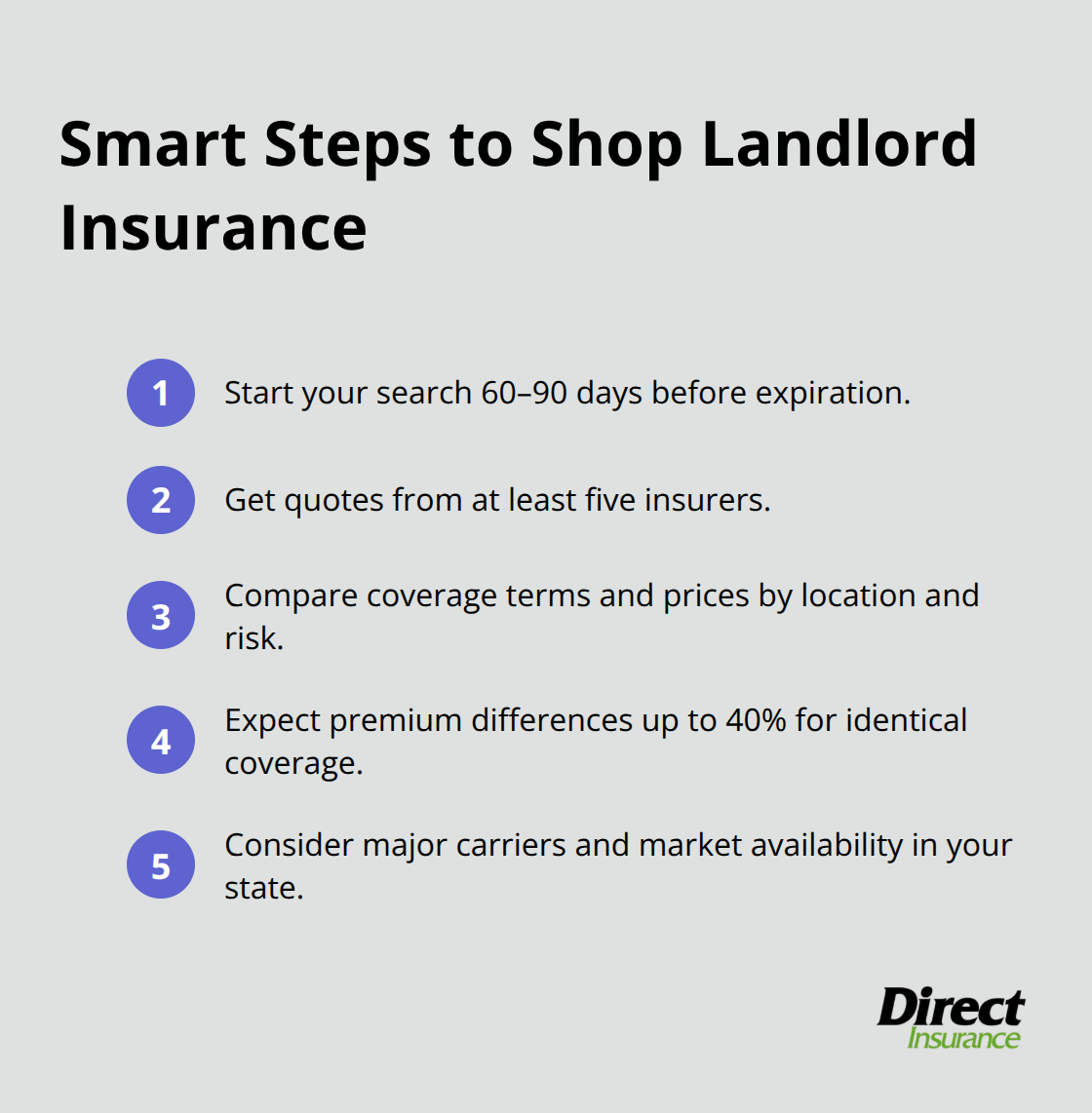
Online insurance comparison platforms provide excellent resources for finding low down payment auto insurance. These tools allow you to input your information once and receive quotes from multiple insurers. This saves time and provides a broad view of available options. When you use these tools, pay close attention to the initial payment requirements and overall policy costs.

Talk to Independent Insurance Agents

Independent agents have access to multiple insurance carriers. This means they can shop around on your behalf to find policies with minimal upfront costs. These agents provide personalized advice based on your specific financial situation and insurance needs.

Contact Major Insurance Carriers Directly

Some large insurance companies offer their own low down payment options. For example, GEICO, Travelers, and State Farm have very cheap car insurance policies that minimize your down payment, and they offer payment plans. When you contact these carriers directly, ask specifically about their lowest initial payment options and any available discounts that could further reduce your costs.

Consider Regional and Specialty Insurers

Don’t overlook smaller, regional insurance companies or specialty insurers. These companies (often focused on specific demographics or types of coverage) might offer more flexible payment options. They may be more willing to work with customers who need lower initial payments.

Explore Usage-Based Insurance Programs

Many insurers now offer usage-based insurance programs that base your premiums on your actual driving habits. These programs (which often use telematics devices or smartphone apps) can sometimes offer lower down payments or even waive them entirely for safe drivers.

As you search for low down payment options, it’s important to compare the total cost of the policy over its entire term. A low initial payment might be offset by higher monthly premiums or a higher overall cost. The next step is to learn how to increase your chances of qualifying for these low down payment policies.

How to Qualify for Low Down Payment Auto Insurance

At Direct Insurance Services, we understand the challenge of finding affordable auto insurance with a low initial payment. While true “no money down” policies are rare, you can use several strategies to qualify for low down payment options. Here’s how you can increase your chances of securing a budget-friendly auto insurance policy:

Keep Your Driving Record Clean

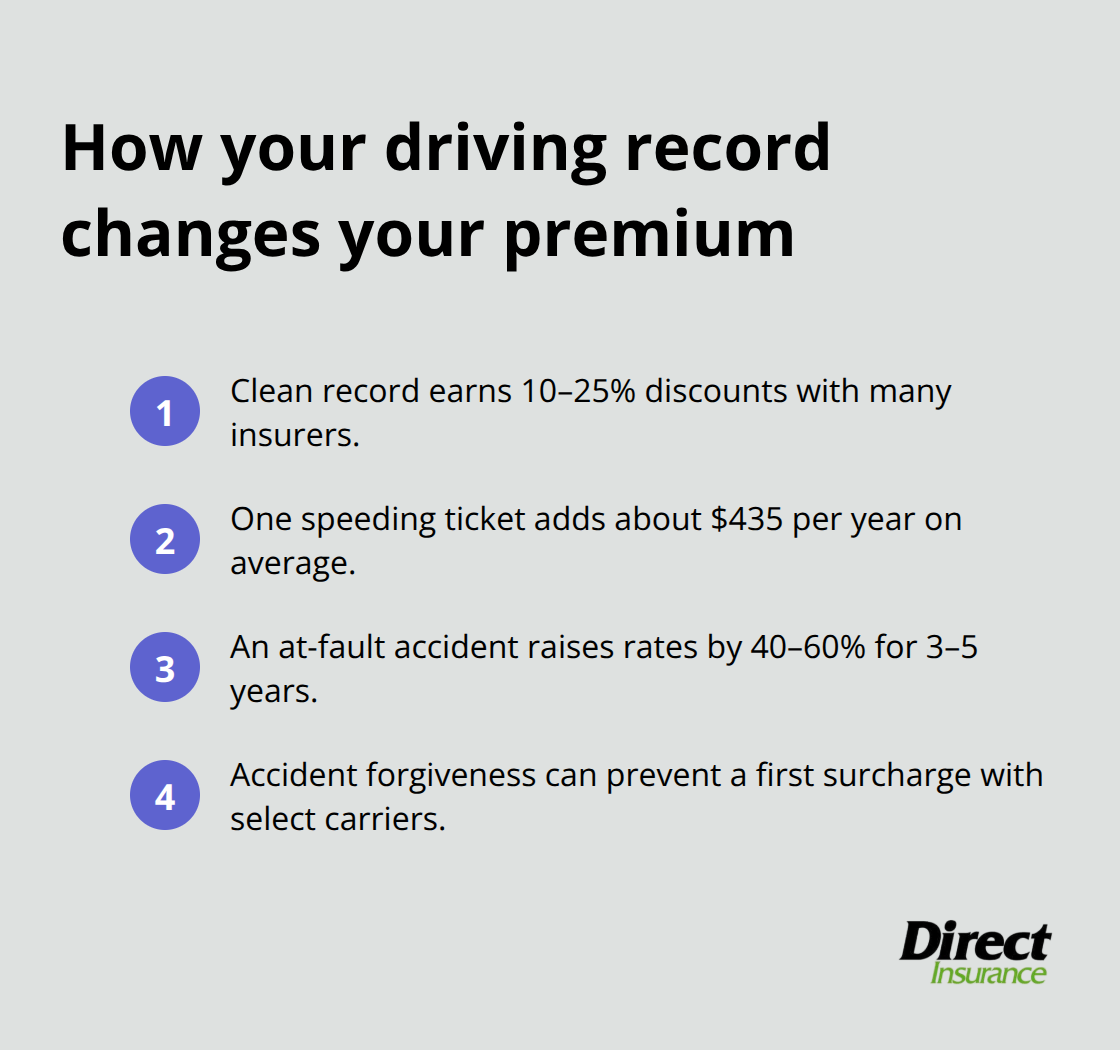
Your driving history significantly impacts your premiums and eligibility for low down payment options. The Insurance Information Institute reports that a single at-fault accident can increase your premium by 20% to 40%. To maintain a clean record:

Chart showing the potential premium increase of 20% to 40% after a single at-fault accident - no money down auto insurance
  • Follow traffic laws and speed limits
  • Avoid distractions while driving
  • Take defensive driving courses to improve your skills (and potentially earn discounts)

Improve Your Credit Score

Many insurers use credit-based insurance scores to assess risk. The Federal Trade Commission states that drivers with poor credit scores pay 20% to 50% more for auto insurance than those with excellent credit. To boost your credit:

  • Pay your bills on time
  • Reduce your credit card balances
  • Limit new credit applications

Bundle Your Policies

Combining multiple insurance policies with one provider often results in significant discounts. The Insurance Information Institute notes that bundling home and auto insurance can save you 5% to 15% on each policy. You can explore bundling options that maximize your savings while minimizing upfront costs.

Try Usage-Based Insurance Programs

Telematics programs track your driving habits through a mobile app or device installed in your car. These programs can lead to lower premiums for safe drivers. Usage-Based Insurance Programs can result in median annual savings of $120 among all telematics users, with those having younger drivers on their policy saving the most. These programs often offer lower initial payments as an incentive to enroll.

Choose a Higher Deductible

Opting for a higher deductible can lower your monthly premiums and potentially reduce your down payment. However, make sure you can afford the higher out-of-pocket cost in case of a claim. This strategy works best if you have some savings set aside for emergencies. When you sign up for a policy, you have the choice to sign up for either a lower deductible or a higher deductible that can typically range from $100 – $2,000.

Final Thoughts

No money down auto insurance policies offer immediate coverage without substantial upfront payments. These options allow drivers to spread payments over time, making essential coverage more accessible. However, the long-term costs may outweigh the initial financial relief, so comparing multiple quotes becomes essential.

Qualifying for these policies often requires a clean driving record, good credit score, and consideration of usage-based insurance programs. These steps can lead to long-term savings on premiums (in addition to increasing eligibility for low down payment options). Reading policy details carefully helps you make an informed decision about coverage limits, deductibles, and potential fees.

We at Direct Insurance Services can help you navigate auto insurance complexities. Our team provides personalized service and expert advice tailored to your unique situation. Contact us today to explore affordable coverage options that meet your needs without compromising protection.

At Direct Insurance Services, we often get asked: Is landlord insurance cheaper than homeowners coverage? It’s a common question for property owners considering renting out their homes.

The answer isn’t always straightforward, as several factors influence the cost of both types of insurance. In this post, we’ll break down the key differences between landlord and homeowners insurance, and explore the various elements that affect their pricing.

What Is Landlord Insurance?

Property Protection and Liability Coverage

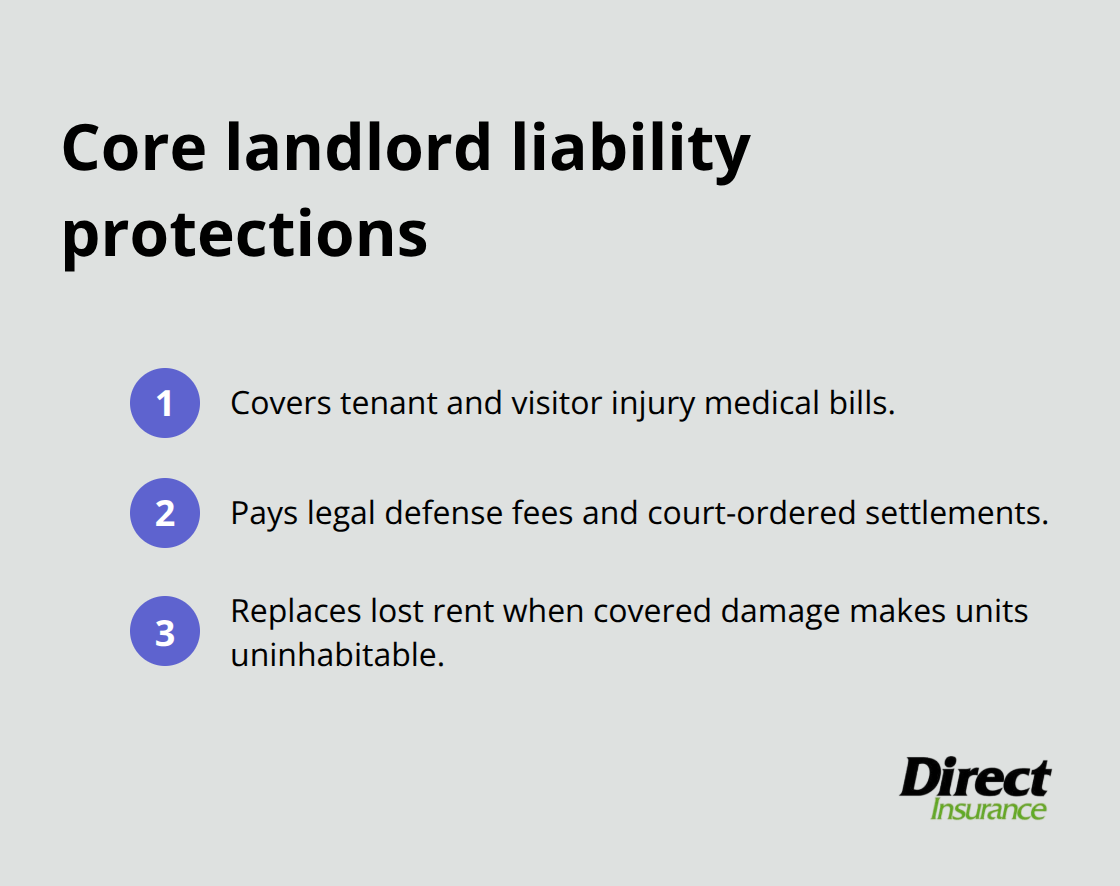
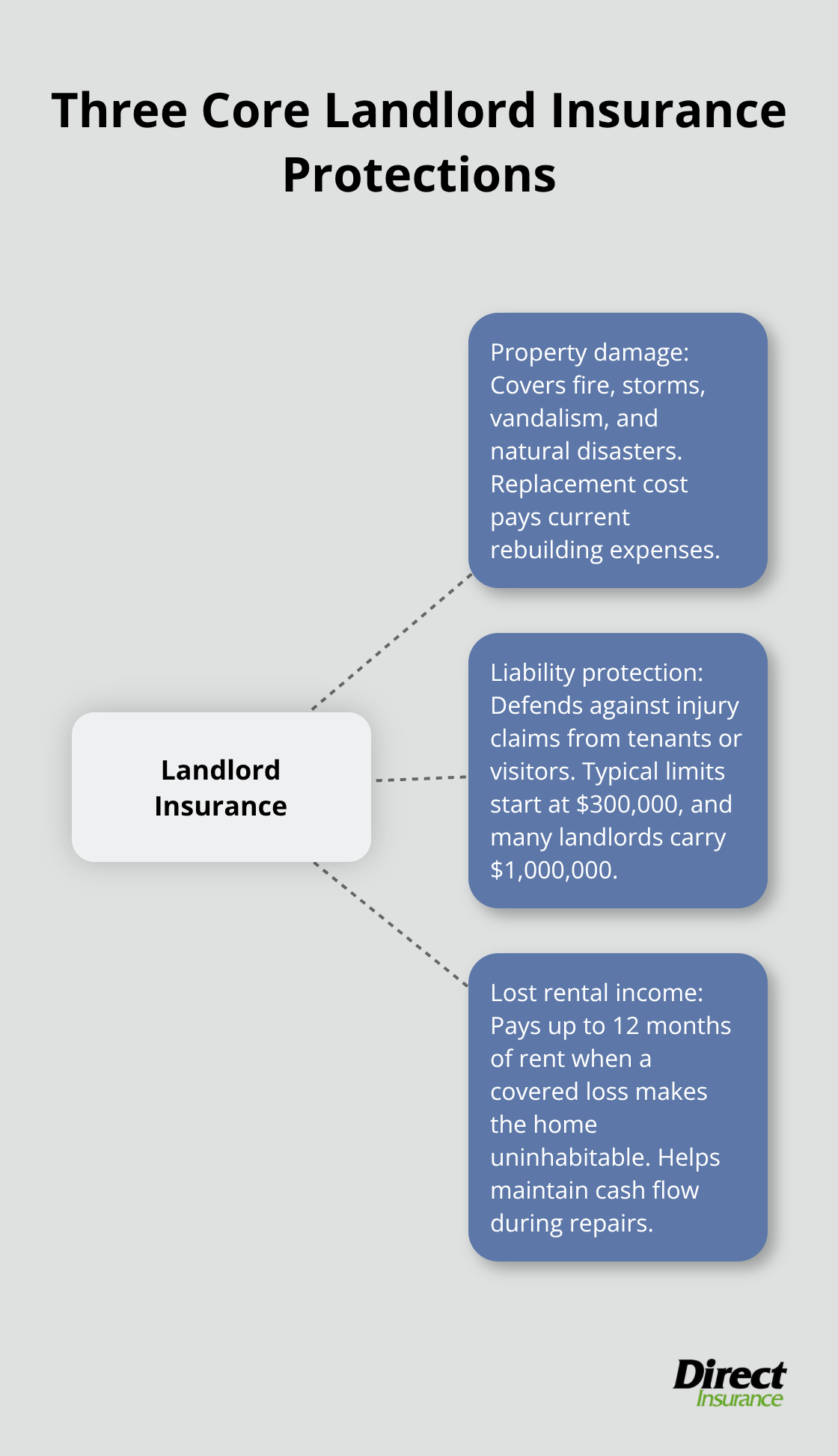
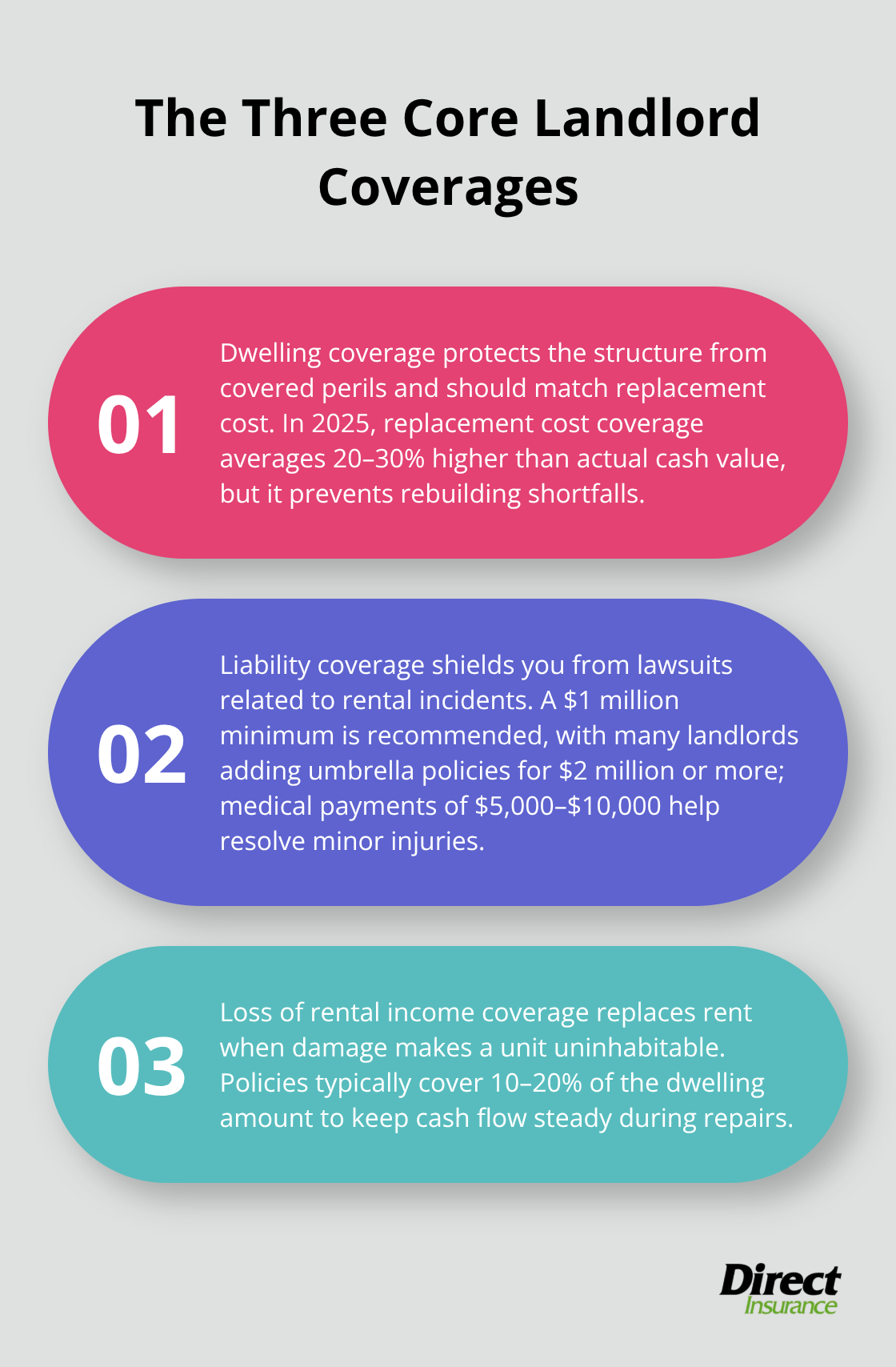
Landlord insurance protects property owners who rent out their homes, apartments, or commercial spaces. This specialized insurance includes two main components: property protection and liability coverage. Property protection safeguards the physical structure of your rental against damages from fire, storms, or vandalism. Liability coverage protects you if a tenant or visitor sustains an injury on your property due to your negligence.

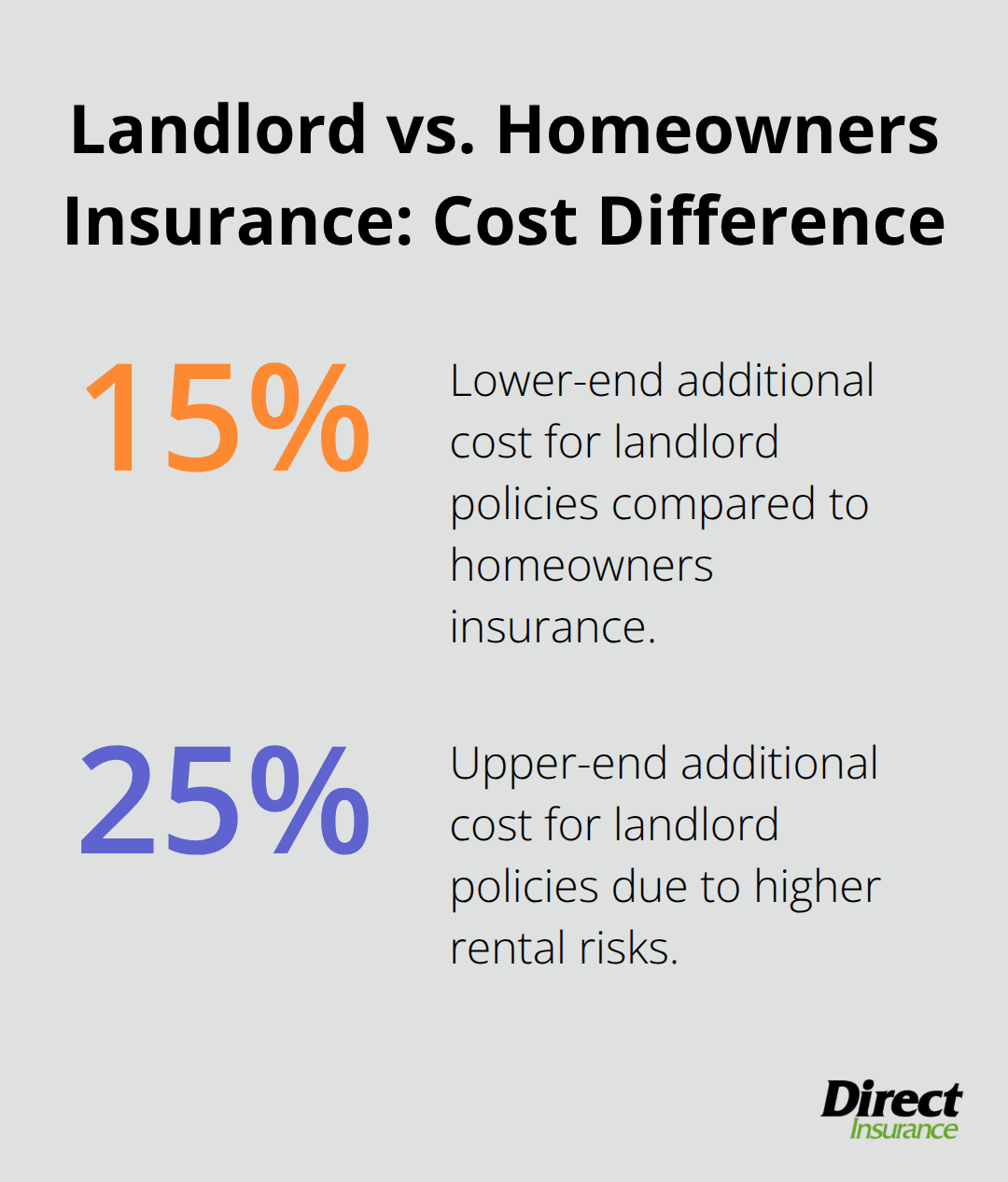
Landlord policies generally cost about 25 percent more than a standard homeowners policy to pay for increased protections. This higher cost reflects the increased risks associated with rental properties (such as more frequent claims and potential property damage from tenants).

Chart showing landlord insurance costs 25% more than standard homeowners insurance

Additional Coverages for Landlords

Landlord insurance offers coverage options not found in typical homeowners policies. Loss of rental income protection can provide financial security if your property becomes uninhabitable due to a covered event. This feature ensures you continue to receive rental income while repairs take place.

Many landlord policies also cover tenant-caused damage, which homeowners insurance typically excludes. The National Association of Realtors reports an increase in rental property ownership in recent years, which highlights the importance of these additional protections.

Key Differences from Homeowners Insurance

Landlord and homeowners insurance both protect property, but significant differences exist. Homeowners insurance covers personal belongings and provides additional living expenses if you must leave your home. Landlord insurance focuses on the structure and potential liability issues related to tenants.

Homeowners insurance may become void if you rent out your property without informing your insurer. This fact underscores the importance of obtaining the right type of coverage for your specific situation.

Importance of Regular Policy Reviews

Landlords should review their policies regularly to ensure adequate coverage. As the rental market evolves and property values change, your insurance needs may shift. A proactive approach helps protect your investment and minimizes potential financial risks associated with being a landlord.

The next chapter will explore the various factors that affect insurance costs for both landlord and homeowners policies. Understanding these elements will help you make informed decisions about your coverage needs.

What Impacts Insurance Costs?

At Direct Insurance Services, we understand that various factors influence the cost of both landlord and homeowners insurance. Let’s explore the key elements that affect your premiums.

Location and Property Type

Your property’s location significantly impacts insurance costs. Disaster risk and premiums have become more strongly correlated over time, with premiums being higher in riskier locations. For example, a rental property in a flood-prone area may require additional flood insurance, increasing overall costs.

The type of property also plays a key role. Multi-unit buildings often have higher premiums than single-family homes due to increased risks and potential for multiple claims. Older properties may face higher costs due to outdated systems or materials that pose greater risks.

Rental Income and Occupancy

For landlords, rental income and occupancy rates can affect insurance costs. Properties with higher rental incomes may require more coverage, potentially leading to higher premiums. However, consistently high occupancy rates might demonstrate stability to insurers, possibly resulting in more favorable rates.

Seasonal rentals or properties with frequent tenant turnover may face higher premiums due to increased risks associated with vacant periods and changing occupants.

Coverage Limits and Deductibles

The coverage limits you choose directly impact your premiums. Higher limits provide more protection but come with increased costs. It’s important to balance adequate coverage with affordable premiums.

Deductibles also play a significant role. Opting for a higher deductible can lower your monthly premiums, but it means you’ll pay more out-of-pocket if you need to file a claim. Try to find the right balance for your financial situation.

Claims History and Risk Factors

Your claims history is a critical factor in determining insurance costs. A history of frequent claims may lead to higher premiums (or even difficulty obtaining coverage). Maintaining your property well and addressing potential hazards can help minimize claims and keep costs down.

Risk factors specific to your property, such as outdated electrical systems or the presence of attractive nuisances like swimming pools, can increase premiums. Addressing these factors through renovations or additional safety measures may help reduce insurance costs over time.

The Insurance Information Institute reports that implementing effective risk management strategies can lead to significant savings on insurance premiums. This might include installing security systems, updating old plumbing or electrical systems, or reinforcing your property against natural disasters common in your area.

Ordered list chart showing three main factors affecting insurance costs: location and property type, coverage limits and deductibles, and claims history and risk factors - is landlord insurance cheaper than homeowners

Now that we’ve covered the factors that impact insurance costs, let’s compare the specific costs between landlord and homeowners insurance policies in the next section.

How Much More Does Landlord Insurance Cost?

At Direct Insurance Services, we have observed that landlord insurance typically costs more than homeowners insurance. The average homeowners insurance premium rose by 7.6 percent in 2021 from 2020, according to a December 2023 study by the National Association of Insurance. This price difference reflects the increased risks associated with rental properties.

Higher Risks, Higher Premiums

Landlord insurance costs more due to several factors. Rental properties often face higher risks of damage and liability claims. Tenants may not maintain the property as diligently as homeowners, which leads to more frequent claims. Additionally, landlord policies usually offer higher liability limits to protect against tenant-related incidents.

Hub and spoke chart illustrating the main reasons landlord insurance is more expensive than homeowners insurance - is landlord insurance cheaper than homeowners

Specialized Coverage Increases Costs

Landlord policies include coverages not found in standard homeowners insurance. Loss of rental income protection serves as a prime example. This coverage ensures you don’t lose income if your property becomes uninhabitable due to a covered event. While this adds to the policy cost, it provides essential financial protection for landlords.

Long-Term Financial Benefits

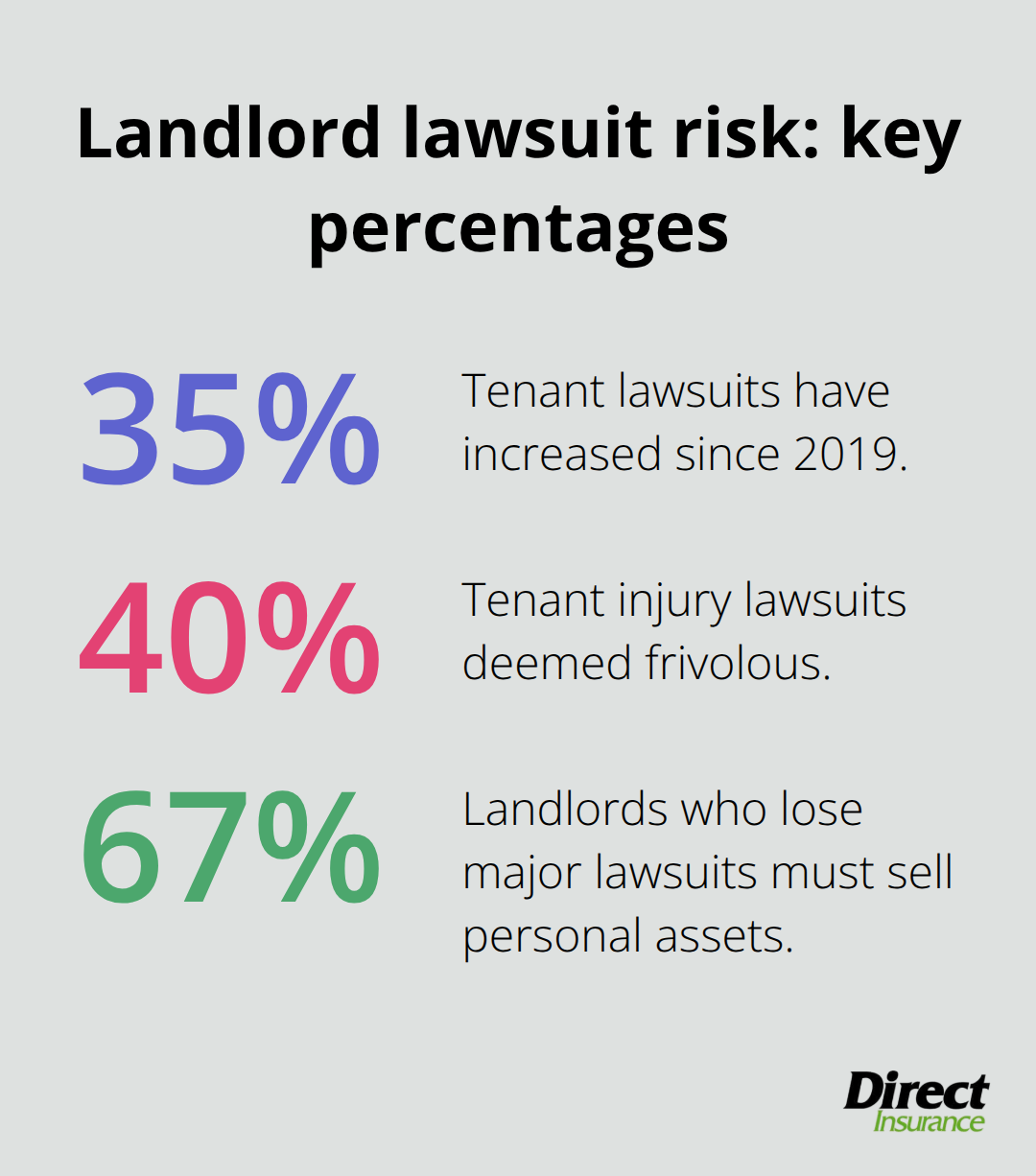
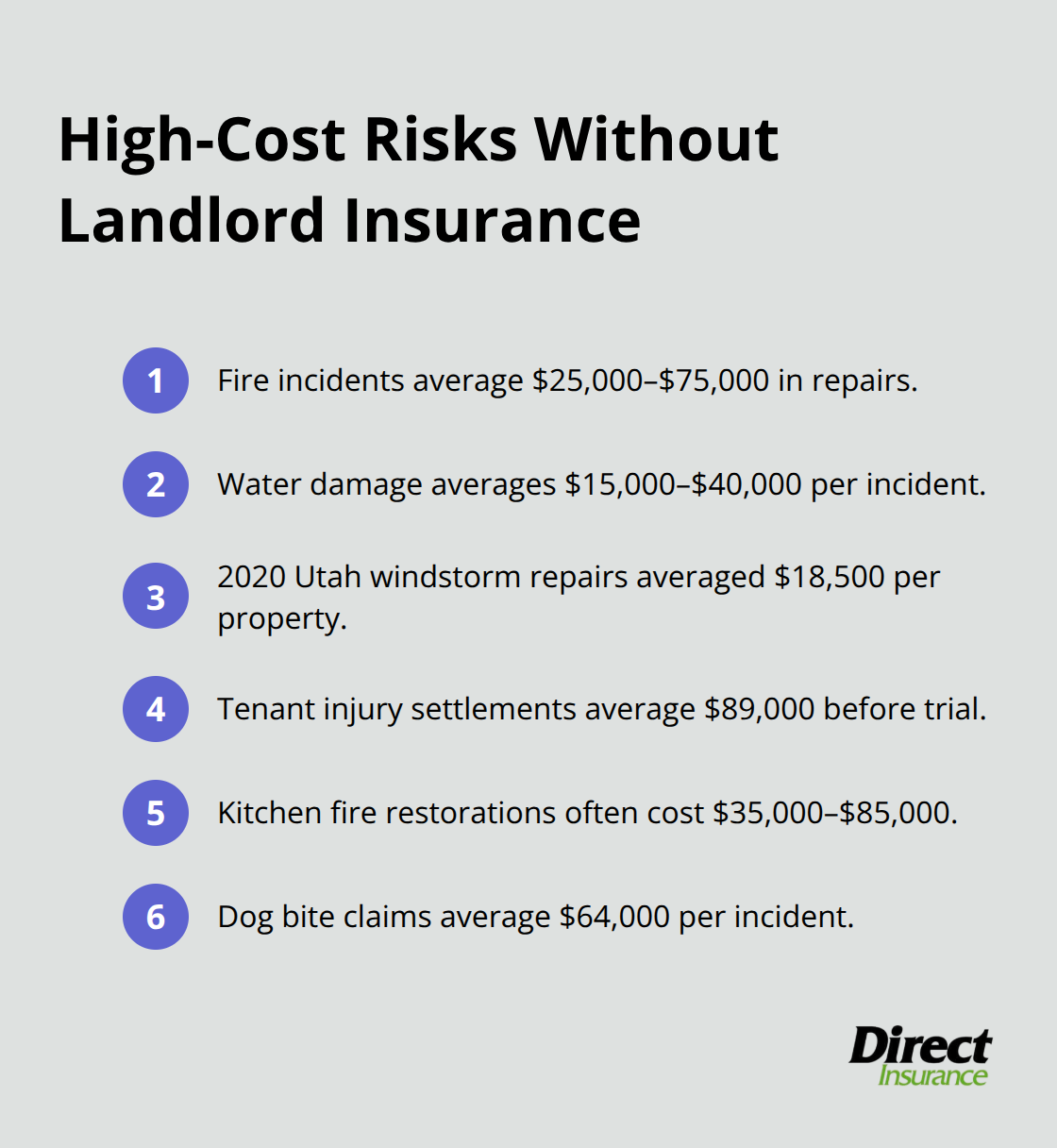
While landlord insurance costs more upfront, it often proves more cost-effective in the long run. The specialized coverage can save property owners from significant out-of-pocket expenses in the event of major property damage or liability claims. For instance, if a tenant’s guest sustains an injury on your property, the higher liability limits in a landlord policy could prevent a financially devastating lawsuit.

Tax Advantages for Property Owners

One advantage of landlord insurance is its tax-deductible status. Unlike homeowners insurance premiums, landlord insurance premiums typically qualify as a business expense (always consult with a tax professional to understand how this applies to your specific situation). This deduction can help offset the higher cost of coverage.

The National Association of Realtors notes that rental property ownership has increased in recent years. This trend underscores the importance of proper insurance coverage for landlords. The comprehensive protection offered by landlord insurance proves essential for protecting your investment and financial well-being, despite the higher cost.

Final Thoughts

Landlord insurance typically costs more than homeowners insurance due to the unique risks associated with rental properties. This increased cost reflects specialized coverage, such as loss of rental income and higher liability limits. Property owners must weigh these additional expenses against the comprehensive protection and potential tax benefits landlord insurance offers.

We at Direct Insurance Services understand the complexities of insurance for both homeowners and landlords. Our team of experienced professionals can help you navigate your options and find the right coverage to protect your property and financial interests. We provide personalized guidance and support tailored to your unique needs.

For expert advice on whether landlord insurance is cheaper than homeowners coverage for your specific situation, contact us today. Our team will work with you to ensure you have the appropriate coverage to safeguard your investment and financial well-being. Don’t leave your property’s protection to chance – let us help you make an informed decision.

Are you a homeowner or a landlord? Understanding the difference between landlord insurance and home insurance is vital for protecting your property investment.

At Direct Insurance Services, we often encounter confusion about these two types of coverage. This blog post will clarify the key distinctions between landlord insurance vs home insurance, helping you make an informed decision about your property protection needs.

What Sets Landlord and Home Insurance Apart?

When it comes to protecting your property, the type of insurance you need depends on how you use it. The wrong policy can leave property owners exposed to significant risks.

Property Coverage: Beyond Bricks and Mortar

Landlord insurance typically offers broader property coverage than standard home insurance. This is because rental properties face unique risks. A study by the National Multifamily Housing Council found that 33% of renters move each year, which increases wear and tear on properties.

Pie chart showing that 33% of renters move each year - landlord insurance vs home insurance

Landlord policies often cover things like malicious damage by tenants or their guests (which home insurance doesn’t usually include).

Liability: Shielding Against Tenant-Related Risks

Liability protection in landlord insurance is tailored to the specific risks of renting out property. According to the Insurance Information Institute, about one in 1,100 homeowners policies has a liability claim related to the cost of lawsuits for bodily injury or property damage. This is why landlord policies often have higher liability limits than home insurance. They also cover scenarios like a tenant slipping on an icy walkway (a situation not covered under a standard homeowners policy if you’re renting out the property).

Income Protection: Securing Your Rental Revenue

One of the most significant differences is loss of income coverage. If your rental property becomes uninhabitable due to a covered event, landlord insurance can reimburse you for lost rent. The National Association of Realtors reports that the average monthly rent in the U.S. is $1,702. Without this coverage, a few months of repairs could mean a substantial financial hit.

Home insurance doesn’t offer this protection because it’s designed for owner-occupied properties. If you consider renting out your home, even temporarily, it’s important to switch to a landlord policy to avoid gaps in coverage.

Hub and spoke chart showing main aspects of landlord insurance coverage

Personal Property: Coverage Differences

Homeowners insurance typically includes extensive coverage for personal belongings, such as furniture, clothing, and electronics. Landlord insurance, on the other hand, provides limited coverage for personal property. It usually only covers items that the landlord keeps on the property for maintenance or tenant use, like appliances or landscaping equipment.

Policy Costs: Understanding the Price Difference

Landlord insurance generally costs more than homeowners insurance. This price difference reflects the increased risks associated with rental properties. Factors that influence the cost include the property’s location, age, and condition, as well as the extent of coverage selected.

The distinctions between landlord and home insurance highlight the importance of choosing the right policy for your specific situation. In the next section, we’ll take a closer look at the key components of landlord insurance to help you understand what this type of coverage entails.

What Does Landlord Insurance Cover?

Comprehensive Property Protection

Landlord insurance offers more extensive property coverage than standard home insurance. This type of policy addresses the unique risks rental properties face. Landlord policies typically cover the building structure, other structures on the property (like garages or sheds), and often include coverage for landlord-owned appliances and furniture.

Robust Liability Safeguards

Liability protection forms a critical component of landlord insurance. A strong landlord policy provides coverage for legal fees and settlements if a tenant or visitor sustains an injury on your property. This protection extends to various scenarios, such as a tenant’s dog biting a neighbor or a delivery person slipping on an icy walkway.

Rental Income Protection

One of the most valuable features of landlord insurance is loss of rental income coverage. This coverage reimburses you for lost rent during repairs if your property becomes uninhabitable due to a covered event (like a fire or severe storm). Without this coverage, landlords could face significant financial strain during extended repair periods.

Customizable Coverage Options

Many landlord policies offer additional coverage options to address specific risks. You might consider adding flood insurance if your property sits in a flood-prone area. Other options might include coverage for vandalism, burglary, or even rent guarantee insurance to protect against tenant default.

The Importance of Proper Coverage

Selecting the right landlord insurance plays a vital role in protecting your investment and financial well-being. The right coverage can mean the difference between a minor setback and a major financial loss. As we move forward, let’s explore the essential components of home insurance to understand how it differs from landlord coverage.

What Does Home Insurance Cover?

Home insurance serves as a vital shield for homeowners, protecting their most valuable asset. At Direct Insurance Services, we’ve witnessed how the right home insurance policy provides peace of mind and financial security. Let’s explore the key components of a typical home insurance policy.

Dwelling Coverage: The Core of Home Protection

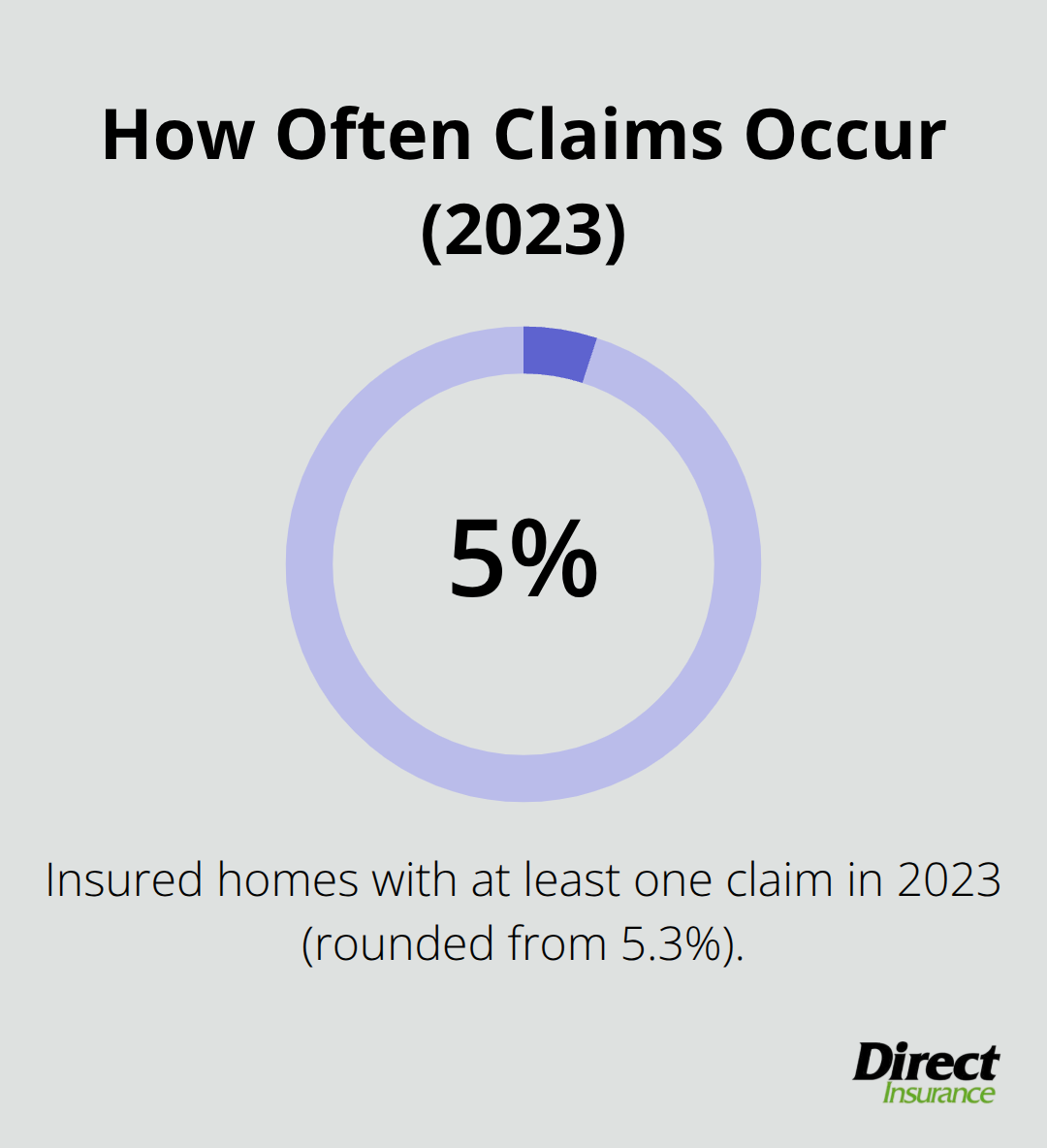
Dwelling coverage forms the foundation of any home insurance policy. It protects the physical structure of your home, including walls, roof, floors, and built-in appliances. According to recent data, 6% of insured homes filed at least one claim in 2020, with the average property damage claim amount from 2016 to 2020 being $13,962. This underscores the importance of adequate coverage to rebuild or repair your home in case of disaster.

When you determine your dwelling coverage amount, consider the cost to rebuild your home, not its market value. Construction costs can vary widely by region. In Utah, for example, the average cost to build a home is $150 per square foot (according to HomeAdvisor’s 2023 data).

Personal Property Protection: Guarding Your Belongings

Home insurance doesn’t just cover the structure; it also protects your personal belongings. This includes furniture, clothing, electronics, and other items. Most policies cover personal property at about 50-70% of your dwelling coverage amount. However, high-value items like jewelry or art may need additional coverage.

A home inventory is essential for maximizing this coverage. The National Association of Insurance Commissioners reports that only 50% of homeowners have a home inventory. Creating one can help ensure you have enough coverage and simplify the claims process if you ever need to use your insurance.

Ordered list chart showing three key points about home insurance claims and coverage - landlord insurance vs home insurance

Liability Coverage: Defending Your Assets

Liability coverage is often overlooked but is a vital part of home insurance. It protects you if someone is injured on your property or if you accidentally damage someone else’s property. The Insurance Information Institute reports that the average liability claim for bodily injury or property damage to others is about $23,000.

We recommend you consider an umbrella policy for additional liability protection, especially if you have significant assets or engage in high-risk activities (like owning a pool or trampoline).

Additional Living Expenses: Maintaining Your Lifestyle

If your home becomes uninhabitable due to a covered loss, Additional Living Expenses (ALE) coverage helps pay for temporary housing and other necessary costs. This can include hotel bills, restaurant meals, and other expenses above your normal living costs.

The amount of ALE coverage varies, but it’s typically about 20% of your dwelling coverage. However, some insurers offer higher limits.

Home insurance is a complex product with many variables. While this overview covers the basics, every homeowner’s situation is unique.

Final Thoughts

Landlord insurance vs home insurance presents distinct coverage options for property owners. Landlord insurance protects rental properties with broader coverage, higher liability limits, and rental income protection. Home insurance focuses on owner-occupied residences, offering extensive personal property coverage and additional living expenses protection.

Property owners must select the right policy to safeguard their financial future. The wrong coverage can expose you to significant risks and potential losses. Regular reviews of your insurance needs are essential as your property situation changes.

At Direct Insurance Services, we help property owners navigate insurance complexities. Our experienced professionals guide you through our comprehensive insurance offerings to ensure you have the right coverage. Contact us today to review your current coverage or explore new policy options (we work with top-rated carriers to provide tailored solutions).

Are you a landlord looking to protect your rental income? Rent guarantee insurance for landlords offers a safety net against potential losses.

At Direct Insurance Services, we understand the importance of financial security in property management. This guide will walk you through the process of securing rent guarantee insurance, ensuring you’re well-equipped to safeguard your investment.

What is Rent Guarantee Insurance?

The Essence of Rent Guarantee Insurance

Rent guarantee insurance specifically addresses rent loss caused by tenant default or eviction. This type of insurance policy offers rental property owners protection against financial losses due to non-payment of rent.

Distinguishing Features

Unlike standard landlord insurance (which typically covers property damage and liability), rent guarantee insurance focuses on the risk of non-payment by tenants. This coverage ensures that landlords receive rental income even if a tenant defaults, offering a vital financial buffer.

Scope of Coverage

Rent guarantee insurance typically covers several months of missed rent payments. Some policies also include legal expenses for eviction proceedings, which can significantly reduce costs for landlords.

Surpassing Traditional Landlord Insurance

While traditional landlord insurance protects against property damage and liability claims, it often lacks comprehensive income protection. Rent guarantee insurance fills this gap, offering a level of financial security that proves particularly valuable during economic uncertainties.

Real-World Implications

For a landlord with multiple properties, missed rent payments could translate to thousands of dollars in lost income. Rent guarantee insurance mitigates this risk, ensuring a consistent cash flow even when tenants default.

Hub and spoke chart illustrating the main components of rent guarantee insurance: covers missed rent payments, includes legal expenses, surpasses traditional landlord insurance, offers financial security, and provides real-world protection. - rent guarantee insurance for landlord

As we move forward, it’s important to understand the specific benefits that rent guarantee insurance offers to landlords. These advantages not only provide financial protection but also contribute to overall peace of mind in property management.

Why Landlords Need Rent Guarantee Insurance

Financial Security in Uncertain Times

Rent guarantee insurance acts as a financial safety net for landlords. When insured tenants default on rent, the insurer steps in and pays the landlord on their behalf. This can help landlords cover mortgage payments or property expenses without financial strain. Recent data from the National Multifamily Housing Council shows that 95.8% of apartment households made a full or partial rent payment by the end of May 2023. While this number is encouraging, it still leaves a significant portion of landlords (4.2%) potentially facing income loss. With rent guarantee insurance, landlords receive payments even when tenants can’t pay, which ensures their cash flow remains stable.

Percentage chart showing that 95.8% of apartment households made a full or partial rent payment by the end of May 2023. - rent guarantee insurance for landlord

Peace of Mind for Property Owners

Managing rental properties can cause stress, especially when economic conditions become unpredictable. Rent guarantee insurance alleviates this stress. Landlords no longer need to worry about chasing late payments or navigating the complex eviction process alone. Many policies cover legal fees associated with evictions (which can cost upwards of $3,500 according to TransUnion SmartMove). This coverage allows landlords to focus on property improvements and tenant relations rather than financial uncertainties.

Attracting and Retaining Quality Tenants

Rent guarantee insurance can help landlords secure better tenants. It allows for more flexibility with screening criteria. Landlords might consider applicants with slightly lower credit scores or those who are self-employed, knowing they have a safety net. This wider pool of potential tenants can lead to faster occupancy rates and reduced vacancy periods. Additionally, tenants appreciate landlords who invest in such protections, as it demonstrates a commitment to professional property management.

Enhanced Risk Management

Rent guarantee insurance provides an additional layer of risk management for landlords. It protects against unforeseen circumstances that might affect a tenant’s ability to pay rent (such as job loss or medical emergencies). This protection becomes particularly valuable during economic downturns or in areas with fluctuating job markets.

Competitive Edge in the Rental Market

Landlords who offer rent guarantee insurance often have a competitive edge in the rental market. They can market their properties as “secure rentals,” which appeals to potential tenants who value stability and professionalism. This unique selling point can help landlords stand out in a crowded market and potentially command higher rents.

Now that we’ve explored the benefits of rent guarantee insurance, let’s examine how landlords can secure this valuable coverage for their properties.

How to Get Rent Guarantee Insurance

Ordered list chart showing the three main steps to obtain rent guarantee insurance: research insurance providers, prepare documentation, and submit application and review policy terms.

Research Insurance Providers

Start your journey to secure rent guarantee insurance by investigating reputable insurance providers. Focus on companies with strong financial ratings and positive customer feedback. The National Association of Insurance Commissioners (NAIC) offers a valuable database to check an insurer’s complaint ratio and financial stability.

Prepare Your Documentation

Collect all necessary documentation before you apply. This typically includes:

  1. Property details (address, type of property, number of units)
  2. Tenant information (rental history, credit scores)
  3. Lease agreements
  4. Proof of ownership
  5. Rental income statements

Having these documents ready will speed up the application process and help insurers accurately assess your risk profile.

Submit Your Application

Once you select a provider, submit your application. Many insurers offer online applications for convenience. After submission, you’ll receive quotes based on your property details and coverage needs. Take time to compare these quotes, paying attention to coverage limits, deductibles, and exclusions.

Review Policy Terms

Before you finalize your policy, carefully examine all terms and conditions. Pay special attention to:

  1. Coverage duration (usually 6-12 months)
  2. Maximum payout limits
  3. Waiting periods before you can file claims
  4. Eviction cost coverage
  5. Requirements for tenant screening

Understanding these details ensures you know exactly what protection you’re getting and how to make a claim if needed.

Finalize Your Coverage

After you review and understand the policy terms, make your decision and finalize your coverage. Contact your chosen insurance provider to complete any remaining steps, such as signing documents or making the initial premium payment. Ask any final questions you may have about the policy to ensure you fully understand your new coverage.

Final Thoughts

Rent guarantee insurance for landlords provides essential financial protection and peace of mind. This powerful tool safeguards rental income against tenant defaults, allowing property owners to focus on portfolio growth. When selecting a policy, landlords should consider coverage limits, protection duration, and included legal expenses to find the best fit for their needs.

Direct Insurance Services understands the unique challenges landlords face in today’s dynamic real estate landscape. As a trusted independent insurance agency serving Utah, we offer personalized solutions to help navigate the complexities of property insurance. Our team can guide you through the process of choosing the right rent guarantee insurance policy (ensuring you have the protection you need).

For expert advice on safeguarding your rental investments, visit Direct Insurance Services today. Take the first step towards a more secure financial future for your property business. Our experienced professionals are ready to assist you in finding the ideal coverage for your specific situation.

Choosing the right auto insurance coverage can be overwhelming. Many drivers wonder, “How much coverage do I need for auto insurance?”

At Direct Insurance Services, we understand this challenge and want to help you make an informed decision.

This guide will break down the essential types of auto insurance coverage and provide practical advice on determining the right amount for your specific situation.

What Types of Auto Insurance Coverage Do You Need?

At Direct Insurance Services, we believe that understanding the different types of auto insurance coverage will help you make informed decisions about your policy. Let’s break down the essential coverage types you should consider:

Liability Coverage: Your Financial Safety Net

Liability coverage forms the foundation of any auto insurance policy. It protects you financially if you’re at fault in an accident. This coverage splits into two parts:

  1. Bodily Injury Liability: This covers medical expenses, lost wages, and legal fees if you injure someone in an accident.
  2. Property Damage Liability: This pays for damage you cause to other people’s property, including their vehicles.

The Insurance Information Institute reports that the average auto liability claim for bodily injury was $26,501 in 2023. This fact underscores the importance of adequate liability coverage. We recommend you carry limits higher than your state’s minimum requirements to fully protect your assets.

Collision and Comprehensive: Protecting Your Vehicle

Collision coverage pays for damage to your car from accidents with other vehicles or objects. Comprehensive coverage protects against non-collision incidents like theft, vandalism, or natural disasters.

While not legally required, these coverages often become mandatory if you have a car loan or lease. Even if you own your car outright, you should consider them. The National Highway Traffic Safety Administration reports over 5 million police-reported crashes in 2020 (highlighting the real risk of vehicle damage).

Personal Injury Protection and Medical Payments

Personal Injury Protection (PIP) and Medical Payments coverage help with medical expenses after an accident, regardless of fault. PIP can also cover lost wages and other related expenses.

The necessity of these coverages varies by state. For example, PIP becomes a requirement in no-fault states, while other states may offer it as an optional coverage. We can help you understand what’s required and recommended in Utah.

Uninsured/Underinsured Motorist Coverage

This coverage protects you if you’re in an accident with a driver who has insufficient or no insurance. The Insurance Research Council estimates that about 1 in 8 drivers are uninsured, making this coverage particularly important.

Pie chart showing that 1 in 8 drivers (12.5%) are uninsured, while 7 in 8 drivers (87.5%) are insured. - how much coverage do i need for auto insurance

Tailoring Your Coverage

Choosing the right auto insurance coverage isn’t just about meeting legal requirements-it’s about protecting your financial well-being. At Direct Insurance Services, we commit to helping you find the right balance of coverage and cost. We’ll work with you to understand your specific needs and create a policy that gives you peace of mind on the road.

Now that we’ve covered the types of auto insurance coverage, let’s explore the factors that influence how much coverage you actually need.

What Factors Determine Your Auto Insurance Needs?

At Direct Insurance Services, we understand that determining the right amount of auto insurance coverage isn’t a one-size-fits-all process. Several key factors influence how much coverage you need. Let’s explore these factors to help you make an informed decision about your auto insurance.

Hub and spoke chart showing five key factors that determine auto insurance needs: State Minimum Requirements, Value of Your Vehicle, Personal Assets, Driving Habits, and Loan/Lease Requirements.

State Minimum Requirements

Every state has its own minimum auto insurance requirements. In Utah, drivers must carry at least $25,000 per person and $65,000 per accident for bodily injury liability, and $15,000 for property damage liability. However, these minimums often fail to provide full protection in the event of a serious accident. We recommend higher limits to ensure adequate protection.

The Value of Your Vehicle

Your car’s value plays a significant role in determining your coverage needs, particularly for collision and comprehensive coverage. If you own a newer or more expensive vehicle, you’ll want to ensure you have enough coverage to repair or replace it if it’s damaged or stolen. For an older car with a low market value, you might consider dropping these coverages to save on premiums.

Your Personal Assets and Financial Situation

Your personal assets and financial situation are important factors in determining your coverage needs. If you own a home, have significant savings, or other valuable assets, you’ll want higher liability limits to protect these assets in case of a lawsuit following an accident. The Insurance Information Institute suggests carrying at least $100,000 per person and $300,000 per accident in bodily injury liability coverage.

Driving Habits and Risk Factors

Your driving habits and personal risk factors also influence your coverage needs. If you have a long commute, frequently drive in heavy traffic, or live in an area with a high rate of auto theft, you might need more comprehensive coverage. Additionally, if you often drive with passengers, higher personal injury protection limits might be advisable.

Loan or Lease Requirements

If you’re financing or leasing your vehicle, your lender will likely require you to carry full coverage (collision and comprehensive coverage in addition to the state-mandated liability coverage). They may also specify minimum coverage limits to protect their investment in your vehicle.

Understanding these factors is just the first step in determining your auto insurance needs. Next, we’ll explore recommended coverage levels for different scenarios to help you make an informed decision about your policy.

How Much Coverage Do Different Drivers Need?

At Direct Insurance Services, we understand that every driver’s insurance needs are unique. Let’s explore recommended coverage levels for various scenarios to help you make an informed decision about your auto insurance.

New Car Owners

New vehicle owners should protect their investment with comprehensive coverage. We recommend full coverage, including collision and comprehensive, with limits that match or exceed your car’s value. For liability, consider limits of at least $100,000 per person and $300,000 per accident for bodily injury, and $100,000 for property damage.

New cars often come with advanced safety features, which can lead to insurance discounts. The Insurance Institute for Highway Safety reports that FCW with AEB reduced rear-end striking crash involvement rates by 50%. Ask us about potential savings for these features.

Pie chart showing that FCW with AEB reduced rear-end striking crash involvement rates by 50%. - how much coverage do i need for auto insurance

Used Car Owners

Used car owners’ coverage needs depend on their vehicle’s value and financial situation. If your car is worth less than $4,000, you might consider dropping collision and comprehensive coverage to save on premiums. However, maintain high liability limits to protect your assets.

A study by Kelley Blue Book found that the average age of vehicles on U.S. roads is 12.2 years. If your car falls into this category, focus on robust liability coverage rather than full coverage.

High-Net-Worth Individuals

High-net-worth individuals need higher liability limits to protect their wealth. We often recommend liability limits of $250,000 per person and $500,000 per accident, or even higher. Consider an umbrella policy for additional protection.

According to a survey by Chubb, 40% of high-net-worth individuals are underinsured in key areas. Don’t fall into this trap – let us help you assess your true coverage needs.

Young Drivers or Students

Young drivers typically face higher premiums due to their lack of experience. Try to maintain good grades and a clean driving record to qualify for discounts. Consider higher deductibles to lower premiums, but ensure you can afford the out-of-pocket expense if needed.

The Centers for Disease Control and Prevention reports that the risk of motor vehicle crashes is higher among teens aged 16-19 than among any other age group. This underscores the importance of comprehensive coverage for young drivers.

Ride-Share Drivers

Ride-sharing drivers need specialized coverage. Your personal auto policy likely won’t cover you while you’re working. You need a specialized ride-share policy or endorsement. These policies typically offer coverage in three phases: when the app is on but you haven’t accepted a ride, when you’ve accepted a ride and are en route to pick up a passenger, and when you have a passenger in the car.

The National Association of Insurance Commissioners reports that many ride-share drivers are unaware of their coverage gaps. Don’t take this risk – let us help you find the right insurance solution for your needs.

Final Thoughts

Auto insurance coverage needs vary based on individual circumstances. We at Direct Insurance Services understand the importance of personalized coverage that protects you without unnecessary costs. Our team works closely with clients to create tailored insurance solutions that provide comprehensive protection.

Life changes often necessitate insurance adjustments. Major events like purchasing a new car, relocating, or experiencing financial shifts should prompt a coverage reassessment. We recommend erring on the side of caution when determining how much coverage you need for auto insurance.

Don’t leave your financial future to chance. Invest in the right auto insurance coverage today. We at Direct Insurance Services will guide you through this process to ensure you have the appropriate coverage for your needs and budget.

Navigating the world of property insurance can be confusing, especially when it comes to landlord insurance vs homeowners insurance. Many property owners struggle to understand the key differences between these two types of coverage.

At Direct Insurance Services, we often encounter clients who are unsure which policy best suits their needs. This guide will clarify the distinctions between homeowners and landlord insurance, helping you make an informed decision about protecting your property.

What Is Homeowners Insurance?

A Vital Safety Net for Property Owners

Homeowners insurance serves as an essential protection for property owners. This type of policy safeguards your home and belongings from unexpected events such as fires, storms, and theft. However, it extends beyond mere protection for your physical assets.

Financial Protection Beyond Your Four Walls

A standard homeowners insurance policy typically covers your dwelling, other structures on your property, personal belongings, and liability. The Insurance Information Institute reports that the average annual premium for homeowners insurance in the United States was $1,249 in 2018 (though this can vary significantly based on location, property value, and coverage limits).

Ordered list chart showing three key facts about homeowners insurance: average annual premium, coverage types, and who needs it

Coverage Types You Need to Know

Most homeowners policies include several types of coverage:

  1. Dwelling coverage: This protects the structure of your home.
  2. Personal property coverage: This safeguards your belongings.
  3. Liability protection: This covers you if someone sustains an injury on your property.
  4. Additional living expenses: This helps with costs if you must temporarily relocate from your home.

Who Needs Homeowners Insurance?

If you own a home, you need homeowners insurance. It’s that straightforward. In fact, if you have a mortgage, your lender will likely require it. Even if you’ve paid off your home, maintaining coverage remains critical to protect your investment.

Real-World Impact of Proper Coverage

Proper coverage can make a significant difference in real-life situations. For instance, a homeowner recently faced substantial damage from a severe storm. Their comprehensive policy covered not only the repairs but also their temporary living expenses while the home was uninhabitable.

The right policy isn’t just about meeting lender requirements-it’s about protecting what matters most to you. Whether you’re a first-time homebuyer or want to review your current coverage, finding a policy that fits your unique needs and budget is essential.

Now that we’ve covered the basics of homeowners insurance, let’s explore how landlord insurance differs and why it’s necessary for property owners who rent out their homes.

What Is Landlord Insurance?

Specialized Protection for Rental Properties

Landlord insurance is a specialized type of property insurance. It protects property owners who rent out their homes, apartments, or other real estate investments. This insurance differs from homeowners insurance. It focuses on the unique risks associated with rental properties.

Key Components of Landlord Coverage

A typical landlord insurance policy includes several important components:

Hub and spoke chart illustrating the main components of landlord insurance: property coverage, liability protection, and income protection - landlord insurance vs homeowners insurance
  1. Property Coverage: This protects the physical structure of your rental. It includes the building itself and other structures on the property (like garages or sheds). This coverage can help pay for repairs or rebuilding if your rental property suffers damage from covered events such as fire, wind, or hail.
  2. Liability Protection: This is a critical aspect of landlord insurance. It can help if a tenant or visitor sustains an injury on your property and you’re held responsible. For example, if someone slips on an icy walkway, your liability coverage could help cover their medical expenses and your legal fees if they decide to sue.

Income Protection: A Financial Safeguard

One of the most valuable features of landlord insurance is loss of rental income coverage. This protection can help replace the rent you would have received if your property becomes uninhabitable due to a covered loss. The National Association of REALTORS® provides the latest real estate research and statistics that affect the industry, including information on rental rates.

Who Needs Landlord Insurance?

You need landlord insurance if you rent out a property. This applies whether it’s a single-family home, a multi-unit building, or even a vacation property. Even if you only rent out a portion of your primary residence, your standard homeowners policy may not provide adequate coverage for your rental activities.

Many property owners mistakenly believe their homeowners insurance will cover their rental property. This can lead to significant gaps in coverage when they need to file a claim. If you earn rental income from a property, landlord insurance is essential.

The right insurance policy isn’t just about meeting legal requirements. It’s about protecting your investment and your financial future. Understanding and obtaining proper landlord insurance is a critical step in your journey as a landlord, whether you’re a seasoned property investor or considering renting out your home for the first time.

Now that we’ve explored the basics of both homeowners and landlord insurance, let’s examine the key differences between these two types of coverage in more detail.

How Do Homeowners and Landlord Insurance Differ?

Understanding the differences between homeowners and landlord insurance is essential for property owners. These policies serve distinct purposes and offer different types of protection. Let’s explore the key distinctions:

Personal Property Coverage: A Significant Difference

Home insurance provides extensive coverage for personal belongings. Standard homeowners policies usually cover personal property at about 50-70% of the insurance on the dwelling (according to the Insurance Information Institute).

Landlord insurance offers limited personal property coverage, if any. This coverage typically restricts itself to items used for property maintenance (such as lawnmowers or snow blowers). Tenants must insure their own belongings through renters insurance.

Ordered list chart comparing three key differences between homeowners and landlord insurance - landlord insurance vs homeowners insurance

Liability Protection: Broader Scope for Landlords

Both policies offer liability protection, but the scope differs significantly:

  • Homeowners insurance provides personal liability coverage. It protects you if someone sustains an injury on your property or if you accidentally damage someone else’s property.
  • Landlord insurance offers more extensive liability coverage tailored to the risks of renting out property. This includes protection against lawsuits from tenants or their guests who sustain injuries on your property. It may also cover legal fees for tenant evictions.

Income Protection vs. Additional Living Expenses

These policies handle disruptions to your living situation or rental income differently:

  • Homeowners insurance typically includes coverage for additional living expenses. This helps pay for temporary housing and other extra costs if your home becomes uninhabitable due to a covered loss.
  • Landlord insurance often includes loss of rental income coverage. If your rental property becomes uninhabitable due to a covered event like fire or storms, this coverage can compensate you for lost rent during the repair period.

Cost Considerations

Landlord insurance typically costs more than homeowners insurance. This price difference reflects the increased risks associated with rental properties. Factors that influence the cost include:

  • Property location
  • Building age and condition
  • Number of units
  • Coverage limits

Claims Process and Frequency

The claims process and frequency often differ between these two types of insurance:

  • Homeowners insurance claims typically involve the homeowner directly.
  • Landlord insurance claims may involve tenants, potentially complicating the process.

Landlords may file claims more frequently due to tenant-related issues or property damage, which can affect premiums over time.

Final Thoughts

Homeowners insurance and landlord insurance serve different purposes for property owners. Homeowners insurance protects your primary residence and personal belongings, while landlord insurance addresses the specific risks of rental properties. The choice between these two types of coverage depends on how you use your property.

We at Direct Insurance Services understand the complexities of property insurance. Our team of experienced professionals helps you navigate these choices. We offer personalized insurance solutions tailored to your unique situation (whether you’re a homeowner or a landlord).

Don’t leave your property’s protection to chance. Contact Direct Insurance Services today to review your current coverage or explore new options. With our expertise, you can feel confident that your property and financial future are well-protected.

Small businesses face unique challenges and risks in today’s competitive landscape. Protecting your venture with the right insurance coverage is essential for long-term success and peace of mind.

At Direct Insurance Services, we understand that navigating insurance options for small businesses can be overwhelming. This guide will help you explore the various types of coverage available and factors to consider when choosing the best protection for your company.

What Risks Do Small Businesses Face?

Common Threats to Small Enterprises

Small businesses form the backbone of our economy, yet they face a multitude of risks. Unexpected events can derail even the most promising ventures, making it essential to understand your business’s unique insurance needs.

One of the most frequent claims we encounter involves slip-and-fall accidents. These can occur in any business with a physical location, from retail stores to office spaces.

Property damage presents another significant risk. Whether it’s fire, storm damage, or theft, the costs can be catastrophic.

Cyber attacks pose an increasing threat. On average, small and medium-sized businesses (SMBs) lose $25,000 due to cyber attacks. In 2020, small businesses faced over 700,000 attacks.

Hub and spoke chart illustrating the impact of cyber attacks on small businesses, including average financial loss and number of attacks in 2020 - insurance options for small business

Customizing Your Coverage

Generic insurance policies often fail to provide comprehensive protection. To create an effective insurance plan, you must thoroughly assess your business operations, assets, and potential liabilities.

Consider the differences in insurance needs between various businesses:

  • A home-based consultant might prioritize professional liability insurance to protect against claims of negligence.
  • A restaurant owner would focus on coverage for food spoilage and liquor liability.

Evaluating Your Specific Requirements

To determine your insurance needs, ask yourself these key questions:

  1. What are my most valuable assets?
  2. What potential lawsuits could my business face?
  3. How would my business survive if it couldn’t operate for a month?

Your answers will guide your insurance decisions. For example, if you rely heavily on a few key pieces of equipment, you’ll want to ensure adequate coverage under your property insurance.

The Importance of Regular Reviews

Your insurance needs will evolve as your business grows. A startup might begin with basic general liability coverage, but as it hires employees and expands operations, it may need to add workers’ compensation and cyber liability insurance.

As we move forward to explore the types of insurance policies available for small businesses, keep in mind that the right combination of coverage can make the difference between weathering a storm and facing financial ruin.

What Insurance Policies Do Small Businesses Need?

Small businesses require a tailored approach to insurance coverage. Let’s explore the essential types of insurance that small businesses should consider.

General Liability: The Foundation of Business Protection

General Liability insurance forms the cornerstone of any small business insurance plan. It covers bodily injury, property damage, and personal injury claims. For example, if a customer slips and falls in your store, this policy will cover their medical expenses and potential legal fees.

A recent study reveals that 4 out of every 10 small businesses are likely to file a Property or General Liability insurance claim within their first 10 years of operation. This statistic highlights the importance of robust general liability coverage.

Pie chart showing that 40% of small businesses are likely to file a Property or General Liability insurance claim within their first 10 years of operation

Property Insurance: Safeguarding Your Assets

Property insurance protects your physical assets, including buildings, equipment, and inventory. It’s vital for businesses with physical locations or valuable equipment. If a fire damages your office, property insurance will cover the cost of repairs and replacement of damaged items.

Professional Liability: Protecting Your Expertise

Professional Liability coverage (also known as errors and omissions insurance) is essential for businesses that provide services or advice. It protects against claims of negligence, misrepresentation, or inaccurate advice.

For instance, if you’re an accountant and a client sues you for a mistake in their tax returns, professional liability insurance will cover your legal defense and any settlements.

Workers’ Compensation: Taking Care of Your Team

If your business has employees, workers’ compensation insurance is often legally required. This policy covers medical expenses and lost wages for employees who are injured on the job.

Business Interruption: Keeping You Afloat

Business interruption insurance helps replace lost income if your business must close temporarily due to a covered event (such as a fire or natural disaster). This coverage can determine whether you reopen your doors or close them permanently.

As we move forward, it’s important to consider how these insurance policies interact with each other and how they can be tailored to your specific business needs. The next section will explore the factors you should consider when choosing the right insurance coverage for your small business.

How to Choose the Right Insurance for Your Business

Hub and spoke chart illustrating key factors to consider when choosing insurance for a small business - insurance options for small business

Assess Industry-Specific Risks

Every industry faces unique challenges. A construction company encounters different risks than a software development firm. For example, a restaurant owner must consider food spoilage insurance and liquor liability coverage. In contrast, a tech startup might prioritize cyber liability insurance to protect against data breaches.

Consider Business Size and Location

Your business size and location significantly influence your insurance needs. A home-based business typically requires less coverage than a large retail store. However, don’t underestimate the importance of adequate coverage, even for small operations.

Location plays a critical role. Businesses in areas prone to natural disasters like floods or earthquakes need specific coverage.

Evaluate Physical Assets and Employees

The value of your physical assets directly impacts your property insurance needs. Take inventory of your equipment, inventory, and buildings. Underinsuring these assets can lead to catastrophic losses in the event of damage or theft.

If you have employees, workers’ compensation insurance is typically mandatory. Proper coverage protects both your employees and your business.

Balance Coverage and Cost

While budget constraints are a reality for many small businesses, cutting corners on insurance can lead to devastating financial consequences. Work with an experienced agent who understands your industry and can help you effectively balance coverage and cost.

Review and Update Regularly

As your business grows and changes, so should your insurance coverage. We recommend reviewing your policies annually or whenever significant changes occur in your business operations. This practice ensures that your coverage remains adequate and relevant to your current business needs.

Final Thoughts

Insurance options for small businesses require careful consideration to protect against potential risks. Each type of coverage, from general liability to cyber liability, plays a specific role in safeguarding a company’s future. Small business owners must adapt their insurance needs as their companies grow, move, or face new industry challenges.

Direct Insurance Services understands the unique insurance challenges small businesses encounter. Our team of professionals helps find the right coverage options that fit specific needs and budgets. We work with top-rated carriers to provide a wide range of policies (including auto, homeowners, commercial, and specialty insurance).

Our personalized approach ensures tailored solutions and clear guidance for small business owners. We invite you to explore insurance options for small businesses with Direct Insurance Services. Our expertise will help you build a solid foundation of protection for your company, allowing you to focus on running your business with confidence.

Car Insurance Facts vs. Myths in UtahWhen it comes to purchasing auto insurance there are many myths that exist. Let’s take a closer look at some of these myths and help you understand why they may not be true.

Auto Insurance Is More Expensive For Men

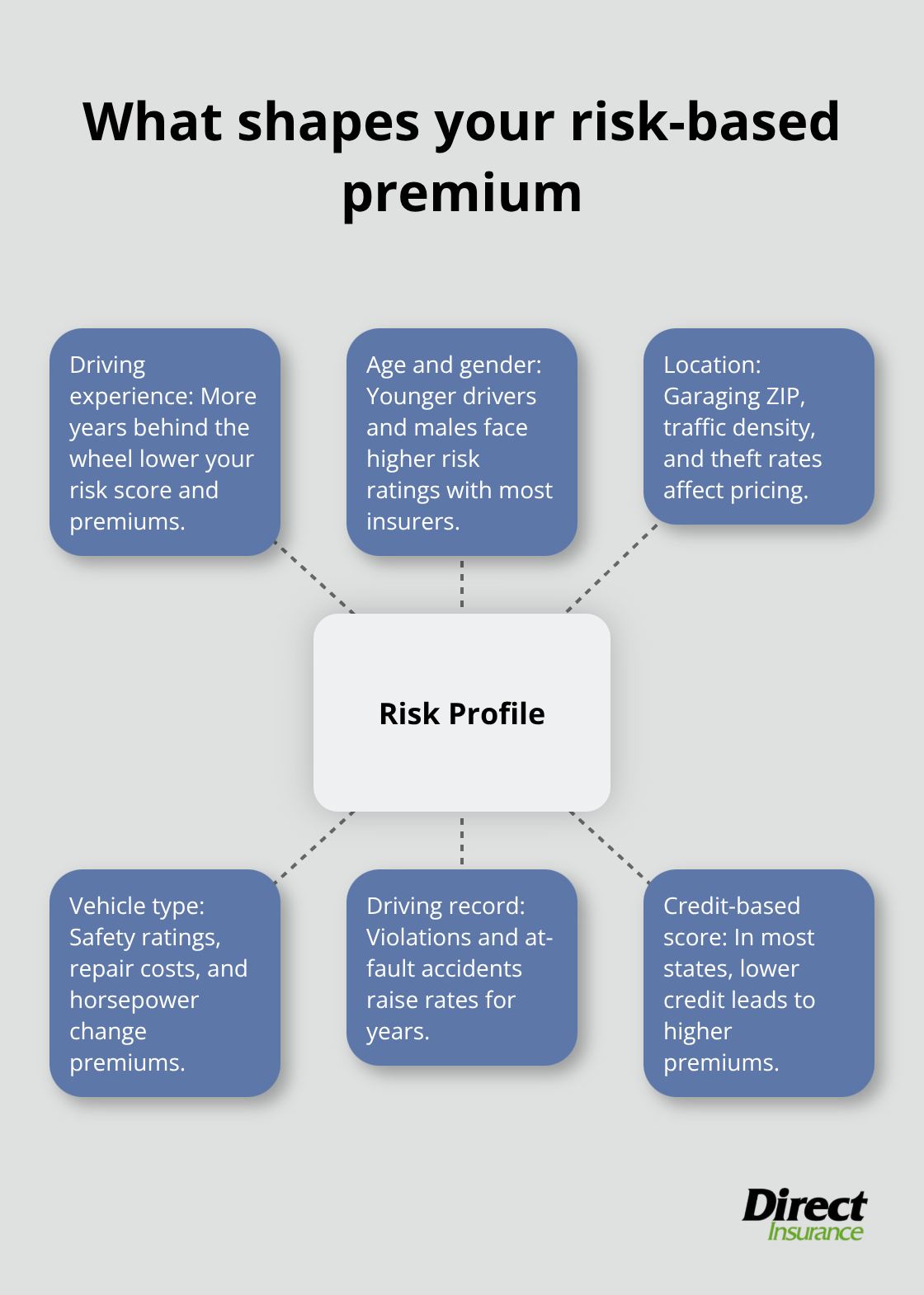
If you have two individuals of the same age who live in the same town, one male and the other female, it is not true that the male will pay more for his insurance. In fact, there are many variables that come into play when an insurance company determines premium. Some of those are:

  1. Garaging Zip Code
  2. Driving history
  3. Credit report
  4. Loss history
  5. Education level
  6. Type of vehicle
  7. And many more!

To find out what your premium might be, the only way is to get a quote. Compare companies and coverage options that you need by talking to an independent agent. We can compare many companies side by side.

Older Cars Cost Less To Insure

Not true. For instance, your personal injury protection will likely be less on a newer vehicle because it is equipped with more safety features to aid you in the event of an accident – meaning you’re more likely to be injured in an older vehicle without airbags for example. However, insurance costs for comprehensive and collision coverage do tend to go down the older a vehicle gets because it is simply worth less money.

If someone borrows your car, they are responsible for the insurance.

In most states, insurance follows the vehicle. It is called “permissive use.” If you give someone permission to drive your vehicle, you’re also essentially giving them permission to use your insurance. Now, be careful here because if someone is in your household and not listed on your insurance policy and has regular access and use to your vehicle, you may find yourself in a tricky claims situation because that person should be listed on your insurance policy.

I have an auto insurance policy so it will cover me when I’m delivering food or working for a rideshare company.

If your job requires you to deliver food using your own vehicle or you work part time as an Uber or Lyft driver, you need a special insurance policy. Typically an endorsement to your regular auto insurance, this provides coverage for you while you’re using your vehicle for work related purposes.

Your friend pays less for their insurance than you do so that means you’re paying too much.

Insurance is specific to the driver, their history, vehicle, garaging zip code, usage and so many other factors. There are hundreds of different scenarios that can be calculated to determine your auto insurance premiums. Just because your friend pays less for a similar car, does not mean you’re overpaying.

If you ever want to know if you’re paying too much or want to know all your options for auto insurance, call us! As an independent insurance agency, we have many choices for insurance. Oftentimes we can share with you the insurance premiums of up to 10 different insurance companies in the same time it takes to do a single quote. Trust us to find you the best rates and service for your specific situation. We can also help you dispel other myths that exist with insurance premiums.

Auto Insurance Discounts St. George, UtahWe have all heard the auto insurance commercials talking about the discounts this insurer or that insurer offers. There are the standard ones: multi-policy, multi-vehicle, etc., but there may be some other discounts that drivers are not aware of. We have compiled some of the most common auto insurance discounts below. Could you be saving money with these discounts?

Auto insurance discounts in Utah:

  • Multi-policy: Bundling multiple polices like auto insurance, home and boat with the same insurance carrier can save you some money.
  • Good or distant student: If your student keeps their grades above certain level (as designated by the insurer) they may be eligible for a good student discount. The insurance carrier will need proof, typically sending a transcript will suffice. If your student is attending college at a distant (typically more than 500 miles from home, but that varies by carrier) you may be eligible for a discount on the vehicle since it may not be driven as much.
  • Education level: Like an extension of the good student discount, drivers who hold advanced degrees, like a bachelor’s degree, may qualify for a discount.
  • Defensive Driver: Taking a carrier approved defensive driving course could earn you a discount on your auto insurance policy. Check with your insurance agent, as this type of discount may be limited to certain age groups.
  • Multi-vehicle: Like a multi-policy discount, insuring multiple vehicles with the same carrier may earn you a small discount.
  • Green vehicle: If you drive an electric or hybrid vehicle, you may be eligible for a discount. Ask your agent to see if your vehicle qualifies.
  • Anti-theft: Vehicles with anti-theft systems statically tend to be stolen less often, thus a lower risk. You may be entitled to a small discount if your vehicle meets the criteria.
  • Anti-lock brakes: The anti-lock brake feature is standard on almost all new vehicles. Check with your insurance agent to see if your carrier provides a discount for anti-lock brakes.
  • Safe driver (accident free): Many major insurance carriers will award safe driving discounts to drivers who have been accident free for a number of years. The criteria varies between insurance carriers.
  • Military: Active and veteran military members are often eligible for discounted auto insurance. Ask your insurance agent to see if you qualify.
  • Early quote/signing: If you are looking to change insurance carriers or upgrade your auto insurance, getting a quote (and signing up) before your current policy has expired may get you a discount. You may need to get a quote within a certain number of days prior to your policy expiration, so check with your agent.
  • Paid-in-full: You’ll see the discount reflected in the price when you are presented with your options for paying your auto insurance policy. Paying off the policy in full will cost you a little less than paying every month.
  • Paperless: Don’t want to get a paper statement? Great, you get a discount. Most major insurance carriers offer discounts for customers who choose to do automatic billing and receive emails rather than paper statements.
  • Loyalty: Sticking with your insurance carrier for three or more years could earn you a discount for every loyalty milestone you hit. Typically these rewards not only include a discount on the cost of your policy, they can sometimes include accident forgiveness!

While buying a home tends to appreciate in value overtime, buying a vehicle is the opposite. Especially if you are buying a brand new vehicle, the moment you drive off the car dealership’s lot, your vehicle has already depreciated in value. For many vehicles, the more expensive the purchase, the faster the depreciation. New vehicles offer more safety features and conveniences, so we understand why people like them.

If you are financing or leasing a vehicle, you may benefit from Gap Insurance.

Imagine this scenario: While out enjoying your new car, you hydroplane and hit a guardrail damaging your new vehicle beyond repair. The insurance company is telling you that your new car is a total loss. If your car is totaled, that means it will cost more to repair it than the car is actually worth because of depreciation.

Gap insurance acts as additional car insurance coverage that will pay off your loan if your car is totaled or you owe more than your car’s new depreciated value. This coverage is usually limited to 25% of your vehicles actual cash value at the time of loss. Check with an agent about specifics for your company. 

What does your car insurance cover if you’re in an accident?

When you lease or finance a car, many lenders require you to have collision and comprehensive insurance coverage on your vehicle until you have paid off your car. If your vehicle was totaled, your insurance company will only pay what it is worth, not what you owe. This is what creates a gap between your current loan balance and what your car is actually valued at today.

Is gap insurance for you?

It depends how much you owe on your vehicle & if you could afford to pay the difference if your car was totaled. Let’s say you bought your car for $20,000. Over the course of your ownership, it’s now valued at $13,000. You currently owe $17,000 on your loan but were recently in an accident where your vehicle was totaled.

Could you pay for the $4,000 difference out of pocket? Keep in mind, if you bought a luxury car, they can lose as much as 60% of its value over the course of five years. You may have an even bigger gap between your loan balance and current value of your vehicle.

Options for gap insurance:

There are two options for purchasing gap insurance.

  • It can be purchased from the dealership or through an insurance agent. If you choose to purchase gap insurance through the dealership you purchase your vehicle from, the gap insurance will be built into your loan. The average price for gap insurance from a dealership is around $1,000, but add interest and taxes and it can add up to much more.
  • If you choose to purchase gap insurance from an insurance agent, on average it would add less than $10 per month to a policy! There may be certain stipulations associated with a gap insurance policy:
  • The loan may need to be through a financial institution rather than an individual.
  • Your current auto insurance policy may need to include Collision and Comprehensive coverage.
  • Your claim may need to be a covered Collision and Comprehensive coverage event.
  • Your vehicle may need to be determined as a total loss.

Before you purchase a new vehicle, make sure to check with your licensed insurance agent in to see how you can add gap insurance to your new vehicle policy.

The local, independent agents at Direct Insurance Services can assist you with adding or amending an existing policy or setting you up with a new policy. Our years of insurance experience can save you a bundle. You can also visit our insurance website 24/7 to learn more about auto insurance or the other insurance products they offer like classic car or home insurance.