Best Auto Insurance Utah: How to Compare and Choose

Finding the best auto insurance in Utah means understanding your coverage options and comparing quotes from multiple providers. At Direct Insurance Services, we’ve helped thousands of drivers navigate Utah’s insurance requirements and find policies that fit their budgets.
The right policy protects you financially while meeting state minimums. This guide walks you through coverage types, comparison strategies, and the factors that shape your rates.
What Coverage Do You Actually Need in Utah?
Utah’s Mandatory Coverage Requirements
Utah’s no-fault insurance system requires three essential components, and understanding each one matters for your wallet and your protection. The state mandates bodily injury liability of $30,000 per person or $65,000 per accident, property damage liability of $25,000, and personal injury protection of at least $3,000 according to Utah DMV requirements. These minimums exist because Utah operates as a no-fault state-your own insurance covers your medical expenses and lost wages regardless of who caused the accident.
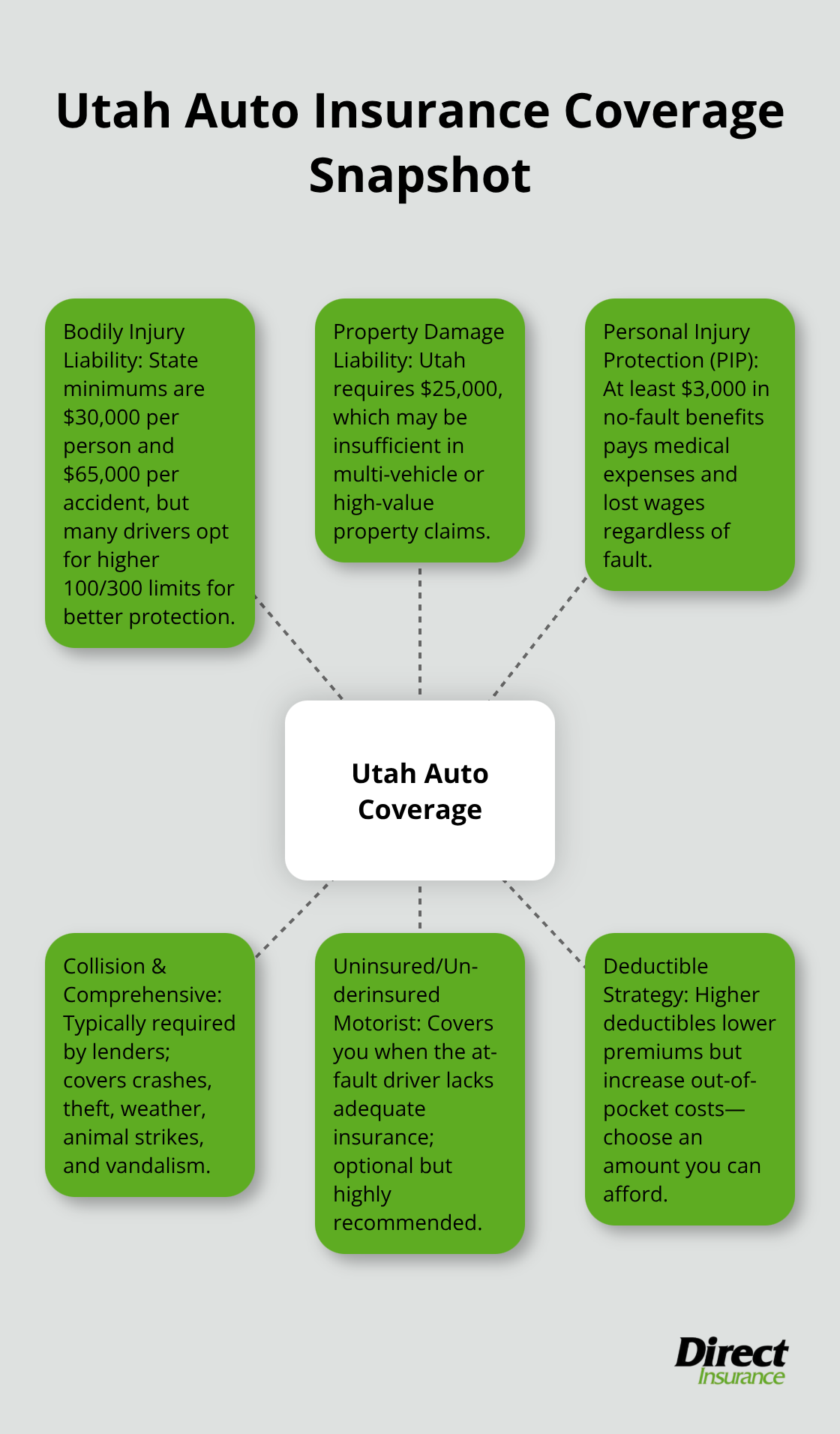
However, these minimums fall short for most drivers. The Insurance Information Institute recommends bodily injury liability of at least $100,000 per person and $300,000 per accident, which provides substantially more protection for serious crashes. A single accident involving multiple vehicles or significant injuries can easily exceed Utah’s legal minimums, leaving you personally liable for the difference.
Why Higher Limits Make Financial Sense
The cost difference between state minimums and recommended coverage remains minimal compared to the financial exposure you face with inadequate limits alone. A serious crash can wipe out your savings and trigger wage garnishment if you lack sufficient liability coverage. Most Utah drivers benefit from higher limits because the premium increase is often just $10 to $20 per month. You protect your home, your vehicle, and your future income by selecting coverage that actually matches your assets and earning potential. This approach prevents a single accident from derailing your financial stability.
Collision and Comprehensive Coverage for Financed Vehicles
Collision and comprehensive coverage become mandatory if you have a car loan or lease, since lenders require full coverage to protect their investment in your vehicle. Collision covers damage from crashes with other vehicles or objects, while comprehensive handles theft, weather, animal strikes, and vandalism. If you own your vehicle outright, these coverages are optional, but their value depends on your car’s age and your financial situation. A newer vehicle makes collision and comprehensive sensible; an older car might not justify the premium.
Uninsured Motorist Protection and Deductible Strategy
Uninsured and underinsured motorist coverage protects you when the other driver lacks adequate insurance or carries none at all. Utah doesn’t require this coverage, but it’s foolish to skip it given that uninsured drivers remain a persistent problem on Utah roads. This coverage pays for your medical bills and vehicle damage when an at-fault driver can’t or won’t cover costs. Your deductible choice directly impacts your monthly premium-a $500 deductible costs less than a $250 one, but you’ll pay more out-of-pocket in a claim. Select a deductible you can actually afford to pay without financial hardship, because a low deductible means nothing if you can’t cover it when an accident happens.
Moving Forward With Your Coverage Decisions
Now that you understand what coverage Utah requires and what protections make sense for your situation, the next step involves comparing quotes from multiple providers to find the best rates and terms for your specific needs.
Comparing Quotes Without Wasting Your Time
Gather Your Information First
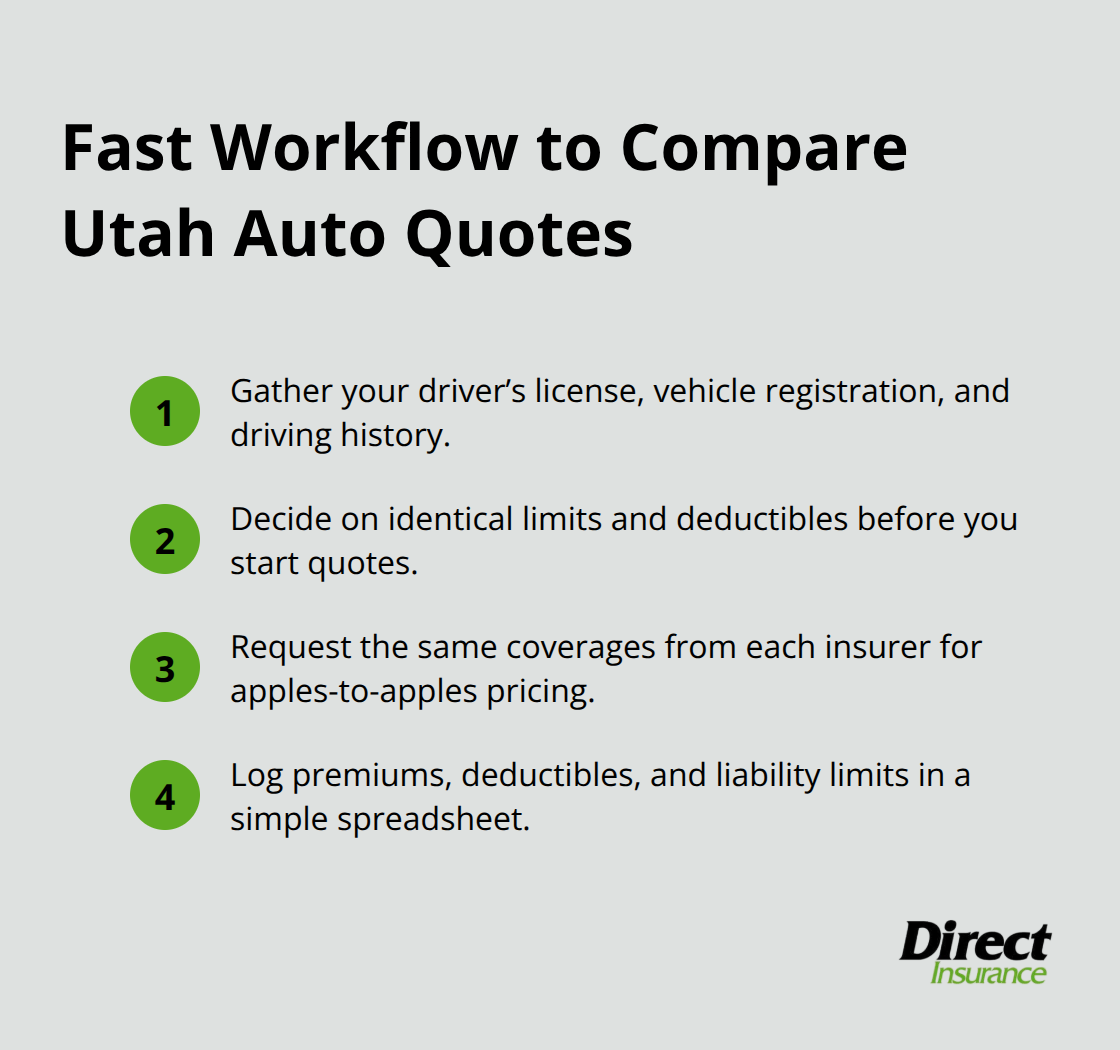
Getting accurate quotes requires feeding each insurer the same information, or you’ll end up comparing apples to oranges and making a decision based on incomplete data. Start by gathering your driver’s license, vehicle registration, and driving history before you contact insurers-having these details ready prevents delays and ensures quotes reflect your actual situation. You need to provide the same coverage levels to each company you contact, which means deciding upfront whether you want state minimums or higher limits.
This consistency matters because GEICO might quote you at $1,848 per year for full coverage with a clean driving record, but that figure only applies if you specify identical deductibles and limits across all quotes.
Request Identical Coverage Across All Quotes
Don’t ask one insurer for $500 deductibles and another for $1,000-the price difference won’t tell you which company actually costs less. Utah drivers can get quotes online from most major carriers in minutes, and many insurers including GEICO let you start a quote, save it, and return later without pressure to complete the purchase immediately. When you contact each provider, specify the exact same deductible amounts, liability limits, and optional coverages so the numbers you receive are truly comparable.
Analyze What You’re Actually Paying For
The real work starts when you analyze what you’re actually paying for across different quotes. A cheaper premium means nothing if it comes with a $1,500 deductible you can’t afford or coverage limits that leave you exposed in a serious accident. NerdWallet’s research shows Nationwide offers full-coverage rates around $1,336 per year for clean drivers, making it the budget option, while GEICO averages $1,848 annually and provides better digital tools through their app and website. Progressive’s average full-coverage rate sits around $2,125 per year but stands out for offering accident forgiveness in some states and rideshare coverage if you drive for platforms like Uber.
Create a Simple Comparison Spreadsheet
When you receive quotes, extract the actual monthly or annual cost, the deductible amount for each coverage type, and the liability limits-then create a simple spreadsheet comparing quotes across multiple carriers from at least three insurers. This prevents you from accidentally selecting the cheapest option only to discover later that the high deductible or low liability limits don’t match your needs. Utah drivers with accidents or violations face substantially higher premiums, with a single speeding ticket increasing rates by about 20 percent according to U.S. News data, so your driving record will heavily influence which company offers the best price for your specific situation.
Account for Your Driving Record’s Impact
Your personal driving history shapes which insurer offers the best deal more than any other factor. A clean record qualifies you for the lowest rates across the board, but violations and accidents narrow your options and increase costs significantly. Once you’ve compared quotes from multiple carriers, you’ll have a clear picture of which company offers the best combination of price, deductibles, and coverage limits for your specific profile-and that’s when you’re ready to evaluate the broader factors that determine whether a policy truly fits your life.
What Drives Your Rate Up or Down
Your driving history sits at the top of the list for rate-determining factors, and the numbers prove why insurers scrutinize it so carefully. A single speeding ticket increases your Utah auto insurance rate by approximately 20 percent according to U.S. News data, while accidents and violations compound the damage to your premiums.
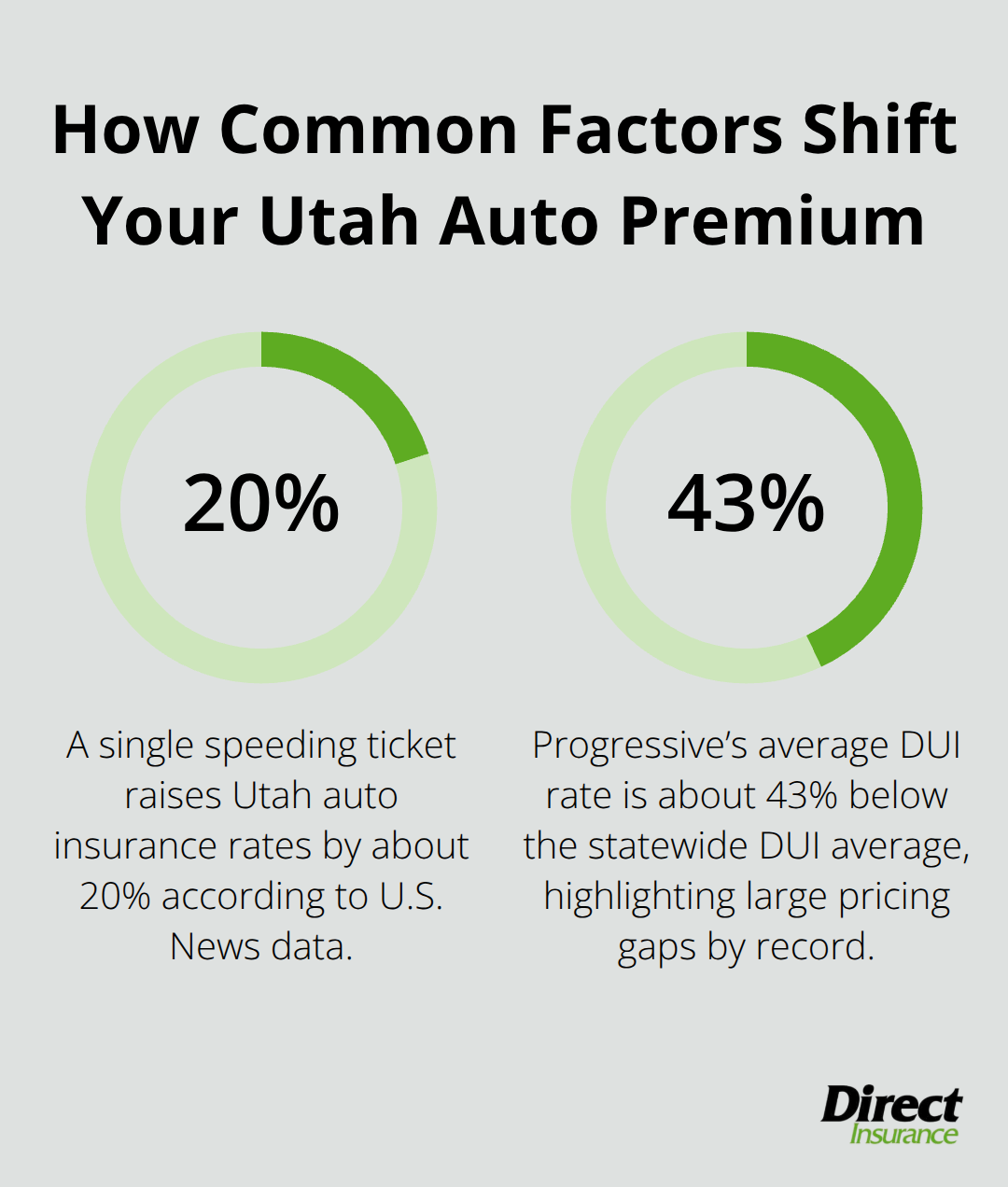
Progressive offers the lowest average rate for Utah drivers with a DUI at $1,773 per year, which sounds reasonable until you realize that’s about 43 percent below the statewide DUI average-meaning most drivers with a DUI pay substantially more. If you have a clean driving record, you qualify for the lowest rates across nearly every carrier; GEICO averages $1,848 annually for full coverage with clean drivers, but that same company charges $5,262 for a driver with a DUI. The gap between your driving record and your premium isn’t theoretical-it’s the difference between affording coverage and struggling with unaffordable rates.
How Your Driving Record Shapes Your Premiums
Your personal driving history determines which insurer offers the best deal more than any other single factor. A clean record qualifies you for the lowest rates across the board, but violations and accidents narrow your options and increase costs significantly. Utah drivers with accidents or violations face substantially higher premiums, so your specific profile will heavily influence which company offers competitive pricing for your situation.
Vehicle Characteristics That Insurers Analyze
The vehicle you drive influences your rate more than most drivers realize, and insurers base these calculations on actual claims data rather than guesswork. Newer vehicles typically cost more to insure than older ones because repair expenses run higher, but they also qualify for safety feature discounts that older cars don’t. A sports car generates higher premiums than a sedan because accident data shows sports cars file more claims, while trucks and SUVs fall somewhere in the middle depending on the specific model. Before you purchase a vehicle, checking insurance quotes for models you’re considering takes minutes and reveals the true cost of ownership-something many buyers overlook until after they’ve signed the paperwork. The vehicle’s value, repair costs, and historical claim frequency all factor into your rate, which means a used Honda Civic costs substantially less to insure than a used BMW even if both are the same age.
Geographic Location and Driving Patterns
Where you live in Utah and how much you drive annually create measurable impacts on your insurance costs that you can actually control. Salt Lake and Utah counties accounted for the highest fatalities in 2017 according to the Utah Highway Safety Office, and insurers use crash data to set rates-meaning drivers in high-accident areas pay more regardless of their personal driving records. Urban areas typically carry higher rates than rural regions because traffic density increases accident frequency, theft rates, and claims volume. Your annual mileage matters equally because more time on the road increases your accident exposure; drivers who commute 50 miles daily face higher rates than those who drive 10 miles to work. If you work from home or use public transportation occasionally, contact your insurer to report lower mileage-some carriers offer discounts for drivers under 7,500 miles annually (though you must verify this applies in your specific situation).
Final Thoughts
You now understand Utah’s coverage requirements, know how to compare quotes effectively, and recognize the factors that shape your rates. The best auto insurance in Utah isn’t about finding the cheapest option-it’s about selecting coverage that protects your assets while fitting your budget. Start with determining whether state minimums suffice or if higher liability limits make sense for your situation, then collect quotes from at least three carriers using identical coverage specifications.
Your driving record, vehicle type, and location influence which company offers the best price for your profile, so don’t assume the same insurer works best for everyone. Create a simple spreadsheet comparing monthly costs, deductibles, and coverage limits across providers. Factor in digital tools and discounts each company offers-GEICO’s app and online features might justify a slightly higher premium if you value convenience, while Nationwide’s budget rates appeal to cost-conscious drivers.
Once you’ve selected a policy, review it annually since your circumstances change, rates fluctuate, and new discounts emerge. At Direct Insurance Services, our team helps Utah drivers navigate these decisions without pressure or confusion, and we work with top-rated carriers to find coverage that matches your needs and budget. Contact us to discuss your specific situation and receive personalized recommendations for securing affordable coverage that protects you when accidents happen.
Disclaimer: The information provided in this blog is for general informational purposes only and does not constitute legal, financial, or insurance advice. Coverage options, terms, and availability may vary. Please consult with a licensed professional for advice specific to your situation


