Auto Home Bundle Utah: Simplify and Save on Your Policies
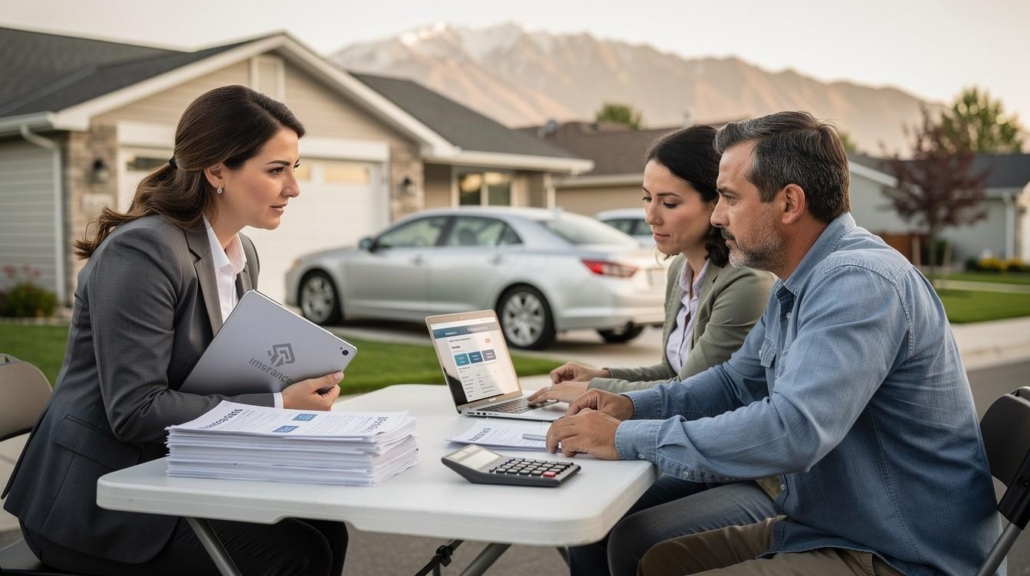
Most Utah homeowners and car owners pay too much for insurance because they’re not bundling their policies. An auto home bundle in Utah can cut your premiums significantly while simplifying how you manage your coverage.
At Direct Insurance Services, we help local families combine their auto and home insurance to get better rates and one straightforward billing statement. This guide walks you through exactly how bundling works and what savings you can realistically expect.
What Bundling Actually Does to Your Premiums
An auto home bundle combines your car and home insurance under one policy with a single insurer. The core benefit is straightforward: insurers reward you for consolidating coverage with a multipolicy discount that reduces your total annual cost. Utah families save anywhere from $375 to $1,033 per year just by bundling, depending on which carrier they choose and their specific risk profile. The discount itself varies significantly by company. Farmers offers a 21% discount, Nationwide provides 19%, and State Farm tops the list at 23%, according to 2026 rate data. However, the largest discount doesn’t always mean the lowest final bill.
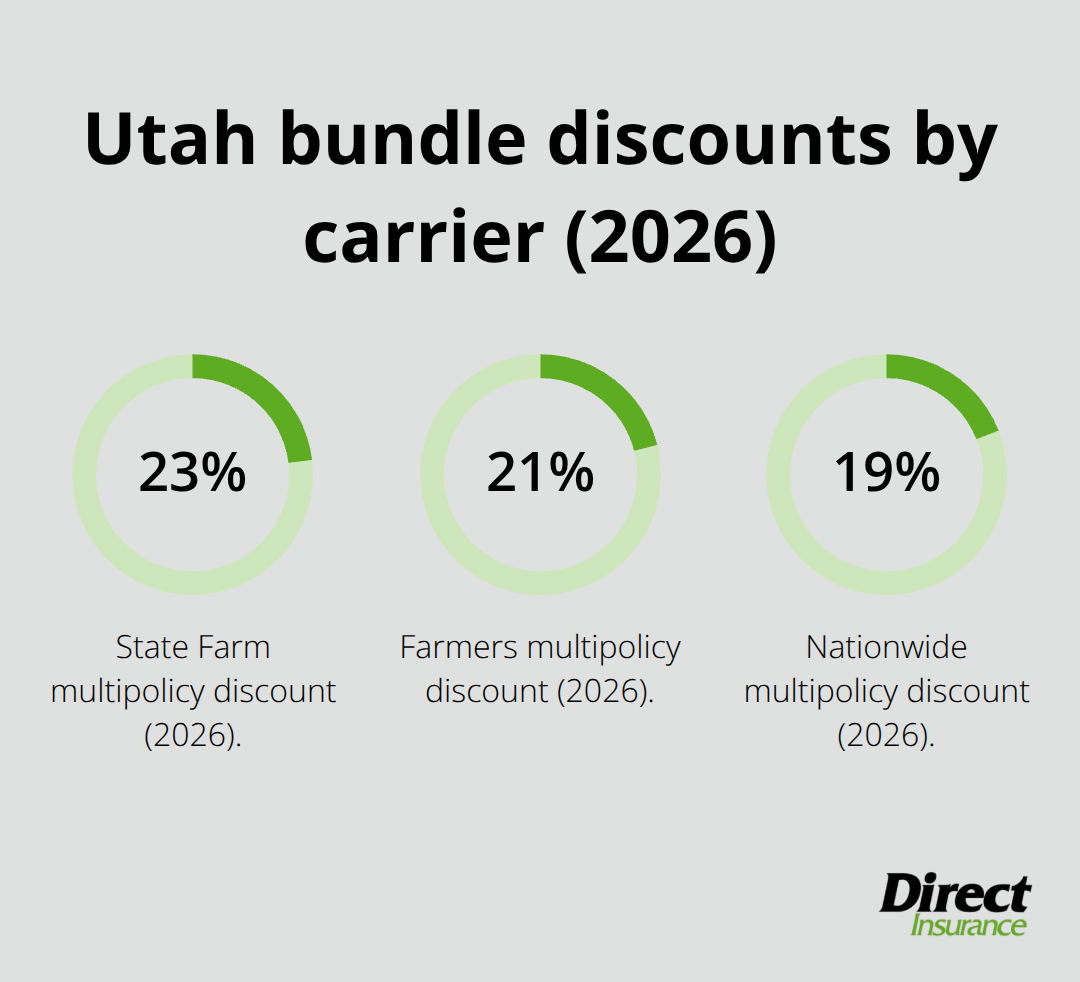
State Farm’s 23% discount sounds impressive until you compare the bottom line: after bundling, State Farm costs around $5,046 annually, while Farmers comes in at $3,913 and Nationwide at $2,742. That $2,304 difference between State Farm and Nationwide matters far more than the percentage discount on paper.
How Carriers Calculate Your Bundled Price
Bundling works because insurers view you as a lower-risk customer when you consolidate policies. You’re less likely to shop around, which reduces their acquisition costs, and you’re statistically more engaged with your coverage. Nationwide’s bundling example illustrates this: a customer’s separate auto and home policies totaled $3,371, but bundling reduced that to $2,742 through the 19% multipolicy discount. USAA members saw a smaller savings of $234 annually (7% discount), bringing their combined cost from $3,144 to $2,910. The variation happens because base rates differ. If your individual auto insurance is already competitive, the bundling discount may not save as much as someone paying higher rates separately. This is why comparing total bundled costs across carriers matters more than chasing the biggest percentage discount. Geographic location amplifies these differences. Salt Lake City residents typically pay 10 to 18% above Utah’s state average for auto insurance, which affects both the base rate and the final bundled price you’ll receive.
Additional Discounts Stack on Top of Bundling
The multipolicy discount is just the starting point. Once you bundle, you become eligible for additional savings that further reduce your premium. Telematics programs like Nationwide’s SmartRide or Farmers’ Signal app stack discounts on top of your bundled rate, potentially cutting auto costs another 10 to 40% if you maintain safe driving habits.
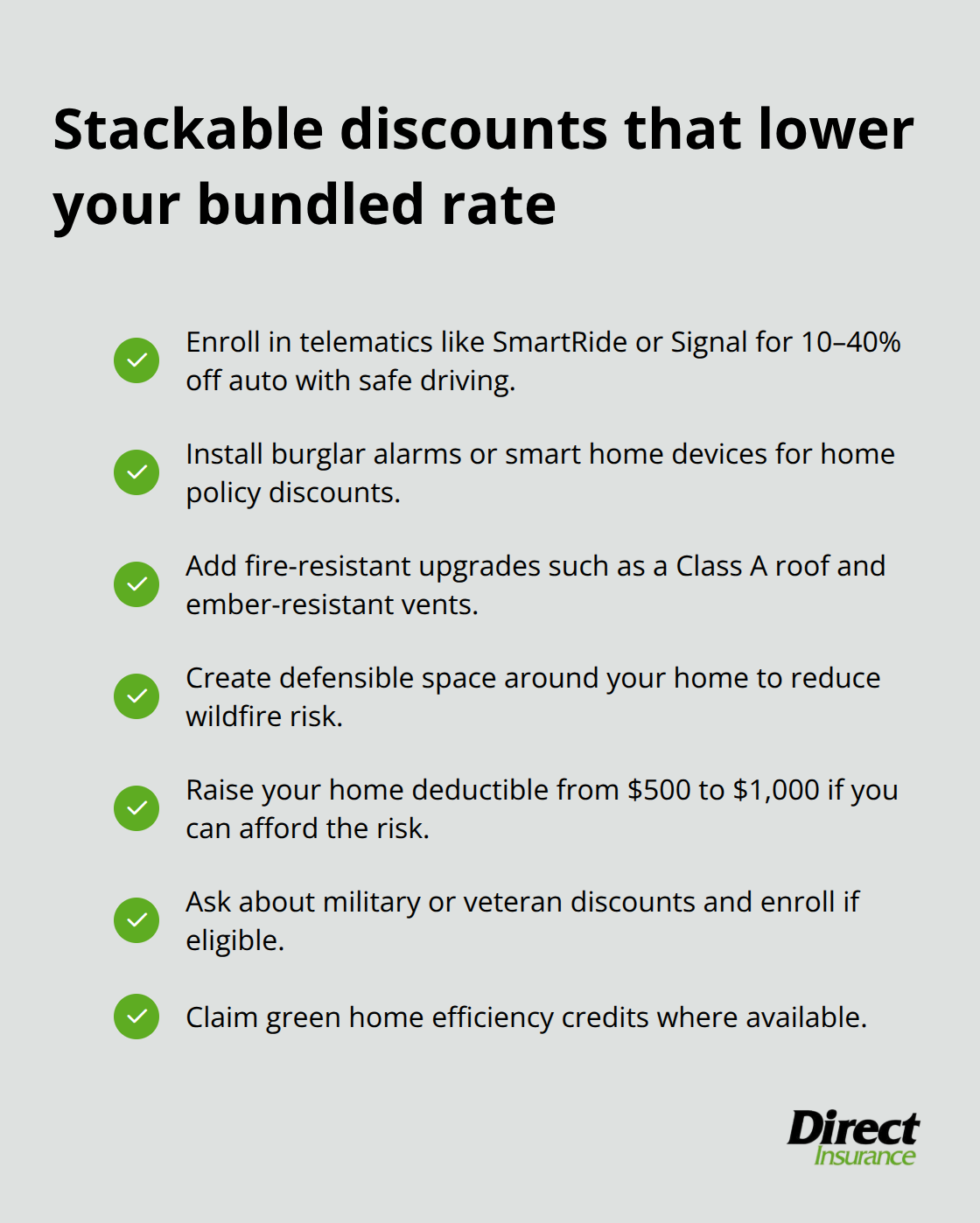
Installing protective devices such as burglar alarms or smart home technology qualifies you for home discounts. For Utah homeowners specifically, fire-resistant upgrades matter because Utah ranked number nine nationally for homes at risk from wildfires as of 2025 according to the Insurance Information Institute. Installing a Class A fire-rated roof, ember-resistant vents, or creating defensible space around your home lowers your home insurance portion of the bundle. Raising your deductibles from $500 to $1,000 on your home policy also reduces bundled premiums significantly, though only if you can actually afford the higher out-of-pocket cost when a claim happens. Military status, green home efficiency credits, and other eligible programs add more savings opportunities. The real strategy isn’t finding one magic discount-it’s stacking multiple discounts on top of your bundled rate to reach the lowest possible annual cost.
What Information You Need to Gather
Getting an accurate bundled quote requires specific details about both your vehicle and your home. For your auto policy, you’ll need your vehicle identification number (VIN), current driving history, and details about your daily commute. For your home, carriers ask for the dwelling value, liability limits you want, and your deductible preference. Having this information ready before you contact carriers speeds up the quoting process significantly. Different carriers may ask slightly different questions, but these core details remain consistent across the industry. Once you provide this information, carriers calculate your base rates for each policy, apply the multipolicy discount, and show you the final bundled cost. The accuracy of your quote depends on the accuracy of the information you provide, so take time to gather correct details rather than estimates.
Comparing Quotes Across Multiple Carriers
Shopping bundled quotes from at least three carriers reveals the real savings available in your area. Nationwide, Farmers, and State Farm represent the top options in Utah, but your specific location and risk profile may make one carrier significantly cheaper than another. Request quotes using the same coverage limits and deductibles across all carriers so you can make an apples-to-apples comparison. Pay attention to the total bundled cost, not just the discount percentage. A carrier offering a 25% discount might still cost more annually than one offering 15% if their base rates are lower. After you’ve narrowed your options, ask each carrier about additional discounts you qualify for based on your home upgrades, driving record, or other factors. This step often reveals another $100 to $300 in annual savings that doesn’t appear in the initial quote.
Why Bundling Makes Financial Sense for Utah Families
Utah families leave significant money on the table by maintaining separate auto and home policies with different carriers. We see this repeatedly: homeowners who could save $375 to $1,033 annually through bundling instead overpay year after year. The savings aren’t theoretical. According to 2026 rate data, Nationwide bundles cost around $2,742 per year, while the same coverage purchased separately totals $3,371, representing real cash back in your pocket. For a family earning a modest Utah income, that’s equivalent to a full month of groceries or a car payment.
The Real Cost Difference Across Carriers
The variation across carriers matters enormously. Farmers bundles run $3,913 annually with a 21% discount, State Farm costs $5,046 with a 23% discount, and USAA bundles come in at $2,910 with a 7% discount. Geographic location amplifies these differences. Salt Lake City residents typically pay 10 to 18% above Utah’s state average, meaning a family there could see bundled savings closer to $500 to $1,200 annually compared to someone in Provo or St. George, where rates run 8 to 15% below state average.
The key insight is this: bundling isn’t about finding the carrier with the biggest percentage discount. It’s about identifying which carrier offers the lowest total bundled cost for your specific location and risk profile, then stacking additional discounts on top.
How Bundling Simplifies Your Insurance Life
Bundling simplifies your insurance life in ways that directly reduce stress and administrative burden. Instead of juggling two separate policies with different renewal dates, different billing cycles, and potentially different agents, you manage everything through one insurer with a single annual bill. One login for claims, one contact for questions, and one renewal conversation instead of two.
This consolidation matters most when you need to file a claim. A homeowner with one agent and one bundled policy files a claim, tracks its progress, and coordinates repairs through a single contact rather than explaining the same situation to two different companies. The billing convenience extends to budgeting. Families paying $2,742 annually know exactly what their insurance costs, as opposed to paying $1,500 for auto and $1,871 for home separately and losing track of the total. Many Utah carriers also offer the ability to pay your bundled premium monthly, quarterly, or annually depending on your preference, giving you flexibility that separate policies sometimes don’t provide.
Access to Better Coverage Through One Agent
Access to better coverage options through a single agent creates advantages that isolated policyholders miss entirely. When you bundle with one carrier, that agent has visibility into your complete insurance picture. They see your home’s replacement cost, your vehicle values, your liability exposure, and your deductibles all in one place. This comprehensive view allows them to identify coverage gaps you might not have noticed.
A Utah homeowner with wildfire risk on the Wasatch Front, for example, might have standard homeowners coverage without earthquake protection or flood coverage. A bundled policy agent recommends earthquake endorsements or separate policies because they understand your full exposure. Similarly, bundling opens access to additional coverage options that single-policy customers sometimes overlook. Nationwide bundles include vanishing deductibles that reduce your collision deductible by $100 for each claim-free year, up to $500 total, potentially eliminating it after five clean years. Allstate and Nationwide both offer rideshare coverage for drivers who use Uber or Lyft, but this coverage isn’t always visible unless an agent actively mentions it during the bundling conversation.
Stacking Discounts on Your Bundled Rate
Telematics programs like Nationwide SmartRide or Farmers Signal stack additional savings on top of your bundled rate. An agent managing your bundled policy enrolls you in these programs and explains exactly how safe driving habits translate to lower premiums, potentially cutting your auto costs another 10 to 40%. The agent also tracks your eligibility for home upgrades discounts. If you install a fire-rated roof or create defensible space around your property, your bundled agent knows to apply those discounts at renewal, whereas separate agents might miss these opportunities entirely.
Now that you understand the financial and practical benefits of bundling, the next step involves finding the right carrier and coverage options for your specific situation in Utah.
Getting Your Bundled Quote and Comparing Options
The process of bundling your auto and home insurance in Utah starts with collecting the right information and requesting quotes from multiple carriers simultaneously. Gather your VIN, current driver’s license information, and details about your daily commute before contacting any insurer, since these specifics directly affect your auto quote accuracy. For your home, have your dwelling’s replacement cost estimate, desired liability limits, and preferred deductible ready. Most Utah carriers can generate a bundled quote within 24 hours once you provide this information, though accuracy depends entirely on the completeness of what you supply. Don’t estimate your home’s value or guess at your commute distance-these details shift your quote significantly. Request quotes from at least three carriers using identical coverage levels and deductibles across each one, which creates a true apples-to-apples comparison. Nationwide, Farmers, and State Farm represent your strongest options in Utah based on 2026 bundling data, but geographic location matters enormously. Salt Lake City residents should expect quotes roughly 10 to 18% higher than rural Utah rates, while Provo and St. George typically run 8 to 15% lower than the state average. This geographic variation means a bundled quote that costs $2,742 annually for a Nationwide customer in one ZIP code might run $3,100 in another, so location-specific quotes matter far more than state-level averages.
Focus on Total Cost, Not Discount Percentages
Most Utah families make a critical mistake when comparing bundled quotes: they chase the largest discount percentage rather than the lowest total annual cost. State Farm advertises a 23% bundling discount, which sounds superior to Nationwide’s 19%, yet after discounts are applied, Nationwide bundles cost approximately $2,742 annually while State Farm costs around $5,046. That $2,304 annual difference represents real money that stays in your account. Focus your comparison on the final bundled price, not the percentage reduction.
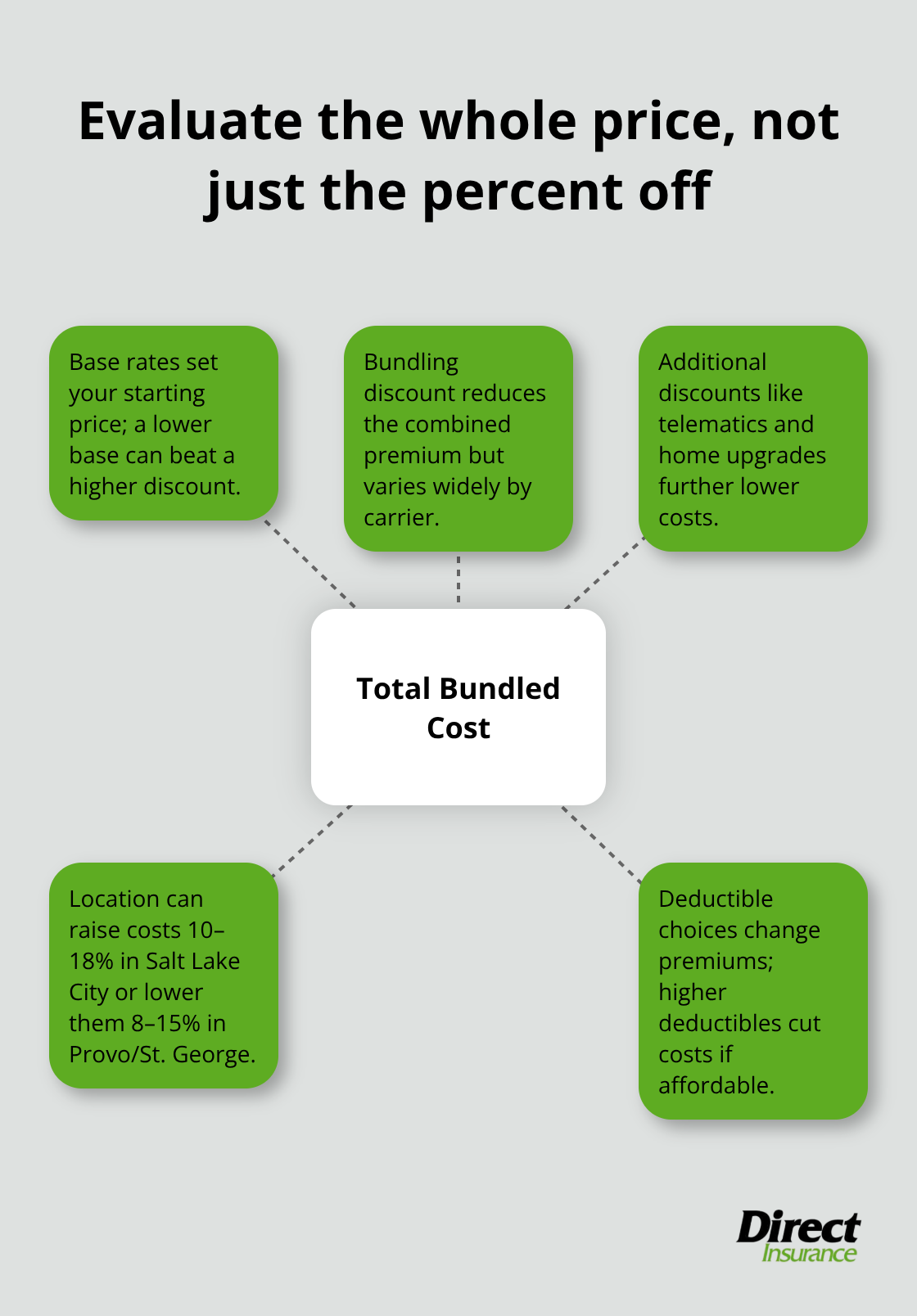
Once you’ve identified which carrier offers the lowest total cost for your situation, ask about stacking additional discounts on top of that bundled rate. Telematics programs like Nationwide SmartRide reduce your auto premium another 10 to 40% based on safe driving habits, fire-resistant home upgrades qualify for further discounts in wildfire-prone Utah areas, and raising your deductible from $500 to $1,000 cuts your home premium substantially if you can afford the higher out-of-pocket cost. A carrier offering a bundled rate of $2,900 annually might drop to $2,600 or lower once you stack these additional discounts, whereas a competitor starting at $3,500 might only reach $3,200 even with the same discounts applied. The compounding effect of base rate plus bundled discount plus additional discounts determines your actual annual cost, so evaluating all three layers matters.
Uncover Hidden Discounts in Your Quote
After narrowing your options to two carriers with the lowest total costs, contact each one directly and ask about discounts you specifically qualify for based on your home characteristics, driving record, protective devices, or military status. This conversation often reveals another $100 to $300 in annual savings that doesn’t appear in the initial quote. Many carriers don’t automatically apply every discount-you must ask for them. A homeowner who installed a fire-rated roof or created defensible space around their property qualifies for wildfire-risk discounts that the initial quote may have missed. A driver with a clean record for five years might qualify for loyalty discounts that weren’t mentioned. A military member or veteran often receives substantial discounts that require explicit enrollment. These hidden discounts compound with your bundled rate and additional telematics savings, potentially lowering your final cost by another $200 to $500 annually.
Initiate Your Bundle and Confirm Coverage Details
Once you’ve compared quotes and identified the carrier with the lowest bundled cost plus the best additional discount opportunities, contact that carrier to initiate your bundle. Most Utah insurers allow you to start your bundled coverage within days rather than weeks, though your existing policies remain active until your new bundled policy’s effective date. Request a policy comparison document showing your current separate costs versus your new bundled costs so you have written confirmation of your savings. Ask your new agent about the specific features included with your bundle-some carriers include certain coverages by default while others require you to add them. Nationwide bundles, for example, include vanishing deductibles that reduce your collision deductible by $100 annually for each claim-free year, while other carriers don’t offer this feature at all.
Protect Against Utah-Specific Risks
Confirm whether your bundled policy includes all the coverage you need, particularly if you live in a high-wildfire-risk area on the Wasatch Front where earthquake coverage and flood protection become essential additions to standard homeowners policies. Utah has no state-run FAIR Plan, meaning if you’re denied coverage by standard carriers, you’ll need to work with surplus lines brokers or upgrade your home to meet insurer requirements. Your bundled agent should explain these options during your initial consultation. Schedule your bundled policy to start on your current auto policy’s renewal date if possible, which eliminates the complexity of managing multiple active policies and ensures your billing consolidates cleanly.
Final Thoughts
Bundling your auto and home insurance in Utah delivers two immediate benefits: lower annual premiums and simplified policy management. Utah families realistically save between $375 and $1,033 per year by consolidating coverage with a single carrier, with Nationwide offering the lowest bundled costs around $2,742 annually. The savings compound when you stack additional discounts like telematics programs, fire-resistant home upgrades, and higher deductibles on top of your bundled rate.
Your next step requires gathering your vehicle identification number, current driver information, home replacement cost estimate, and desired coverage limits, then requesting bundled quotes from at least three carriers using identical coverage levels. Focus on comparing total annual costs rather than discount percentages, since a larger percentage discount doesn’t guarantee the lowest final bill. Once you identify the carrier offering the best auto home bundle Utah price for your situation, ask about additional discounts you qualify for based on your home characteristics, driving record, or protective devices.
We at Direct Insurance Services understand that navigating bundling options takes time and attention to detail. As a locally trusted independent insurance agency serving Utah families, we work with top-rated carriers to help you access the best bundled coverage options without pressure or one-size-fits-all solutions. Contact Direct Insurance Services today to get your personalized bundled quote and start saving.
Disclaimer: The information provided in this blog is for general informational purposes only and does not constitute legal, financial, or insurance advice. Coverage options, terms, and availability may vary. Please consult with a licensed professional for advice specific to your situation


