Homeowners Insurance Tips Utah: Optimize Protection and Price

Utah homeowners face unique insurance challenges due to the state’s diverse climate and terrain. From wildfire risks in certain regions to hail damage in others, your coverage needs differ from those in other states.
At Direct Insurance Services, we’ve helped countless Utah residents find the right balance between solid protection and affordable premiums. This guide walks you through practical homeowners insurance tips for Utah so you can make informed decisions about your policy.
What Utah Homeowners Insurance Actually Covers
The Four Pillars of Standard Utah Coverage
A standard Utah homeowners policy protects you across four essential areas: your dwelling structure, personal property inside it, liability protection if someone is injured on your property, and additional living expenses if you need temporary housing after a covered loss. The dwelling coverage helps cover the cost of repairing or rebuilding your home if it’s damaged by certain hazards, while personal property coverage reimburses you for damaged belongings like furniture, electronics, and clothing. Personal liability protection shields you if you’re found responsible for someone’s injury or property damage, and medical payments to others covers minor injuries on your property without requiring fault.

What’s Covered and What Isn’t
Wind and hail damage fall under standard coverage in Utah, as do losses from fallen trees, structural collapse from heavy snow or ice, and wind-driven rain. However, standard policies explicitly exclude flood damage, water backup from sewers or drains, and earthquake damage-these require separate endorsements or policies. Water damage presents a particular challenge: interior water from a storm receives coverage only if exterior damage occurs first, but frozen pipe damage may not be covered if your negligence caused it, such as failing to maintain adequate heat during winter months. The National Association of Insurance Commissioners notes that understanding these boundaries prevents costly surprises when you file a claim.
Utah’s Unique Climate Risks
Utah’s climate and terrain create specific coverage gaps you must address. Flash flooding occurs regularly across the state’s desert regions, especially after heavy rainfall, yet flood insurance isn’t included in standard policies and must be purchased separately through the National Flood Insurance Program. Wildfire risk varies significantly by county and elevation, affecting both your coverage needs and premium costs. Summit County residents, for example, face median annual premiums of $2,829.61 by 2026 according to recent data, compared to the statewide average of $1,541, largely because higher elevations and terrain increase exposure to weather-related losses.
Replacement Cost Versus Actual Cash Value
Ask whether your policy includes replacement cost value or actual cash value for contents-replacement cost pays to replace items with new equivalents, while actual cash value deducts depreciation, making a significant difference in claim payouts. A $10,000 water damage claim might net you $7,000 with actual cash value but $10,000 with replacement cost coverage. This distinction directly impacts what you receive when you file a claim, so clarify this detail before you purchase your policy.
Tailoring Coverage to Your Property
Winter hazards like ice dams and frozen pipes demand that you maintain consistent home heating and proper attic ventilation to qualify for full coverage. Before you purchase a policy, request a detailed comparison of what each insurer covers for wind, hail, water damage, and winter-related losses, since coverage terms vary between companies. Work with a local agent to identify endorsements for high-risk areas on your property, such as sump pump backup coverage if your basement floods regularly or water damage from sewer backups if your neighborhood experiences drainage issues. These targeted additions address the specific vulnerabilities of your Utah home and help you avoid protection gaps that could prove expensive later.
How to Cut Your Utah Homeowners Insurance Costs
Combine Your Policies for Immediate Savings
Bundling your homeowners and auto policies with the same insurer delivers the most direct path to lower premiums. Utah homeowners who combine both policies save approximately $950 depending on coverage details and the insurer you choose, according to industry data. When you shop for quotes, request the bundled rate explicitly-some insurers advertise bundling but don’t automatically apply the discount. Verify the total savings across both policies rather than focusing on the homeowners rate alone, since some companies offer a modest home discount but substantial auto savings, or vice versa. The bundling discount typically ranges from 10 to 25 percent depending on the carrier, but the actual dollar savings matters more than the percentage. Start with quotes from at least three insurers and compare the combined annual cost for both policies side by side.
Qualify for Safety and Security Discounts
Monitored security systems, burglar alarms, smoke detectors, and deadbolt locks reduce your risk profile in the eyes of underwriters and qualify you for measurable premium reductions. Sprinkler systems also qualify for discounts in many cases. Request specific discount amounts from each insurer before you install anything, since the savings vary depending on your insurance provider, your policy, and the type of security system you have. The upfront cost of a monitored security system typically ranges from $300 to $500 plus monthly monitoring fees of $10 to $25, so calculate whether the annual discount justifies the investment over multiple years. If you upgrade your home’s heating, plumbing, wiring, or roof, inform your insurer immediately since these improvements often qualify you for preferred or discounted rate programs, particularly for older homes that previously didn’t qualify for better pricing.
Adjust Your Deductible Strategically
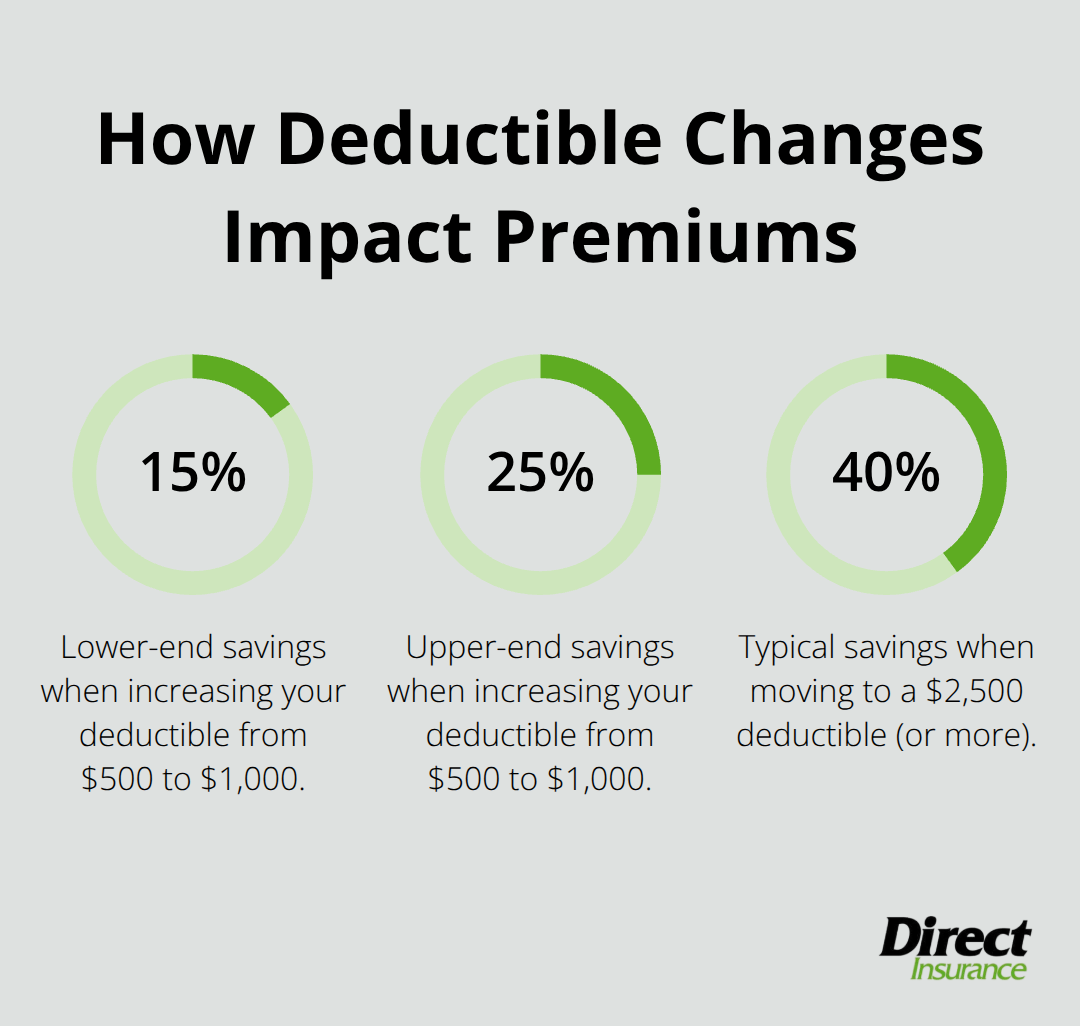
Raising your deductible directly lowers your premium, but only if you have sufficient savings to cover the higher out-of-pocket cost when you file a claim. Moving from a $500 deductible to $1,000 typically reduces your annual premium by 15 to 25 percent, while jumping to a $2,500 deductible can cut costs by 40 percent or more. However, this strategy backfires if a hail storm damages your roof and you lack $2,500 in accessible funds to pay before your insurer reimburses you.
Set your deductible at the highest level you can genuinely afford to pay within 30 days of a loss, not the amount you hope to have someday. Homeowners in Summit County paying median premiums of $2,829.61 annually might save $400 to $700 through this adjustment, making it particularly valuable in high-cost regions.
Maintain Your Home to Protect Your Coverage
Regular maintenance directly affects your insurability and premium. Insurers increasingly deny coverage for water damage from frozen pipes if they determine you failed to maintain adequate heat during winter, effectively voiding a claim when you need it most. Inspect your roof every two years and replace it before it reaches 20 years of age, since older roofs trigger higher premiums or coverage restrictions at renewal. Keep gutters clear, trim tree branches away from your home, and address any foundation cracks or water intrusion issues before they worsen. Document your maintenance with photos and receipts-this evidence supports your claim if damage occurs and demonstrates responsible homeownership to your insurer at renewal time.
Know What Affects Your Premium Beyond Your Control
Your location, claims history, and home characteristics determine much of what you pay. Fire protection class (determined by your distance to a fire hydrant and your local fire department’s quality) influences your premium significantly, as does your insurance score, which is a credit-based rating that Utah insurers use to assess risk. Construction and repair costs continue to rise, especially in densely populated areas with limited supply, pushing premiums higher across the state. Extreme weather events are becoming more frequent and severe, increasing the risk of home damage and claims in Utah. These factors explain why Summit County residents face substantially higher premiums than those in other regions-terrain, elevation, and weather exposure create genuine cost differences that no discount can fully offset. Understanding these realities helps you set realistic expectations as you shop for coverage and plan your insurance budget.
Right Coverage Amounts for Your Utah Home
Determining the correct coverage limits requires honest assessment of what you actually own and what it costs to rebuild. Homeowners regularly underinsure their dwellings because they confuse home market value with replacement cost. A $400,000 home in Salt Lake County might require $500,000 in dwelling coverage if construction costs run $175 per square foot for a 2,000 square foot rebuild, especially as material and labor costs continue climbing across Utah. The National Association of Insurance Commissioners emphasizes that replacement cost reflects what you’ll spend to rebuild with comparable materials, excluding land value. Start with a detailed rebuild estimate from a local contractor or use online calculators that factor in Utah’s current construction costs.

Then add 10 to 20 percent as a safety buffer since inflation consistently outpaces initial estimates. Your mortgage lender’s appraisal shows market value, not rebuild cost, so don’t use that number when setting dwelling limits.
Personal Property Coverage Must Match Your Actual Possessions
Standard personal property coverage limits typically run 50 to 70 percent of your dwelling coverage, which often leaves high-income earners significantly underinsured. If your dwelling limit is $500,000, standard coverage might provide only $250,000 to $350,000 for contents, yet you could own $400,000 in furniture, electronics, art, and clothing. Walk through your home and photograph every room, then create a spreadsheet listing items with approximate purchase prices. Electronics, appliances, and furniture depreciate rapidly, so replacement cost coverage for contents matters far more than actual cash value, particularly for newer purchases. The cost difference between ACV and replacement cost on personal property is typically 5 to 15 percent of your annual premium-a worthwhile investment when a single claim could exceed your coverage limits. Request a specific dollar amount for your contents coverage limit rather than accepting the standard percentage-based calculation, and ensure your policy states replacement cost value rather than actual cash value.
High-Value Items Demand Separate Protection
Jewelry, fine art, collectibles, and high-end electronics face strict sublimits under standard homeowners policies, meaning your standard coverage might reimburse only $1,500 to $2,500 for all jewelry even if you own a $15,000 engagement ring. Blanket jewelry coverage removes these sublimits and covers items at full replacement cost without requiring receipts for each piece, costing roughly $100 to $300 annually depending on total value. Similarly, fine art, antique collections, and high-end cameras need scheduled personal property endorsements that list specific items and their values. Document everything with photographs, professional appraisals, and purchase receipts stored outside your home (ideally in a safe deposit box or cloud storage). For items under $10,000 in total value, blanket coverage proves more practical than scheduling each piece individually, but anything exceeding that threshold warrants itemized scheduling. Ask your agent about coverage for business property kept at home, since standard homeowners policies exclude equipment used for income generation.
Final Thoughts
Balancing protection and cost requires three practical decisions: understanding what your home actually costs to rebuild, choosing coverage limits that match your real possessions, and implementing the specific discounts available to Utah homeowners. Replacement cost matters far more than market value, bundling policies saves roughly $950 annually, and raising your deductible strategically cuts premiums without leaving you vulnerable if you maintain adequate emergency savings. The homeowners insurance tips Utah homeowners need most involve honest assessment rather than guesswork-photograph your belongings, get a contractor’s rebuild estimate, and request specific dollar amounts instead of accepting percentage-based calculations.
Your next step is straightforward: gather your current policy documents and compare them against what you’ve learned here. Check whether you have replacement cost or actual cash value coverage, verify your dwelling limit against current construction costs in your county, and identify any protection gaps for high-value items or winter-related risks. Request quotes from at least three insurers and compare the bundled rates for both auto and homeowners policies, not just the home premium alone.
If your policy is more than two years old, the rates have almost certainly changed-Utah counties saw median premium increases ranging from 51 percent in Salt Lake County to 96.8 percent in Summit County between 2020 and 2023, so shopping around isn’t optional anymore. Start your review with Direct Insurance Services to find coverage that actually fits your needs and budget, or call to discuss your current policy with someone who knows Utah homeowners insurance inside and out. Our team understands Utah’s specific risks, from flash flooding in desert regions to ice dam damage in mountain communities, and we work with top-rated carriers to help you navigate these decisions without pressure.
Disclaimer: The information provided in this blog is for general informational purposes only and does not constitute legal, financial, or insurance advice. Coverage options, terms, and availability may vary. Please consult with a licensed professional for advice specific to your situation

