Rental Property Insurance Utah: A Local Landlord’s Guide
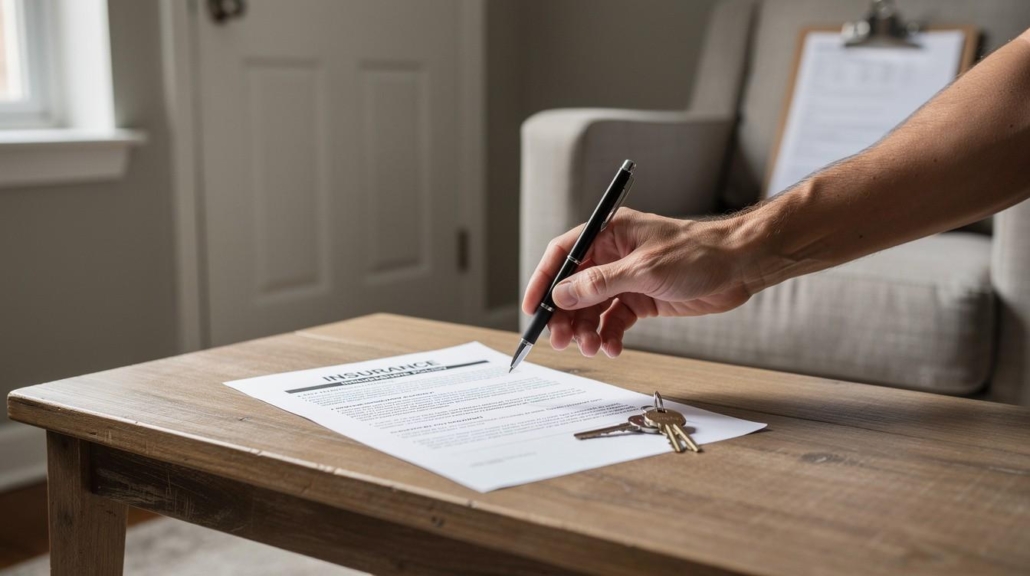
Owning rental property in Utah comes with real financial exposure. Tenants, visitors, and property damage create liability risks that standard homeowners insurance won’t cover.
At Direct Insurance Services, we’ve helped countless Utah landlords protect their investments with proper rental property insurance. This guide walks you through the coverage types you need, how to assess your specific risks, and how to find a policy that actually fits your situation.
What You Actually Need to Know About Utah Rental Property Insurance
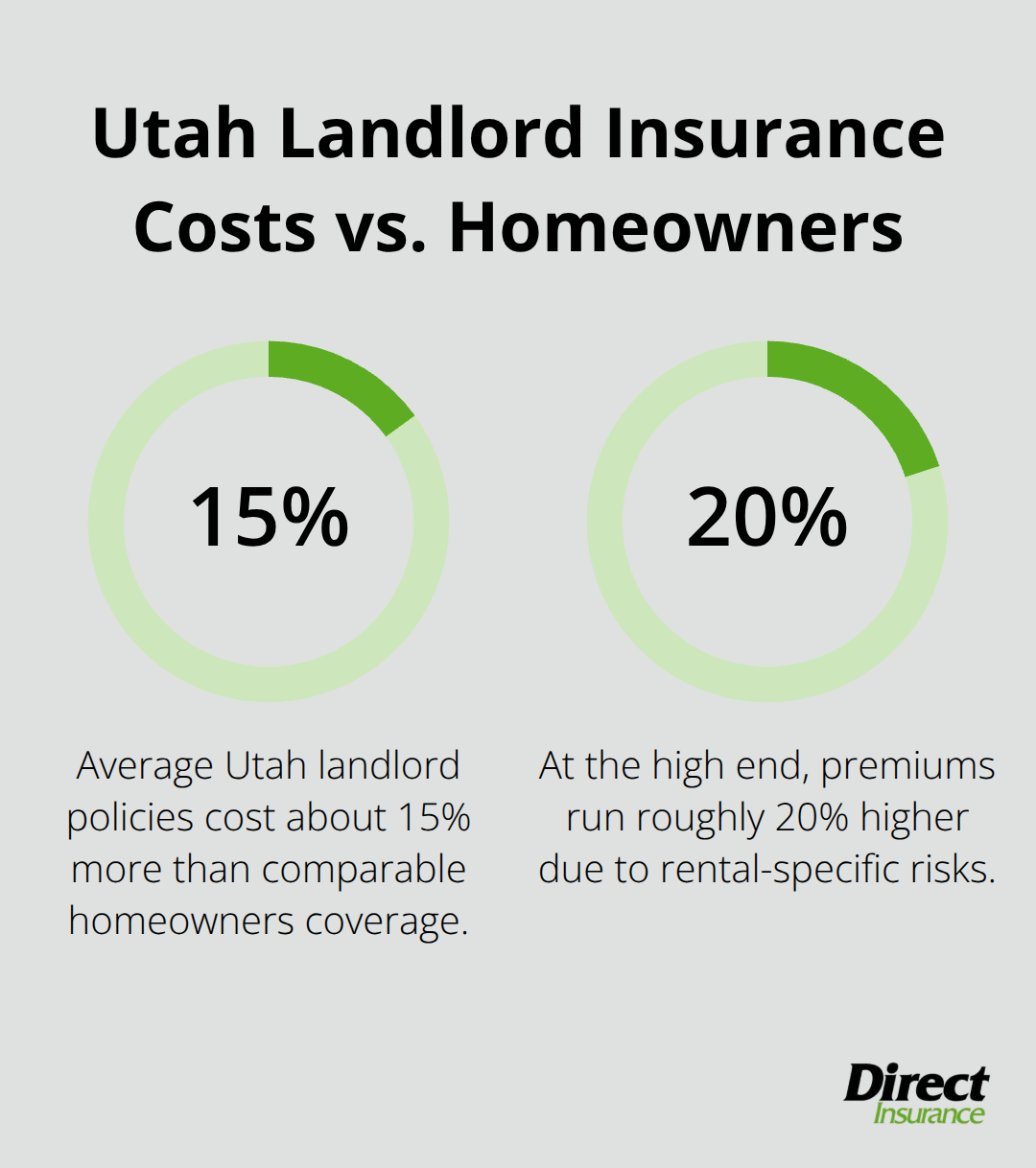
Utah doesn’t legally require you to carry landlord insurance, but that’s where most landlords make their first mistake. The state is landlord-friendly in many ways-no rent control, fast evictions, high rental demand-but that doesn’t mean your property is protected. Standard homeowners insurance explicitly excludes rental activity. If you rent out your property and file a claim without proper landlord coverage, your insurer can deny it entirely. We’ve seen this happen repeatedly. The average cost of landlord insurance in Utah runs about $913 annually, which is roughly 15 to 20 percent more than homeowners coverage for the same building. That difference exists because rental properties carry different risks: tenant damage, loss of income when the property becomes uninhabitable, and liability exposure from multiple occupants.
Why Homeowners Insurance Fails for Rental Properties
Your homeowners policy was designed for owner-occupied homes. It doesn’t cover lost rental income if a fire makes your unit unrentable for months. It doesn’t protect you against tenant-related liability claims. It won’t reimburse the mortgage, property taxes, and maintenance costs that continue while you wait for repairs-and major rebuilds in Utah often take 18 months or longer. Liability coverage in a standard homeowners policy typically maxes out at $100,000 to $300,000, which is dangerously low for a rental property where multiple people enter regularly. If a guest trips on your stairs and sues for $500,000 in medical bills, you become personally liable for the gap. Landlord policies specifically address these gaps. They include dwelling coverage for the building structure, liability protection that can reach $1 million, loss of rents coverage, and often vandalism or theft protection. Utah landlords should also know that wildfire risk is significant in certain regions and severe winter storms hit mountain properties regularly, making fire and weather coverage non-negotiable.
The Coverage Gaps That Cost Landlords Money
Most landlords discover coverage gaps only after a loss. Flood damage isn’t included in standard landlord policies-you need a separate endorsement or flood insurance, which matters in Utah (spring runoff and occasional heavy precipitation events create real exposure). Sewer backup coverage requires an add-on. Earthquake coverage is excluded unless you purchase it separately.
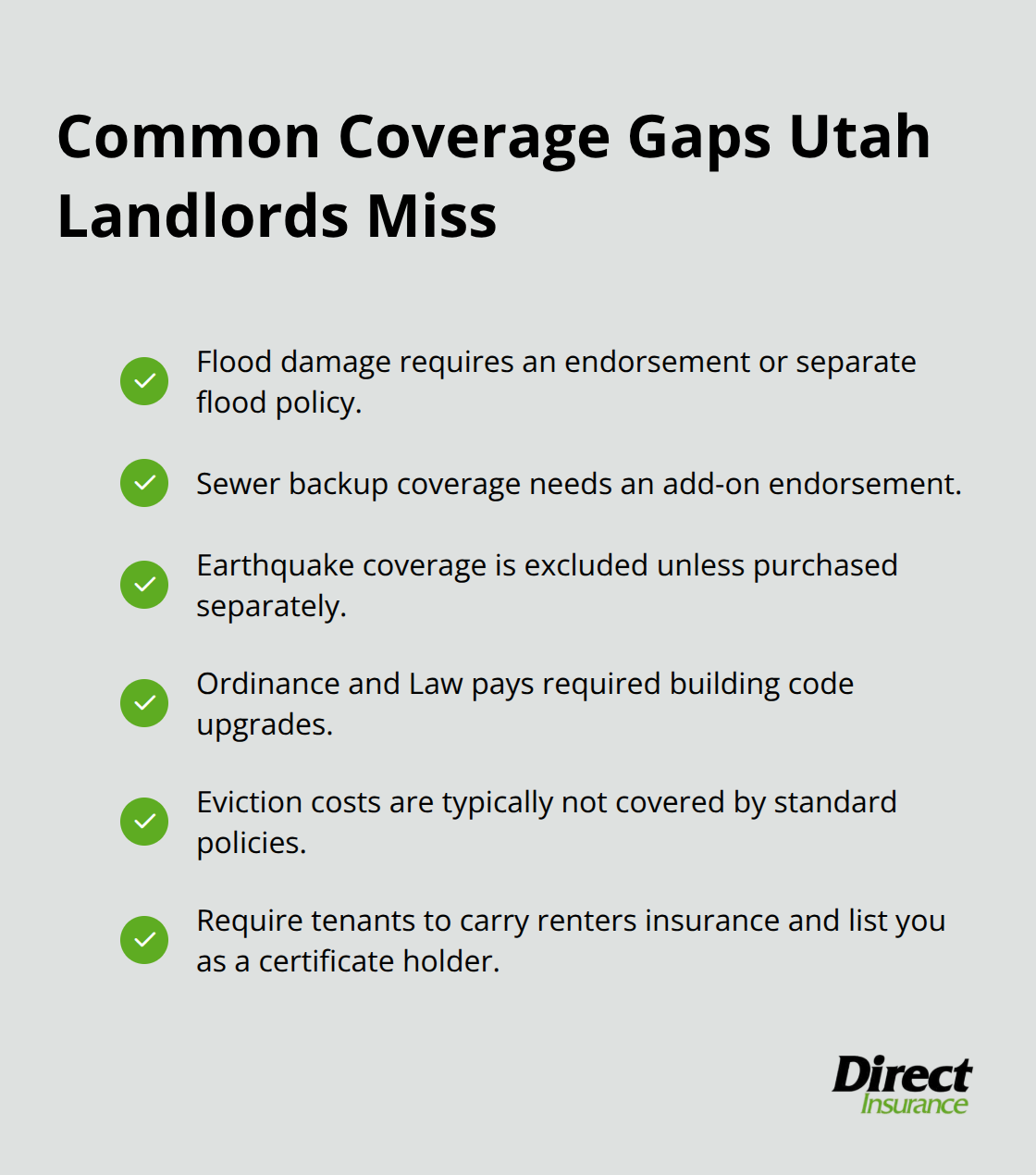
Building code upgrade costs represent another common gap: when you rebuild after a fire, current code might require updated electrical, plumbing, or structural work that your original replacement cost doesn’t cover. Ordinance and Law coverage pays for these upgrades and becomes increasingly important on older properties. Eviction costs are typically not covered either, though some carriers offer endorsements. If you require tenants to carry renters insurance and list you as a certificate holder-which you absolutely should-make sure your policy actually coordinates with their coverage rather than creating overlaps that leave you exposed.
Working with a Local Agent to Avoid Gaps
Online quotes often miss critical protections because they can’t account for your property’s specific characteristics. A local Utah agent understands the regional risks that matter: wildfire exposure in certain areas, winter storm damage on mountain properties, and the liability patterns that emerge in fast-growing rental markets. That agent can also explain how your policy coordinates with tenant coverage and identify endorsements that fill gaps before a loss occurs. A local agent tailors your policy to match your actual exposure rather than settling for generic protection. Whether you own a single-family rental, a duplex, or a condo, personalized guidance ensures you’re truly protected rather than facing a financial disaster.
Understanding what your landlord policy actually covers-and what it doesn’t-determines whether you’re truly protected or facing a financial disaster. The next section walks you through the essential coverage types that every Utah rental property needs.
Essential Coverage Types for Utah Rental Properties
Dwelling Coverage: Protecting Your Building Structure
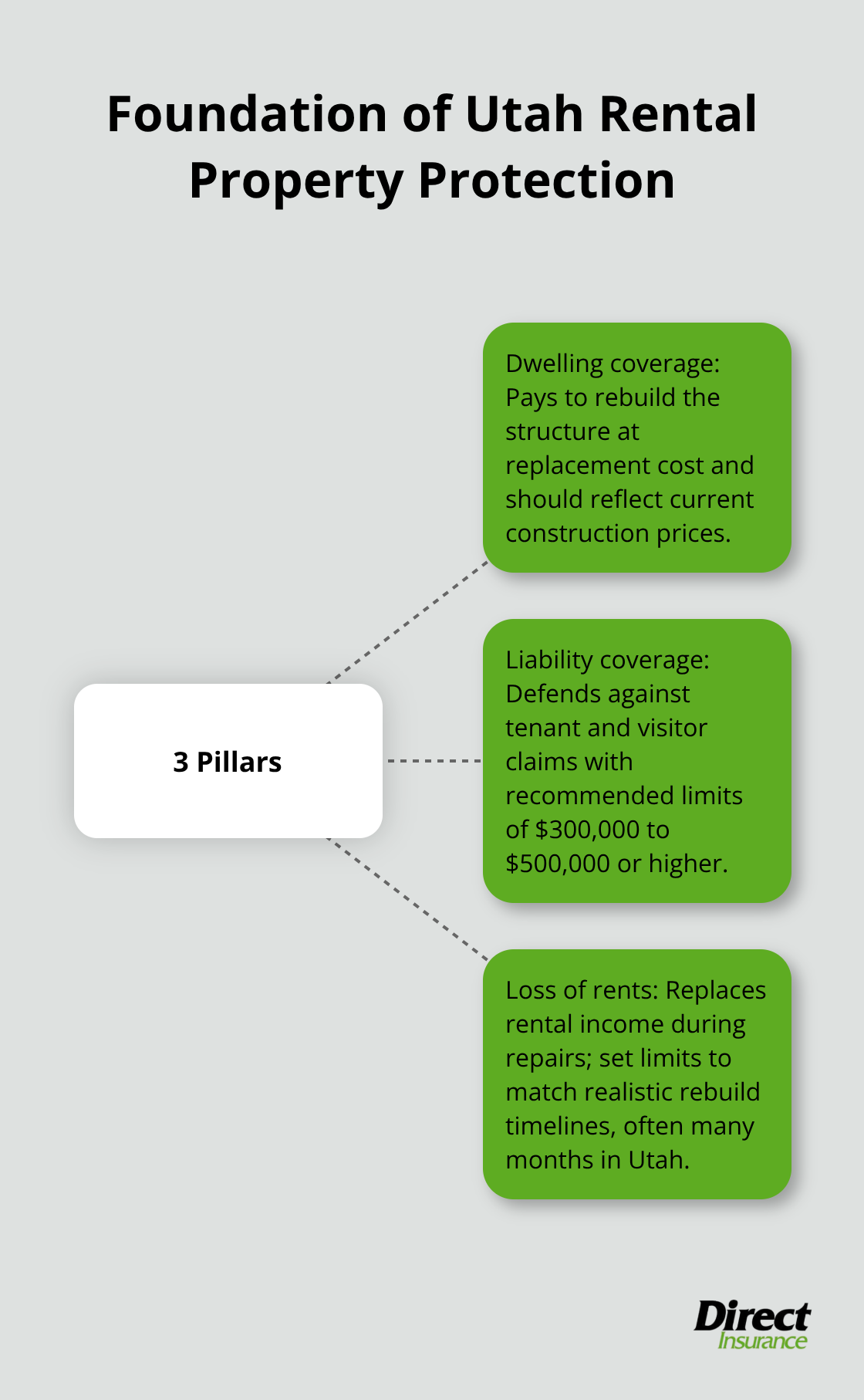
Dwelling coverage protects the structure itself-the walls, roof, foundation, and permanently attached systems like electrical and plumbing. In Utah, you need replacement cost coverage, not actual cash value. The difference matters enormously. If your rental property suffers a $100,000 fire loss and your policy limits are set at $200,000 with replacement cost, you receive the full $100,000 to rebuild. If you’re underinsured-say your property actually needs $400,000 to rebuild but you only carry $200,000-coinsurance penalties kick in. You’d receive only $50,000 of that $100,000 loss because you’re insuring only half of what you should.
Utah properties face real fire exposure, particularly in mountain regions and areas near wildland-urban interface zones. Your dwelling coverage should reflect current construction costs in your area, not the price you paid five years ago. Older Utah properties often qualify only for DP-2 or DP-1 policies rather than the broader DP-3 Special Form, so verify your property qualifies for comprehensive coverage before you buy.
Ordinance and Law coverage is critical for older rentals. It reimburses the additional costs to bring undamaged portions of your structure up to current building code after a covered loss-something standard replacement cost won’t cover. This protection becomes increasingly valuable as properties age.
Liability Coverage: Defending Against Tenant and Visitor Claims
Liability coverage protects you when a tenant or visitor is injured on your property and sues. Standard liability limits of $100,000 to $300,000 are dangerously inadequate for rental properties. We recommend minimum coverage of $300,000 to $500,000, and increasing from $300,000 to $500,000 typically costs only about $20 per year-a trivial expense for substantially better protection.
If a guest falls down your stairs and incurs $750,000 in medical and legal costs, a $300,000 policy leaves you personally liable for $450,000. Requiring tenants to carry renters insurance and list you as a certificate holder adds another layer of protection; their liability coverage can reach $100,000 or more, creating a combined defense up to roughly $1 million depending on claim specifics.
Loss of Rents Coverage: Protecting Your Income During Repairs
Loss of rents coverage reimburses you when a covered peril makes the property uninhabitable. If a fire forces your tenant out and repairs take 18 months-a realistic timeline for major Utah rebuilds-this coverage pays your lost rent and continuing expenses like mortgage payments and property taxes throughout the vacancy. Calculate your loss of rents limit carefully: multiply your monthly rent by the number of months you reasonably expect repairs to take. If you collect $1,500 monthly and expect an 18-month rebuild, your loss of rents limit should be at least $27,000. Many landlords underestimate this coverage and face serious cash flow problems during extended repairs.
These three pillars form the foundation of rental property protection. The next section shows you how to assess your specific property risks and compare policies that actually match your situation.
How to Choose the Right Rental Property Insurance Policy
Assess Your Property’s Specific Characteristics
Selecting rental property insurance requires more than clicking through an online quote generator. Your property’s specific characteristics-location, age, construction type, number of units, and local risk exposure-directly determine which policies you qualify for and what you’ll pay. Start by gathering precise details about your rental: the year built, square footage, number of units, construction materials, proximity to wildland areas (critical in Utah given wildfire exposure), and whether the property has had previous claims.
Properties built before 1980 often qualify only for DP-2 or DP-1 policies instead of the broader DP-3 Special Form, which affects both coverage breadth and cost. Newer properties in low-risk areas typically qualify for DP-3, offering replacement cost coverage without restrictions. Your property’s location matters significantly. A rental in a mountain region near wildland-urban interface zones faces different fire exposure than a property in Salt Lake City’s developed areas. Utah’s winter storms create additional exposure for mountain properties, while lower elevation rentals may face different seasonal risks.
Once you understand your property’s profile, you can accurately assess which coverage limits actually protect you. Underinsurance due to coinsurance penalties is far more expensive than paying slightly higher premiums upfront.
Compare Quotes from Multiple Carriers
Online quote tools often seem convenient, but they consistently miss critical details because algorithms cannot account for Utah-specific risks or your property’s unique characteristics. An independent agent works with multiple top-rated carriers-not just one company-and can access quotes that online platforms don’t offer. That agent understands which carriers specialize in older Utah properties, which ones offer the best rates for mountain rentals, and which provide the strongest service records for claims handling.
When comparing quotes from multiple carriers, focus on three factors beyond price: the coverage form offered (DP-3 is superior to DP-2 or DP-1), the deductible structure (higher deductibles lower premiums but increase your out-of-pocket costs after a loss), and what endorsements each carrier includes or charges extra for. A quote $200 cheaper annually means nothing if it excludes sewer backup coverage that costs you $15,000 when your rental experiences a claim.
Work with a Local Agent to Customize Coverage
Local agents identify discounts you won’t find online-multi-policy discounts if you bundle your rental coverage with homeowners or auto insurance, security system discounts for properties with monitored alarms, and claims-free discounts after years without losses. An agent who understands Utah landlord risks helps you customize coverage by adding critical endorsements before a loss occurs: flood coverage if your property sits in a flood-prone area, earthquake coverage if you’re in a seismic zone, building code upgrade protection for older structures, and service line coverage for main sewer or water line repairs.
This tailored approach costs more initially than a generic online quote but prevents the financial disasters that emerge when landlords discover coverage gaps after claims occur. At Direct Insurance Services, we work with top-rated carriers to help you access the best coverage options without the pressure of a one-size-fits-all approach. Our experienced team provides clear guidance on which endorsements actually protect your specific property and which ones you can safely skip based on your location and risk profile.
Final Thoughts
Rental property insurance in Utah protects your investment from the financial devastation that follows a major loss. Without proper coverage, a single fire, tenant injury claim, or extended vacancy wipes out years of rental income and forces you into personal liability that extends far beyond your property value. The three pillars we’ve covered-dwelling protection, liability defense, and loss of rents coverage-form the foundation of any solid landlord policy.
Utah’s specific risks, from wildfire exposure in mountain regions to severe winter storms and fast-growing rental markets, demand coverage tailored to your actual location and property characteristics. Gather your property details and request quotes from multiple carriers through a local agent who understands rental property insurance in Utah. Verify that any policy you consider offers replacement cost dwelling coverage, liability limits of at least $300,000 to $500,000, and loss of rents protection calculated to cover your actual rebuild timeline.
At Direct Insurance Services, we work with top-rated carriers to help Utah landlords access the best coverage options without pressure or one-size-fits-all solutions. Our experienced team provides clear guidance on which endorsements protect your specific property and which ones you can skip. Contact us today to review your current protection or get a personalized quote that reflects your property’s real risks and your financial situation.
Disclaimer: The information provided in this blog is for general informational purposes only and does not constitute legal, financial, or insurance advice. Coverage options, terms, and availability may vary. Please consult with a licensed professional for advice specific to your situation


