Condo Policy Basics: What Every Owner Should Know

Condo ownership comes with unique insurance needs that differ from traditional homeowners coverage. Many condo owners don’t realize their building’s master policy leaves significant gaps in protection for their unit and belongings.
At Direct Insurance Services, we’ve seen firsthand how condo policy basics get overlooked, leaving owners exposed to unexpected costs. This guide walks you through what you actually need to know to protect your investment.
Why Your Condo Needs Its Own Insurance Policy
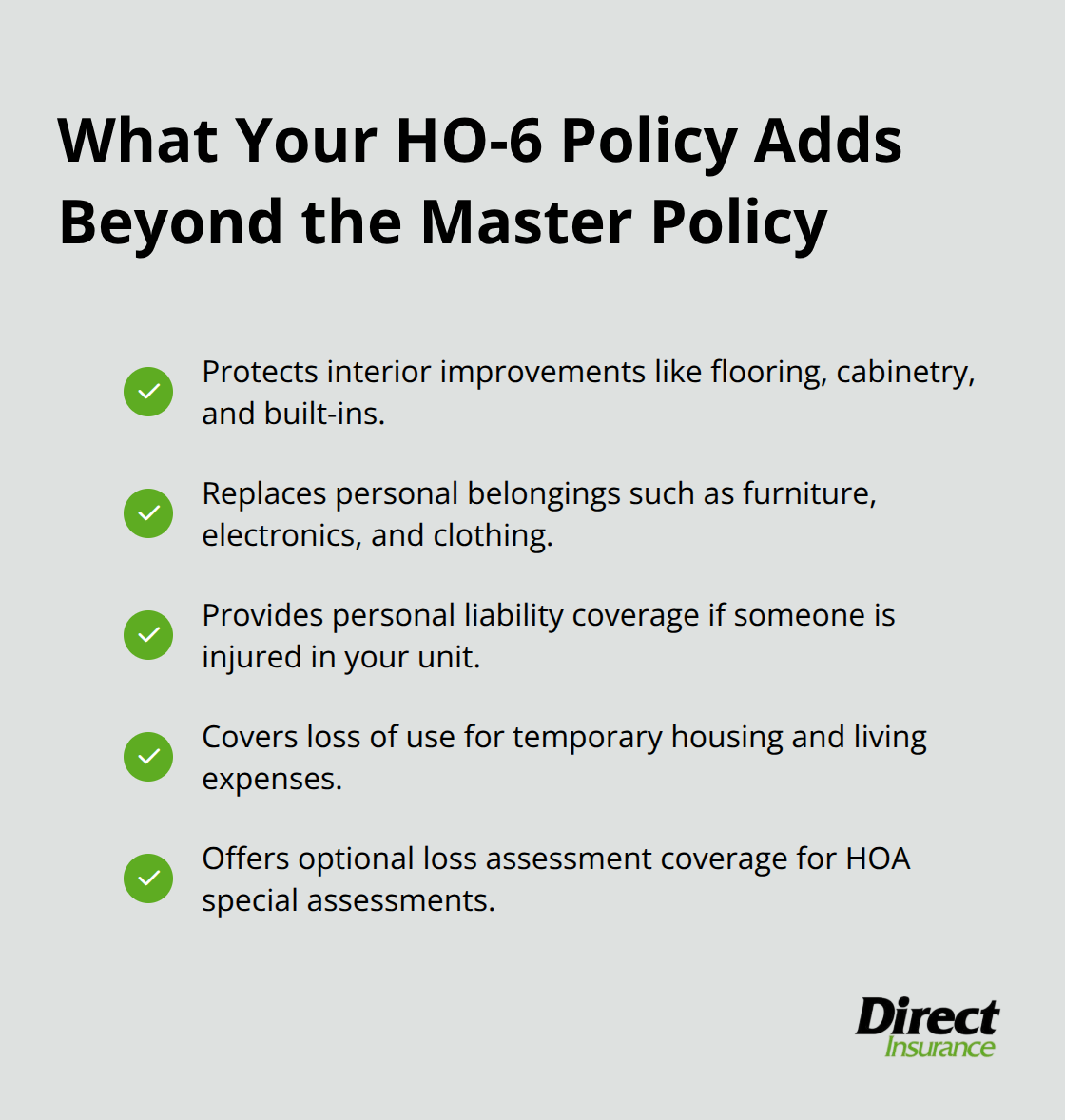
A condo policy, formally called HO-6 insurance, protects what the building’s master policy doesn’t. Your condo association’s master policy covers the structure itself-the roof, exterior walls, common hallways, elevators, and shared spaces. It does not protect your personal belongings, the interior of your unit, or your liability if someone gets injured inside your home. That gap is where condo insurance steps in. Without it, you’re personally responsible for replacing everything from your furniture to your kitchen cabinets if disaster strikes.
Mortgage lenders typically require condo insurance as a condition of financing, and many HOAs mandate it in their bylaws. Even if neither applies to you, skipping this coverage is financially reckless. A single water damage claim from a burst pipe or a liability lawsuit from a guest injured on your property can cost tens of thousands of dollars out of pocket.
What HO-6 Actually Protects
HO-6 covers three critical areas your master policy ignores. First, dwelling coverage protects the interior elements you’re responsible for-paint, flooring, cabinetry, built-in appliances, and any improvements or renovations you’ve made. Second, personal property coverage replaces your belongings if they’re damaged, destroyed, or stolen due to a covered loss like fire, theft, or storms.
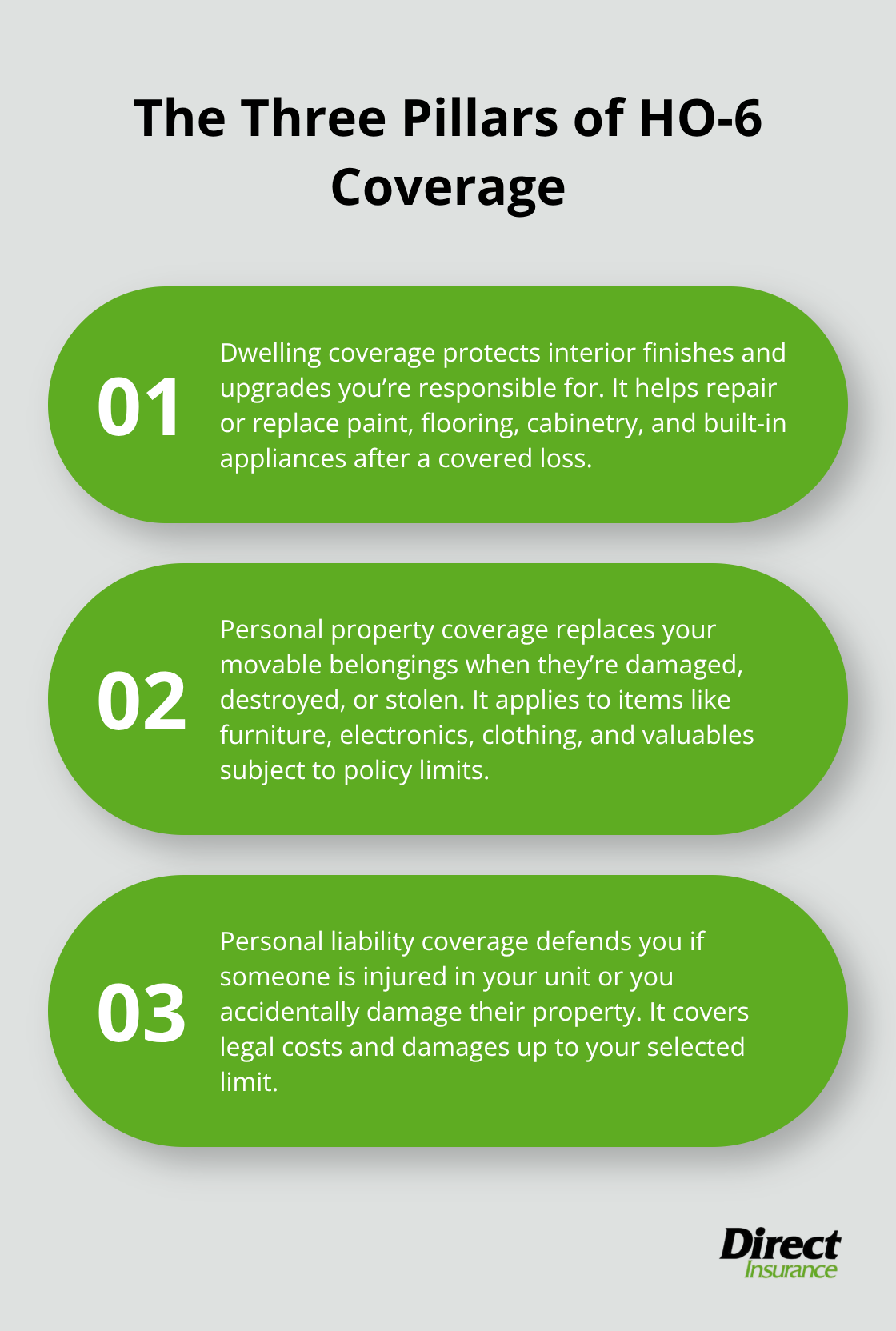
This includes furniture, electronics, clothing, and valuables. Third, personal liability coverage defends you if someone sues you for injuries or property damage they sustained at your unit. Standard liability minimums sit around $100,000, though higher limits are available.
Loss of use coverage, often included, pays for temporary housing and living expenses if your unit becomes uninhabitable. The key difference between HO-6 and standard homeowners insurance is scope. Standard homeowners policies protect single-family homes and cover the entire structure plus contents. HO-6 focuses narrowly on what you own inside your unit and your personal liability, assuming the building’s master policy handles the structure.
Gaps That Leave You Exposed
Master policies vary significantly in what they cover inside units. Some policies provide bare-walls coverage, meaning they only cover the building’s structural shell. Others include single-entity coverage that extends to built-in fixtures. A few offer all-in coverage that even includes your improvements and additions. Without reviewing your HOA’s actual master policy document, you won’t know which category applies to you.
Many condo owners assume the master policy covers everything and discover during a claim that they’re personally liable for tens of thousands in uninsured damage. Loss assessment coverage, an optional endorsement on your HO-6 policy, protects you from special assessments if the master policy limits are exhausted after a major loss affecting the entire building. When the master policy can’t cover the full cost of rebuilding common areas, the HOA bills residents for the difference.
Without loss assessment coverage, you could face bills of $5,000 to $50,000 or more (depending on the damage and your unit’s percentage of ownership). This coverage is inexpensive-often $50 to $100 annually-and we strongly recommend adding it to every condo policy. Understanding these gaps matters because they directly shape what you need to buy. The next section walks you through how to assess your unit’s actual value and match it with the right coverage limits.
What Your HO-6 Policy Actually Covers
Dwelling Coverage for Your Interior
Your HO-6 policy protects three distinct areas that the master policy leaves uncovered. Dwelling coverage reimburses you for damage to interior elements you’re responsible for maintaining-paint, flooring, cabinetry, built-in appliances, countertops, and any renovations you’ve completed. If a burst pipe floods your unit and ruins your custom tile work and newly installed kitchen cabinets, dwelling coverage pays to repair or replace those items up to your policy limit. Travelers reports that dwelling coverage also protects against fire, smoke damage, storms, vandalism, and internal plumbing issues.
Personal Property and Liability Protection
Personal property coverage is equally essential because it protects movable items inside your unit: furniture, electronics, clothing, jewelry, and other belongings. A kitchen fire that destroys your appliances, dishes, and food? Personal property coverage handles it. A theft that takes your laptop and watches? Covered. Personal liability coverage defends you if someone is injured at your unit or if you accidentally damage their property. If a guest slips on your bathroom floor and breaks their arm, sues you, and wins a judgment, your liability coverage pays the legal costs and damages up to your policy limit.
Standard minimums often fall short for serious injuries. We recommend higher limits of $300,000 to $500,000 if you have guests regularly or live in a building with heavy foot traffic. Loss of use coverage, typically included in HO-6 policies, reimburses temporary housing, meals, and transportation costs if your unit becomes uninhabitable from a covered loss.
Critical Gaps Between Master and HO-6 Coverage
The critical gap is understanding what your specific master policy actually covers inside your unit, because this determines your HO-6 limits. Some master policies cover only the bare walls and structural shell, leaving you responsible for everything else. Others extend to built-in fixtures like counters and cabinetry. A few cover improvements and additions you’ve made. Without reviewing your HOA’s actual master policy document, you’re guessing about your protection.
Regional hazards like earthquakes, sinkholes, and nuclear hazards require separate coverage beyond HO-6-they’re standard exclusions. Sewer backups and damage from municipal water lines also typically require endorsements because HO-6 focuses on internal plumbing, not external municipal systems. Routine maintenance, wear and tear, and intentional damage are never covered.
Loss Assessment Coverage and Renovations
Loss assessment coverage, which we recommend adding to every policy, protects you from special assessments if the master policy limits are exhausted after a major loss affecting common areas. Without it, you could face significant bills if the HOA rebuilds after a fire or major structural damage. If you’ve renovated your unit, the original dwelling coverage limits won’t reflect the increased value-you must update them with your agent to avoid underinsurance during a claim. The next section shows you how to assess your unit’s actual value and match it with the right coverage limits for your situation.
Choosing the Right Coverage for Your Condo
Calculate Your Unit’s Replacement Cost
Start with your unit’s replacement cost, not what you paid for it. Market value and replacement cost are entirely different figures. If you bought your condo for $250,000 five years ago and it’s now worth $350,000, that’s market appreciation-but it doesn’t tell you what it costs to rebuild the interior if it burns down. Calculate the replacement cost of your dwelling coverage by estimating what it would cost to rebuild your unit from the foundation up: new drywall, flooring, cabinetry, countertops, appliances, and any custom finishes you’ve installed. Many condo owners underestimate this figure significantly. A modest two-bedroom unit with mid-range finishes easily runs $100,000 to $150,000 to rebuild. If you’ve renovated with higher-end materials, add another $50,000 to $100,000.
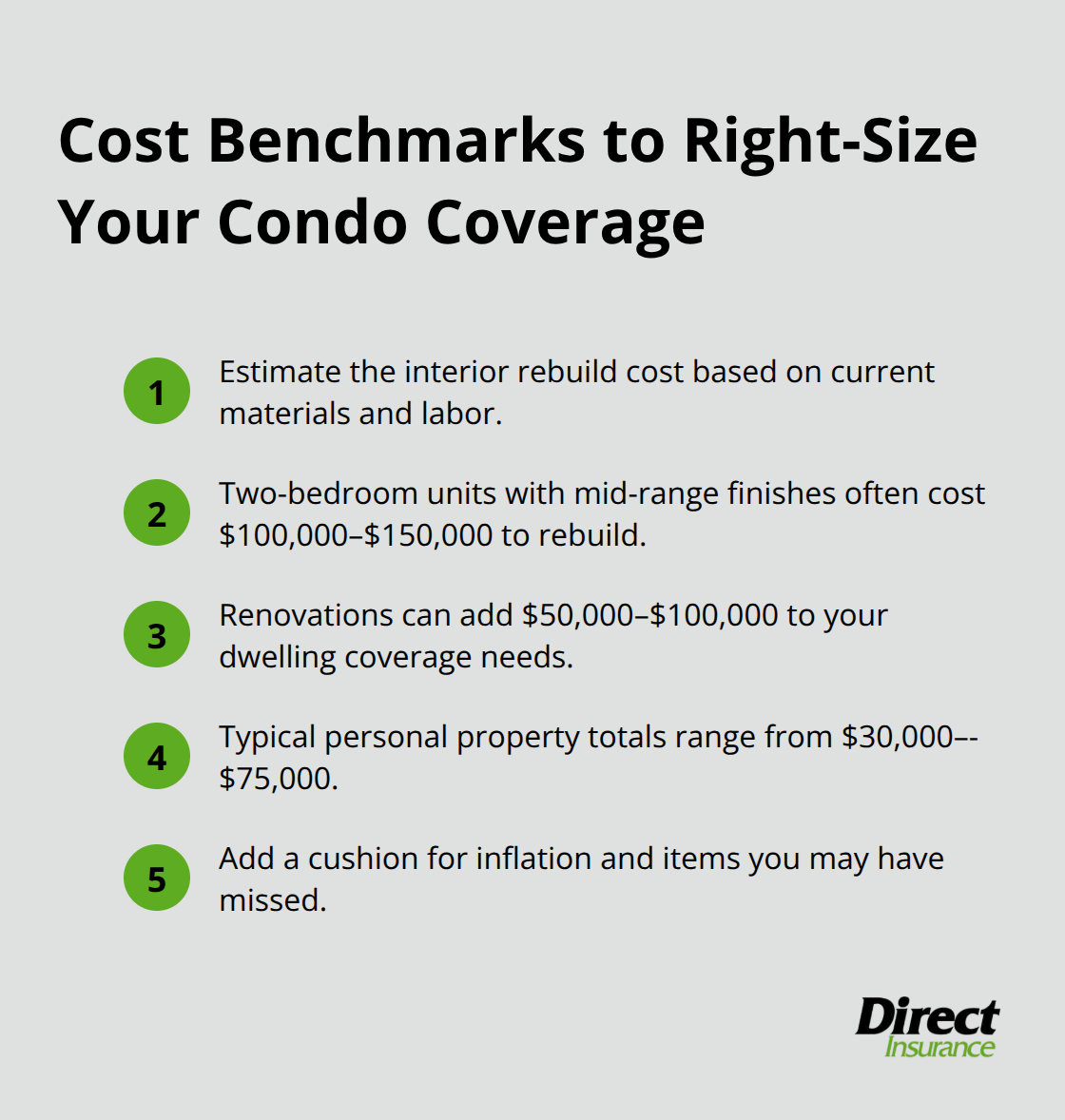
For personal property, create a detailed home inventory. Walk through your unit and photograph or video-record every item of value: electronics, furniture, jewelry, artwork, and appliances. Assign realistic replacement costs to each category. Most condo owners own $30,000 to $75,000 in personal belongings, though this varies dramatically based on lifestyle and possessions. Once you have these figures, your dwelling limit should match your replacement cost, and your personal property limit should cover your inventory with a small cushion for inflation and items you might have forgotten.
Review Your HOA’s Master Policy Document
Obtain a copy of your HOA’s master policy document directly from your condo association-this is non-negotiable. Do not rely on secondhand descriptions or assumptions about what it covers. Contact your HOA board or property management company and request the master policy and a summary of what it covers inside individual units. Read the actual policy language around dwelling coverage, particularly what it covers in the interior of your unit. Some master policies cover only structural elements like framing and drywall, leaving you responsible for flooring, paint, fixtures, and appliances. Others extend to built-in items. Once you understand exactly what the master policy covers, you avoid overpaying for duplicate coverage and identify critical gaps your HO-6 policy must fill.
Compare Quotes from Multiple Carriers
Request quotes from multiple carriers after you’ve assessed your unit’s value and reviewed the master policy. We recommend obtaining at least three quotes from different insurers to compare dwelling limits, personal property limits, liability limits, and endorsement options. When comparing quotes, ensure each one reflects the same coverage limits and deductibles so you’re making an apples-to-apples comparison. Pay close attention to whether loss assessment coverage is included or available as an add-on. This endorsement typically costs $50 to $100 annually and protects you from special assessments if the master policy limits are exhausted after a major loss.
Add Endorsements for High-Value Items and Renovations
High-value items like jewelry, watches, or expensive electronics may exceed your standard personal property limit, so ask each carrier about scheduled personal property endorsements that cover specific items at their full replacement value without a sub-limit. If you’ve made significant renovations, confirm that your quote reflects the increased value of your unit-carriers sometimes apply standard limits that don’t account for upgrades. Once you’ve selected a policy, review it annually and update your coverage if you’ve made improvements, acquired high-value items, or if your unit’s replacement cost has increased due to inflation and construction costs.
Final Thoughts
Condo policy basics come down to this: your building’s master policy protects the structure, not your unit or belongings. You need separate HO-6 coverage to fill those gaps-dwelling coverage protects your interior improvements, personal property coverage replaces your belongings, personal liability coverage defends you against injury claims, and loss assessment coverage shields you from special assessments if the master policy runs short after a major loss. Without these protections, a single disaster costs you tens of thousands of dollars out of pocket.
Start by obtaining your HOA’s actual master policy document and understanding exactly what it covers inside your unit. Calculate your unit’s replacement cost, create a detailed inventory of your belongings, and request quotes from multiple carriers to compare dwelling limits, personal property limits, and liability coverage side by side. Add loss assessment coverage and scheduled personal property endorsements for high-value items, then update your coverage annually as your unit’s value and possessions change.
An experienced insurance agent helps you navigate how your master policy interacts with your HO-6 coverage and identifies gaps you might miss. Contact Direct Insurance Services today to discuss your condo insurance needs and receive a personalized quote that reflects your unit’s true value and your family’s protection requirements.
Disclaimer: The information provided in this blog is for general informational purposes only and does not constitute legal, financial, or insurance advice. Coverage options, terms, and availability may vary. Please consult with a licensed professional for advice specific to your situation


