Boat and RV Insurance: Tailored Auto Coverage for Your Adventures
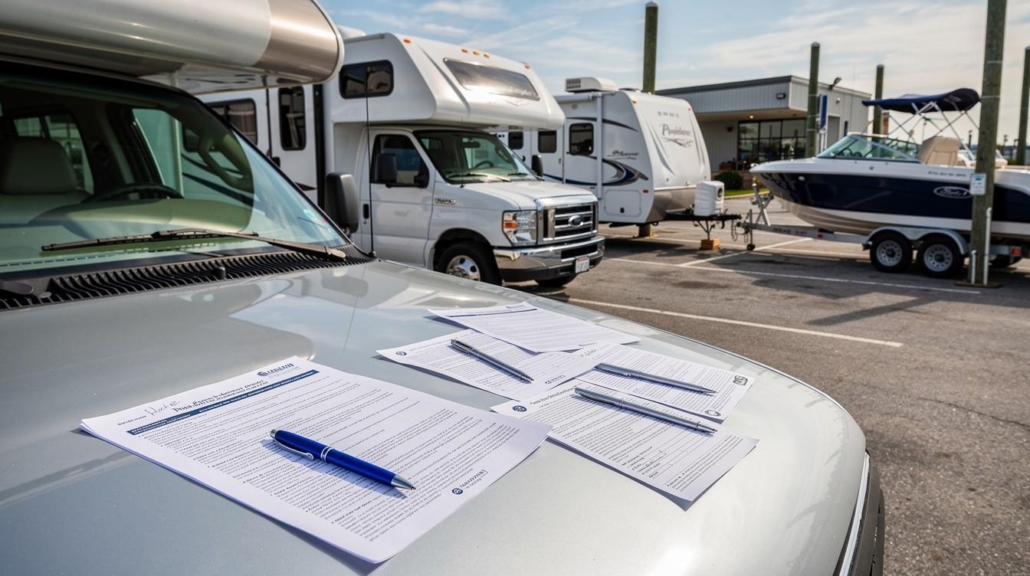
Your boat and RV represent freedom on the water and open roads. But standard auto insurance won’t protect them adequately-these vehicles face unique risks that demand specialized coverage.
At Direct Insurance Services, we know that boat and RV insurance requires a different approach than typical car policies. Let’s walk you through what you need to know to safeguard your recreational investments.
Why Boat and RV Insurance Differs from Standard Auto Coverage
Standard auto insurance was designed for vehicles that spend most of their time on public roads. Your boat sits idle in a marina for months. Your RV parks in campgrounds where liability exposure looks completely different. Your boat’s engine operates in saltwater environments that corrode components. Your RV’s roof faces intense UV damage from prolonged sun exposure. Standard auto policies simply don’t account for these realities, which is why state regulators and insurers treat them as entirely separate categories.
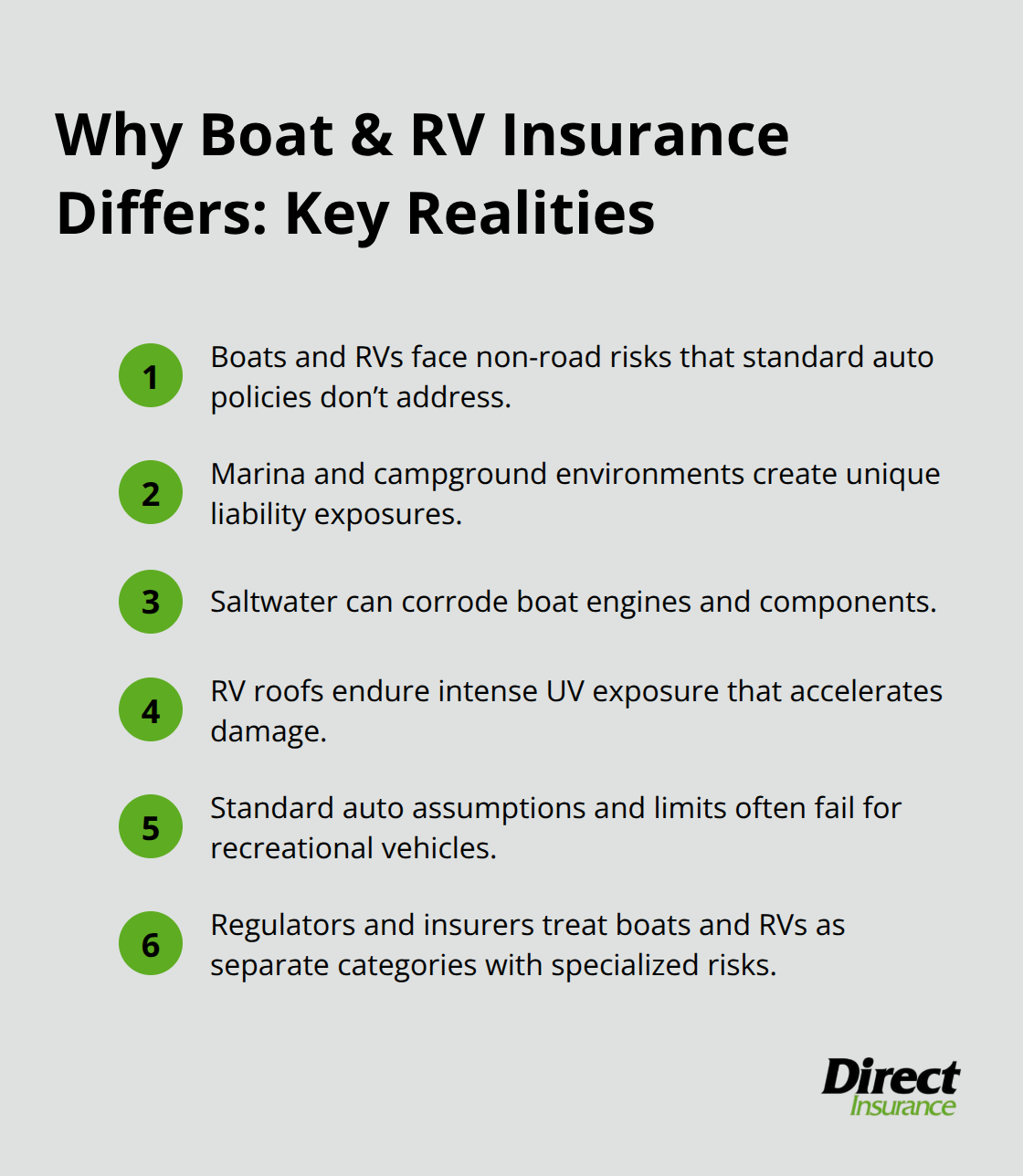
When you own a recreational vehicle, you operate in specialized environments with specialized risks that standard coverage ignores.
Most states require RV drivers to carry liability insurance that mirrors minimum car requirements, but that represents just the baseline. The actual protection gap extends far wider. Water damage in an RV is typically covered only if a sudden or accidental event causes it, while gradual leaks or wear are usually excluded. For boats, liability coverage often doesn’t appear in homeowners policies at all, leaving you exposed if someone gets injured on your vessel or if your boat damages someone else’s dock or equipment.
Replacement Costs That Exceed Standard Vehicles
A boat or RV can cost two to three times what you’d pay for a standard vehicle, yet standard auto coverage caps replacement value far below what you actually need. National General offers full replacement cost coverage for the first five model years and a nine-year purchase-price guarantee on new RVs, recognizing that depreciation schedules differ dramatically from cars.
Your RV’s interior-appliances, furniture, electronics-represents tens of thousands in additional value that standard policies won’t touch. Boats carry similar exposure, with specialized equipment like navigation systems, fishing gear, and watersports equipment requiring explicit coverage riders. When a boat is totaled or stolen, the insurer typically pays actual cash value or replacement cost depending on the policy you select, according to the Insurance Information Institute.
Seasonal Storage and Dormancy Patterns
Your boat spends half the year in storage. Your RV might sit unused for entire seasons. Standard auto policies charge you the same premium whether you drive daily or monthly, but recreational vehicles operate on completely different usage models. Many insurers now offer storage discounts specifically for RVs kept in seasonal storage, with Nationwide providing over 10 RV-specific discounts that account for part-time use patterns.
If you live in your RV more than six months annually, you need entirely different coverage-think homeowners-style protections like expanded personal liability, medical payments for guests, and loss assessment coverage. The risk profile changes fundamentally based on how many months per year you actually use the vehicle, yet standard auto underwriting never asks these questions. Understanding these differences positions you to select coverage that actually matches your recreational lifestyle rather than forcing your boat or RV into a standard auto box.
Coverage That Actually Protects Your Boat or RV
Liability Protection: The Foundation of Your Policy
Liability coverage forms the foundation of any boat or RV policy, and it includes costs associated with injuries, property damage, and legal fees, helping safeguard your finances in the event of an incident. When someone suffers injury on your boat or RV, or your vessel damages someone else’s dock, marina equipment, or another boat, liability coverage pays for their medical bills and property damage up to your policy limit. Progressive’s core boat insurance includes property damage liability and bodily injury liability as standard components, recognizing that watercraft and recreational vehicles create exposure that extends beyond typical roadway accidents. Most states don’t mandate boat insurance by law, yet marinas and storage facilities frequently require proof of coverage before you dock or store your vessel.
For RVs, state requirements mirror car insurance minimums, but the actual liability exposure you face while parked at a campground or traveling through multiple states demands higher limits than the baseline. Vacation liability coverage typically sits around $10,000, but you can increase it to $100,000 or more for an added cost-a move we recommend if you frequently host guests or travel to high-liability destinations. Watersport coverage deserves special attention for boat owners. This optional add-on pays medical costs for guests injured during water activities like tubing or waterskiing, up to a specified limit that you select.
Physical Damage Protection for Your Investment
Comprehensive and collision coverage protects the physical structure of your boat or RV itself. If you financed or leased your vessel, lenders almost always require both coverages. Comprehensive coverage handles theft, fire, falling objects, and weather damage, while collision covers accidents with other vehicles or objects. For RVs, Progressive offers roof protection coverage specifically designed for motorhomes or trailers under six years old with a $250 deductible, addressing the reality that roof damage from UV exposure, branches, or weather represents one of the most common claims full-time RVers file.
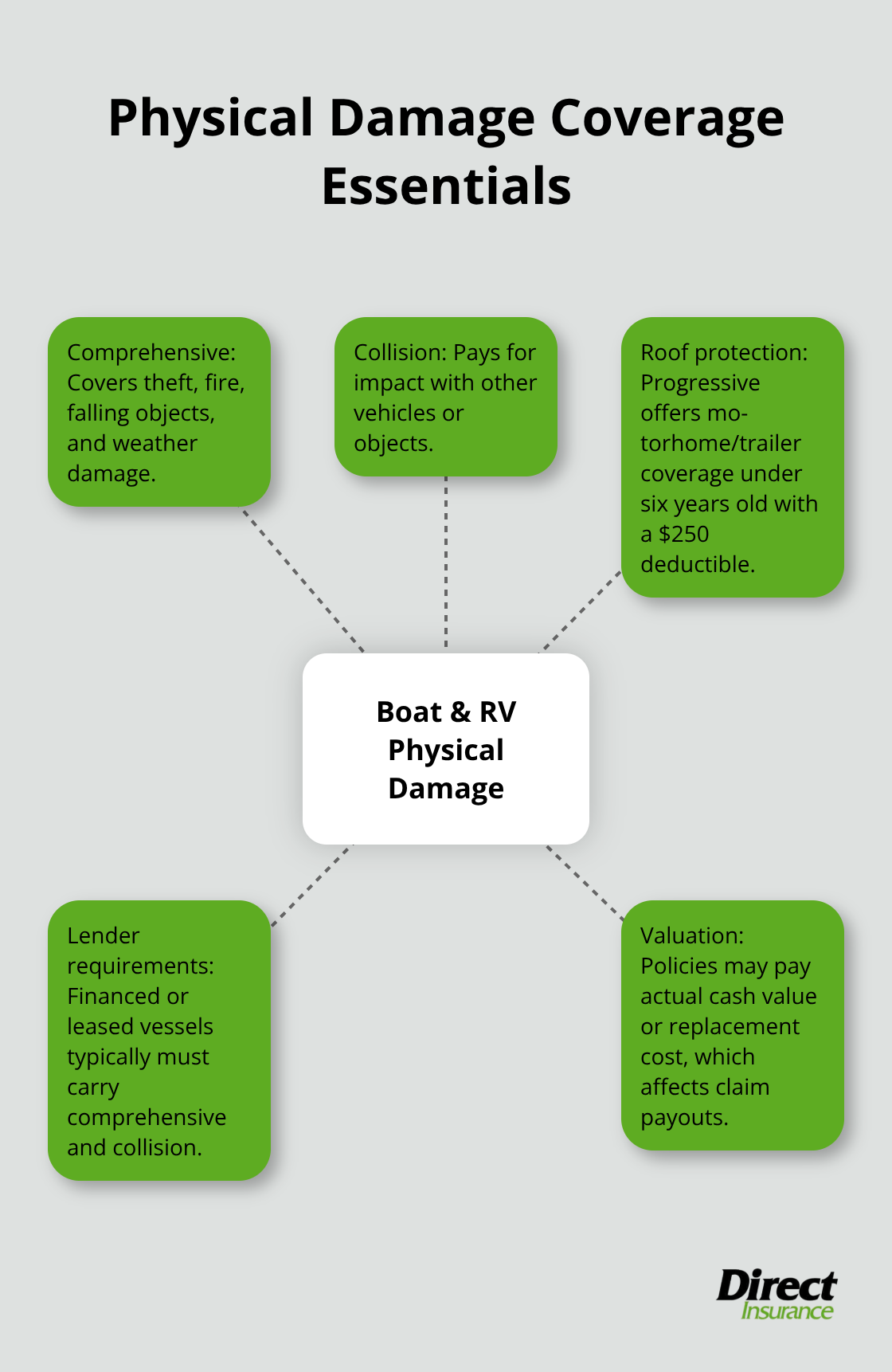
When a boat is totaled or stolen, the Insurance Information Institute notes that coverage typically pays as actual cash value or replacement cost depending on your policy selection. This distinction matters enormously because replacement cost covers what you’d pay today for the same model, while actual cash value subtracts depreciation. National General’s nine-year purchase-price guarantee on new RVs recognizes that recreational vehicle depreciation differs fundamentally from standard vehicles, protecting your investment across a longer timeframe.
Personal Property and Specialized Equipment Coverage
Personal property coverage inside your RV extends protection to laptops, cameras, phones, and other belongings damaged within the vehicle, up to specified policy limits. For boats, specialized equipment like navigation systems, fishing gear, and watersports equipment requires explicit coverage riders rather than relying on general personal property protection. Wreckage removal coverage for boats pays the legally required costs of removing your vessel from the water if it sinks-a practical protection that many boat owners overlook until facing a significant removal bill.
Fuel spill coverage covers legally required cleanup costs for spilled fuel regardless of cause, protecting you from environmental liability that standard marine coverage often excludes entirely. These specialized protections reflect the reality that boats and RVs operate in environments where standard vehicle coverage simply cannot account for the actual risks you face. Understanding which coverages apply to your specific situation and which optional riders you need sets the stage for selecting a policy that truly matches your recreational lifestyle.
Selecting the Right Policy for Your Boat or RV
Document Your Actual Usage Patterns
Start by documenting exactly how you use your recreational vehicle. Full-time RVers living in their motorhome more than six months annually face fundamentally different risk profiles than someone who takes weekend camping trips twice a year. This distinction directly shapes which coverages you actually need and which optional riders justify their cost. If you live in your RV year-round, you need personal liability protection that mirrors homeowners coverage, medical payments for guests, and loss assessment protection that standard RV policies don’t include. Part-time users typically benefit from core liability, comprehensive, and collision coverage without these expanded protections.
Progressive offers RV quotes in as little as three minutes for travel trailers and motorhomes, allowing you to test different usage scenarios and see how your answers affect premium calculations. Document whether you store your RV seasonally, travel full-time, or use it sporadically-this information determines your actual exposure and helps you avoid paying for protections you don’t need while missing critical gaps in your coverage.
Compare Coverage Limits and Deductibles Strategically
Compare specific coverage limits and deductibles rather than shopping solely on premium price. Vacation liability coverage typically starts around $10,000, but you can increase it to $100,000 or more for modest additional cost according to Money magazine’s RV insurance guidance. For boats, if you frequently host guests for watersports activities, watersport coverage becomes essential rather than optional-this protects against medical costs for injuries during tubing or waterskiing.
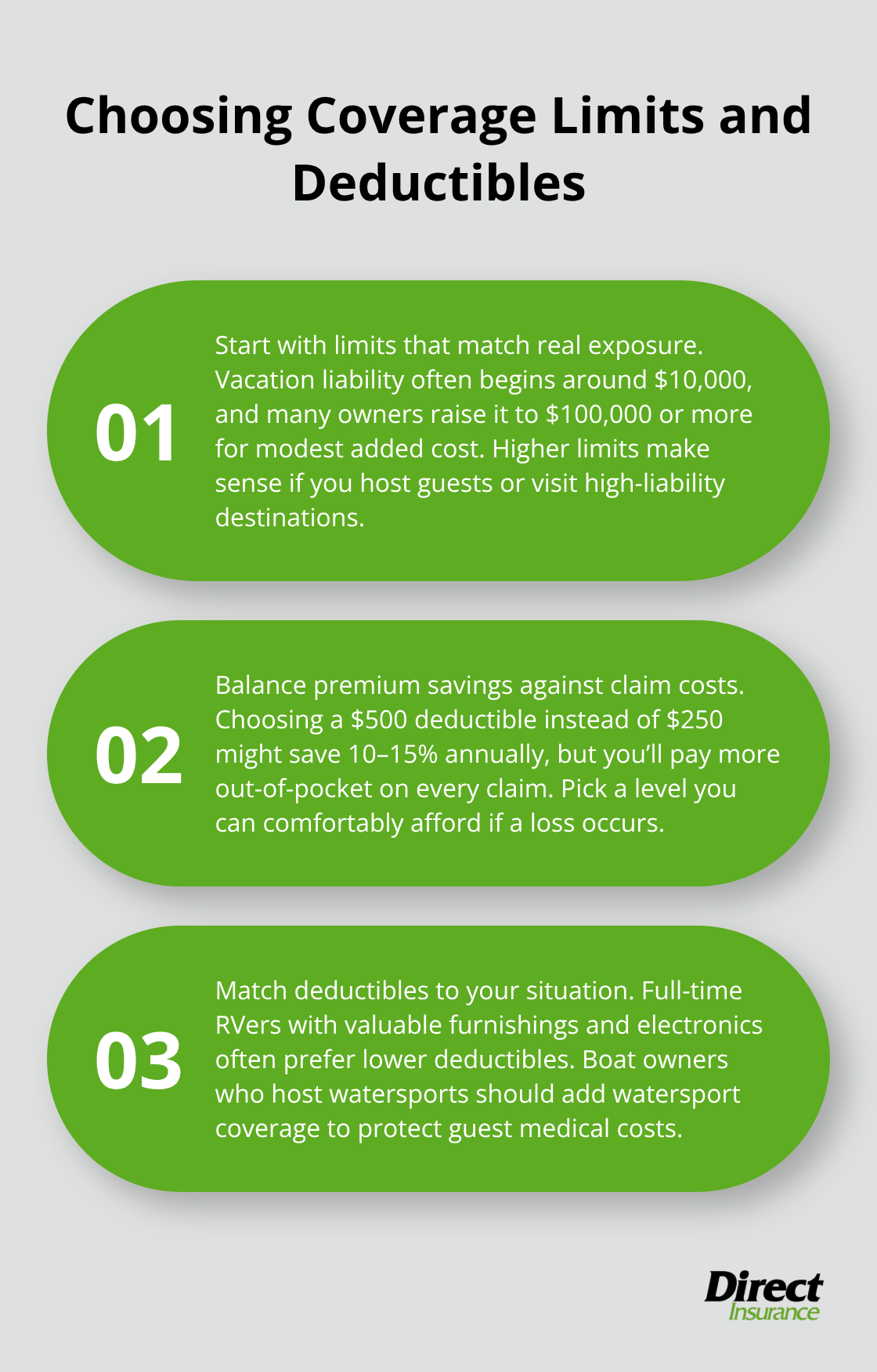
When evaluating deductibles, understand that choosing a $500 deductible instead of $250 might save 10-15% on premiums annually, but you’ll pay that difference out-of-pocket on every claim. For full-time RVers with expensive interior furnishings and electronics, lower deductibles often make financial sense. The right deductible balances your monthly budget against your ability to cover unexpected out-of-pocket costs when a claim occurs.
Work with an Independent Agent for Local Expertise
An independent agent serving your specific state understands local requirements, available discounts, and which carriers offer the specialized protections your situation demands. Agents can identify bundling opportunities and uncover discounts for safety features, accident-free driving records, or RV organization memberships that online quotes might miss entirely.
At Direct Insurance Services, we work with top-rated carriers to help you compare genuine options rather than forcing you into a one-size-fits-all approach. Our independent agency model means we represent your interests, not a single insurer’s bottom line. We can evaluate whether your current auto or homeowners policies create coverage gaps for your boat or RV, then recommend specific riders or standalone policies that fill those gaps cost-effectively.
Final Thoughts
Boat and RV insurance protects what standard auto policies cannot, and your recreational vehicles operate in specialized environments with unique risks that demand tailored coverage. Start by documenting how you use your boat or RV-full-time RVers need homeowners-style protections like expanded personal liability and medical payments for guests, while part-time users benefit from core liability, comprehensive, and collision coverage without unnecessary add-ons. This clarity about your usage patterns directly shapes which coverages justify their cost and which optional riders you genuinely need.
Compare coverage limits and deductibles across multiple carriers rather than shopping on premium price alone. Vacation liability coverage typically starts around $10,000 but can increase to $100,000 for modest additional cost, and for boat owners who host watersports activities, watersport coverage becomes essential protection rather than optional. Understanding these distinctions prevents you from overpaying for protections you don’t need while missing critical gaps in your boat and RV insurance.
Working with an independent agent gives you access to multiple carriers and local expertise about state requirements and available discounts. At Direct Insurance Services, we help Utah residents navigate their insurance needs by comparing genuine options from top-rated carriers, identifying bundling opportunities, and evaluating whether your current policies create coverage gaps. Contact Direct Insurance Services today to review your boat and RV insurance needs and receive a personalized quote that fits both your coverage requirements and your budget.
Disclaimer: The information provided in this blog is for general informational purposes only and does not constitute legal, financial, or insurance advice. Coverage options, terms, and availability may vary. Please consult with a licensed professional for advice specific to your situation


