Condo Association Insurance Essentials for HOA and Owners

Condo association insurance protects both your property and your finances, but most owners don’t fully understand what their coverage actually includes. The gap between what your HOA’s master policy covers and what you need to protect personally creates real financial risk.
At Direct Insurance Services, we’ve seen too many condo owners face unexpected costs because they didn’t know the difference. This guide breaks down exactly what you need to know about condo insurance so you can avoid costly mistakes.
What Your HOA Master Policy Actually Covers
The Building Structure and Common Areas
Your HOA’s master policy protects the building structure and common areas that benefit all residents, but coverage limits and what qualifies as part of the building varies significantly depending on how your association structured the policy. Most master policies cover the roof, exterior walls, foundation, and shared spaces like hallways, lobbies, pools, and parking areas. The policy also includes liability coverage for injuries that occur in these common areas, protecting the association and its board members from lawsuits.
Minimum Coverage Requirements
Minnesota’s condo insurance requirements under MCIOA mandate that associations carry property insurance with full replacement cost and commercial general liability at minimum. Many lenders also require Employee Dishonesty coverage. This baseline protection forms the foundation of what your HOA provides, but it doesn’t tell the full story about what you personally need to protect.
Bare Walls Versus All-In Coverage
The confusion starts here: some master policies are written as bare walls coverage, meaning they only protect the structural frame and shared spaces while leaving unit interiors entirely to owners. Other policies use all-in coverage, extending protection to built-in fixtures, flooring, and even some upgraded finishes inside individual units. The difference matters enormously because it determines what gaps you personally must fill with your own HO-6 policy.
Loss Assessment Protection
Loss assessment coverage protects you from special assessments when a major loss exceeds the master policy’s limits. If a building-wide disaster like a roof collapse or significant fire damage occurs and the association’s insurance doesn’t fully cover the repair costs, the board can impose a special assessment on all owners to cover the shortfall. Without loss assessment coverage on your individual HO-6 policy, you could face thousands in unexpected bills. Fannie Mae and the FHA recognize this risk, which is why loss assessment endorsements are increasingly standard on HO-6 policies in communities with shared liability exposure.
Understanding Coverage Limits and Valuation Methods
The actual coverage limits in your master policy matter more than most owners realize. A roof replacement that costs $500,000 but only has $300,000 in coverage leaves a $200,000 gap that could trigger an assessment. Additionally, the difference between Actual Cash Value and Replacement Cost coverage affects what gets paid out. A hail-damaged roof with a $1,000,000 replacement cost but 15 years of age might only pay $600,000 under ACV versus $900,000 under replacement cost.
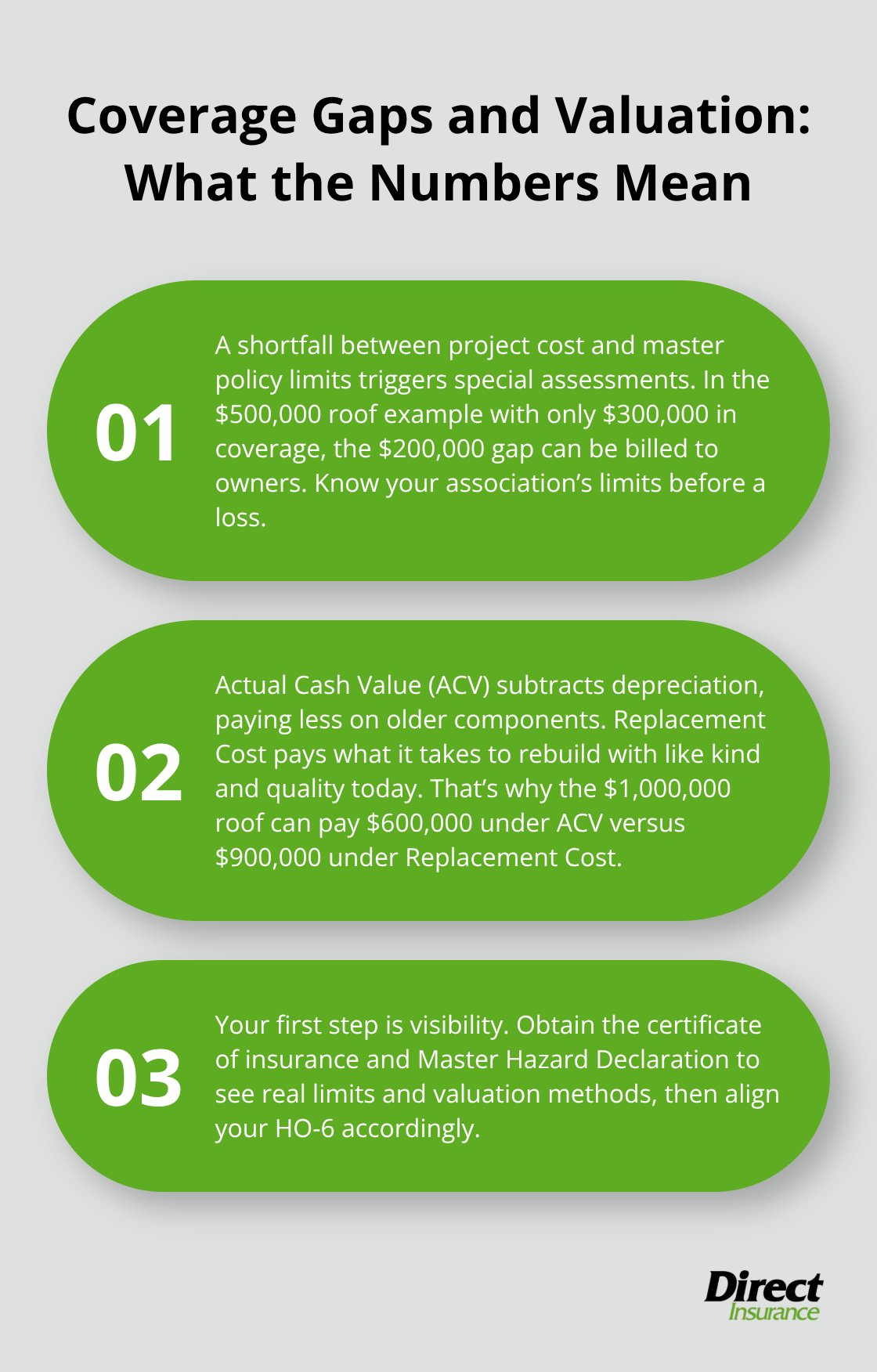
Your HOA should provide you with a certificate of insurance and the Master Hazard Declaration so you know exactly what’s covered, what limits apply, and where your personal coverage needs to begin. Understanding these details now prevents surprises later when you need to file a claim or face an unexpected assessment.
Where Your HOA Coverage Ends and Yours Begins
Understanding the Two-Layer Protection System
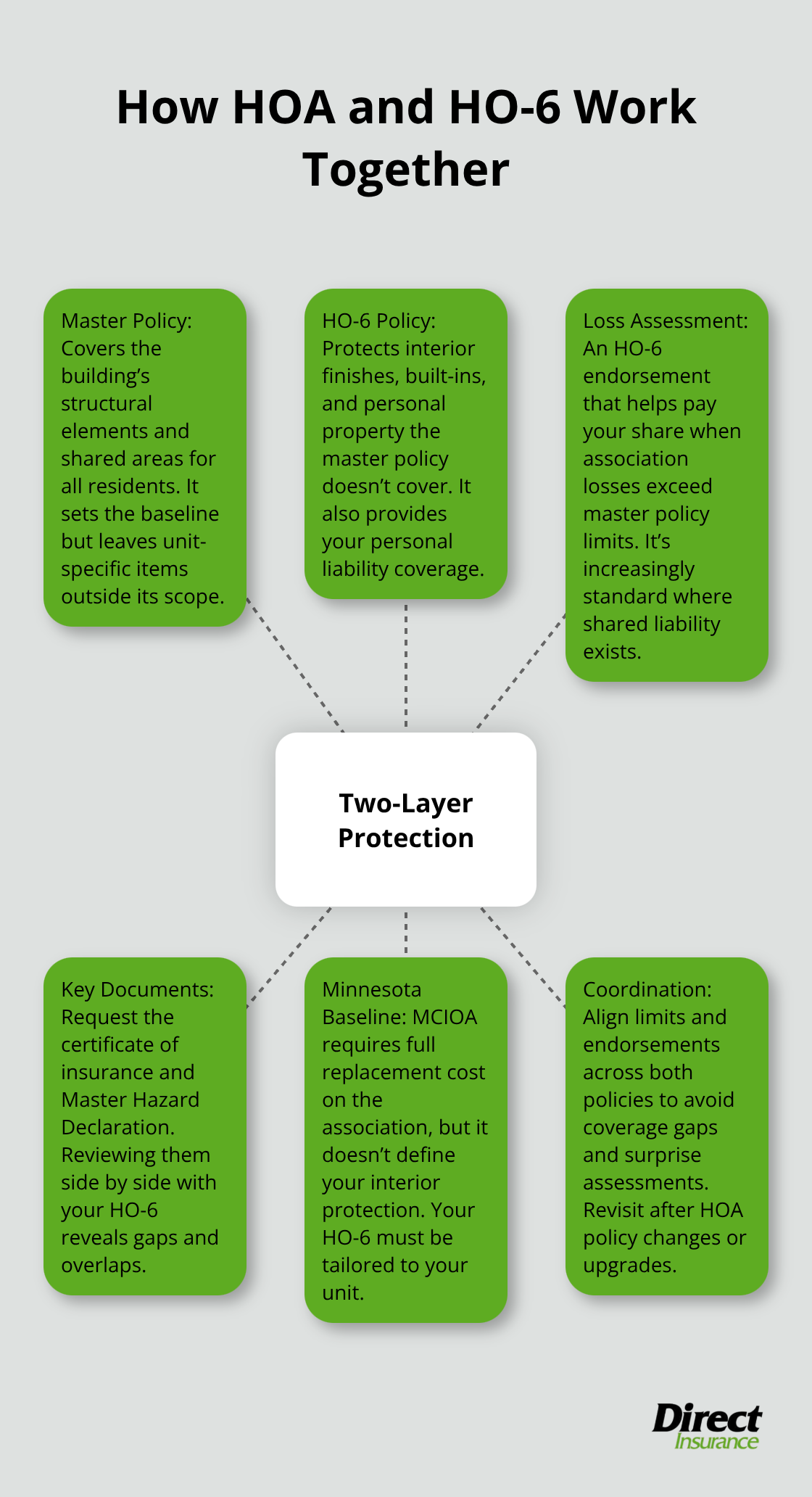
Your HOA’s master policy and your individual HO-6 policy operate in two separate layers, and understanding exactly where one stops and the other starts determines whether you stay protected or face exposure. The master policy covers the building’s structural elements and common areas that serve all residents, while your HO-6 protects everything inside your unit that the master policy doesn’t touch. In Minnesota, MCIOA requires associations to carry property insurance with full replacement cost, but that requirement alone doesn’t tell you what happens to your personal interior finishes, upgraded fixtures, or belongings if disaster strikes. Most condo owners assume their HOA has them covered completely, then face a rude awakening when they file a claim and discover their kitchen cabinets, flooring, or custom lighting weren’t included in the master policy’s scope.
What the Master Policy Actually Protects
The master policy typically covers the roof, exterior walls, foundation, structural framing, and common areas like hallways and lobbies. Anything beyond that-your drywall, paint, flooring, built-in appliances, countertops, and personal property-falls to you. If your HOA uses bare walls coverage, which many do, the association covers only the structural frame and shared spaces, leaving nearly everything inside your unit your responsibility. Even with all-in coverage, which extends to some built-in fixtures, gaps still exist around upgraded finishes or improvements you’ve made since purchase.
The Financial Risk of Misaligned Coverage
The real financial risk emerges when you don’t align your HO-6 limits with what the master policy actually excludes. A $300,000 master policy with a $500,000 roof replacement cost creates a $200,000 shortfall that can trigger a special assessment on all owners. Your loss assessment coverage protects against these surprise bills, but only if you purchased the endorsement on your HO-6. Without it, you could face thousands in unexpected costs when the association’s insurance falls short. Fannie Mae and the FHA increasingly recognize this exposure, which is why loss assessment endorsements are becoming standard on most HO-6 policies in communities with shared liability.
Getting the Documents You Need
Request your HOA’s certificate of insurance and Master Hazard Declaration immediately-these documents spell out exactly what’s covered and at what limits. Have your insurance agent review both documents side by side with your current HO-6 policy to identify gaps. Many owners discover they’re either duplicating coverage they don’t need or leaving themselves dangerously underinsured. If your current policy is an HO3 designed for single-family homes, you’re likely paying for coverage you don’t own, like the building structure. Switching to an HO-6 policy tailored to condo ownership reduces unnecessary costs while ensuring your interior and personal property receive proper protection.
Moving Forward with Confidence
The coordination between these two policies is not optional-it’s the difference between manageable risk and financial crisis. Once you understand what your master policy covers and what gaps exist in your personal protection, you can address the specific mistakes that leave most condo owners exposed. The next section reveals the most common errors owners make when setting up their coverage.
Common Insurance Mistakes Condo Owners Make
Underestimating Your Interior Replacement Costs
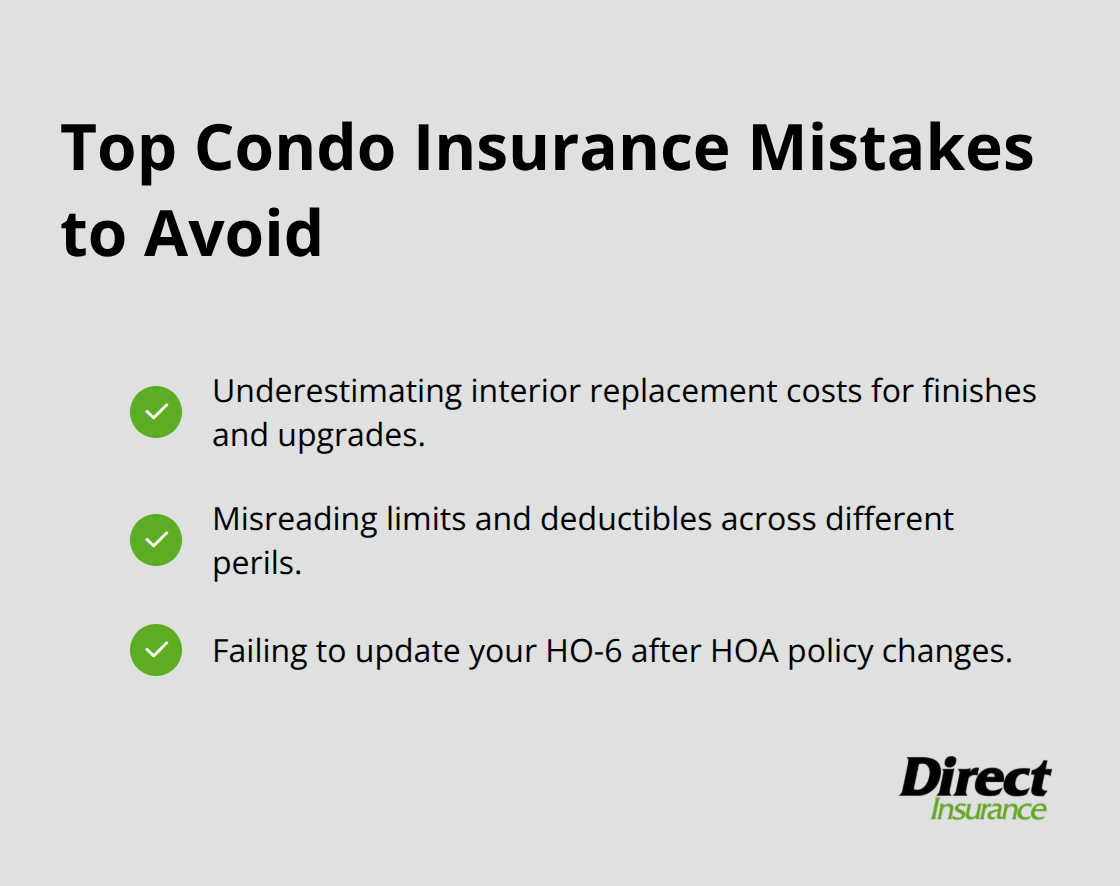
Most condo owners drastically underestimate what their interior actually costs to replace, and this mistake creates massive financial exposure. A kitchen renovation with custom cabinetry, granite countertops, and upgraded appliances easily runs $40,000 to $60,000, yet many owners carry HO-6 limits of only $15,000 to $20,000. When a fire or water damage destroys your unit, that gap between your coverage limit and your actual replacement cost becomes your personal financial responsibility. Request detailed replacement cost estimates from a contractor before you set your HO-6 limits, not after a loss occurs. Your insurance agent can help you calculate the true replacement cost of your flooring, fixtures, and finishes so your coverage actually matches what you own.
Misunderstanding Policy Limits and Deductibles
The second mistake involves misunderstanding your policy’s actual limits and how deductibles work across multiple coverage types. Many owners think their $300,000 dwelling limit applies to every type of damage equally, when in reality some perils carry separate limits or higher deductibles. Water damage from a burst pipe might have a $5,000 limit or a $2,500 deductible, while fire carries a different threshold entirely. Read your HO-6 declarations page carefully-the actual coverage summary shows exactly what limit applies to each peril and what you’ll pay out of pocket.
Different perils (fire, theft, water damage, wind) often have different deductible amounts, and understanding these distinctions prevents shock when you file a claim.
Ignoring Policy Changes After HOA Modifications
The third and most dangerous error involves ignoring your policy after your HOA makes changes. If your association converts from bare walls coverage to all-in coverage, your old HO-6 might now duplicate coverage you no longer need, or if they reduce their limits, you suddenly face new exposure. When your HOA purchases a new master policy, renovates common areas, or hires a new property management company, request an updated certificate of insurance immediately and have your agent review it against your current HO-6. That annual review takes 30 minutes and prevents thousands in wasted premiums or dangerous coverage gaps. Your master policy can shift significantly from year to year, and your individual coverage must shift with it to stay aligned.
Final Thoughts
Your condo association insurance strategy requires action, not assumptions. Obtain your HOA’s certificate of insurance and Master Hazard Declaration, then compare what the master policy covers against what you own personally. This comparison reveals your actual gaps and prevents both overpaying for duplicate coverage and underinsuring critical assets. An HO-6 policy with limits that match your actual interior replacement costs, loss assessment protection, and liability coverage for injuries inside your unit form the essential foundation of your protection.
Review your condo association insurance annually and request an updated certificate whenever your HOA makes changes to their master policy, renovates common areas, or hires new management. Life changes matter too-if you upgrade your kitchen, add flooring, or install custom fixtures, your HO-6 limits need adjustment to reflect those improvements. Document your interior finishes with photos and keep receipts for upgrades so you have proof of value if you file a claim.
We at Direct Insurance Services help condo owners navigate these conversations and align their individual policies with their association’s master coverage. The coordination between these two layers of protection determines whether you face financial security or unexpected crisis when damage occurs. Take control of your coverage today.
Disclaimer: The information provided in this blog is for general informational purposes only and does not constitute legal, financial, or insurance advice. Coverage options, terms, and availability may vary. Please consult with a licensed professional for advice specific to your situation


