Contractor General Liability Insurance: Guiding Your Business’s Risk
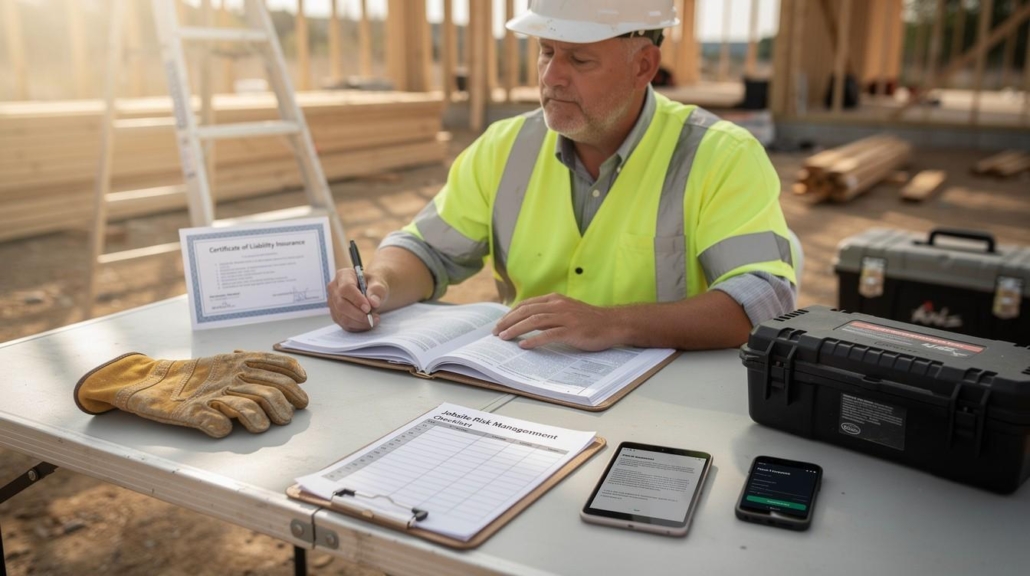
One accident on a job site can wipe out your profits for the year. Contractor general liability insurance protects you from the financial fallout when someone gets hurt or property gets damaged because of your work.
At Direct Insurance Services, we’ve helped hundreds of contractors understand what coverage they actually need. This guide walks you through the basics, why this insurance matters, and how to pick the right limits for your business.
What Contractor General Liability Insurance Actually Covers
Contractor general liability insurance protects you when a third party-a client, a passerby, or a property owner-claims you caused them bodily injury or property damage. This is fundamentally different from protecting your own equipment or injuries to your employees. If a homeowner slips on wet flooring at a renovation site and breaks their arm, or if your crew accidentally damages their kitchen cabinets, general liability covers the medical bills, legal fees, and settlements. The National Safety Council reports that slip-and-fall claims average $47,316, which is exactly the kind of expense that can devastate a small contracting business without proper coverage. Your policy also covers advertising injury claims, such as if someone accuses your marketing materials of infringing on their copyright or trademark. Most policies include defense costs, meaning the insurance company pays for your legal representation even before a verdict is reached.
Coverage limits depend on your project scope
A standard baseline is $1 million per occurrence and $2 million aggregate, but this depends entirely on your project scope and industry risk. Roofing contractors, for example, typically pay 20 to 30 percent more for general liability than general contractors because fall risk is substantially higher. The Hartford reports that construction businesses pay about $1,351 per year for general liability on average, or roughly $113 monthly, though this varies significantly by location and risk profile. Urban areas with higher property values drive premiums up considerably-New York City costs substantially more than rural regions.
How deductibles and discounts affect your bottom line
Choosing a higher deductible lowers your premium but increases what you pay out of pocket when a claim happens, so balance this against your cash flow. Getting quotes from at least three carriers can save you about 20 percent on premiums according to the Insurance Information Institute.
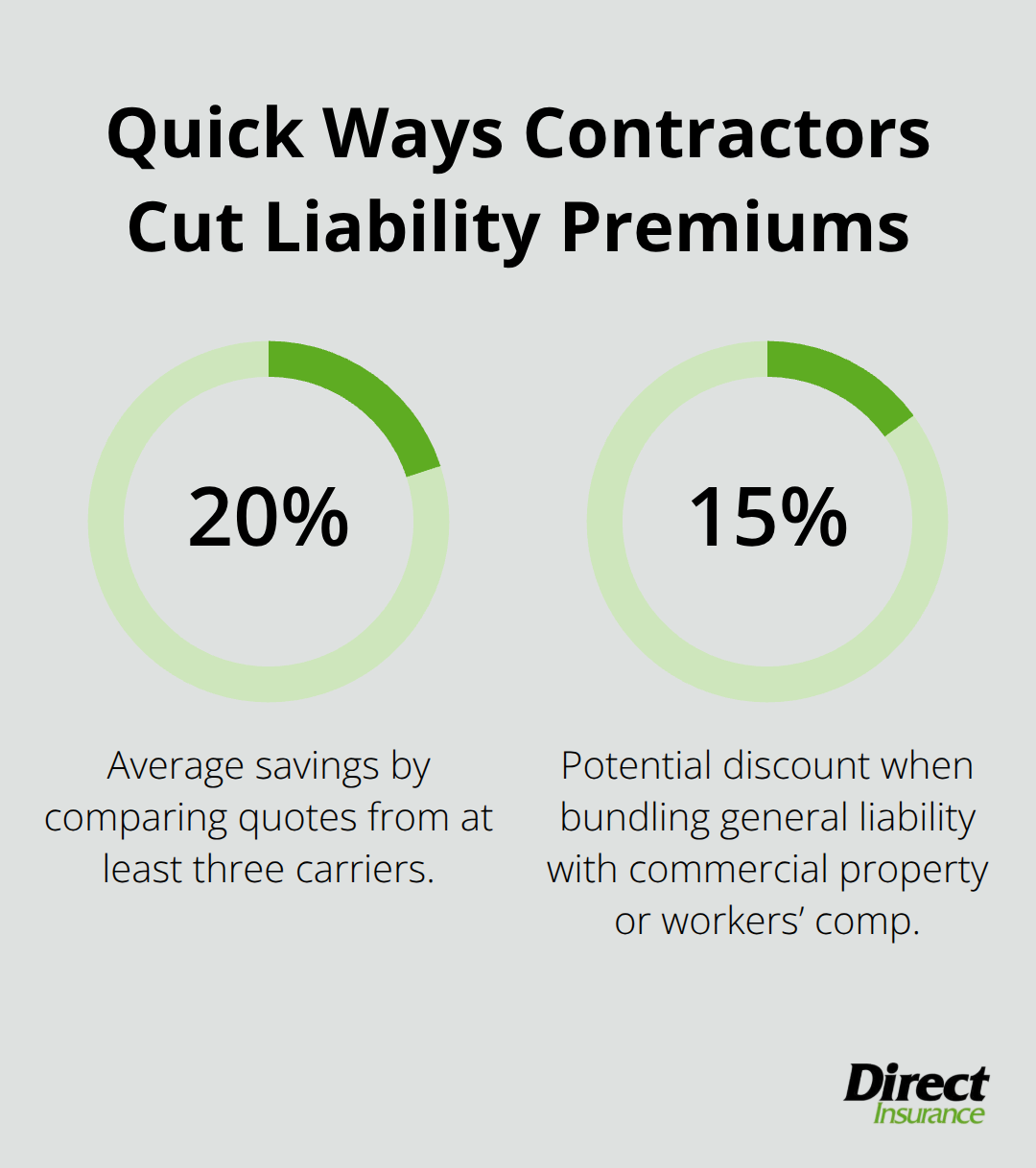
Bundling general liability with commercial property or workers’ compensation can yield discounts up to 15 percent. Do not under-insure thinking you’ll save money; one serious incident can exceed inadequate coverage limits and leave you personally liable for the difference.
What happens next in your coverage decision
Your industry risk, location, and project value all shape what coverage you actually need. The next section walks you through how to assess these factors for your specific contracting business.
Why Your Business Needs This Coverage
Without general liability insurance, a single incident on a job site becomes your personal financial crisis. The U.S. Bureau of Labor Statistics recorded 174,100 nonfatal injuries in construction during 2020, and the National Safety Council reports that slip-and-fall claims average $90,043 per claim. These aren’t hypothetical scenarios-they happen regularly, and contractors who lack coverage face personal bankruptcy.
Clients require proof before they hire you
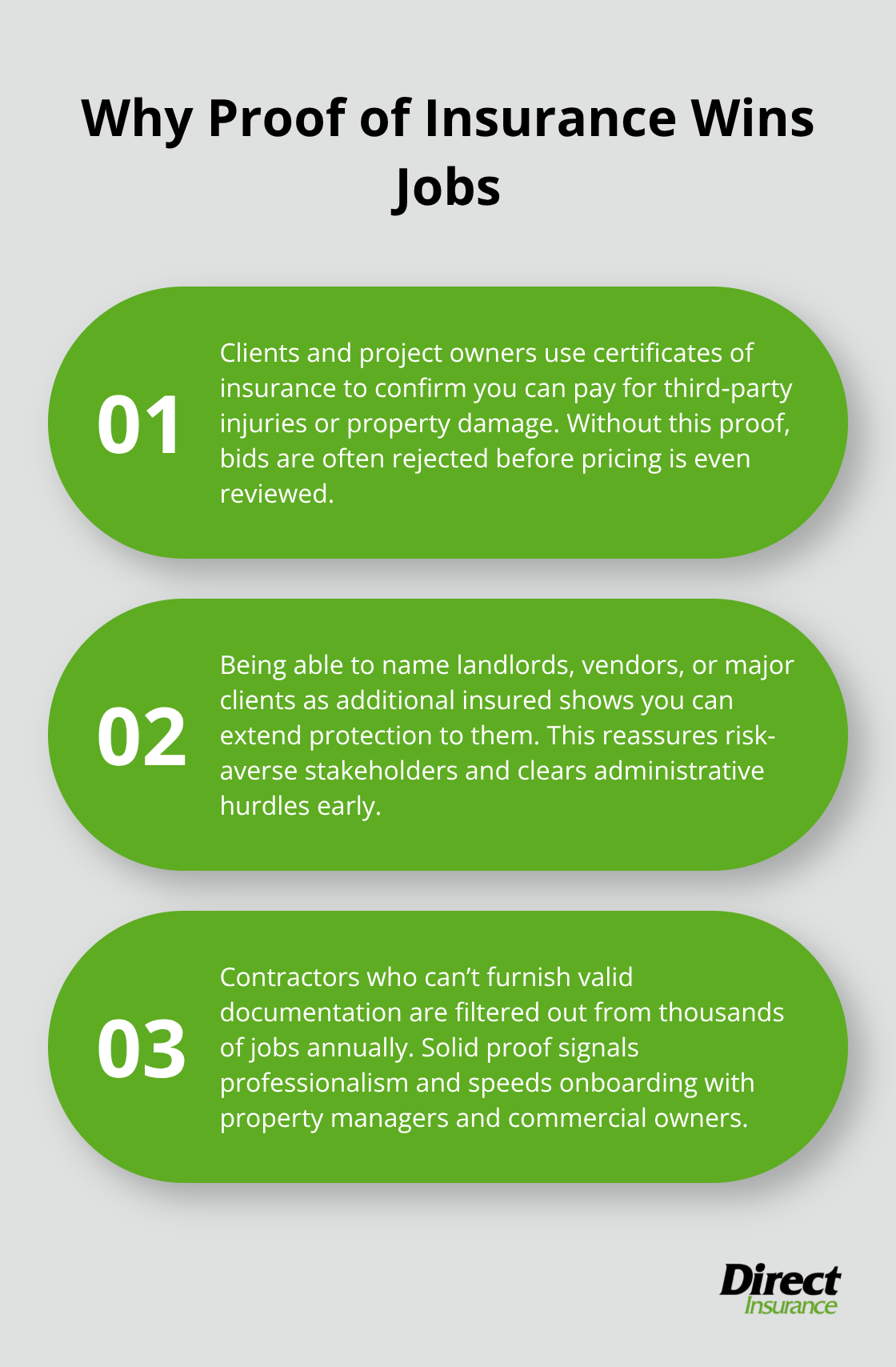
Clients expect proof of your insurance before they hire you. Most homeowners, property managers, and commercial building owners require a certificate of insurance before work starts. Many won’t even consider your bid without it. This isn’t optional in competitive markets; it’s a baseline requirement. Licensing boards and regulatory agencies in many states also mandate general liability for contractors to operate legally.
A certificate of insurance proves you’re legitimate and financially protected. Landlords, vendors, and major clients often require you to name them as additional insured on your policy, meaning they receive protection under your coverage. This single requirement eliminates contractors without insurance from thousands of potential jobs annually. Many contractors lose bids not because of price but because they can’t produce valid coverage documentation.
Your reputation depends on solid coverage
Beyond legal requirements, your reputation depends on demonstrating financial responsibility. When a prospective client sees you carry solid coverage, they trust you to handle accidents professionally rather than cutting corners or disappearing if something goes wrong. The Hartford data shows construction businesses pay roughly $113 monthly for baseline coverage, which is negligible compared to losing even one major contract.
Requesting quotes from multiple carriers takes a few hours but directly impacts your ability to win work. Those who skip this step often discover mid-project that clients require coverage levels they don’t have, forcing expensive last-minute policy amendments or policy cancellations that damage relationships. Your coverage level signals to clients that you take their protection seriously.
What coverage limits mean for your competitiveness
Standard baseline coverage ($1 million per occurrence and $2 million aggregate) meets most client requirements, but your specific industry and project scope determine what you actually need. Roofing contractors typically pay 20 to 30 percent more for general liability than general contractors because fall risk is substantially higher. Urban areas with higher property values drive premiums up considerably compared to rural regions. The next section walks you through how to assess these factors and select the right coverage limits for your specific contracting business.
Picking the Right Coverage Limits for Your Contracting Business
Your industry determines how much coverage you actually need, and choosing wrong costs you either in premiums or in exposure. Roofing contractors face substantially different risks than general contractors, and electricians face different risks than plumbers. The Hartford data shows roofing contractors pay 20 to 30 percent more for general liability than general contractors specifically because fall risk is higher. Start by identifying what type of work dominates your business. If you’re a general contractor doing residential renovations, your risk profile differs significantly from a roofing specialist or a commercial HVAC technician.
Match your coverage to your actual work type and location
Your industry sets your baseline. Once you know your trade, look at your actual job sites. Are you working in high-value urban properties where property damage claims run larger, or in rural areas where claims tend to be smaller? New York City premiums are substantially higher than rural regions due to higher property values and litigation costs. Your project scope matters equally. A $50,000 kitchen remodel carries different risk than a $500,000 commercial build. The Hartford reports construction businesses pay about $1,351 per year for baseline coverage, but this figure assumes a standard risk profile. Your specific situation will vary based on whether you do small residential jobs or large commercial projects.
Select limits that reflect your actual exposure
The standard baseline of $1 million per occurrence and $2 million aggregate works for most contractors, but this is where most people make mistakes. Too many contractors pick limits based on what their competitor has rather than what their actual exposure demands. Start with your largest potential claim. If you work on high-value properties, one serious incident could easily exceed $1 million in damages. If you do smaller residential work, $1 million may be more than adequate.
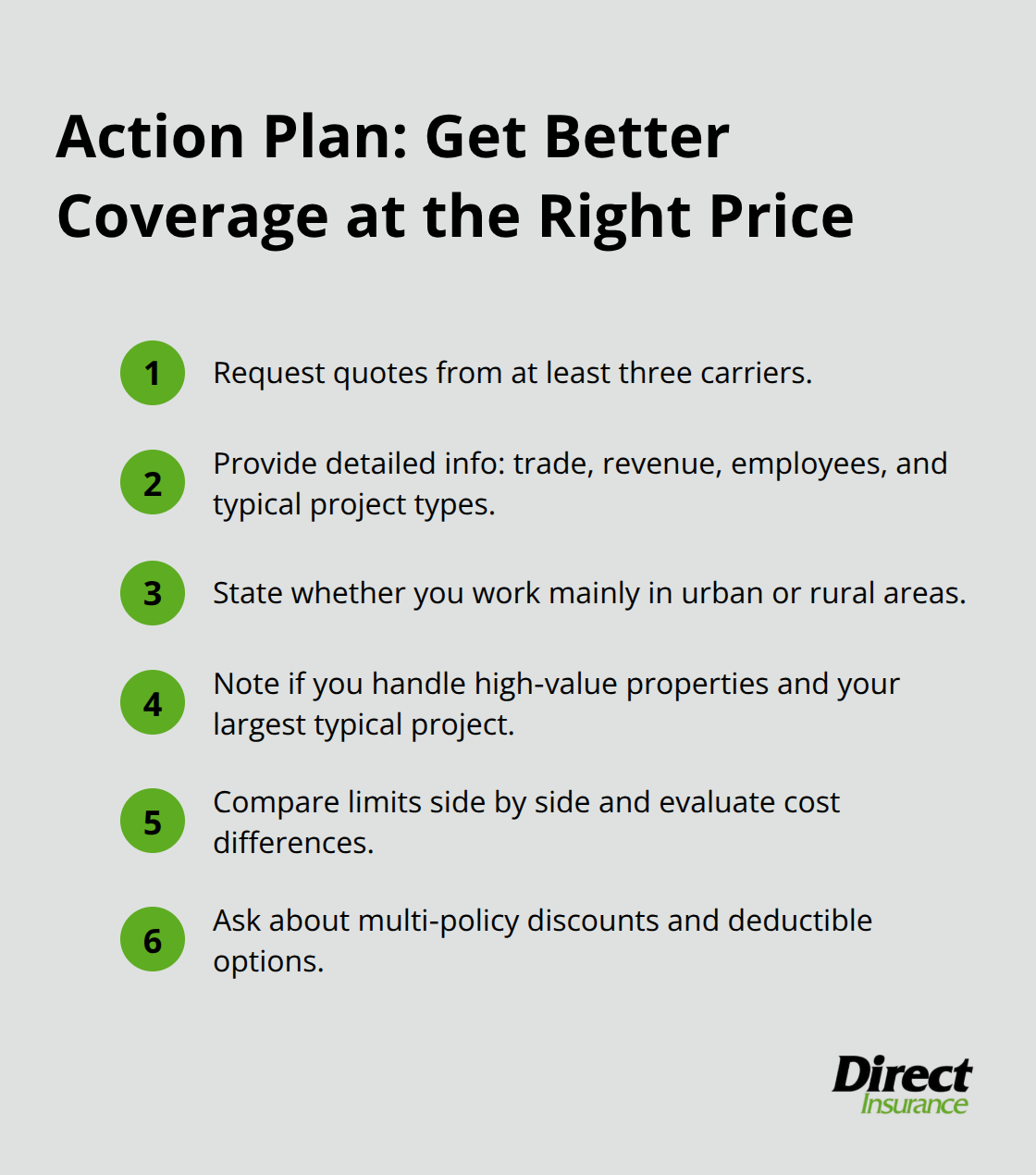
Contact three carriers and request quotes at different coverage levels so you see exactly how much more you pay for higher limits. The Insurance Information Institute found that quotes from at least three carriers save about 20 percent on premiums, which means you spend a few hours and potentially save hundreds annually. When you request quotes, be specific about your work type, annual revenue, number of employees, and the types of projects you typically handle. Vague requests produce vague quotes. Tell carriers whether you work primarily in urban or rural areas, whether you handle high-value properties, and what your largest typical project is.
Balance your deductible against your cash flow
Your deductible choice directly impacts your monthly cost. A higher deductible lowers your premium but increases what you pay out of pocket when a claim happens. Most contractors should choose a deductible they can actually afford to pay without crippling cash flow. Bundling general liability with workers’ compensation or commercial property coverage yields discounts up to 15 percent according to the National Association of Insurance Commissioners, so always ask about multi-policy discounts when you request quotes.
Final Thoughts
Contractor general liability insurance separates businesses that win contracts from those that lose them. Clients demand proof of coverage before they hire you, regulatory agencies require it in most states, and one serious incident without protection bankrupts your business. Slip-and-fall claims average $90,043, construction injuries topped 174,100 in 2020, and a single accident wipes out your annual profits without adequate coverage.
Contact at least three insurance carriers and request quotes specific to your trade, location, and project scope. The Insurance Information Institute found that comparing three quotes saves about 20 percent on premiums, which means a few hours of work saves you hundreds annually. Ask about bundling discounts when you request quotes, since combining general liability with workers’ compensation or commercial property coverage reduces costs by up to 15 percent.
Start with the standard baseline of $1 million per occurrence and $2 million aggregate, then adjust based on your actual exposure. Choose a deductible you can afford to pay without disrupting cash flow, since a higher deductible lowers your premium but increases your out-of-pocket cost when a claim happens. Request a personalized quote today and get your contractor general liability insurance in place.
Disclaimer: The information provided in this blog is for general informational purposes only and does not constitute legal, financial, or insurance advice. Coverage options, terms, and availability may vary. Please consult with a licensed professional for advice specific to your situation


