Homeowners Insurance Premium Tips: Save More on Your Policy
Homeowners insurance premiums keep climbing, and most people have no idea why. We at Direct Insurance Services know that small changes to your policy can add up to real savings.
This guide walks you through the exact factors that drive up costs and the concrete steps you can take to lower them. You’ll also learn the mistakes that cost homeowners thousands in unnecessary premiums.
What Actually Drives Your Homeowners Insurance Costs
Location Creates Massive Price Differences
Your location is the single biggest factor determining what you pay for homeowners insurance, and it’s not even close. The average homeowners insurance premium is about $2,424 per year, but this number masks enormous regional variation. Oklahoma homeowners pay roughly $4,695 annually while Alaska averages around $1,035 for identical coverage-that’s a $3,660 difference driven almost entirely by location.
Your ZIP code matters because insurers assess weather risk, theft rates, fire department proximity, and natural disaster exposure in your area. If you live near a fire hydrant or in a community with a professional fire department, you’ll pay less than someone five miles away without these protections. States like Florida, Louisiana, and Oklahoma face higher premiums because of hurricane and tornado risk, while states in the upper Midwest pay more for winter storm damage.
The Fire Suppression Rating Schedule, which insurers use to evaluate fire protection in your area, directly impacts your quote. Before you commit to a move or purchase, check tools like First Street or Climate Check to understand regional hazard exposure in your target location.
Home Age and Construction Quality Matter More Than You Think
Your home’s age and construction quality are the second major cost driver that many homeowners overlook. Homes built in 1959 average around $3,285 annually to insure, while homes built in 2020 average roughly $2,182 for similar coverage-that $1,100 difference reflects the cost of aging electrical, plumbing, and heating systems. Older homes require more expensive repairs after claims, and outdated systems pose higher fire and water damage risks.
If your home’s electrical wiring, plumbing, or HVAC system is more than 10 years old, you’re paying a premium for that risk. Upgrading these systems can lower your costs noticeably, though some home improvements like finishing a basement or adding premium siding actually increase premiums because they raise your home’s replacement cost.
Claims History and Credit Score Lock In Your Rate
Your claims history and credit score are the third pillar of premium pricing, and both are non-negotiable in most states. Insurers review CLUE reports, which track insurance claims for up to seven years on a specific property. Even if you switch insurers, a prior claim on your new home follows the address, not you.
Filing a small claim for $2,000 in damage might cost you $500 more annually in premiums for the next three to five years-the math often doesn’t work in your favor. Your personal credit history also influences rates dramatically in most states; moving from poor credit to average credit can save approximately $1,389 per year on average. However, California, Maryland, and Massachusetts restrict or ban credit-based pricing, so improving your credit won’t help there.
If you’ve had recent claims or poor credit, your best strategy is to shop aggressively across multiple insurers because rates vary wildly based on how different companies weight these factors. Understanding what drives your specific premium is the first step toward lowering it-and that’s exactly what we’ll cover next.

Lower Your Premium Without Cutting Coverage
Bundle Your Policies for Immediate Savings
The fastest way to cut your premium is to bundle your policies with the same insurer. USAA is the No. 1 best bundle option, offering a multi-policy discount of up to 10% for the military community. Before you accept any quote, request the bundled price and compare it against buying policies separately from different insurers. Some carriers offer stronger discounts for bundling than others, so the savings calculation changes based on which companies you’re comparing.
Raise Your Deductible Strategically
Your deductible is the second major lever you control, and raising it works differently than most homeowners think. Increasing your deductible from $500 to $1,000 typically saves around 15 to 25 percent on your annual premium, which translates to $300 to $600 per year for the average policyholder. Moving to a $2,000 deductible can save you another 10 to 15 percent beyond that. The math only works if you actually have the cash set aside to cover your deductible if you file a claim-this isn’t theoretical. If a $2,000 deductible means you’d go into debt after a loss, that strategy backfires. However, if you have three to six months of emergency savings already, raising your deductible is one of the fastest ways to cut costs.
Install Security and Safety Devices
Home safety features reduce your risk profile in insurers’ eyes, which translates directly into lower quotes. Monitored security systems, smoke detectors, and smart home cameras all qualify for discounts with most carriers. Some insurers offer 5 to 15 percent discounts for security systems connected to a monitoring service, while basic smoke detectors might earn 5 percent off. The key is asking your insurer specifically which devices qualify for discounts before you buy anything.

This approach prevents wasted spending on equipment that won’t lower your rate.
Maintain Your Home to Stay Insurable
Regular home maintenance prevents costly claims that would spike your future premiums far more than any discount you’d receive today. Updating electrical systems, roof repairs, and plumbing maintenance aren’t just about avoiding claims-they’re about staying insurable at reasonable rates. Homes with electrical, heating, and plumbing systems less than 10 years old cost less to insure due to lower risk of failure or fire. After you complete renovations, notify your insurer to update your coverage and potentially qualify for new discounts. These improvements signal to insurers that you take risk seriously, which matters when your policy comes up for renewal.
The strategies above address what you can control directly. But most homeowners still make critical errors when they actually shop for coverage-mistakes that cost thousands in unnecessary premiums and inadequate protection.
Where Homeowners Lose Money During Quote Shopping
Most homeowners approach insurance shopping the way they buy groceries-they grab what’s convenient and move on. This passive approach costs thousands in wasted premiums and leaves gaps in coverage that create real financial exposure. The three biggest mistakes happen before you even buy a policy, and they’re entirely preventable.
Set Coverage Limits Based on Rebuild Cost, Not Purchase Price
The first mistake costs homeowners thousands: they set coverage limits based on what they paid for their house instead of what it would actually cost to rebuild. Your home’s purchase price and its reconstruction cost are completely different numbers. If you bought a $400,000 house in an area where construction costs $150 per square foot, but your home is only 1,500 square feet, the rebuild cost is roughly $225,000-not $400,000. Land value doesn’t get insured because land doesn’t burn down or get stolen.
Yet homeowners routinely set their dwelling coverage equal to their purchase price, which either overinsures the structure and wastes money on premiums, or worse, underinsures it and leaves them exposed. The Insurance Information Institute recommends getting a professional rebuild cost estimate from a contractor before you set coverage limits. This single step prevents both overpaying and underinsuring simultaneously.
Update Your Insurer When Your Home Changes
The second critical error is ignoring your policy between renewals. Your home changes every year-you finish a basement, replace the roof, add an expensive art collection, or remove a trampoline that was raising your rates. Most homeowners never tell their insurer about these changes, which means they’re either paying for coverage they don’t need or failing to get credit for improvements that lower premiums.
Homes built within the last 10 years qualify for newer home discounts that can reduce costs noticeably, but you only get the discount if you actually report the improvement. Similarly, if you’ve eliminated attractive nuisances like pools or removed trees that posed falling hazards, your insurer doesn’t know unless you tell them. Annual policy reviews take 20 minutes and can identify both money-wasting coverage gaps and missed discount opportunities.
Compare Quotes from Multiple Insurers
The third mistake is the most expensive: shopping with only one or two insurers instead of gathering quotes from at least three companies. Individual quotes from different carriers for the same home routinely vary by $600 to $1,200 per year. One insurer might weight your credit score heavily while another barely considers it. One carrier might offer a 15 percent multi-policy discount while another caps bundling at 8 percent.
Getting quotes from at least three insurers-and ideally more-is the only way to find which company values your specific risk profile most favorably.
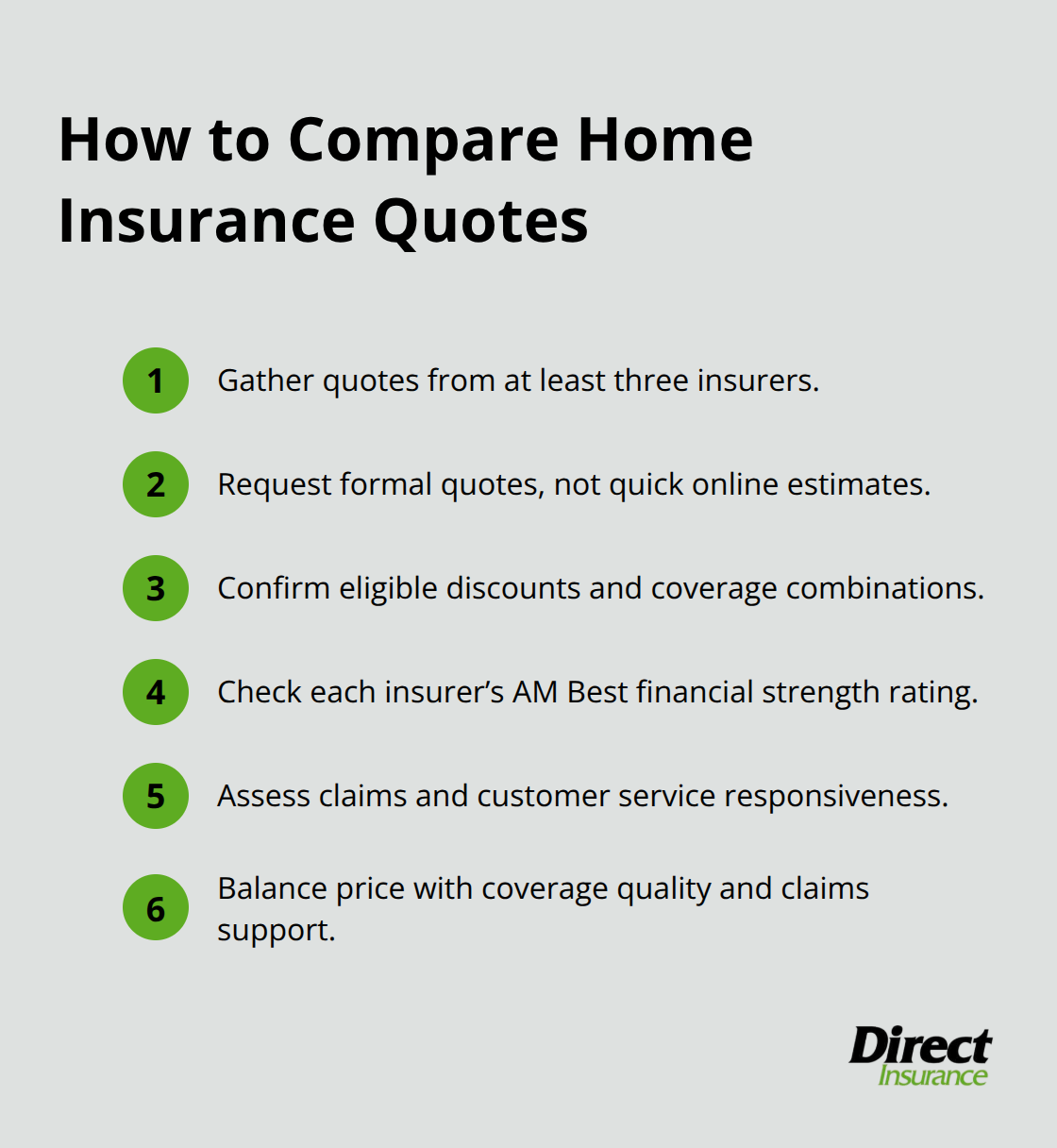
When you narrow your options to three insurers, request formal quotes rather than online estimates, because formal quotes account for discounts and specific coverage combinations. Verify each insurer’s financial stability through AM Best ratings and assess customer service responsiveness during the shopping process. The insurer with the lowest quote today might have terrible claims service when you actually need it, which transforms a small premium savings into a massive headache. Shopping thoroughly takes a few hours, but it’s the most direct path to saving hundreds annually while securing coverage that actually protects your home.
Final Thoughts
You now control the three forces that shape your homeowners insurance premium: location, home age, and claims history. While you cannot change where you live or your past claims, you can control everything else-bundling policies, raising your deductible strategically, installing safety devices, and maintaining your home all work together to lower what you pay without sacrificing protection. The real savings come from shopping aggressively across multiple insurers and setting coverage limits based on actual rebuild costs, not purchase price.
Most homeowners leave hundreds of dollars on the table every year by accepting the first quote they receive or failing to report home improvements to their insurer. Annual policy reviews take minimal time and consistently uncover missed discounts and coverage gaps that cost money. Your homeowners insurance premium tips should always start with this principle: understand what you’re paying for before you try to cut costs.
A lower premium that leaves you underinsured creates far worse financial exposure than paying full price for adequate coverage. We at Direct Insurance Services help homeowners throughout Utah navigate these decisions every day by gathering quotes from multiple insurers so you see the full range of what’s available. Contact Direct Insurance Services whether you’re reviewing an existing policy or shopping for new coverage, and our team will provide the guidance you need to make confident decisions about your home’s protection.
Disclaimer: The information provided in this blog is for general informational purposes only and does not constitute legal, financial, or insurance advice. Coverage options, terms, and availability may vary. Please consult with a licensed professional for advice specific to your situation


