What Does Auto Liability Insurance Actually Cover?
Auto liability insurance covers the essentials when it comes to protecting yourself financially on the road. But what exactly does it include?
At Direct Insurance Services, we often encounter confusion about the specifics of auto liability coverage. This blog post will clarify what’s covered, what’s not, and why understanding your policy is crucial for every driver.
What Is Auto Liability Insurance?
The Foundation of Car Insurance
Auto liability insurance forms the core of your car insurance policy. It pays for damages you cause to others in an accident where you’re at fault. This coverage protects drivers financially in case of unfortunate incidents on the road.
Key Components of Auto Liability Coverage
Auto liability insurance includes two main parts:

- Bodily Injury Liability: This covers medical expenses, lost wages, and legal fees if you injure someone in an accident.
- Property Damage Liability: This pays for repairs or replacement of other people’s property you damage with your vehicle.
State-Specific Legal Requirements
Almost all states require a minimum amount of liability insurance. The minimum coverage amounts vary significantly across states.
It’s worth noting that these minimums often fall short in serious accidents.
Understanding Liability vs. Full Coverage
While liability insurance is required by law in most states, full coverage remains optional (though often recommended). Full coverage typically includes:
- Liability insurance
- Collision coverage (for damage to your own car in an accident)
- Comprehensive coverage (for non-collision related damage like theft or natural disasters)
How to Select the Right Coverage
When you decide on your coverage limits, you should consider your assets and potential risks. A useful guideline is to have liability coverage at least equal to your net worth. This strategy protects your assets if a lawsuit follows a serious accident.
Insurance professionals can help you navigate these decisions. They ensure you have adequate protection without overpaying by analyzing your specific situation and recommending coverage that balances protection and affordability.
As we move forward, let’s explore the different types of auto liability coverage in more detail. Understanding these distinctions will help you make informed decisions about your insurance needs.
Key Types of Auto Liability Coverage
Auto liability insurance is not a one-size-fits-all solution. Different coverage types can significantly impact your financial protection. Let’s examine the main components of auto liability coverage to help you make informed decisions.
Bodily Injury Liability: Protecting Others’ Health
Bodily injury liability covers medical expenses, lost wages, and legal fees if you injure someone in an at-fault accident.
Consider this scenario: You cause an accident resulting in the other driver needing surgery and physical therapy. Your bodily injury liability would cover these costs up to your policy limit. Without this coverage, you could face personal liability for tens of thousands of dollars.
Property Damage Liability: Safeguarding Others’ Assets
Property damage liability pays for repairing or replacing property you damage with your vehicle. This extends beyond other cars to include buildings, fences, and personal property.
Picture accidentally driving into someone’s living room. Property damage liability would cover the cost to repair their house, replace damaged furniture, and potentially even temporary housing. Without this coverage, you’d pay all these expenses out of pocket.
Split Limits vs. Combined Single Limit: Choosing Your Coverage
When selecting liability coverage, you’ll encounter two main types of limits: split limits and combined single limits (CSL).
Split limits appear as three numbers, like 100/300/100. This means:
- $100,000 bodily injury coverage per person
- $300,000 bodily injury coverage per accident
- $100,000 property damage coverage per accident
A CSL policy might appear as 300 CSL, indicating a single $300,000 limit for bodily injury or property damage claims in any combination.
CSL policies often provide more flexibility. For instance, if you cause an accident with $250,000 in property damage and $50,000 in bodily injury, a 300 CSL policy would cover it all. With a 100/300/100 split limit policy, you’d fall $150,000 short on the property damage coverage.

Understanding these distinctions helps you choose the right coverage for your needs and budget. While state minimums exist, they often fall short in serious accidents. Consider your assets and potential risks when selecting your coverage limits.
As we move forward, it’s important to understand what auto liability insurance doesn’t cover. This knowledge will help you identify potential gaps in your coverage and make informed decisions about additional protection you might need.
What Auto Liability Insurance Doesn’t Cover
Auto liability insurance forms the foundation of your car insurance policy, but it has limitations. At Direct Insurance Services, we often encounter clients who express surprise about the gaps in their coverage. Let’s explore the areas auto liability insurance doesn’t protect and why understanding these limitations matters for comprehensive protection.
Personal Injuries and Vehicle Damage
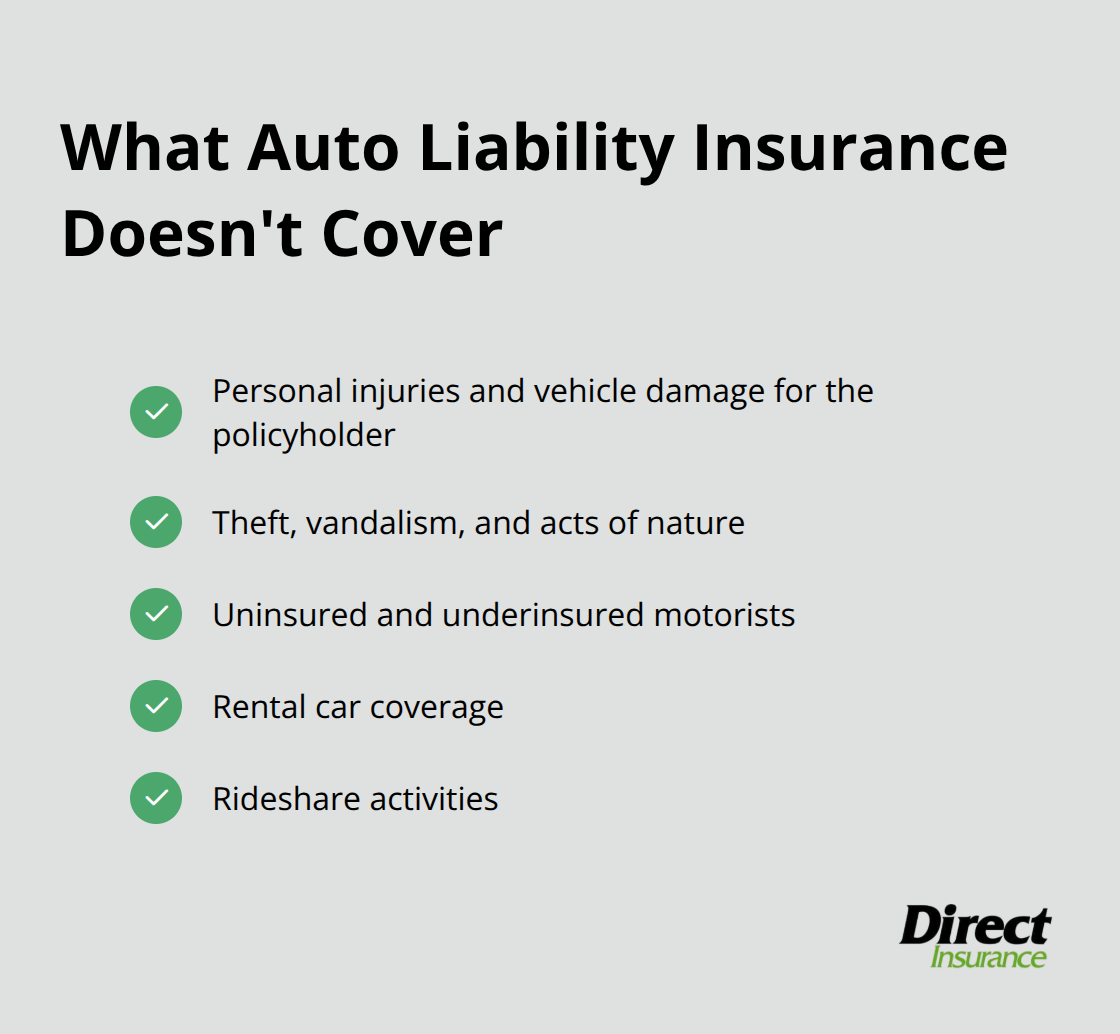
Auto liability insurance excludes coverage for your own injuries and vehicle damage. If you cause an accident, your liability insurance won’t pay for your medical bills or repairs to your car. Medical payments can help pay for medical expenses resulting from an accident. PIP can help cover medical expenses resulting from an accident as well.
Theft, Vandalism, and Acts of Nature
Your liability coverage falls short when it comes to non-collision related incidents. If someone steals your car, vandalizes it, or natural disasters like floods or hailstorms damage it, liability coverage won’t help.
Uninsured and Underinsured Motorists
Liability-only coverage leaves a critical gap in protection against uninsured or underinsured motorists. If one of these drivers hits you, your liability insurance won’t cover your damages. Adding uninsured motorist coverage to your policy can safeguard you against this risk.
Rental Car Coverage
Standard auto liability insurance often doesn’t extend to rental cars. This gap can leave you financially exposed if you rent a vehicle and get into an accident. Many people assume their personal auto policy covers rental cars, but this isn’t always the case. You should check your policy or speak with an insurance professional to understand your coverage for rental vehicles.
Rideshare Activities
If you use your personal vehicle for rideshare services like Uber or Lyft, your personal auto liability insurance likely won’t cover you during these activities. Rideshare companies typically provide some coverage, but it may not be comprehensive. You might need a special rideshare insurance policy to fill this gap and ensure full protection while driving for these services.
Final Thoughts
Auto liability insurance covers essential aspects of potential accidents, but it has limitations. You must understand what’s included and what’s not to make informed decisions about your coverage needs. Your assets and potential risks should guide your choice of coverage amount, as state minimums often fall short in serious accidents.
We recommend you review your policy regularly and adjust your coverage as your circumstances change. Life events such as buying a home, starting a business, or having children can significantly impact your insurance needs. You should seek professional advice when evaluating your coverage options.
At Direct Insurance Services, we help individuals, families, and businesses find the right auto insurance coverage. Our team of experienced professionals can guide you through the complexities of insurance (ensuring you have the protection you need without overpaying). We work with top-rated carriers to offer a range of options tailored to your specific situation.


