
Household Contents Coverage: Protecting Your Belongings at Home

Your home contains thousands of dollars worth of belongings-furniture, electronics, clothing, and personal items that would be expensive to replace if damaged or stolen. Most homeowners assume their standard homeowners insurance covers everything, but the reality is far different.
At Direct Insurance Services, we’ve seen countless claims denied because household contents coverage had gaps or limits that didn’t match what people actually owned. This guide shows you exactly what’s covered, where the vulnerabilities are, and how to protect your belongings properly.
What Household Contents Coverage Actually Protects
Household contents coverage pays to replace or repair your belongings if fire, theft, smoke, vandalism, wind, or certain water damage affects them. According to the Insurance Information Institute, this protection applies to items inside your home and often extends to belongings you take with you for short periods, like clothes on a trip or equipment at a temporary location. The catch is that most homeowners drastically underestimate what their contents coverage includes and excludes.
Standard Coverage and Hidden Sublimits
Standard policies impose sublimits on high-value items like jewelry and electronics, meaning you won’t receive full replacement cost for these belongings even if they’re damaged. Furniture, appliances, clothing, kitchen items, and general household goods typically fall under standard coverage, but the details matter significantly. A typical home contains $50,000 to $100,000 worth of belongings, yet many people carry contents limits of just $30,000 or $40,000 without realizing the shortfall until a loss occurs.
Actual Cash Value Versus Replacement Cost Changes Everything
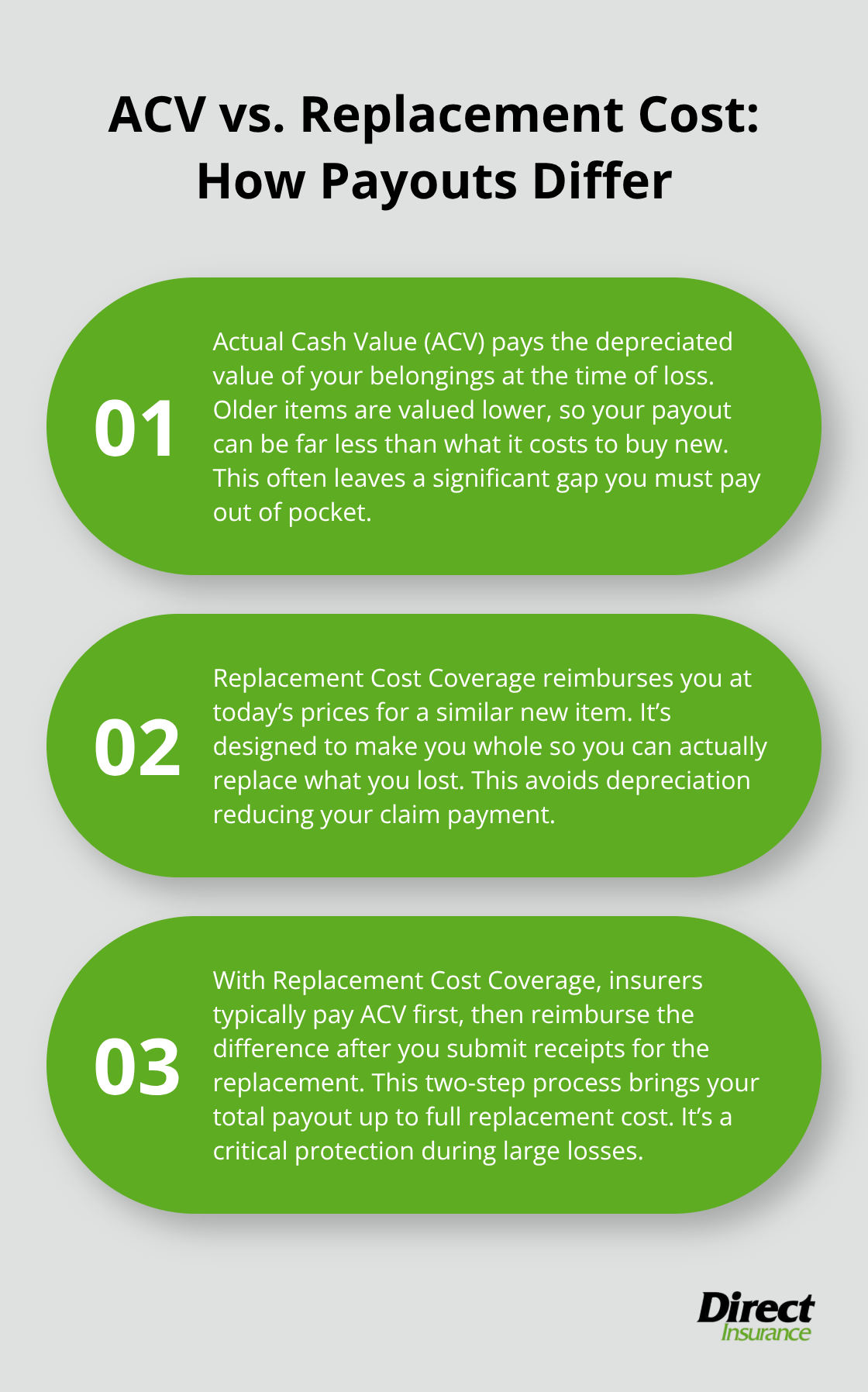
This is where most homeowners get blindsided. Actual Cash Value (ACV) pays you the depreciated value of an item at the time of loss, meaning a five-year-old television worth $1,500 new might be valued at $600 after depreciation. Replacement Cost Coverage reimburses you at today’s prices for a new item of similar kind and quality, so you’d receive what it actually costs to replace that television now.
If your policy includes Replacement Cost Coverage, you receive the ACV amount initially, then after you replace the item and provide receipts, the insurer covers the difference up to full replacement cost. This distinction matters enormously-a homeowner with ACV coverage on a fire loss might receive $15,000 for damaged belongings, while the same loss under Replacement Cost Coverage could pay $22,000 or more.
Why Replacement Cost Coverage Matters Most
Depreciation gaps leave you absorbing the real cost of rebuilding your life after a loss. Replacement Cost Coverage protects you from this financial burden by ensuring you can actually replace what you lost, not just receive a fraction of its value. Most homeowners who experience a significant loss wish they had chosen this option before disaster struck.
Understanding what your current policy covers sets the foundation for identifying gaps. The real vulnerability emerges when you compare your coverage limits to what you actually own-which is where most households discover they’re significantly underprotected.
Where Your Coverage Actually Falls Short
The gap between what homeowners think they’re covered for and what their policy actually pays is where financial disaster happens. Standard homeowners policies impose sublimits on high-value items, meaning jewelry might be capped at $1,500 total coverage regardless of actual value, and electronics often face similar restrictions. A homeowner with a $3,000 diamond ring and $2,000 in watches discovers during a burglary claim that their policy pays only $1,500 for all jewelry combined, leaving them absorbing $3,500 in losses. Electronics face the same problem-a home theater system worth $4,000 might have a $2,500 sublimit, forcing you to cover the difference yourself.
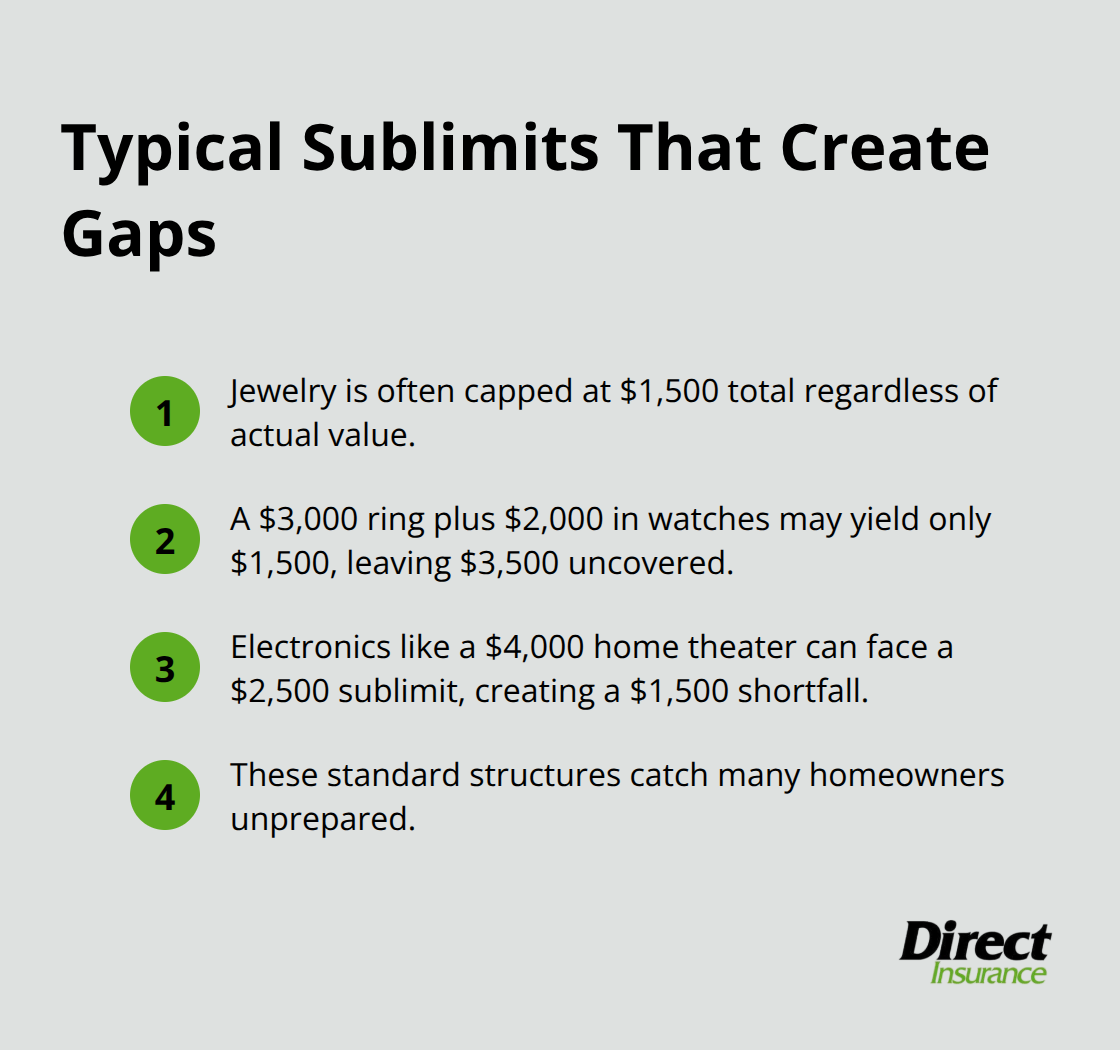
These aren’t rare edge cases; they’re standard policy structures that catch most homeowners unprepared.
High-Value Items Hit Hard
Sublimits devastate owners of valuable possessions. High-value items like jewelry, watches, and art face per-item or category sublimits on standard homeowners policies. A single piece of jewelry worth $5,000 might trigger a $1,500 sublimit, leaving you responsible for $3,500. Electronics suffer equally-your home theater system, computers, and cameras all face restricted coverage amounts. Standard policies impose these sublimits specifically on high-value items, which means your most expensive belongings receive the least protection. Without scheduled endorsements that list individual items with appraised values, you absorb the gap between what your policy pays and what replacement actually costs.
The Replacement Cost Reality Check
Many people believe their $50,000 contents limit covers everything they own until they actually price replacement. A modest home inventory includes a $3,000 sofa, $2,500 dining table, $2,000 bedroom set, $1,500 kitchen appliances, $1,200 washer and dryer, $800 in clothing per bedroom, $1,500 in linens and curtains, and $2,000 in electronics-you’ve already hit $15,000 before accounting for tools, outdoor equipment, or decorative items. Typical homes contain $50,000 to $100,000 in belongings, yet most people carry limits 30 to 50 percent below actual replacement value. When loss occurs, the gap between your limit and actual replacement cost becomes your personal financial responsibility. Inflation only worsens this problem-replacement costs for furniture and appliances have risen significantly, meaning a $50,000 limit from five years ago covers substantially less today.
Common Exclusions That Leave You Exposed
Specific categories face exclusions that devastate unprepared homeowners. Flood damage isn’t covered by standard homeowners policies, requiring a separate flood insurance policy through the National Flood Insurance Program if you live in a flood-prone area. Sewer backup and sump pump overflow are commonly excluded as well, yet these water-related losses happen frequently in basements. High-value art, collectibles, and antiques often exceed standard sublimits and require separate scheduling through an appraisal process. Business equipment and home office property may need endorsements if you work from home, and standard policies typically don’t cover business liability from home-based work.
How Scheduled Personal Property Fixes the Problem
Scheduled Personal Property endorsements exist specifically to address these gaps. You list individual high-value items with their appraised values and receive full replacement cost protection for each one. This approach eliminates sublimits for the items you schedule, meaning your $5,000 jewelry collection receives $5,000 in coverage, not $1,500. The appraisal process requires documentation, but it protects what matters most. Without these endorsements, you’re gambling that nothing valuable gets damaged or stolen-and that’s a bet most homeowners lose eventually. The real question isn’t whether you need these protections, but rather which items in your home demand them most urgently.
Sizing Your Coverage to Match What You Actually Own
The disconnect between coverage limits and actual belongings destroys most homeowners during claims. We regularly see policies with $40,000 limits protecting homes containing $80,000 or more in furniture, electronics, and personal items. The only way to avoid this trap is conducting a thorough home inventory, calculating your true replacement value, and matching your coverage accordingly.
Walk Through Each Room and Document Everything
Start by moving through each room with your phone or camera and documenting everything systematically. Your lounge likely contains a television worth $1,500 to $2,500, a sofa at $2,500 to $4,000, and additional furniture totaling another $2,000 to $3,000. Kitchen appliances including a dishwasher at $1,200, refrigerator, and small appliances easily reach $3,500 to $4,000. Bedrooms multiply these costs-each bedroom needs a bed frame, mattress, dresser, and nightstands running $2,000 to $3,500 per room.
Most homeowners complete this exercise and discover their actual belongings total $60,000 to $100,000, yet their policy covers only $35,000 to $50,000. For a quick estimate of the amount of insurance you need, multiply the total square footage of your home by local, per-square-foot building costs. Instead, calculate your actual replacement value and set your limit at least 10 to 15 percent higher to account for inflation and items you’ll inevitably forget during inventory.
Store Your Inventory Where Fire Can’t Reach It
Photographs and receipts become worthless if they burn in the same fire that destroys your belongings. Store your inventory digitally in cloud storage like Google Drive or Dropbox, separate from your home entirely. Document each item’s description, purchase date, purchase price, and current replacement value-not depreciated value.
A five-year-old sofa originally purchased for $2,500 may be worth $600 in actual cash value, but it costs $2,800 to replace with a similar sofa today, and replacement cost is what matters for coverage decisions. Include serial numbers and model numbers for electronics, appliances, and high-value items, as insurers request these during claims. For jewelry, watches, art, and collectibles exceeding $1,500 individually, obtain professional appraisals from certified appraisers and attach them to your policy records (these appraisals cost $100 to $300 per item but eliminate disputes during claims and justify scheduled endorsements that provide full replacement cost protection).
Update Your Inventory After Major Purchases
Update your inventory annually or within 30 days of major purchases-a new television, furniture replacement, or jewelry acquisition changes your coverage needs immediately. Most homeowners skip this step and discover gaps only when filing claims, at which point adjustments won’t help.
Compare Your Limit Against Your Documented Inventory
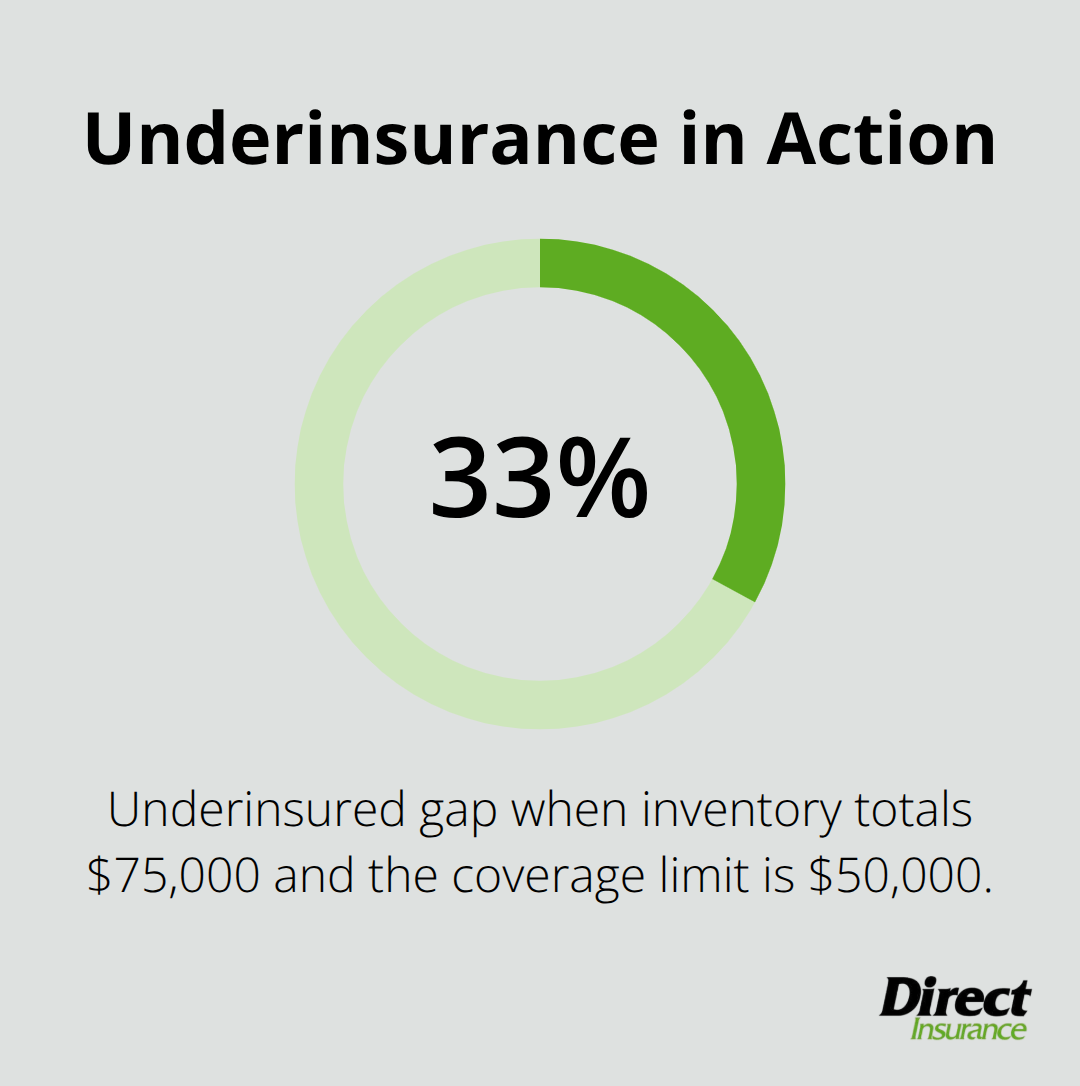
Set a calendar reminder each January to compare your current limit against your documented inventory value. If your inventory totals $75,000 and your coverage limit is $50,000, you’re underinsured by 33 percent-a gap that becomes your personal loss during a claim. Inflation typically increases replacement costs 3 to 5 percent annually, so a $50,000 limit from 2021 covers roughly 20 percent less today (add new furniture, electronics, or collectibles, and the gap widens further).
Request a coverage review from your agent whenever you make significant purchases, refinance your home, or suspect your limit may be insufficient. Don’t wait for renewal-changes during the policy year ensure immediate protection. High-value items acquired after your last appraisal should receive updated professional valuations before adding scheduled endorsements, as appraisals from years past don’t reflect current market prices.
Final Thoughts
The gap between what homeowners think they’re covered for and what their policies actually pay creates financial disaster when loss strikes. Household contents coverage protects your belongings, but only if your limits match what you actually own and your policy addresses high-value items through scheduled endorsements. Most homeowners discover this mismatch too late, during claims when adjustments can’t help.
Complete a thorough home inventory by walking through each room and documenting everything with descriptions, purchase dates, and current replacement values, then store this inventory digitally in cloud storage separate from your home so fire or theft won’t destroy your documentation. Calculate your total replacement value honestly-most homes contain $60,000 to $100,000 in belongings, yet many policies cover only $35,000 to $50,000-and identify high-value items like jewelry, watches, or art that exceed $1,500 individually so you can obtain professional appraisals for scheduled endorsements that eliminate sublimits. Set a calendar reminder each January to compare your documented inventory against your current coverage limit and adjust for inflation and new purchases, then request a coverage review from your agent whenever you acquire significant items or suspect your limit is insufficient.
Contact our team for a policy review and let us help you ensure your household contents coverage protects what matters most to your family.
Disclaimer: The information provided in this blog is for general informational purposes only and does not constitute legal, financial, or insurance advice. Coverage options, terms, and availability may vary. Please consult with a licensed professional for advice specific to your situation


