
Does Home Insurance Cover Roof Leaks?
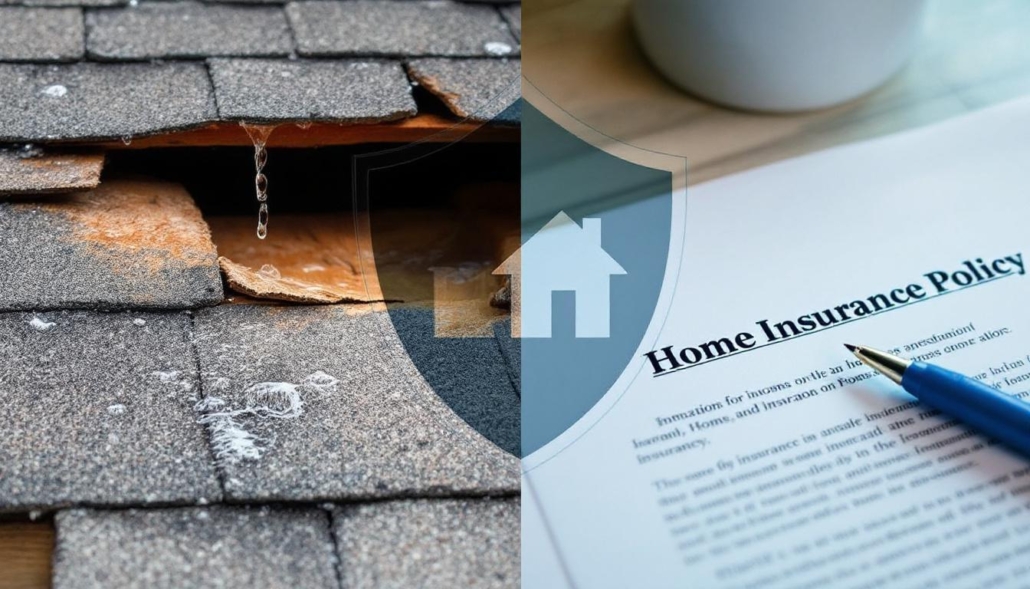
A roof leak can turn into an expensive problem fast. The question of whether home insurance covers roof leaks isn’t always straightforward-the answer depends on what caused the damage and how well you’ve maintained your roof.
At Direct Insurance Services, we’ve helped countless homeowners navigate these claims. Understanding your coverage now can save you thousands in repair costs later.
What Causes Roof Leaks and Your Coverage
Sudden Damage Gets Covered, Deterioration Does Not
Home insurance covers roof leaks when they result from sudden, accidental events like storms, hail, wind, or falling trees. According to GEICO, these covered perils include heavy wind, hail, the weight of ice or snow, lightning, fire, and fallen objects. The moment a storm damages your shingles or hail punctures the roof, you have a covered claim.
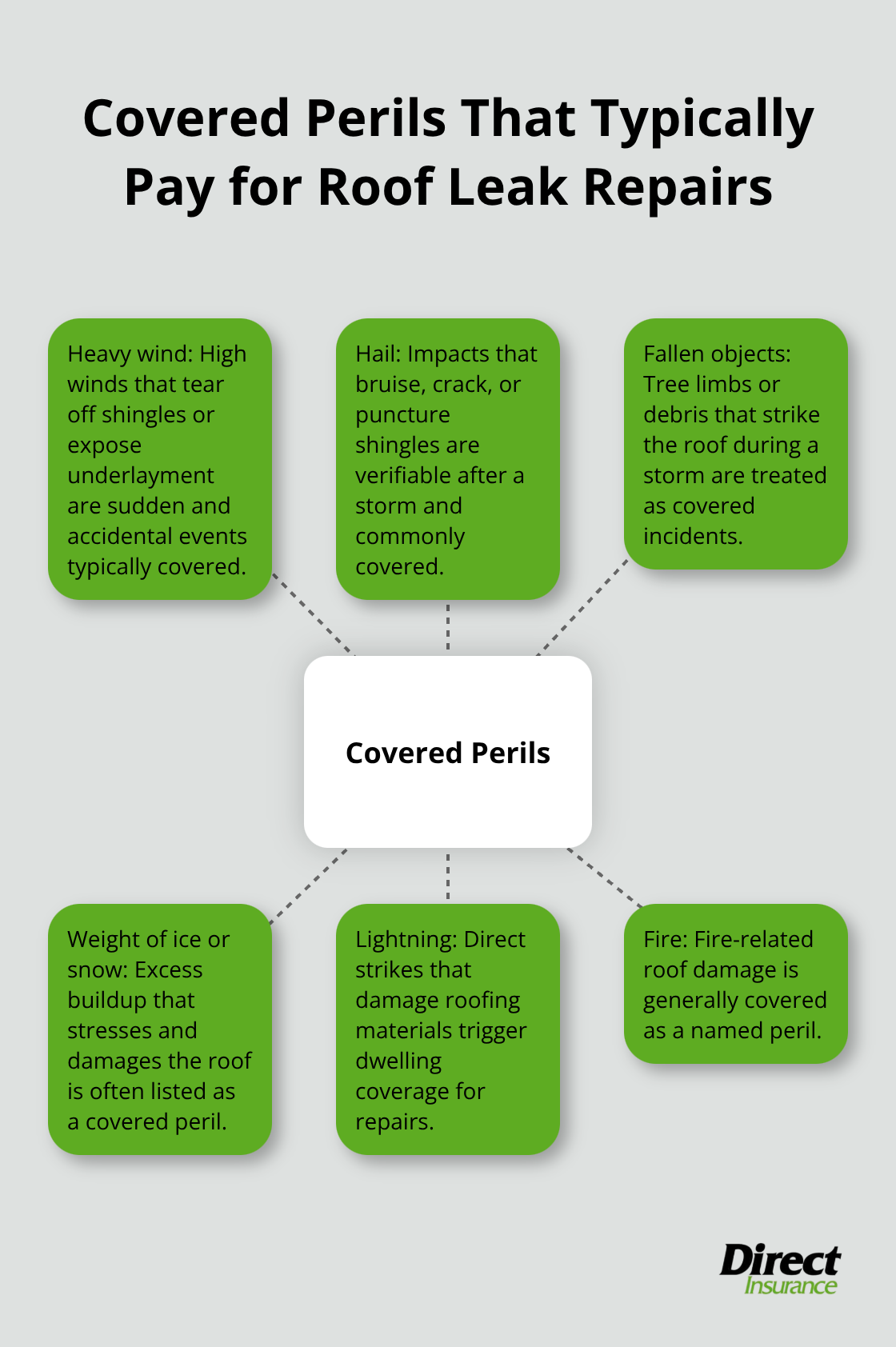
The problem arises when the leak stems from age, poor maintenance, or gradual deterioration-insurers will deny these claims without hesitation. Water damage and freezing account for a significant share of homeowners insurance claims, per the Insurance Information Institute, which means roof leaks are common, but not all are covered.
Weather Damage That Your Policy Actually Pays For
When a covered peril causes the leak, your dwelling coverage pays to repair or replace the roof and fix interior damage like stained ceilings or ruined walls, minus your deductible. If a storm knocks a branch onto your roof or high winds tear away shingles, that’s a valid claim. Hail damage is particularly straightforward because it’s sudden and verifiable. Interior damage from the resulting leak-water-stained drywall, damaged flooring, ruined belongings-falls under personal property coverage if caused by that same covered peril. However, your policy will exclude damage from earthquakes and floods unless you carry separate coverage for those perils. The key principle is that the damage must come from a sudden event, not from the roof aging or from your failure to maintain gutters and trim branches.
Why Neglect and Age Kill Your Claim
Policies explicitly exclude leaks caused by lack of maintenance or wear and tear. If your gutters become clogged with debris, water backs up under the shingles-and that’s on you. If your roof reaches 20 years old and the shingles deteriorate naturally, insurers will argue the leak resulted from age, not a covered peril. GEICO notes that insurers may require evidence of routine upkeep before approving a claim. You need to document your roof inspections and repairs. A roof inspection twice yearly (especially after major storms) and timely repairs to missing or damaged shingles strengthen your position if a claim becomes necessary. Trimming tree branches near your home, clearing gutters, and ensuring proper attic ventilation aren’t just maintenance tasks-they’re proof that you prevent leaks rather than ignore them. When an adjuster investigates your claim, they’ll look for signs of neglect. A well-maintained roof supports your claim; a neglected one guarantees denial.
What Happens When You File a Claim
An adjuster will determine whether the leak’s cause qualifies as a covered peril. If the cause isn’t covered, the claim gets denied immediately. This is why understanding what your policy covers matters before damage occurs. The adjuster’s investigation will reveal whether you maintained your roof properly or let it deteriorate. Your maintenance records-photos of inspections, receipts for repairs, evidence of gutter cleaning-become your strongest defense. Without this documentation, you’ll struggle to prove you didn’t neglect the roof. The difference between a paid claim and a denial often comes down to what you can show the adjuster about your roof’s condition and your care of it.
When Your Homeowners Policy Won’t Pay
Maintenance Failures and Age-Related Damage
Your homeowners insurance will reject a roof leak claim if poor maintenance, age, or conditions you allowed to develop over time caused the damage. Insurers distinguish between sudden damage and gradual deterioration, and this distinction determines whether you receive payment. If your gutters clogged with leaves and debris, water backed up under the shingles-that responsibility falls on you. If your roof reached 15 or 20 years old and shingles started failing naturally, insurers will deny the claim because age qualifies as an excluded peril.
Lack of maintenance ranks as the most common reason claims get denied. You need proof that you inspected your roof twice yearly, cleared gutters, trimmed overhanging branches, and repaired damage promptly. Without documentation, an adjuster will assume neglect and deny your claim outright.
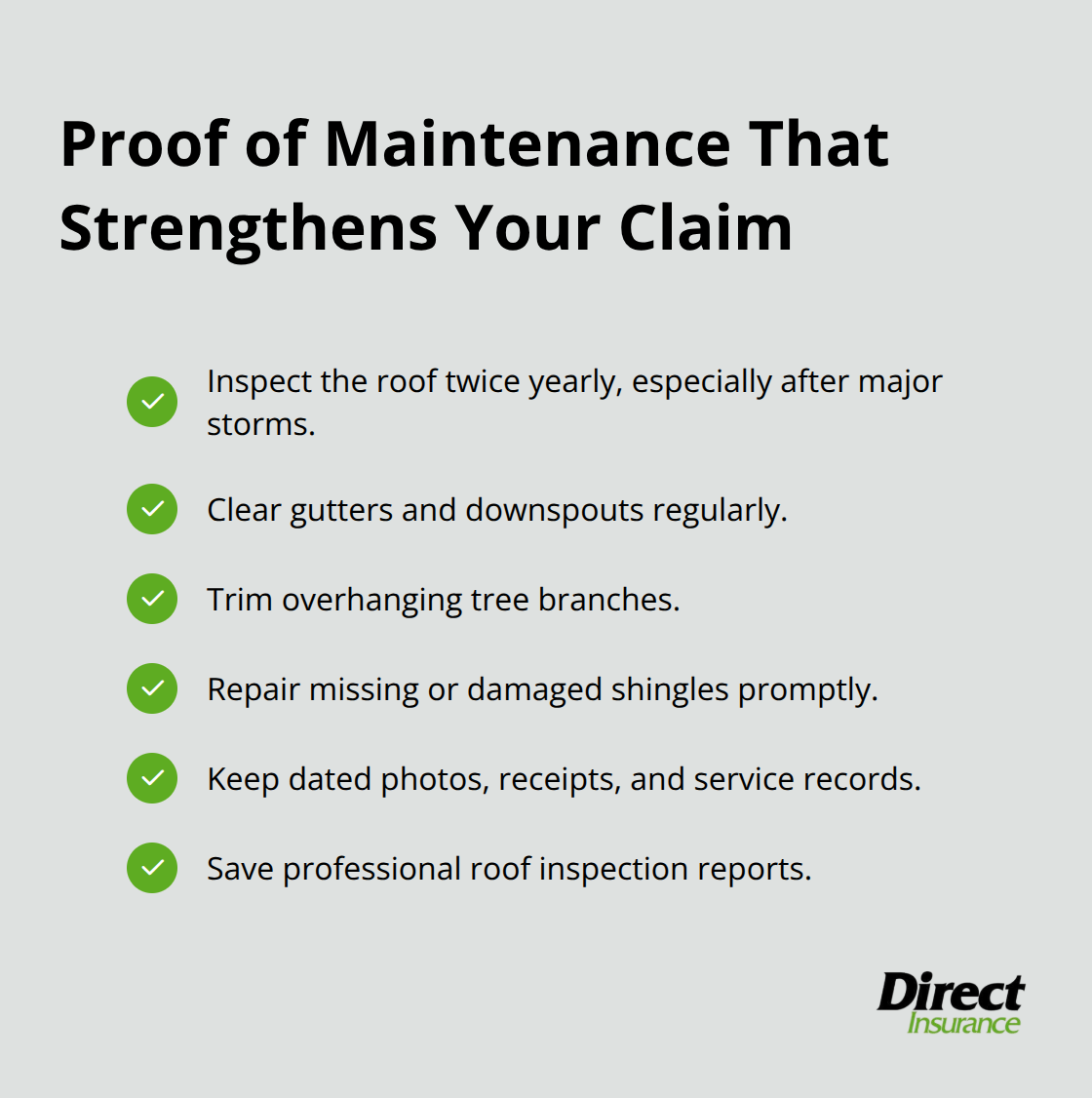
A roof inspection before filing a claim matters significantly. You also need to understand what your specific policy excludes.
Pre-Existing Conditions That Block Coverage
Pre-existing damage also kills coverage. If your roof already leaked before the storm hit, the insurer will argue the storm did not cause the loss-the pre-existing condition did. This is why a professional roof inspection before filing a claim protects your interests. Standard homeowners policies exclude earthquake damage, flood damage, and damage from pests or fungus unless you carry separate coverage or endorsements.
Some policies apply roof surfacing payment schedules that limit payouts based on roof age, meaning a roof receives a lower payout as it ages even if the damage is identical. Read your actual policy document, not just the summary. Call your agent and ask specifically what perils your policy covers and what exclusions apply to roof damage.
Policy Exclusions You Must Know
Many homeowners discover exclusions only after filing a claim, which is far too late. The adjuster’s job is to verify whether the cause of your leak falls within covered perils. If it does not, denial becomes automatic. Your policy document contains the answers you need-but only if you read it before damage occurs. Standard policies exclude certain perils entirely, and roof-specific exclusions vary by carrier and state.
Understanding these exclusions now prevents costly surprises later. When you file a claim, the adjuster will investigate the leak’s cause and compare it against your policy’s covered perils list. This investigation determines your payout or denial. The next step in protecting yourself involves knowing exactly how to file a claim and what documentation strengthens your position.
How to File a Roof Leak Claim
Act Fast and Document Everything
You must act immediately after discovering a roof leak. Document the damage with photos and videos showing the water intrusion, damaged shingles, stains on ceilings and walls, and any visible interior damage before cleanup starts. Take these photos from multiple angles and include dates if your camera or phone records them automatically. The Insurance Information Institute reports that water damage and freezing account for a significant portion of homeowners insurance claims, which means adjusters see countless roof leak claims and expect thorough documentation from the start.
Contact your insurance agent within 24 to 48 hours of discovering the damage, not weeks later. Many policies have filing windows ranging from 30 days to two years, but waiting weakens your position because adjusters may question whether the damage existed before the covered event. When you call, provide specific details: the date you discovered the leak, what caused it (storm, hail, wind), and the areas affected.
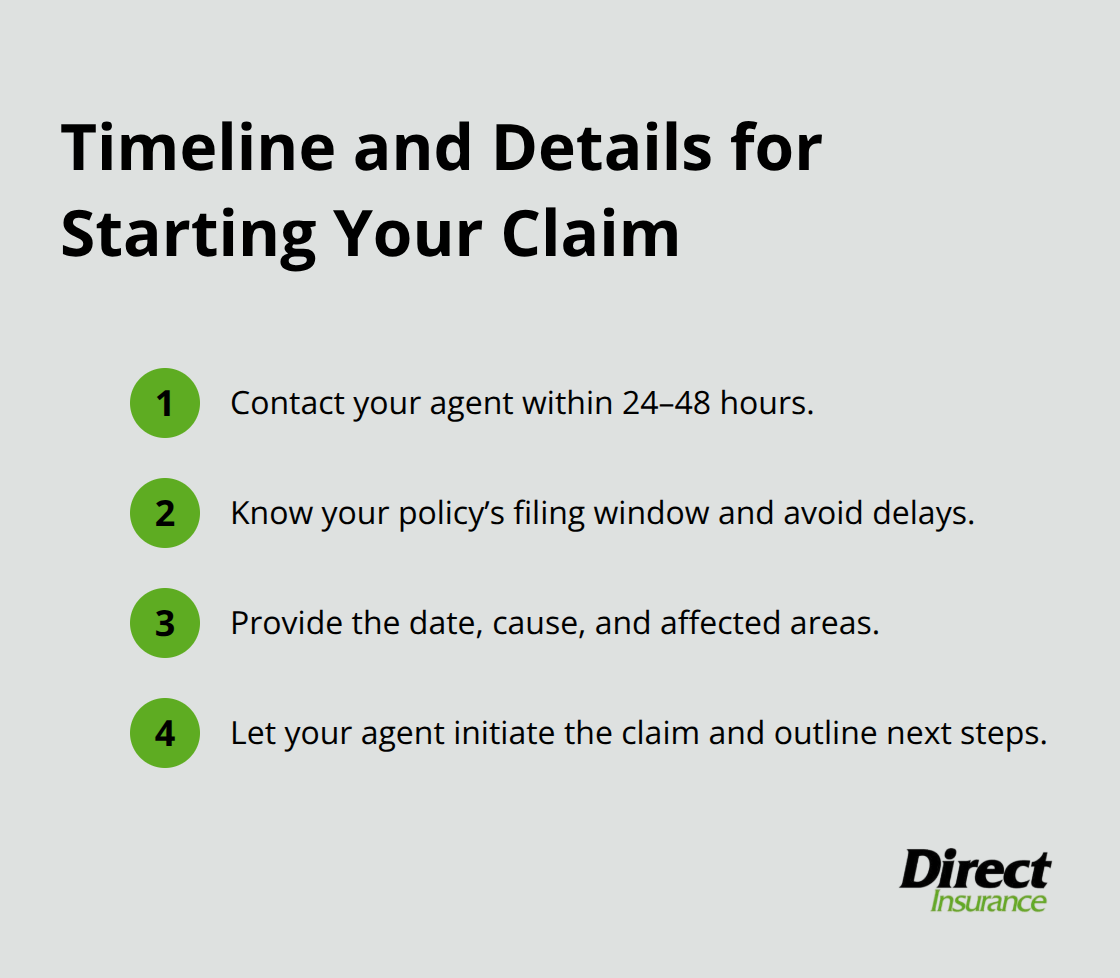
Your agent will initiate the claim and explain your next steps.
Gather Proof of Maintenance
Collect documentation of routine maintenance you performed before the leak occurred. Receipts for gutter cleaning, roof inspections, and repairs to damaged shingles demonstrate that you maintained the roof properly. If you had a professional inspection done in the past year, that document becomes invaluable because it shows the roof’s condition before the loss. Take photos of this documentation and have copies ready when the adjuster calls.
Adjusters investigate thoroughly and will deny claims based on evidence of neglect. Your maintenance records become your strongest defense against denial. Without this documentation, you’ll struggle to prove you didn’t ignore the roof’s condition.
Prepare for the Adjuster’s Visit
When the adjuster schedules an inspection, prepare a detailed list of all damage you observed, including interior effects like water stains and ruined materials. Walk the adjuster through your documentation of maintenance efforts. Do not exaggerate or misrepresent the cause of the damage; adjusters investigate thoroughly and will deny claims based on dishonesty.
Obtain repair estimates from qualified contractors before the adjuster visits, as this gives you a baseline for comparison. Some homeowners make the mistake of hiring a contractor immediately and paying out of pocket, then hoping insurance will reimburse them. Instead, wait for the adjuster’s assessment unless the leak poses an immediate safety risk. For emergency tarping or water extraction to prevent further damage, keep all receipts because these preventive costs may be covered separately.
Understand the Adjuster’s Decision
After the adjuster completes the inspection, ask for a written report explaining their findings and the coverage determination. If the claim receives approval, the insurer will pay up to your policy limit minus your deductible. If your repair estimate exceeds the payout, you’ll owe the difference unless you have higher coverage limits or replacement cost endorsements.
If the claim receives denial, request a detailed written explanation of why the cause of the leak falls outside your covered perils. Review your home insurance policy document against that explanation to decide whether to appeal or pursue other options. The adjuster’s investigation determines your payout or denial based on whether the leak’s cause qualifies as a covered peril under your specific policy.
Final Thoughts
Your roof leak claim hinges on one critical factor: whether the damage stems from a covered peril or from neglect and age. The answer to “does home insurance cover roof leaks” is yes, but only under specific circumstances. A storm that tears shingles away or hail that punctures the roof qualifies for coverage, while a roof that deteriorated over years of ignored maintenance does not.
Before filing a claim, review your actual policy document with your agent and ask which perils your coverage includes and what exclusions apply specifically to roof damage. This conversation takes 15 minutes and prevents costly surprises later. If your claim gets denied, request a written explanation detailing why the adjuster determined the cause falls outside your covered perils, then review that explanation against your policy language to decide whether to appeal.
The strongest position you can take is preventive: inspect your roof twice yearly, clear gutters and downspouts, trim branches hanging over your home, and repair damaged shingles promptly. These actions reduce your actual leak risk and create documentation that protects your claim if damage occurs. We at Direct Insurance Services help Utah homeowners understand their coverage before problems arise, and our team works with top-rated carriers to ensure your homeowners insurance fits your actual needs-contact us to discuss your roof coverage today.
Disclaimer: The information provided in this blog is for general informational purposes only and does not constitute legal, financial, or insurance advice. Coverage options, terms, and availability may vary. Please consult with a licensed professional for advice specific to your situation

