Contractor General Liability Utah: Shielding Your Projects
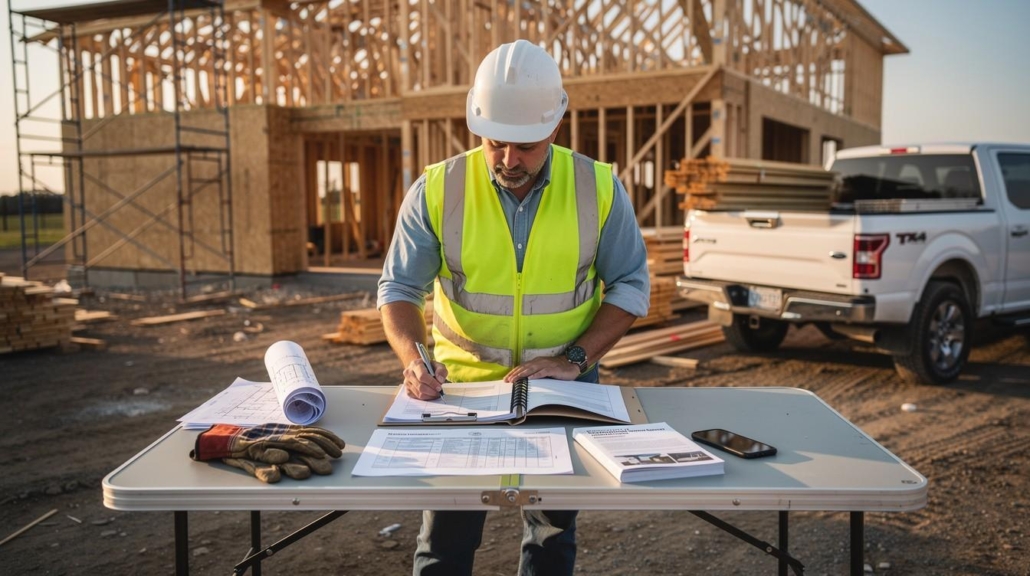
One accident on your job site can cost thousands in medical bills, property damage, and legal fees. Contractor general liability in Utah isn’t optional-it’s a business requirement that protects you from financial ruin.
At Direct Insurance Services, we help contractors understand exactly what coverage they need and why it matters. The right policy stands between a manageable claim and a business-ending lawsuit.
What Your General Liability Policy Actually Covers
Medical Expenses and Bodily Injury Protection
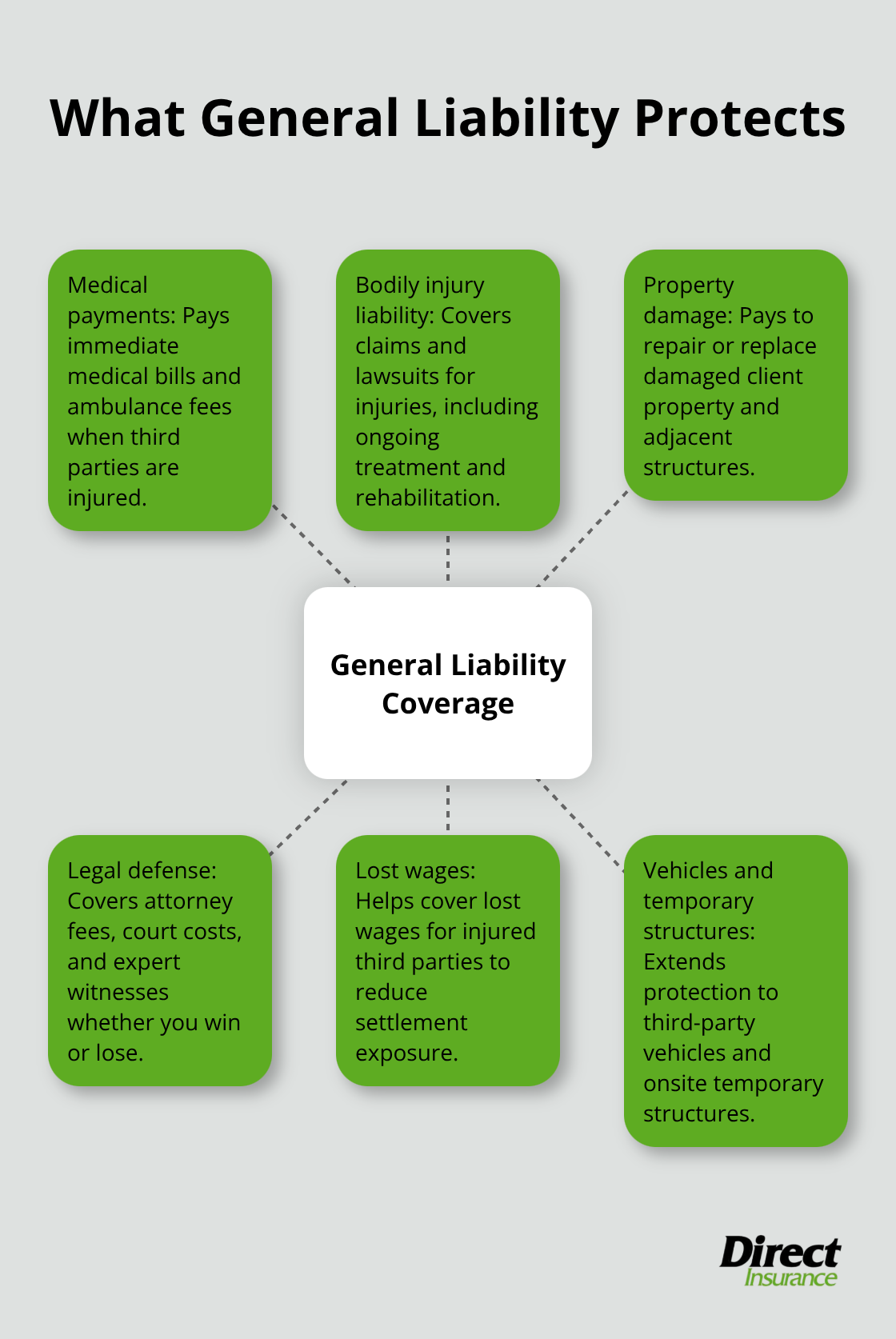
One accident on your job site can trigger medical bills that spiral into tens of thousands of dollars. General liability insurance covers medical expenses and bodily injury claims when a client or bystander gets hurt on your project-a fall, a cut from equipment, or an allergic reaction to materials. Your policy pays their medical bills, ambulance fees, and ongoing treatment costs. Most policies include both immediate medical payments and liability claims that arise later when someone sues. Medical expenses and bodily injury claims in construction can cost contractors between $85 to $90 per month for coverage, with annual policy costs ranging from around $250 to over $3,000 per year. Your policy also covers lost wages and rehabilitation costs for injured parties, which keeps settlements from spiraling into six-figure lawsuits.
Property Damage and Third-Party Claims
Contractors regularly damage client property during normal operations. A power drill goes through a wall, scaffolding scratches expensive flooring, or your truck backs into a neighbor’s fence-these incidents happen on nearly every job site. Your general liability policy covers repair or replacement costs, plus any legal fees if the property owner sues. This protection extends beyond just the client’s building; it covers damage to adjacent properties, vehicles, and even temporary structures on the site. Without this coverage, you pay these costs directly from your business account, which can wipe out your profit margin on an entire project.
Legal Defense Costs and Court Expenses
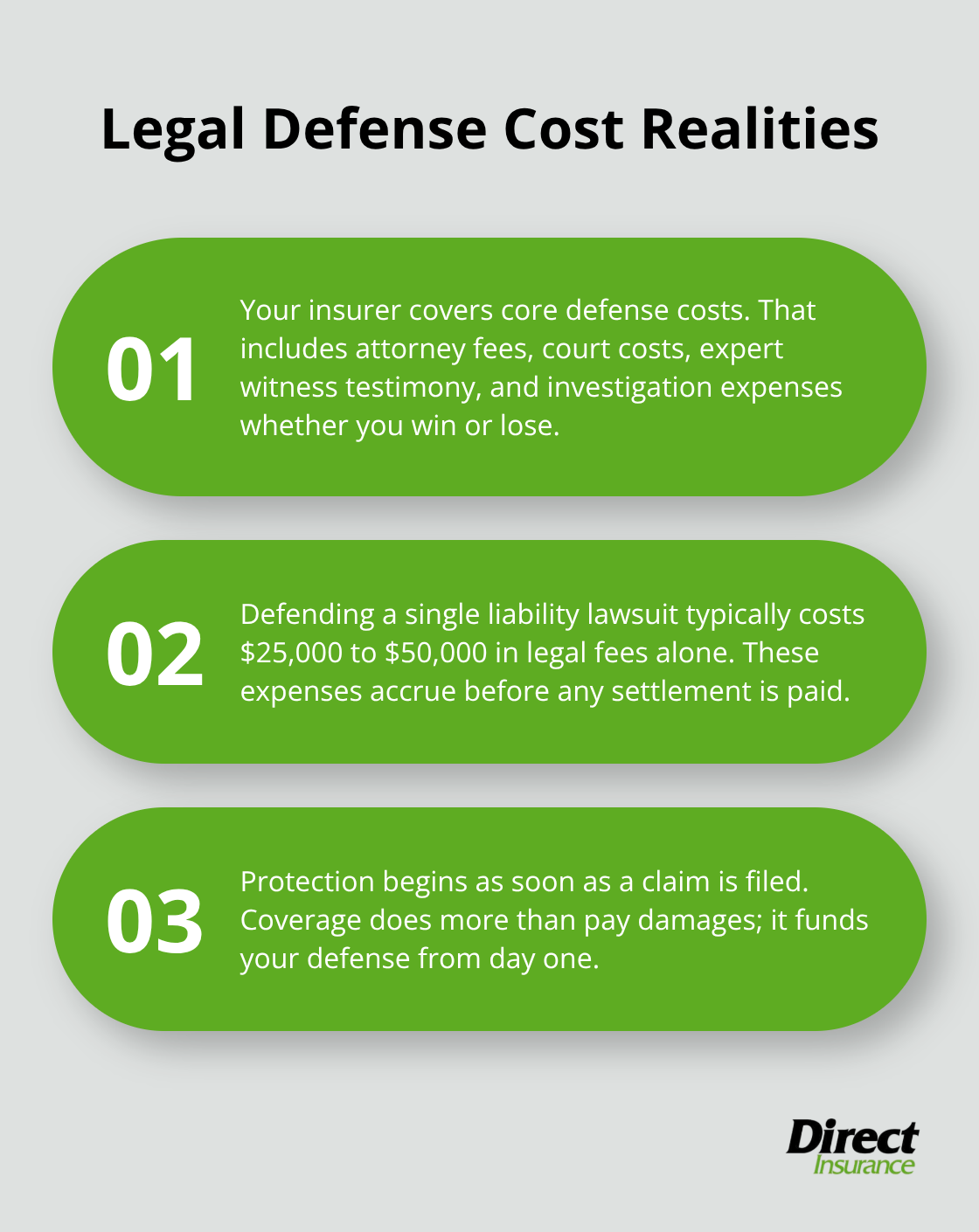
Legal defense costs often surprise contractors who think their policy only pays settlements. Your insurer covers attorney fees, court costs, expert witness testimony, and investigation expenses whether you win or lose the case. The National Association of Construction Industries found that defending a single liability lawsuit costs $25,000 to $50,000 in legal fees alone, before any settlement payment. This means your coverage actually starts protecting you the moment a claim gets filed, not just when you pay damages.
Understanding these three protection layers helps you identify whether your current policy has gaps that could expose your business to financial risk.
Assessing Your Coverage Gaps
Most contractors carry some form of general liability insurance, but many policies lack adequate limits for their actual project scope. A $1 million policy sounds substantial until a major property damage claim arrives (it often isn’t). You need to compare what your current policy covers against the specific risks your projects face, which varies dramatically between residential remodeling, commercial construction, and specialty contracting work.
Why Utah Contractors Must Have General Liability Coverage
Legal Requirements That Protect Your License
Utah’s construction licensing board requires general liability insurance as a condition for contractor licensing and bonding. The Utah Division of Occupational and Professional Licensing mandates that contractors maintain active coverage before they can legally bid on projects or sign contracts. Without documented general liability insurance, you cannot obtain or renew your contractor’s license, which means zero legal ability to operate. This isn’t a suggestion from industry groups-it’s a hard regulatory requirement that affects your entire business.
Personal Liability Without Coverage
Utah courts have consistently ruled that contractors without general liability insurance face personal liability for accidents, meaning your personal assets become targets in lawsuits. A single job site accident can result in claims exceeding $500,000 when medical expenses, lost wages, and pain-and-suffering damages combine. Construction accident data from the U.S. Bureau of Labor Statistics shows that construction workers experience non-fatal injuries at rates double the national average across all industries, which means job site incidents in Utah aren’t rare exceptions but predictable business risks. Your general liability policy protects your business capital, equipment, and personal savings from these financial emergencies. Utah contractors operating without adequate coverage often face bankruptcy after a single significant claim, even if the accident wasn’t their fault.
Competitive Advantage in Utah’s Market
Financial security extends beyond accident prevention to project profitability. Contractors who carry proper general liability insurance can bid competitively because clients and general contractors demand proof of coverage before hiring subcontractors. Major projects in Utah routinely require $1 million to $2 million in liability coverage as a contract condition, and without it, you’re excluded from these higher-paying jobs. Insurance also protects your business from the hidden costs of claims-administrative expenses, investigation fees, and business interruption losses add up quickly when an accident occurs. Utah’s growing construction market means increased competition, and contractors with comprehensive coverage win more bids than those without it. Your insurance becomes a competitive advantage that directly impacts revenue, not just a regulatory checkbox.
Choosing Coverage That Matches Your Projects
The gap between minimal coverage and adequate protection often determines whether your business survives a major claim. Your next step involves assessing the specific risks your projects face and selecting coverage limits that actually protect your operation.
How to Choose the Right General Liability Policy
Match Coverage Limits to Your Actual Project Values
Selecting a general liability policy requires understanding what your projects actually expose you to, not what an insurance agent suggests as standard coverage. Residential remodeling contractors face different risks than commercial foundation work or specialty electrical installation, yet many contractors accept whatever limits their agent recommends without questioning whether those limits protect their specific operations.
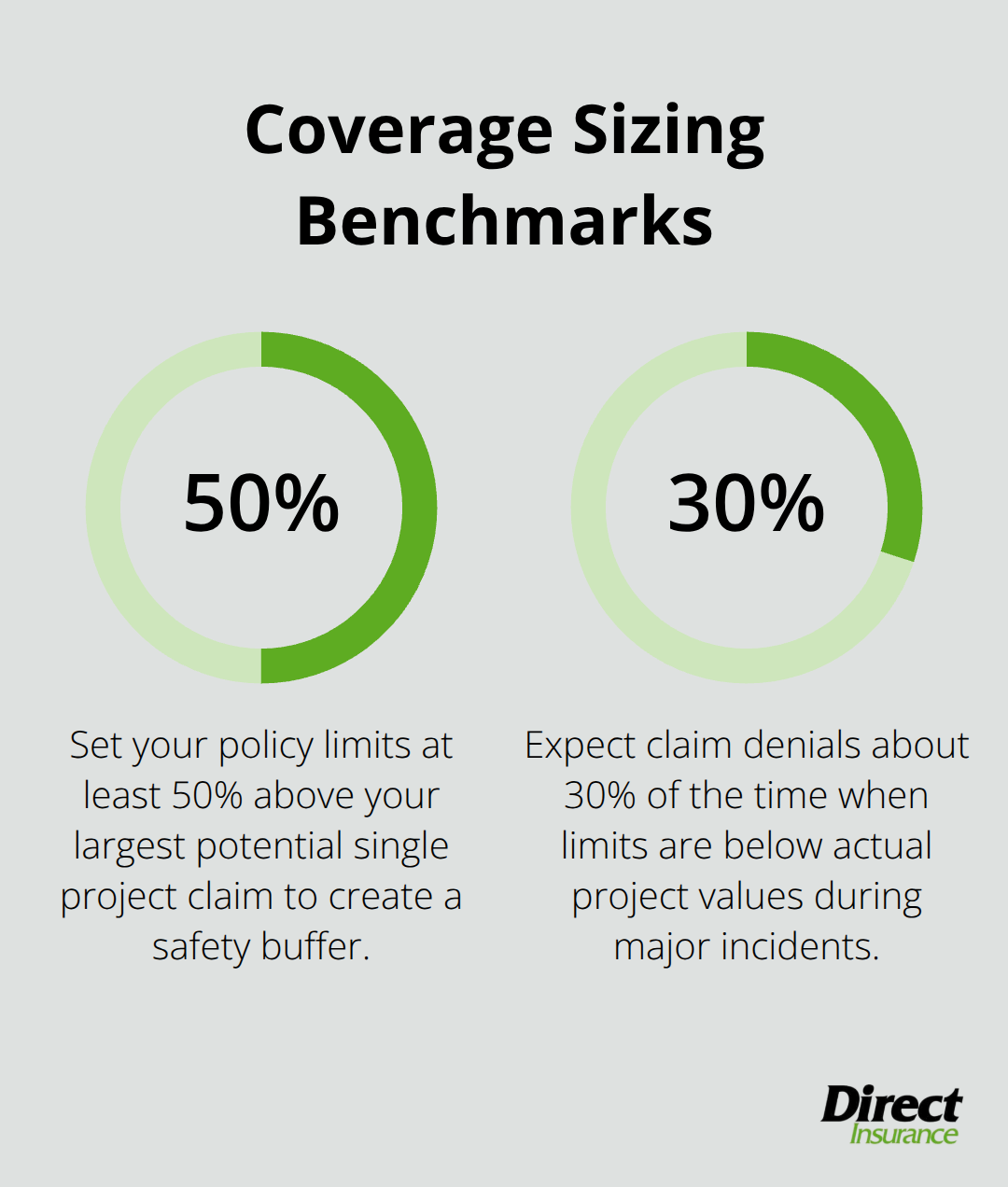
Start by listing your typical projects over the past two years, including project values, types of work, and any incidents that occurred. A contractor doing $500,000 in annual residential kitchen remodels needs different coverage than one handling $2 million commercial tenant improvements. Your coverage limits should exceed your largest potential single project claim by at least 50 percent-if your biggest project is worth $300,000, your policy should carry at least $450,000 in property damage limits.
Construction industry data shows contractors with coverage limits below their actual project values face claim denials approximately 30 percent of the time when major incidents occur. Utah contractors commonly underestimate their exposure by choosing $500,000 limits when they regularly work on jobs exceeding $1 million in value.
Optimize Your Deductible for Cash Flow
Your deductible significantly impacts cash flow management. Higher deductibles like $10,000 reduce your premium but mean you absorb smaller claims from your operating account, while lower deductibles like $1,000 cost more but protect your working capital during busy seasons when you cannot afford claim expenses.
Calculate what your business can realistically pay out-of-pocket without disrupting operations. A contractor with strong cash reserves might comfortably handle a $5,000 deductible, while one with tighter margins should opt for $1,000 or $2,500 to avoid financial strain when incidents occur.
Examine Policy Exclusions Carefully
The comparison process requires examining what each policy actually excludes, not just the premium price. Two policies with identical $1 million limits can vary dramatically in coverage scope, with one excluding completed operations claims and another limiting coverage for property damage to client-owned equipment.
Request detailed policy documents from multiple carriers rather than relying on agent summaries, then identify which exclusions could impact your specific work. Utah contractors in specialized trades like roofing or HVAC installation often discover their general liability insurance excludes work-specific hazards entirely, forcing them to purchase additional riders or endorsements that should have been included from the start.
Shop Multiple Carriers for Better Rates
Premium differences between carriers covering the same risk typically range from 15 to 40 percent, meaning shopping multiple quotes could save $2,000 to $5,000 annually on a standard commercial policy. Schedule consultations with independent agents who represent multiple carriers rather than captive agents working for single companies, since independent agents can compare options across the market instead of steering you toward one company’s products.
Ask each agent specifically which exclusions apply to your work type and request written explanations of coverage limits before committing to any policy. Working with agents who shop multiple carriers helps you access the best coverage options without the pressure of a one-size-fits-all approach.
Final Thoughts
Contractor general liability in Utah protects your ability to operate legally and compete for better projects. The three protection layers-medical expenses, property damage, and legal defense costs-work together to keep your business standing after accidents that would otherwise force closure. Your coverage limits must match your actual project values, your deductible must fit your cash flow situation, and your policy exclusions require examination before you commit to any carrier.
The contractors who thrive in Utah’s competitive market understand their exposure, carry adequate limits, and work with agents who shop multiple carriers instead of accepting one-size-fits-all solutions. A $1 million policy sounds substantial until you face a real claim, which is why matching coverage to your specific work matters far more than accepting whatever an agent recommends. Utah’s construction licensing board mandates general liability insurance as a condition for contractor licensing, making this protection both a legal requirement and a business necessity.
Contact Direct Insurance Services to review your current coverage against your actual risks. Our team works with multiple carriers to find coverage that protects your operation without unnecessary premium costs, and we’ll examine your policy exclusions, compare deductibles that fit your cash flow, and identify gaps that could expose your business to financial risk.
Disclaimer: The information provided in this blog is for general informational purposes only and does not constitute legal, financial, or insurance advice. Coverage options, terms, and availability may vary. Please consult with a licensed professional for advice specific to your situation


