Homeowners insurance coverage Utah: What Is Covered and What Isn’t

Homeowners insurance coverage in Utah protects your home and belongings, but it doesn’t cover everything. Many Utah homeowners are surprised to learn what their policies actually exclude-especially when they need coverage most.
We at Direct Insurance Services help homeowners understand exactly what their policies cover and where the gaps are. This guide breaks down the essentials so you can make informed decisions about your protection.
What Your Utah Homeowners Policy Actually Protects
Dwelling Coverage: Your Home’s Foundation and Structure
Your homeowners insurance in Utah covers three primary areas that form the backbone of your protection. Dwelling coverage pays for damage to your home’s structure, including the walls, roof, foundation, built-in appliances, and attached structures like garages or decks. This is your largest coverage component because rebuilding a home costs significant money. According to the National Association of Home Builders, the average cost to build a home in Utah is approximately $400 per square foot, meaning a 2,500-square-foot home could cost $1 million to rebuild.
Your dwelling coverage limit should reflect current replacement costs, not the market value of your property, since market value includes land value while replacement cost covers only reconstruction. A professional replacement cost estimate provides the most accurate figure for your specific home, accounting for local Utah construction rates and your home’s unique features.
Personal Property Coverage: Protecting Your Belongings
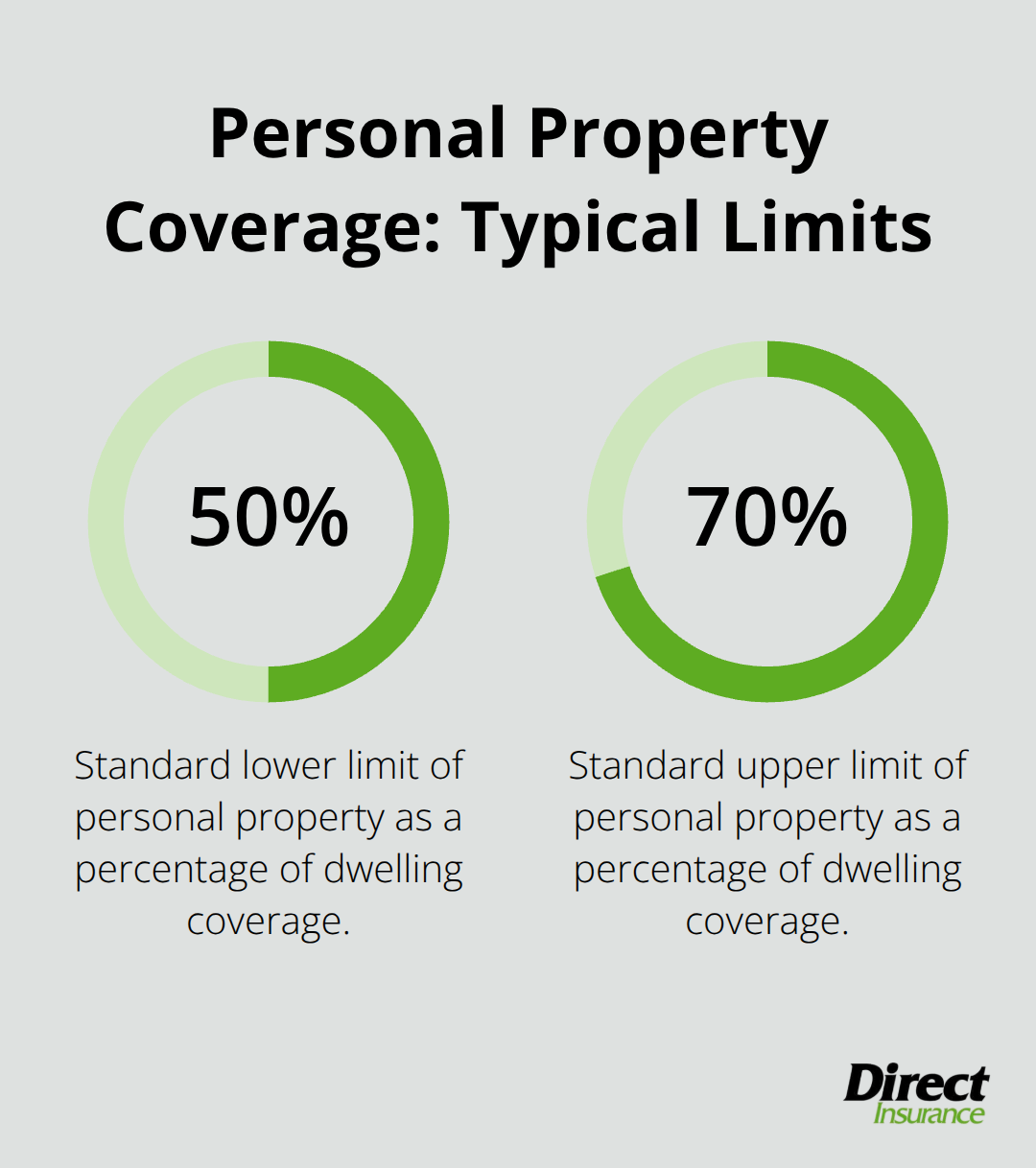
Personal property coverage protects your belongings inside the home-furniture, electronics, clothing, and other possessions. Standard policies typically cover 50 to 70 percent of your dwelling coverage limit for personal property, though you can increase this if needed. High-value items like jewelry, art, or collectibles usually hit coverage caps around $1,500 to $2,500 per item, so you may need a separate rider for those.
Walk through your home and photograph or list major items, then add up actual replacement prices at current retail rates. This exercise reveals whether your personal property limit matches what you actually own.
Liability Coverage: Your Financial Shield
Liability coverage protects your financial interests when someone gets injured on your property and sues you. This coverage pays for their medical bills and legal costs up to your policy limit, which typically starts at $100,000 but many Utah homeowners should carry $300,000 or more (given rising medical costs and litigation expenses). Consider your net worth and assets-your coverage should exceed what someone could realistically recover in a lawsuit.
If you have a pool, trampoline, or frequently host guests, higher liability limits make financial sense. Utah homeowners should also know that most policies include code upgrade coverage, which helps pay for bringing older homes up to current building codes during reconstruction, though this coverage is often limited to 10 percent of dwelling coverage.
Identifying Your Coverage Gaps
Most Utah homeowners underestimate replacement costs and overlook personal property limits. The gap between what you think you’re covered for and what your policy actually covers often emerges only when you file a claim. Understanding these three protection areas helps you spot where your coverage falls short-and that’s where the exclusions matter most.
What’s Not Covered by Your Utah Homeowners Policy
Flood Damage: Utah’s Most Dangerous Gap
Standard homeowners insurance in Utah excludes all flood damage, and this gap costs homeowners real money. Most homeowners insurance does not cover flood damage. Utah’s geography creates genuine flood risks-areas near the Jordan River, Weber River, and seasonal mountain runoff zones face serious exposure. Your standard policy won’t cover any water damage from flooding, whether it stems from heavy rain, snowmelt, or overflowing rivers.
You need separate flood insurance through the National Flood Insurance Program or a private carrier. This coverage carries a 30-day waiting period, so waiting until storm season arrives won’t work. The cost typically ranges from $400 to $1,200 annually depending on your flood zone and home elevation. Without this coverage, a single flood event leaves you paying thousands out of pocket.
Earthquake Damage: A Major Risk for Utah Homeowners
Earthquake damage presents another major gap for Utah homeowners, particularly those in Salt Lake County or near the Wasatch Fault. The U.S. Geological Survey identifies Utah as having moderate to high seismic risk, yet standard policies exclude all earthquake and ground movement damage. A moderate earthquake hitting the Wasatch Front could cause billions in damage across the state, and homeowners without earthquake coverage face complete financial exposure.
Earthquake insurance costs roughly $100 to $300 annually for most Utah homes, and like flood coverage, it requires a separate policy. This relatively low cost protects against catastrophic financial loss, making it a practical consideration for Utah residents.
Wear and Tear: Your Maintenance Responsibility
Your policy won’t cover damage from neglect, aging systems, poor maintenance, or normal deterioration. If your roof fails because shingles deteriorated over time rather than from a sudden storm, that’s your responsibility. Foundation settling, wood rot from moisture problems, or mechanical failures all fall outside coverage. This means regular home maintenance directly impacts your financial risk and claim eligibility.
Staying on top of repairs and upkeep isn’t just about home value-it protects your insurance coverage. Insurers investigate claims carefully, and they can deny coverage if they find evidence that poor maintenance caused the damage.
Understanding Your Real Protection Limits
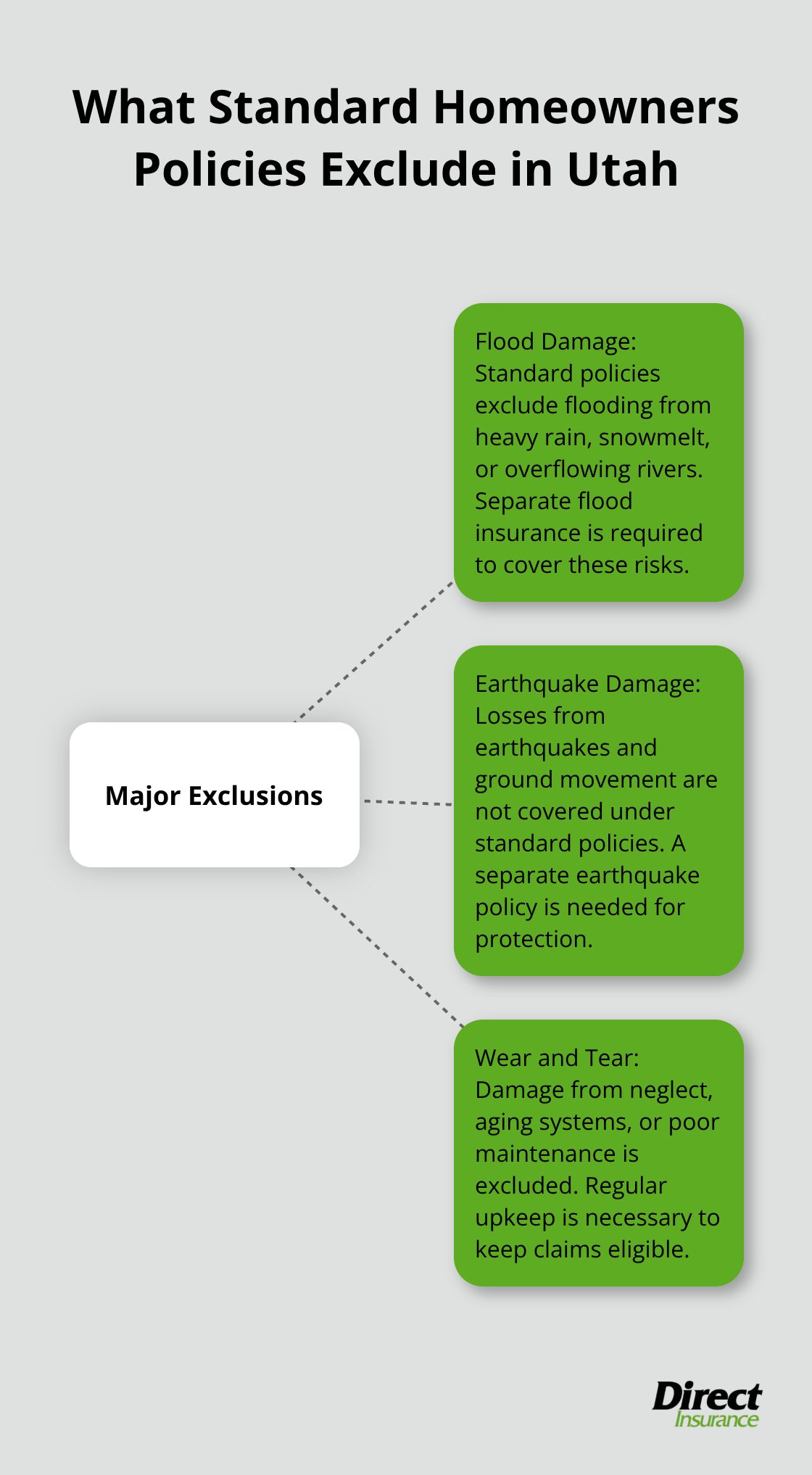
These three exclusion categories (flood, earthquake, and wear and tear) create substantial gaps between what homeowners think they’re covered for and what their policies actually protect. Most Utah homeowners underestimate replacement costs and overlook personal property limits, then discover these gaps only when filing a claim. Knowing what your standard policy excludes helps you identify where additional coverage makes sense-and that’s where choosing the right coverage level becomes essential.
How to Choose the Right Coverage Level for Your Utah Home
Assess Your Home’s Replacement Cost with Actual Numbers
Getting your coverage limits right means doing actual math with your specific home, not guessing based on what neighbors have or what sounds reasonable. Start by hiring a professional appraiser or contractor to calculate your home’s replacement cost in today’s Utah market. Construction costs accounted for 64.4% of the average price of a new home in 2024, providing a baseline, but your actual costs depend on local labor rates, material availability, foundation type, and whether your home has custom features.
A 2,500-square-foot home in Salt Lake City costs significantly more to rebuild than the same size home in rural Utah because labor and material costs vary regionally. Contact three local contractors for replacement cost estimates-they’ll factor in your specific construction type, foundation depth, roof pitch, and local building codes. This step takes two hours and prevents you from carrying insufficient dwelling coverage or overpaying for limits you don’t need.
Once you have that number, add 10 to 20 percent as a buffer since construction costs typically rise during rebuilds when demand spikes. Your dwelling coverage limit should match this inflated replacement cost, not your home’s market value or what you paid for it years ago.
Document Your Personal Property and Set Realistic Limits
Personal property coverage requires a different approach-actually walking through your home and documenting what you own. Open your closet, kitchen cabinets, garage, and storage areas, then photograph or video-record items while noting approximate replacement prices at retail rates. Check online retailers for current prices on furniture, electronics, and appliances rather than guessing based on what you paid years ago.
Most Utah homeowners discover their standard 50 to 70 percent personal property limit falls short once they total everything. If your dwelling coverage is $500,000 and your personal property limit is $250,000, that’s only 50 percent-but many households own more than that. Increase this limit if your inventory exceeds what the standard percentage covers.
For high-value items like jewelry, art, or collectibles, get appraisals and add scheduled personal property riders that specify individual items and their values. This protection prevents you from hitting per-item caps that standard policies impose.
Choose Your Deductible Based on Financial Reality
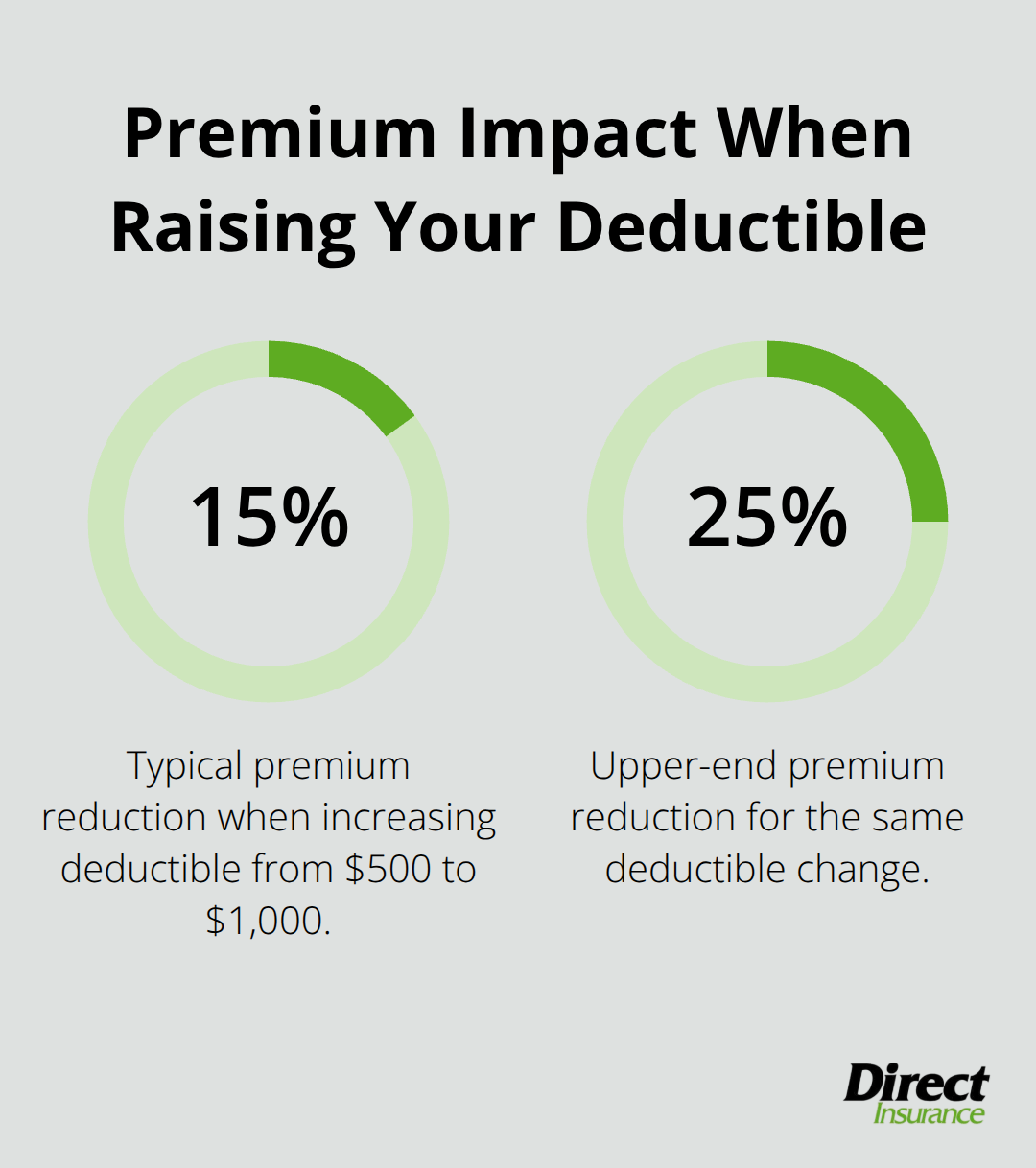
Deductibles directly impact your premium costs, and most Utah homeowners choose $1,000 to $2,500 based on what they can afford to pay out-of-pocket after a loss. Raising your deductible from $500 to $1,000 typically reduces premiums by 15 to 25 percent, making this a genuine financial trade-off worth calculating.
Consider your emergency fund and how much cash you could access immediately if a loss occurred. A higher deductible saves money on premiums but costs more when you file a claim. The right choice depends on your personal financial situation, not on what other homeowners select.
Final Thoughts
Your homeowners insurance coverage in Utah protects against specific risks, but only if your policy matches your actual home and belongings. The gaps we’ve covered-flood damage, earthquakes, and wear-and-tear-represent real financial exposure that standard policies don’t address. Dwelling coverage, personal property protection, and liability limits form your foundation, but they work only when set at realistic levels based on current replacement costs and what you actually own.
The most common mistake Utah homeowners make is setting coverage limits based on guesses rather than actual numbers. You’ve learned how to calculate replacement costs with local contractors, document personal property through your home, and choose deductibles that match your financial situation. These steps take time upfront but prevent costly gaps when you need coverage most.
Pull out your current policy and compare your dwelling limit against a professional replacement cost estimate. Check whether your personal property coverage matches your documented inventory, and identify whether you need separate flood or earthquake insurance based on your location and risk tolerance. Contact Direct Insurance Services to review your homeowners insurance coverage in Utah and make sure you’re protected where it matters most.
Disclaimer: The information provided in this blog is for general informational purposes only and does not constitute legal, financial, or insurance advice. Coverage options, terms, and availability may vary. Please consult with a licensed professional for advice specific to your situation


