Contractor Liability Coverage Utah: Reducing Risk On The Job
One accident on a job site can cost you thousands in medical bills, property repairs, and legal fees. Contractor liability coverage in Utah isn’t optional-it’s a business necessity that protects your finances and your reputation.
At Direct Insurance Services, we’ve helped countless Utah contractors understand what coverage they actually need. The right policy shields you from claims that could otherwise drain your business.
What Your Contractor Liability Coverage Actually Protects
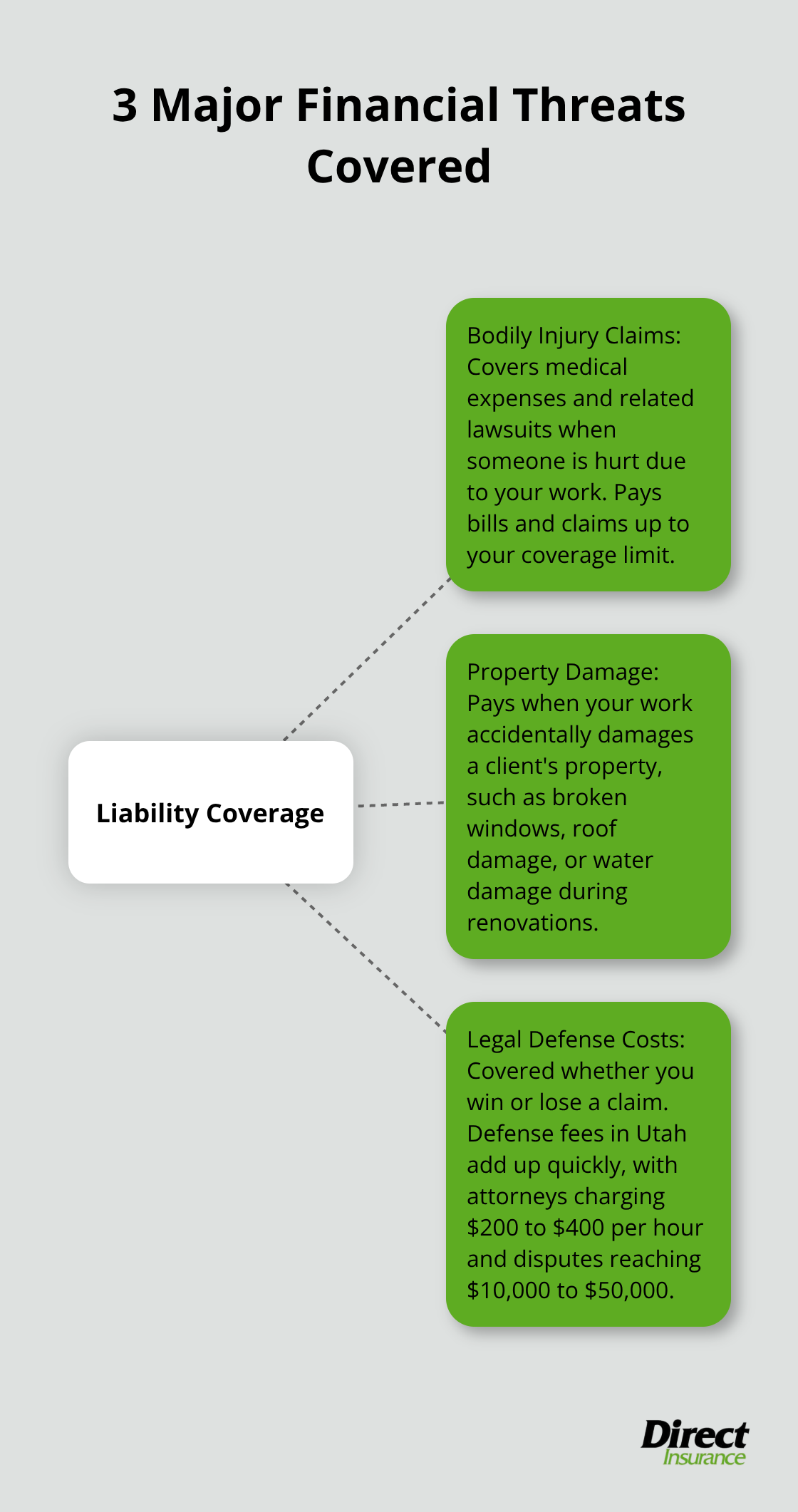
Three Major Financial Threats on Utah Job Sites
Contractor liability coverage protects you from three major financial threats that appear regularly on Utah job sites. Bodily injury claims cover medical expenses when someone gets hurt during your work. If a homeowner slips on your materials or a worker from another trade gets injured near your job site, your policy pays their medical bills and any resulting lawsuits up to your coverage limit.
Most Utah contractors carry between $300,000 and $1,000,000 in bodily injury limits, depending on the size and scope of their projects.
Property damage coverage pays when your work damages someone else’s property. This includes accidentally breaking a client’s window, damaging their roof while working nearby, or causing water damage during a renovation. Legal defense costs get covered regardless of whether you win or lose the claim. These costs add up fast-defense attorneys in Utah charge $200 to $400 per hour, and complex construction disputes easily reach $10,000 to $50,000 in legal fees alone.
How Legal Defense Costs Work
Your policy covers legal defense expenses separately from your coverage limits. This separation matters significantly because your defense doesn’t eat into the money available to settle claims. A $500,000 coverage limit remains intact for claim payouts while your insurer handles defense costs on top of that amount.
Coverage Limits and Deductibles: The Critical Difference
Most Utah contractors miss the distinction between coverage limits and deductibles. A $500,000 coverage limit means your insurance pays up to that amount per claim, but your deductible (typically $500 to $2,500) comes out of your pocket first. Choosing the right combination depends entirely on your business type.
Tailoring Coverage to Your Specific Work
Framing contractors and roofers face higher injury risks and should lean toward higher bodily injury limits, while finish carpenters might prioritize property damage coverage. General contractors managing multiple subcontractors need different protection than independent specialists. Your specific job risks should drive your limit selection, since underinsuring creates serious exposure while overinsuring wastes money on premiums you don’t need.
The next step involves assessing exactly what risks your contracting business faces on a typical project.
Why Liability Coverage Matters for Utah Contractors
Utah’s Legal Requirements for Licensed Contractors
Utah’s Division of Occupational and Professional Licensing requires all licensed contractors to carry liability insurance as a condition of maintaining their license. The state doesn’t specify exact minimum amounts, but the Utah Construction Services Commission expects contractors to maintain coverage appropriate to their work scope. Without active liability coverage, you risk losing your license entirely-and with it, your ability to legally operate. The state actively audits contractor licensing compliance, and coverage lapses trigger immediate enforcement action.
The Real Cost of Job Site Accidents
Utah’s court system treats contractor negligence seriously. A single job site injury can result in lawsuits exceeding $100,000, and medical inflation means these numbers keep climbing. Workers’ compensation covers your employees, but general liability protects you when someone else gets hurt on your property or due to your work-homeowners, their family members, neighboring property owners, or subcontractors from other trades. Without this protection, a serious accident becomes a personal financial catastrophe rather than an insurable event.
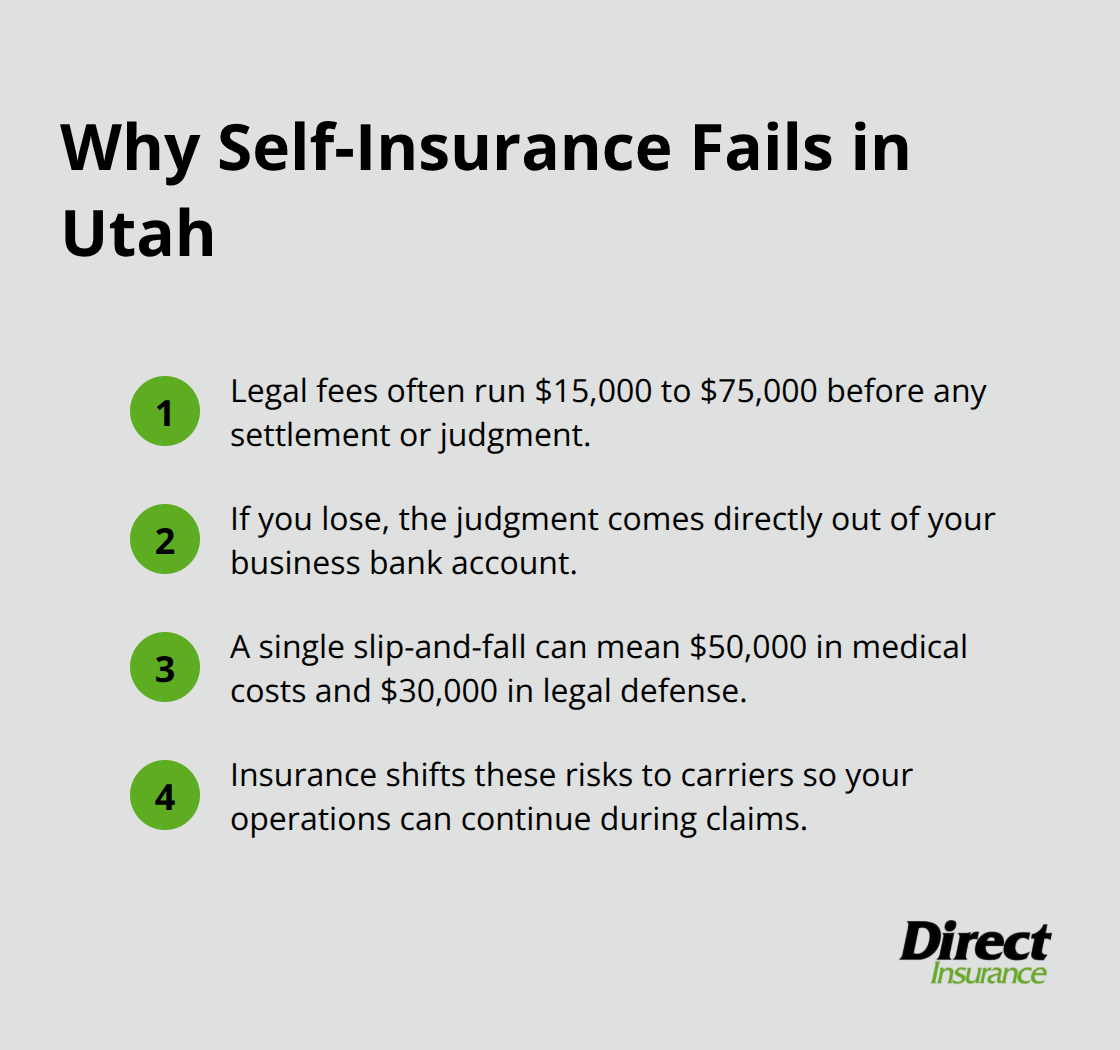
Why Self-Insurance Fails Contractors
The financial reality of defending yourself without insurance is brutal. Utah construction disputes regularly involve legal fees between $15,000 and $75,000 before any settlement or judgment. If you’re self-insured and lose a case, you pay the judgment directly from your business bank account-potentially thousands of dollars that disappear from operating capital, payroll, and equipment purchases. One homeowner slip-and-fall claim with $50,000 in medical costs and $30,000 in legal defense can wipe out years of profit. Insurance shifts this risk to carriers designed to handle it, keeping your business operational while claims get resolved.
How Coverage Affects Your Competitive Position
Licensed contractors carrying proper liability coverage attract better clients and subcontractors. Many general contractors now require proof of insurance from anyone working on their projects, making coverage essential for getting hired on larger jobs. Without it, you lose access to the most profitable work in Utah’s construction market. This requirement isn’t going away-it’s becoming standard across the industry.
Understanding why you need coverage is only half the battle. The real challenge lies in selecting the right limits and deductibles for your specific contracting operation.
Selecting Coverage That Matches Your Real Job Risks
Assess Your Actual Job History
Start with your actual job history, not industry averages. Pull your last twelve months of projects and categorize them by risk level-residential kitchen remodels carry different exposure than commercial roofing work, and finish carpentry differs completely from foundation repairs. Document what goes wrong on your jobs. If you’ve had water damage claims, property damage coverage matters more than bodily injury limits. If you work on multi-story residential projects with frequent foot traffic, bodily injury protection becomes your priority.
Utah contractors working on ski resort developments or commercial properties should carry higher limits than those doing interior finish work, since the potential injury costs scale dramatically with project complexity and occupancy. A serious injury claim on a commercial project can exceed $250,000 in medical costs alone, while residential claims typically max out at $75,000 to $150,000. Your coverage limits should reflect what actually happens on your jobs, not what seems reasonable in theory.
Compare Specific Coverage Numbers
Once you’ve assessed your risks, compare specific numbers rather than percentages. Most Utah contractors think in terms of standard packages-$300,000 or $1,000,000-but your actual needs might land at $500,000 bodily injury with $250,000 property damage. Get quotes at multiple limit combinations to see the premium differences. Moving from $300,000 to $500,000 bodily injury coverage typically costs 15 to 25 percent more in annual premiums, which might be $200 to $400 yearly.
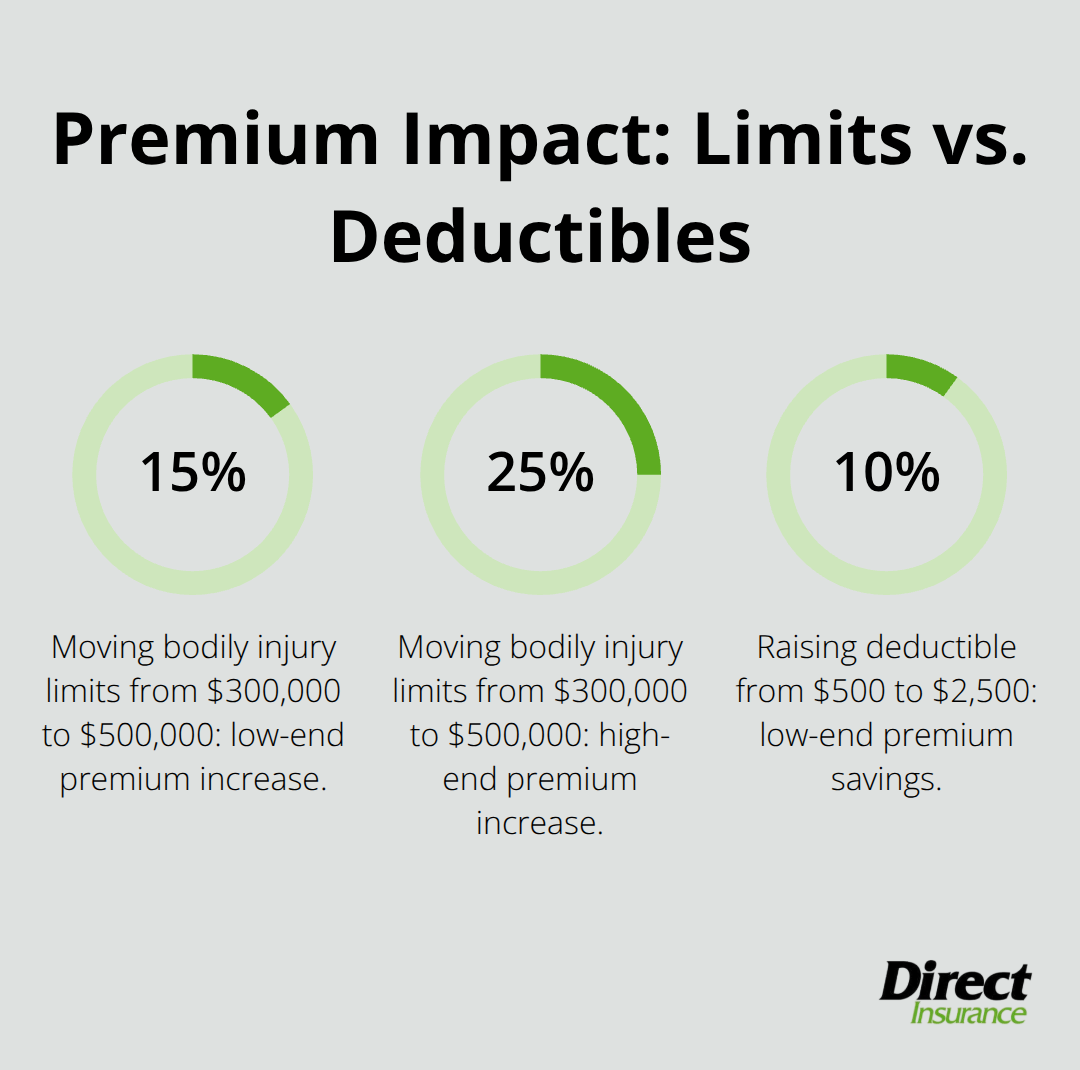
The additional protection pays for itself if you face even one moderate injury claim. Deductibles work the opposite way-raising your deductible from $500 to $2,500 saves roughly 10 to 20 percent on premiums. That $150 to $300 annual savings only makes sense if you can actually cover that $2,500 deductible from your operating account without stress.
Work with an Independent Agent
An independent agent can run quotes across multiple carriers at different limit and deductible combinations, showing you exactly what you pay for each option. Captive agents representing single insurance companies can’t show you these comparisons, so you lose visibility into whether you’re overpaying or underinsuring. Direct Insurance Services, as an independent agency, works with top-rated carriers to ensure you have access to the best coverage options without the pressure of a one-size-fits-all approach.
Final Thoughts
Contractor liability coverage in Utah protects three critical areas of your business: bodily injury claims, property damage, and legal defense costs. These aren’t theoretical risks-they’re expenses that appear on real job sites and drain real bank accounts when you’re unprotected. Your job history tells you what coverage you actually need, since a framing contractor managing multiple crews faces different exposure than a finish carpenter working solo.
Utah’s licensing requirements make this decision straightforward. You need contractor liability coverage to maintain your license, which means this isn’t optional regardless of your risk tolerance. The state takes compliance seriously, and coverage lapses trigger immediate enforcement action that can shut down your business.
Pull your last twelve months of projects, identify what went wrong, and assess whether your current limits would have covered those incidents. If you’re uncertain whether your coverage matches your needs, Direct Insurance Services can review your policy and show you options across multiple carriers as an independent agency working with top-rated providers.
Disclaimer: The information provided in this blog is for general informational purposes only and does not constitute legal, financial, or insurance advice. Coverage options, terms, and availability may vary. Please consult with a licensed professional for advice specific to your situation


