Landlord Insurance Utah Rentals: Comprehensive Protection For Investors

Owning rental properties in Utah can be profitable, but it comes with real financial risks. Standard homeowners insurance won’t protect your rental income or cover liability from tenants and guests.
At Direct Insurance Services, we help landlords get the specialized coverage they need. Landlord insurance for Utah rentals fills the gaps that regular policies leave behind.
What Landlord Insurance Actually Covers
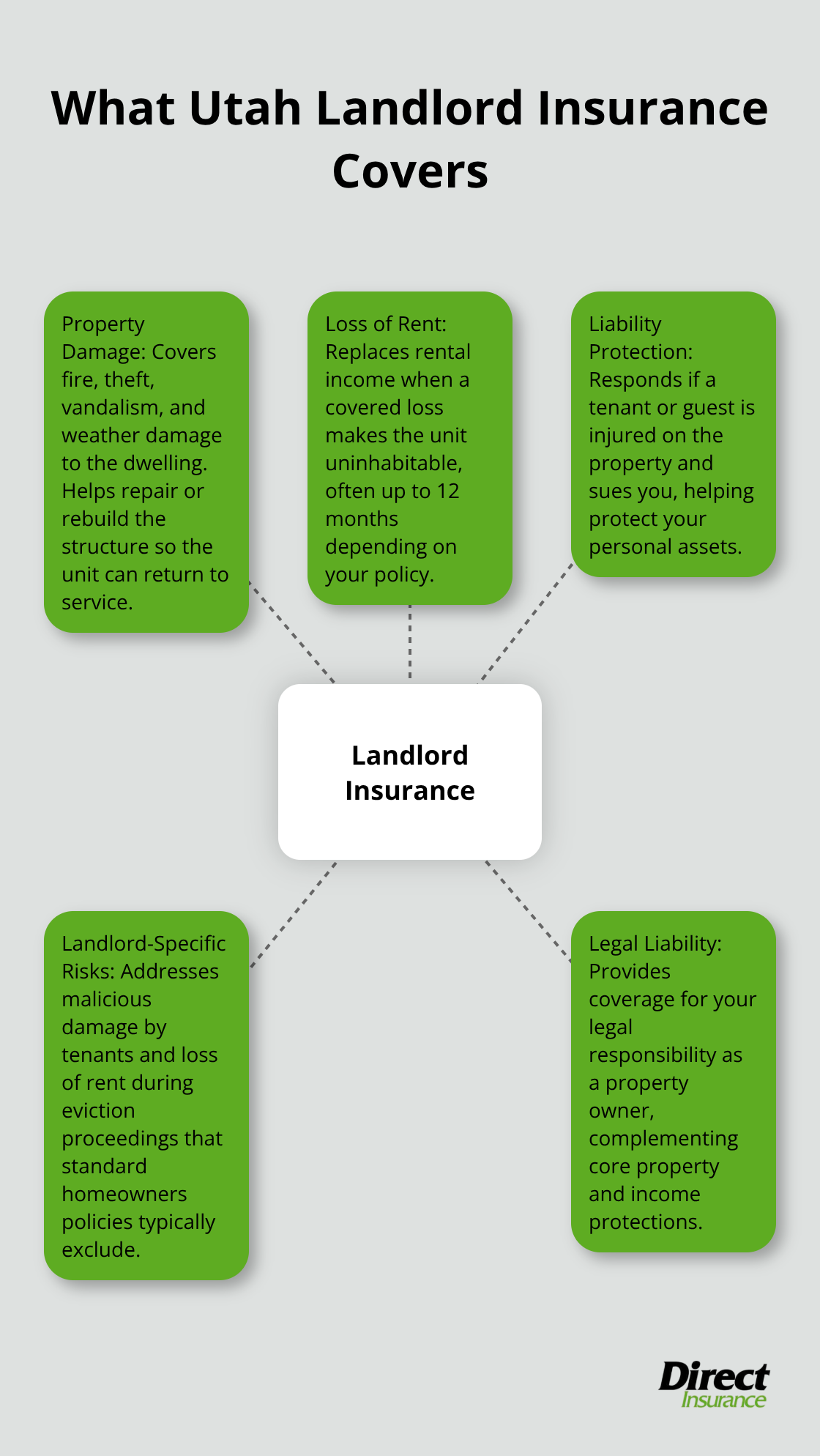
Landlord insurance in Utah protects your rental income and shields you from liability that homeowners policies won’t touch. The coverage works in three main ways. First, it covers property damage to the building itself-fire, theft, vandalism, and weather damage. More importantly, it covers loss of rent, which means if a tenant cannot occupy the property due to a covered loss, the insurance replaces that income. This is the feature homeowners insurance completely ignores. Second, landlord policies include liability protection that applies when a tenant or guest gets injured on your property and sues you. Utah courts have awarded significant damages in premises liability cases, and your personal assets are at risk without proper coverage. Third, these policies add protections for landlord-specific situations like malicious damage by tenants, loss of rent during eviction proceedings, and coverage for your legal liability as a property owner.
Income Protection Separates Landlord Policies From Standard Coverage
Loss of rent coverage is where landlord insurance separates itself from everything else. If a fire damages your rental unit and the tenant must move out while repairs happen, your mortgage, property taxes, and maintenance costs don’t stop. Loss of rent coverage pays your rental income during that period, typically for up to 12 months depending on your policy. Without this, you absorb months of lost revenue while still paying all expenses.
Liability Coverage Protects Your Personal Assets
Liability coverage is equally important. A tenant slips in a common area, breaks their leg, and sues for medical bills plus pain and suffering. If you lack landlord liability coverage with adequate limits, a Utah court judgment could attach your personal bank accounts and other assets. Most landlords in Utah carry liability limits of 300,000 to 500,000, which is reasonable given that serious injury claims regularly exceed 100,000.
Additional Coverages Address Landlord-Specific Risks
Additional coverages available include malicious damage by tenants, which standard policies often exclude, and legal liability for violations of fair housing laws-an increasingly common source of landlord disputes. These protections (along with loss of rent and liability coverage) form the foundation of comprehensive landlord insurance. Understanding what your policy covers matters, but knowing what it doesn’t cover matters more. The next section explains why standard homeowners insurance leaves landlords exposed to significant financial losses.
Why Homeowners Insurance Falls Short for Landlords
Homeowners Policies Exclude Rental Income Protection
Standard homeowners insurance policies protect owner-occupied residences, not investment properties that generate rental income. Insurance companies treat rental properties differently because the risk profile changes dramatically when you rent out a property. Your homeowners policy explicitly excludes business activities, and most policies contain language stating they won’t cover loss of rents, business liability, or damage caused by tenants. This gap creates serious financial exposure for Utah landlords.
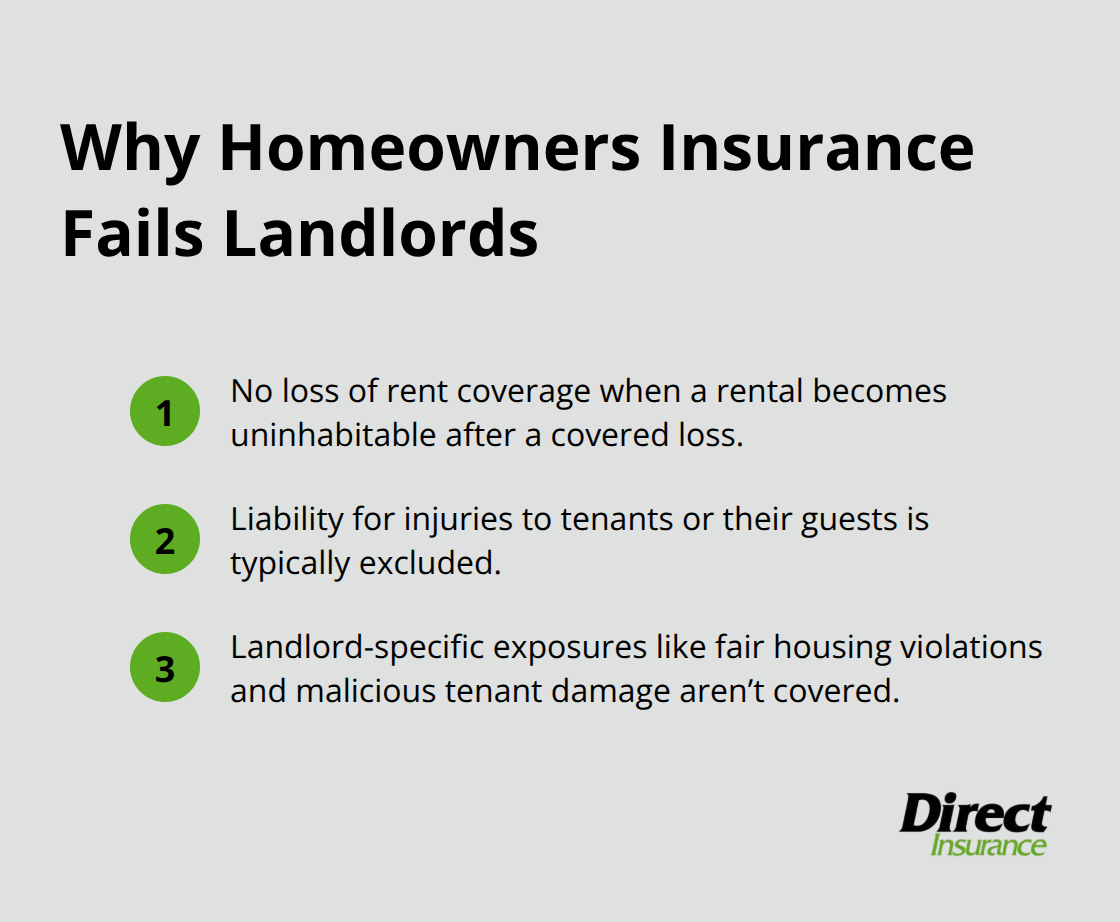
If a fire makes your rental unit uninhabitable for six months while repairs happen, your homeowners policy won’t replace the rental income you lose. You’ll still owe your mortgage, property taxes, and maintenance costs while receiving zero dollars from tenants. A landlord in Salt Lake City facing this scenario could lose $15,000 to $25,000 in rental income depending on the property value and rental rate, while the homeowners policy covers only the building damage itself.
Liability Coverage Leaves You Personally Vulnerable
Liability coverage under homeowners policies creates another serious problem. These policies limit liability protection to owner-occupied situations and specifically exclude coverage when tenants or their guests suffer injuries. Utah premises liability judgments have reached $500,000 or more in cases involving serious injuries like broken bones or head trauma.
If a guest at your tenant’s unit suffers a severe injury and sues, your homeowners policy will deny the claim because a non-family member was injured at a rental property. Your personal assets become vulnerable to judgment liens and wage garnishment. You face direct financial consequences that standard homeowners coverage won’t address.
Landlord-Specific Risks Remain Unprotected
Homeowners policies don’t cover landlord-specific liability exposures like fair housing law violations, which have increased significantly nationwide with settlements averaging $50,000 to $150,000 according to HUD data. They also exclude malicious damage caused by tenants, which means if a tenant deliberately damages the property during an eviction dispute, you absorb the cost.
Landlord insurance fills these exact gaps with coverage designed specifically for the business of renting property. The next section explains how property location, rental type, and your claims history affect what you’ll pay for this specialized protection.
Key Factors That Affect Your Landlord Insurance Costs in Utah
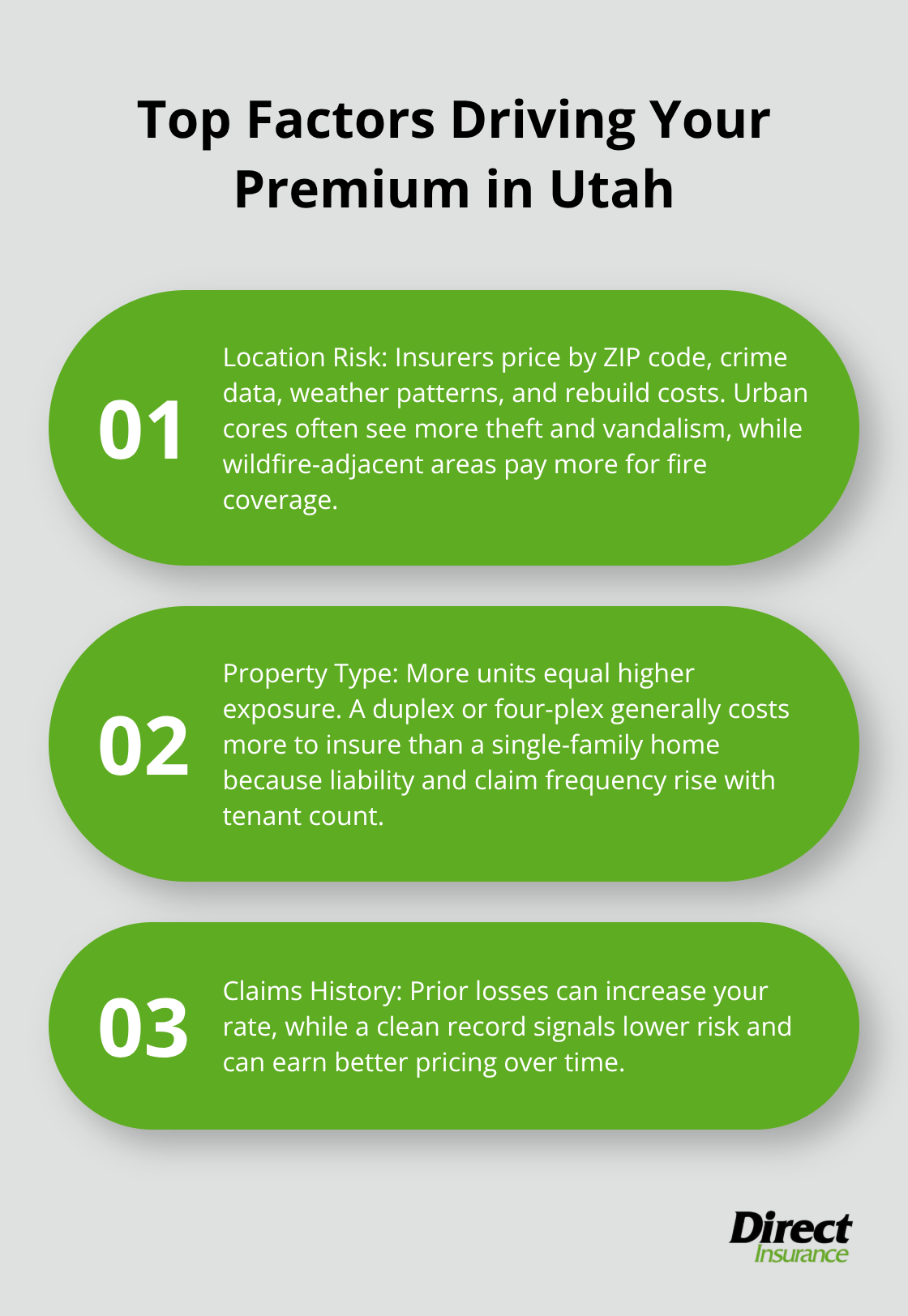
Property location matters more than most Utah landlords realize. Insurance companies charge significantly different rates based on zip code, crime statistics, weather patterns, and local construction costs. A rental property in Salt Lake City’s downtown core pays different premiums than an identical property in a rural county, even though the building itself is the same. Urban areas typically face higher theft and vandalism claims, while properties near wildfire zones pay more for fire coverage. If you own property in a high-risk area, shopping rates across different insurers becomes essential because some carriers specialize in challenging locations while others avoid them entirely.
How Property Type Shapes Your Premium
The type of rental property you own creates the largest cost variation. A single-family home costs far less to insure than a duplex, and a duplex costs less than a multi-unit apartment building. Insurance companies charge based on exposure-more units mean more tenants, more liability potential, and more claims history to track. A four-plex in Utah costs more to insure than a single-family rental because the liability exposure increases with each additional unit.
Claims History and Risk Assessment
Your claims history directly impacts your premium. If you filed a loss of rent claim after a tenant caused water damage three years ago, insurers view you as higher risk and charge accordingly. Conversely, landlords with clean claims histories receive better rates because they represent lower future loss potential. Insurance companies track your loss patterns and adjust pricing to reflect the risk you present.
Coverage Limits and Personal Asset Protection
Coverage limits you select also matter significantly. A landlord carrying $300,000 in liability coverage pays less than one with $500,000 in limits, but the difference in protection during a serious lawsuit could mean the difference between keeping your personal assets and losing them. As property values increase in Utah’s competitive market, your liability exposure increases too, which makes reviewing your coverage limits annually a smart financial move.
Final Thoughts
Landlord insurance for Utah rentals provides the specialized protection that standard homeowners policies simply won’t deliver. Your rental income, liability exposure, and landlord-specific risks demand coverage designed specifically for investment properties. Without it, you face real financial consequences every month your property sits occupied by tenants.
A six-month loss of rent claim could cost you $15,000 to $25,000 depending on your property value, and a serious liability judgment could exceed $500,000 and attach your personal assets through wage garnishment and liens. Utah courts award substantial damages in premises liability cases regularly, and rental properties generate claims that homeowners policies explicitly exclude. The cost of being uninsured far exceeds any premium you’ll pay for proper coverage.
We at Direct Insurance Services work with top-rated carriers to find landlord insurance solutions that match your property type, location, and budget. Contact us today to review your current coverage and explore landlord insurance options that actually protect your investment and income.
Disclaimer: The information provided in this blog is for general informational purposes only and does not constitute legal, financial, or insurance advice. Coverage options, terms, and availability may vary. Please consult with a licensed professional for advice specific to your situation


