Vacation Rental Property Coverage: What You Need to Know for Hosts

Your standard homeowners insurance policy won’t protect your vacation rental business. Most policies explicitly exclude income from guests and liability claims tied to short-term rentals.
At Direct Insurance Services, we’ve seen hosts lose thousands because they assumed their existing coverage was enough. The gap between what homeowners insurance covers and what vacation rental property coverage actually provides can be devastating.
Why Your Homeowners Policy Won’t Cover Your Rental
Standard Homeowners Insurance Excludes Rental Income
Standard homeowners insurance exists to protect your primary residence, not a business operation. When you rent out a property to guests, you transform that building from a home into a commercial enterprise. The Insurance Information Institute confirms that regularly renting out a second home requires separate business coverage or a landlord policy because personal homeowners policies explicitly exclude income-generating activities. Your insurer will deny claims related to guest injuries, property damage caused by renters, or lost income from cancellations. Hosts face five-figure repair bills after guest incidents because their homeowners policy contains standard exclusions for rental properties. The contract language is clear: coverage terminates the moment you start accepting payment for overnight stays.
Guest Injuries Leave You Personally Liable
Your homeowners liability coverage protects you if someone gets injured at your primary residence, but that protection vanishes with rental activity. A guest who slips on your rental property’s stairs and requires surgery can pursue a lawsuit against you personally. Standard homeowners policies reject these claims outright because they don’t cover business-related liability. Vacation rental property insurance provides up to $1,000,000 in bodily injury coverage depending on the policy. Without it, medical bills, legal fees, and potential settlement costs come directly from your pocket. This risk intensifies if your property has higher-risk features like pools, hot tubs, or multiple stories where accidents become more likely.
Guest Damage Creates a Financial Double Hit
When a guest damages your rental property-whether it’s a broken window, stained carpeting, or destroyed furniture-your homeowners policy won’t cover the repair costs. More importantly, if that damage forces you to close the property for repairs, you lose rental income with zero compensation. A standard homeowners policy has no mechanism to reimburse lost rental income because it never anticipated you’d operate a business from the property. Vacation rental property insurance addresses both problems by covering guest-caused property damage and providing loss of rental income protection during covered repair periods. Hosts without this coverage face a double hit: they pay for repairs while simultaneously losing the revenue that pays their mortgage and property taxes.
What This Means for Your Coverage Strategy
The gap between homeowners insurance and vacation rental protection is substantial. Your existing policy leaves you exposed to liability claims, property damage costs, and lost income-three financial threats that can devastate your rental business. The solution requires moving beyond standard homeowners coverage to policies specifically designed for short-term rental operations. Understanding which types of coverage address these gaps will help you build the protection your rental property actually needs.
Types of Insurance Coverage Vacation Rental Hosts Need
Property Damage Coverage Protects Your Investment
Vacation rental property insurance policies form the foundation of your protection, but they’re not a single monolithic product. Safely offers up to $1,000,000 in bodily injury coverage with claims paid in 4–5 days in 98% of cases, while Proper Insurance provides no limit on guest-damage payouts alongside $1,000,000 liability coverage. CBIZ Vacation Rental Insurance includes $2,000,000 general liability with bed bug coverage up to $25,000 and loss of rental income protection.
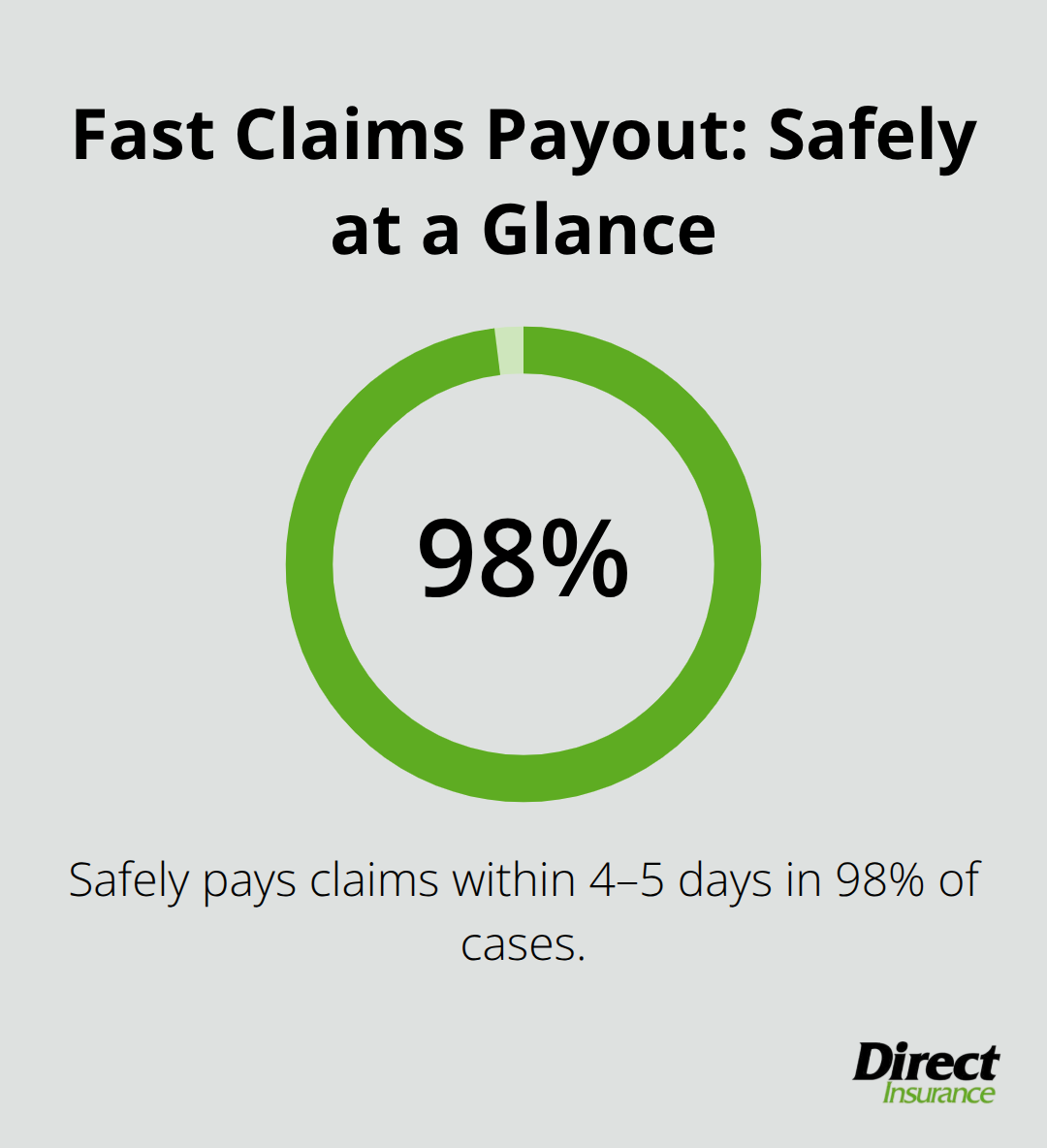
The key difference between these providers lies in their claims speed and damage caps-Safely prioritizes rapid payouts for hosts who need immediate reimbursement, while Proper Insurance attracts hosts with high-value properties by removing damage caps entirely.
Liability Coverage Protects You from Guest Injuries
Liability coverage for guest accidents operates separately from property damage protection, though most vacation rental policies bundle them together. When a guest sustains a serious injury at your rental, your liability coverage covers their medical expenses, legal fees, and settlement costs up to your policy limit. Without this protection, you personally defend the lawsuit and pay damages from your own assets. Your property type determines which carrier serves you best-a single-family home with a pool needs different coverage than a downtown condo, and providers like Obie offer digital quotes tailored to diverse property types across all 50 states.
Loss of Rental Income Protection Replaces Your Revenue
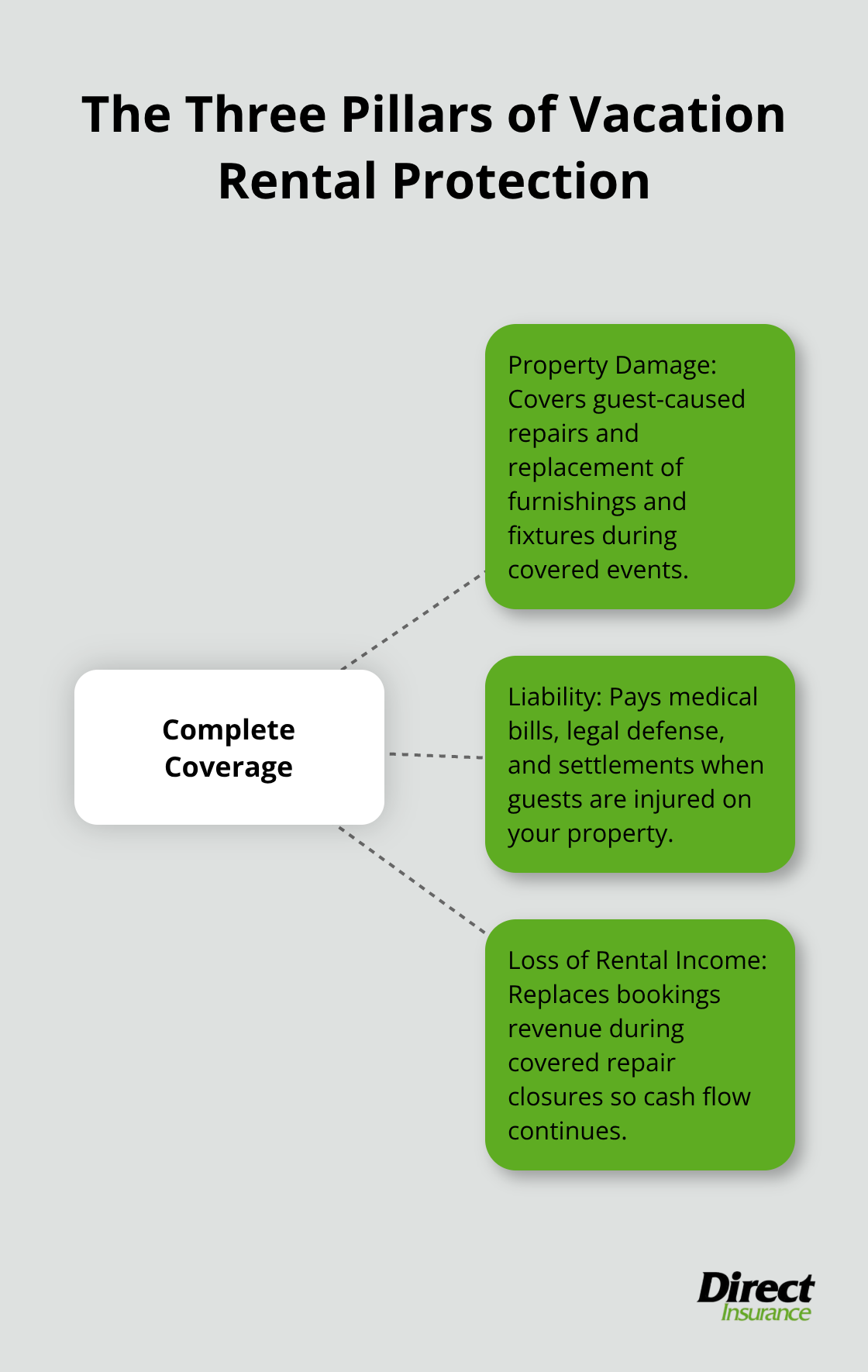
Loss of rental income protection reimburses you for revenue lost during covered repair periods. If a guest damages your kitchen and repairs require two weeks of closure, this coverage replaces the booking income you would have earned. Most hosts overlook this component, assuming property damage coverage alone suffices, but the financial impact of lost occupancy often exceeds repair costs. Costs can range from as little as $40 per year for limited add-ons to over $4,000 for high-end or high-risk properties, making income protection an affordable addition that prevents catastrophic revenue loss.
How These Three Pillars Work Together
The combination of property damage, liability, and income protection creates a complete financial safety net that standard homeowners policies simply cannot provide. Each component addresses a specific financial threat-repairs, lawsuits, and lost bookings-that can devastate your rental business independently. When you stack these three coverage types together, you eliminate the gaps that leave hosts vulnerable.
The next step involves selecting the right policy limits and deductibles for your specific situation, which requires understanding your property’s unique risk profile and guest patterns.
Selecting the Right Coverage Limits for Your Rental
Match Coverage Limits to Your Property’s Risk Profile
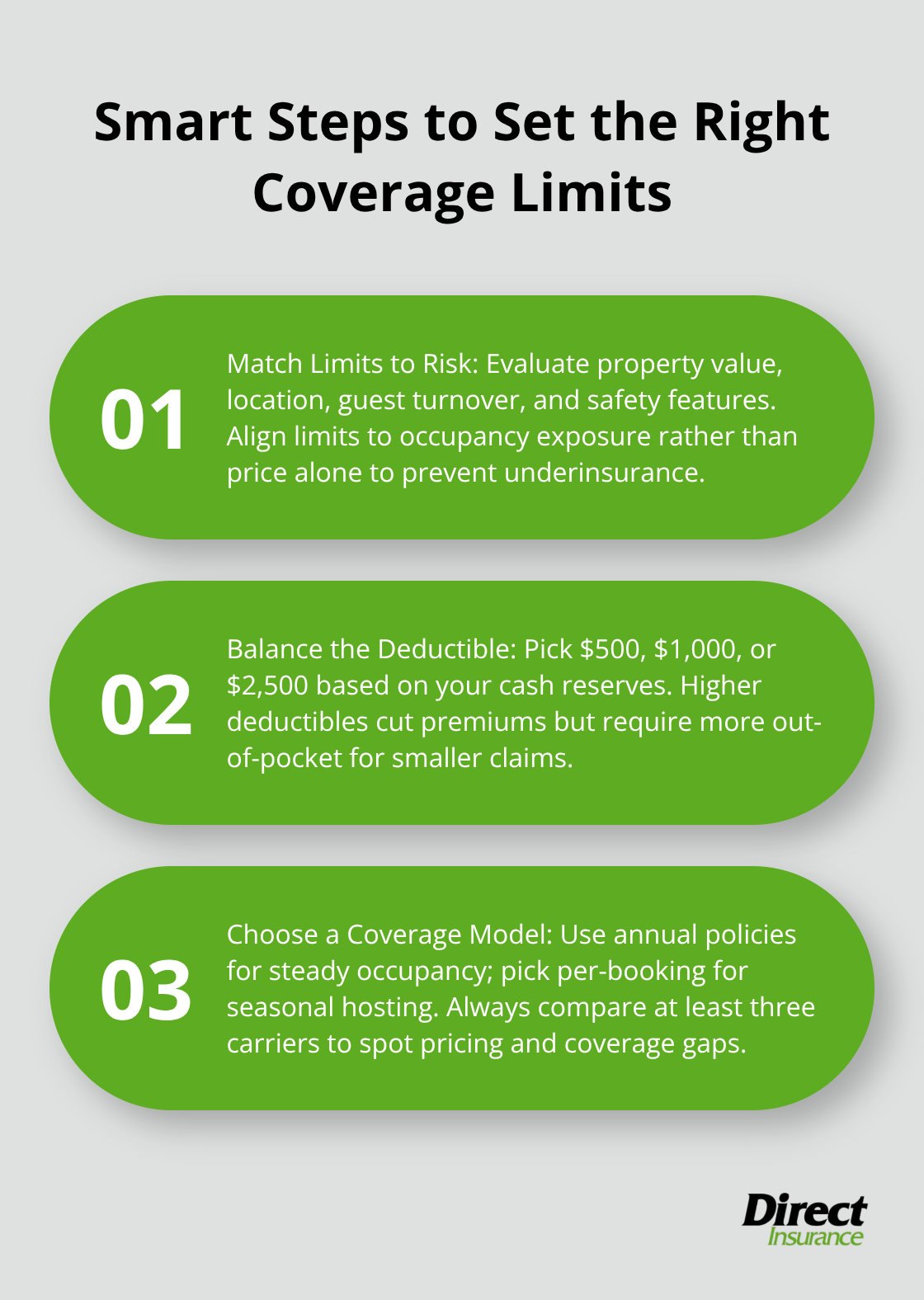
Property type and occupancy patterns determine which coverage limits actually protect your rental business. A single-family home with a pool hosting 40 guests annually needs different protection than a downtown condo with 120 annual bookings, yet many hosts simply accept whatever limits their insurer suggests. Safely’s $1,000,000 bodily injury coverage works well for moderate-risk properties, but Proper Insurance’s unlimited guest-damage payouts serve hosts with high-end furnishings or luxury amenities where a single incident could exceed standard caps. Your mortgage lender requires minimum coverage amounts before they’ll approve your loan, and this requirement often exceeds what casual hosts assume they need. CBIZ Vacation Rental Insurance includes $2,000,000 general liability, which provides substantial protection but costs more than policies with liability limits of $1,000,000.
The Insurance Information Institute notes that property value, location, guest turnover, and safety features directly influence both your premium and the appropriate coverage ceiling. A $500,000 property with annual bookings totaling 200 nights faces higher exposure than a $300,000 property rented only 60 days yearly, which means your policy limits should reflect actual occupancy and risk, not just property value.
Balance Your Deductible Against Your Cash Reserves
Deductibles function as your financial threshold before coverage kicks in. You can select between a $500, $1,000, or $2,500 deductible, and this choice requires balancing monthly premiums against your cash reserves. Higher deductibles reduce premiums substantially but force you to absorb smaller claims from your own funds, making this decision critical for hosts with limited emergency savings.
Verify Your Lender’s Insurance Requirements
Your lender’s insurance requirements appear in your mortgage documents and typically mandate replacement-cost coverage at 80 to 100 percent of your property value, plus minimum liability limits of $300,000 to $500,000. Many hosts discover their chosen policy doesn’t satisfy these requirements only after a claim denial or during a loan review, creating expensive gaps at the worst possible time.
Contact your lender before purchasing any vacation rental policy to confirm exact coverage minimums, and request their written insurance requirements so you have documentation. Obie offers quick digital quotes across all 50 states plus DC, allowing you to compare multiple carriers against your lender’s specific demands without scheduling agent calls. Some carriers like Allstate HostAdvantage provide landlord-style coverage starting around $300 to $800 annually, which appeals to budget-conscious hosts but may fall short of lender requirements for higher-value properties.
Choose Between Annual and Per-Booking Coverage Models
Truvi operates on a per-booking model starting at £13.80 per booking, making it economical for hosts with seasonal or sporadic rental activity who don’t want annual premiums for months of vacancy. The choice between annual policies and per-booking coverage hinges on your occupancy rate-annual policies favor consistent hosts, while per-booking options benefit those with irregular schedules.
Compare Quotes From Multiple Carriers
Obtain quotes from at least three carriers before committing, since premium variations for identical properties can exceed $1,000 annually depending on each insurer’s risk assessment methodology. This comparison process reveals which carriers align with your property type, occupancy patterns, and lender requirements without forcing you into inadequate or overpriced coverage.
Final Thoughts
Protecting your vacation rental property requires three essential coverage types working together. Property damage coverage handles guest-caused repairs and destruction, liability coverage shields you from medical bills and lawsuits when guests get injured, and loss of rental income protection replaces revenue during forced closures. Standard homeowners insurance abandons you across all three fronts, leaving your rental business exposed to financial devastation that can exceed tens of thousands of dollars annually.
Your property type, occupancy rate, location, and lender requirements determine which policy limits actually protect your business rather than leaving dangerous gaps. Contact your mortgage lender first to confirm their minimum coverage demands, then gather quotes from at least three carriers to compare how each addresses your unique risk profile. Carriers like Safely, Proper Insurance, and CBIZ offer different strengths-some prioritize rapid claims processing while others eliminate damage caps for high-value properties-so comparing options prevents you from overpaying or underinsuring your vacation rental property coverage.
A single guest injury lawsuit or major property damage incident can wipe out years of rental income if you lack proper protection. We at Direct Insurance Services help hosts throughout Utah navigate these complexities by connecting you with carriers that match your needs and budget. Contact us to review your current situation and build the protection your rental business actually requires.
Disclaimer: The information provided in this blog is for general informational purposes only and does not constitute legal, financial, or insurance advice. Coverage options, terms, and availability may vary. Please consult with a licensed professional for advice specific to your situation


