Auto Insurance Coverage Options: Finding the Right Fit

Picking the right auto insurance coverage options feels overwhelming when you’re staring at liability limits, deductibles, and add-ons you don’t fully understand. Most drivers either over-insure and waste money or under-insure and risk financial disaster.
At Direct Insurance Services, we help people cut through the confusion and match their coverage to their actual needs. This guide walks you through the coverage types available, what affects your rates, and how to build a policy that protects you without unnecessary costs.
Understanding Auto Insurance Coverage Types
Liability Coverage: Your Legal Foundation
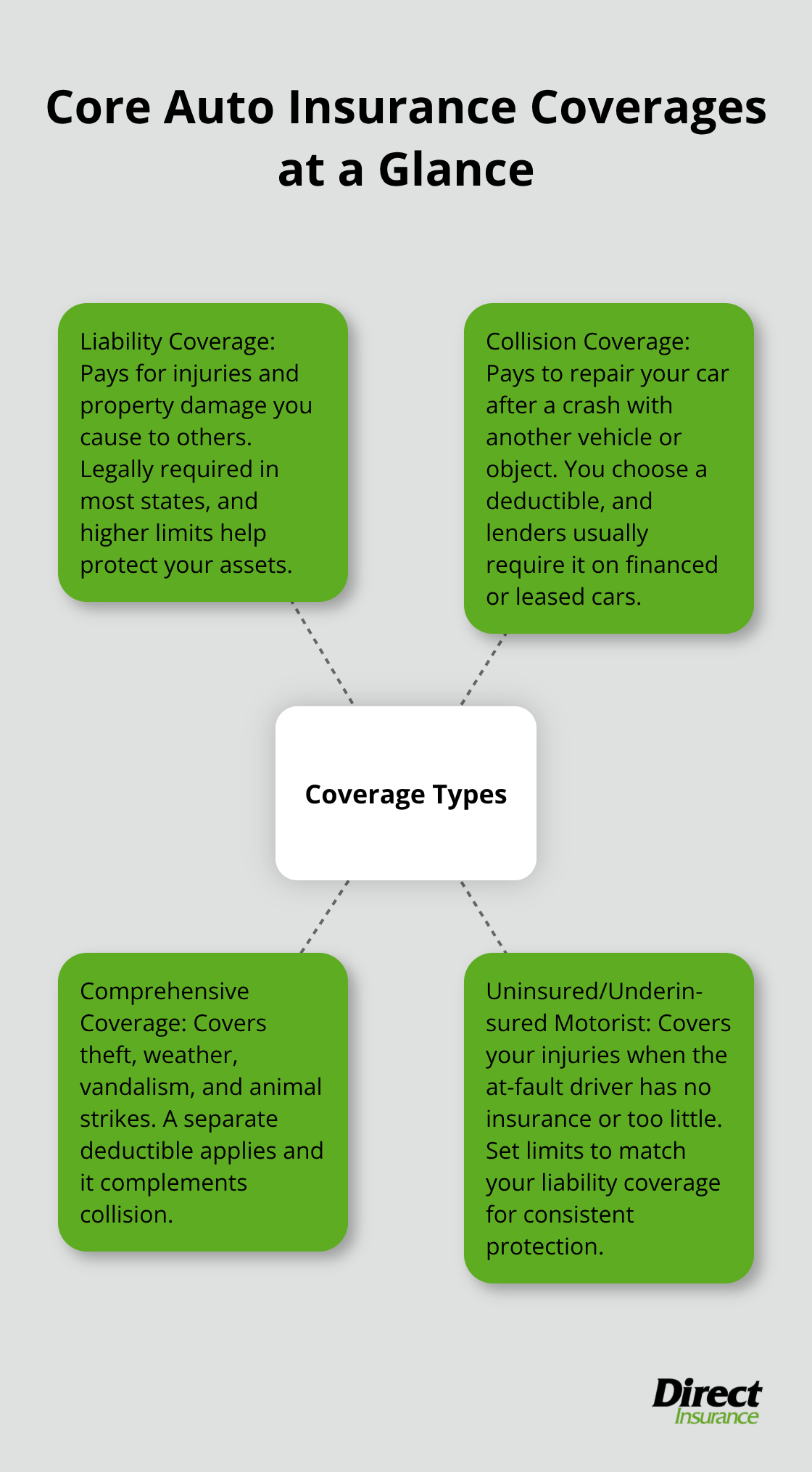
Liability coverage forms the foundation of every auto insurance policy, and most states legally require it. This coverage pays for damage or injuries you cause to other people and their property when you’re at fault in an accident. Most states set minimum liability limits around $25,000 for bodily injury per person and $50,000 per accident, though these numbers vary by state.
The Insurance Information Institute reports that the average liability claim exceeds $20,000, which means minimum coverage often falls short. You should carry at least $100,000 in bodily injury coverage and $100,000 in property damage coverage, especially if you have assets to protect. If a jury awards a judgment against you that exceeds your policy limits, creditors can pursue your wages and bank accounts to collect the difference.
Collision and Comprehensive: Protecting Your Vehicle
Collision and comprehensive coverage protect your own vehicle rather than covering others. Collision pays for damage from accidents with other vehicles or objects, while comprehensive covers theft, weather, vandalism, and animal strikes. You choose a deductible for each-typically $500 or $1,000-which is what you pay out of pocket before insurance kicks in.
Higher deductibles lower your premiums but mean larger upfront costs when damage occurs. If your vehicle is financed or leased, your lender will require both collision and comprehensive coverage. For older vehicles worth less than $10,000, skipping these coverages sometimes makes financial sense, but only if you can afford to replace the car outright.
Uninsured and Underinsured Motorist Protection
Uninsured and underinsured motorist coverage protects you when the other driver either has no insurance or insufficient coverage to pay for your injuries. This coverage pays your medical bills, lost wages, and pain and suffering up to your policy limit.
Many people ignore this protection because they assume other drivers are insured, but that assumption costs them real money. Underinsured motorist coverage is equally important-it covers the gap when the at-fault driver’s limits are too low to compensate you fully. You should set your uninsured and underinsured motorist limits equal to your liability limits for consistent protection. If you have significant medical expenses from an accident, your health insurance deductible and copays still apply, making this coverage a financial safety net that often gets overlooked.
Now that you understand what each coverage type does, the next step involves looking at what actually moves your rates up or down.
Factors That Affect Your Auto Insurance Rates
Driving History: The Biggest Rate Driver
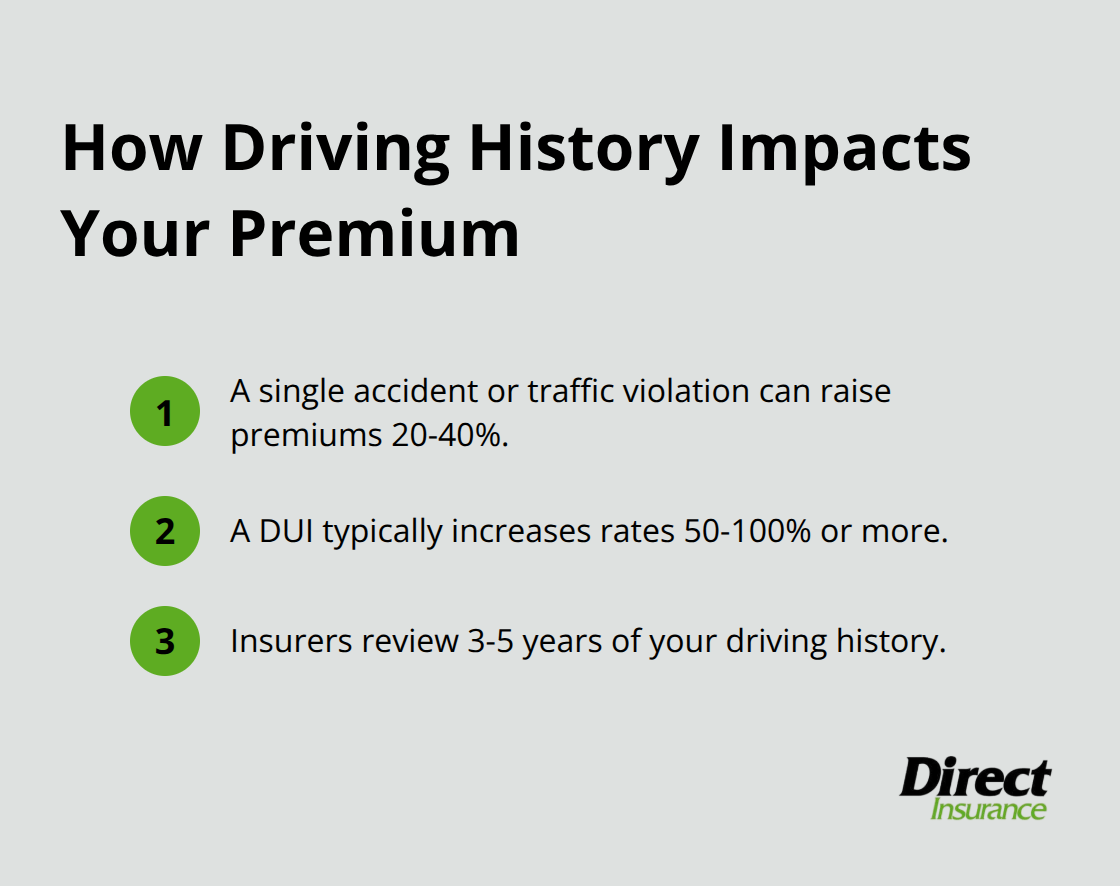
Your driving record carries more weight than any other factor in determining your premium. Insurance companies review your last three to five years of driving history to calculate rates, and a single accident or traffic violation can increase your premium by 20-40%, according to data from the National Association of Insurance Commissioners. A DUI conviction hits much harder, typically raising rates by 50-100% or more.
If you’ve had violations or accidents, some insurers offer accident forgiveness programs or safe driver discounts after a certain period without incidents-usually three to five years. Shopping around after a violation makes sense because different companies weight these factors differently; one insurer might penalize a speeding ticket heavily while another focuses more on accident history.
Vehicle Type and Safety Features
Your vehicle’s make, model, year, and safety features directly affect what you pay each month. Insurance companies charge more for vehicles with high repair costs, poor safety ratings, or powerful engines that increase accident severity. A 2024 Honda Civic costs significantly less to insure than a 2024 BMW M440i because repair parts are cheaper and claims tend to be smaller.
Vehicles with advanced safety technology like automatic emergency braking and blind-spot monitoring often qualify for discounts of 5-15% because they prevent accidents. If you’re shopping for a new vehicle and insurance costs matter, check the Insurance Institute for Highway Safety ratings before purchasing to avoid unexpectedly expensive-to-insure models.
Location and Driving Patterns
Where you live and how you use your vehicle shape your rates as much as what you drive. Urban drivers in high-accident areas pay 30-50% more than rural drivers for identical coverage because claim frequency runs higher. Commuting 30+ miles daily costs more than occasional driving because you spend more time on the road.
Some insurers now offer usage-based programs that track your actual driving patterns through a mobile app or plug-in device, potentially saving safe drivers 10-30% on premiums. If you work from home or drive infrequently, mention this during quotes to lower your rate significantly since you’re exposed to less risk than someone commuting daily.
Understanding these rate factors helps you identify where you can reduce costs and which coverage levels make sense for your situation. The next step involves assessing your personal financial picture and risk tolerance to build a policy that actually fits your life.
How to Choose the Right Coverage for Your Needs
Assess Your Financial Situation Honestly
Calculate how much you could actually afford to pay if an accident happened tomorrow. Pull up your bank and investment statements, then subtract your essential expenses for three months. If you have $15,000 in liquid savings, a $1,000 deductible on collision makes sense. If you have $2,000, that same deductible becomes reckless because one accident wipes out your emergency fund and forces you into debt.
Your financial situation isn’t about what sounds responsible-it’s about what you can genuinely handle without falling apart. Think about your liability exposure next. If you own a home or have substantial income, a judgment against you could attach your wages for years. Someone earning $50,000 annually needs higher liability limits than someone with minimal assets because creditors will pursue income aggressively.
Calculate Your Liability Protection Needs
A $100,000/$100,000 liability policy costs roughly $15-30 more per month than minimum coverage in most states, but that difference prevents bankruptcy. Your liability limits should reflect what you actually stand to lose, not what insurance companies suggest as standard. Higher limits protect your wages, home equity, and future earnings if you cause a serious accident.
Compare Quotes Across Multiple Insurers
Comparing quotes from multiple insurers reveals how dramatically prices vary for identical coverage. Get quotes from at least three insurers-not just the big names like State Farm or Geico, but also regional carriers that sometimes offer better rates for specific situations.
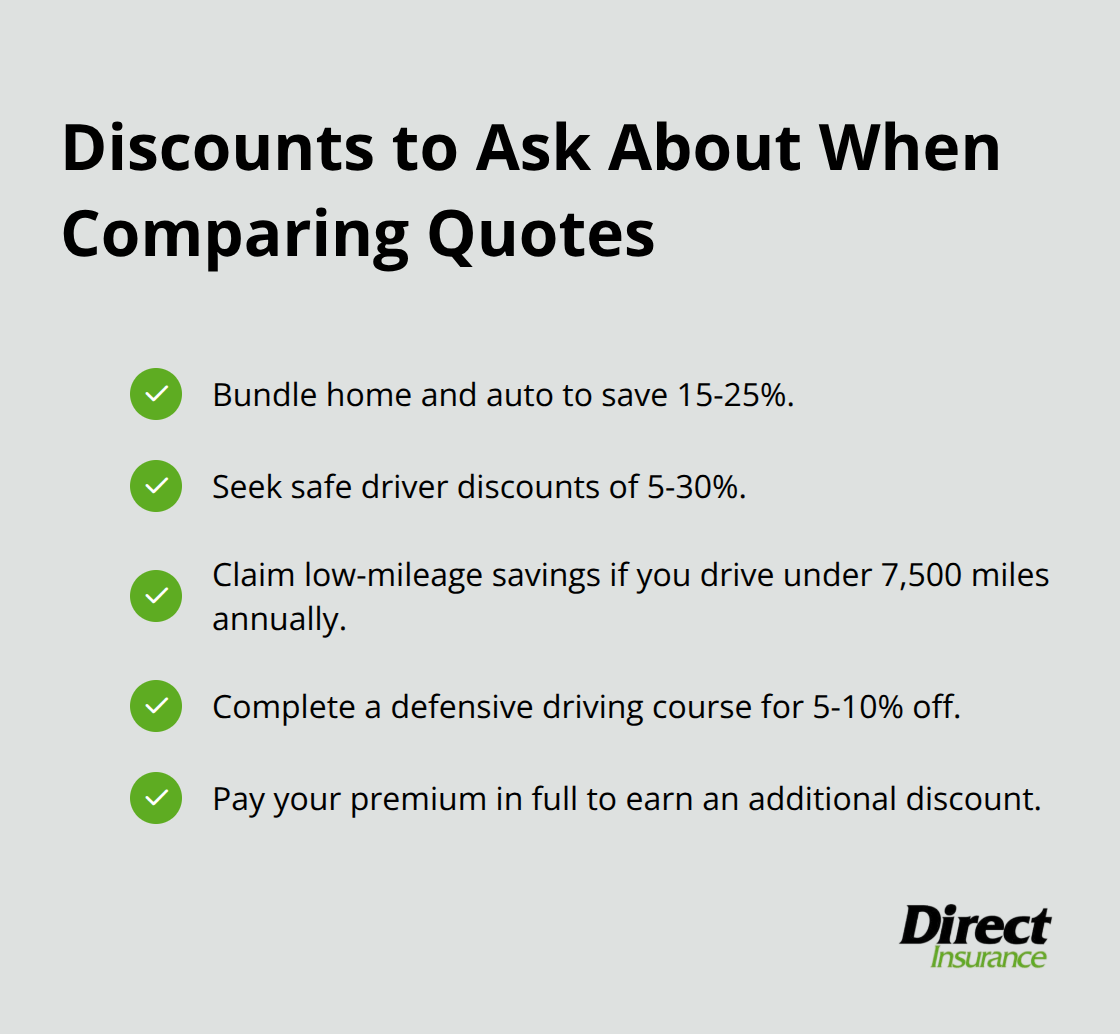
When requesting quotes, use the exact same coverage limits across all companies so you’re actually comparing apples to apples. Ask each insurer specifically about discounts you qualify for: bundling home and auto coverage typically saves 15-25%, safe driver discounts range from 5-30%, and low-mileage discounts apply if you drive under 7,500 miles annually. Many insurers offer 5-10% savings for completing defensive driving courses, and some provide discounts simply for paying your premium in full rather than monthly installments.
Work with an Independent Agent
An independent agent can pull quotes from multiple carriers simultaneously and identify which company offers the best rates for your specific profile, saving you hours of phone calls and form submissions. Independent agents work with top-rated carriers to access discounts and coverage options that direct insurers sometimes don’t advertise. Their incentive aligns with finding you affordable coverage rather than upselling unnecessary add-ons since they’re paid by commission.
If you live in Utah, Direct Insurance Services works with top-rated carriers to help you navigate coverage options and find rates that fit your budget. Our team pulls multiple quotes and identifies discounts you might miss on your own, making the comparison process straightforward instead of overwhelming.
Final Thoughts
Matching your auto insurance coverage options to your actual financial situation and risk tolerance matters far more than following generic industry standards. The coverage types available-liability, collision, comprehensive, and uninsured motorist protection-each protect you in different ways, and skipping any of them creates real financial exposure. Your rates depend on factors you cannot change, like location and vehicle type, but also on choices you control, like deductible amounts and coverage limits.
The selection process requires three practical steps: calculate what you can genuinely afford to pay out of pocket, determine your liability exposure based on your assets and income, and compare quotes from multiple insurers to find the best rates for your specific situation. Most drivers overpay because they never shop around or miss available discounts that could save hundreds annually (bundling discounts, safe driver discounts, and low-mileage savings add up quickly). Getting quotes from at least three different carriers takes a few hours but typically reveals price differences of 30-50% for identical coverage.
If you live in Utah, Direct Insurance Services works with top-rated carriers to help you navigate auto insurance coverage options and find rates that fit your budget. Our team handles the comparison work so you receive personalized solutions without the overwhelming process. Contact us to review your current coverage or get quotes on a new policy that actually protects you without unnecessary costs.
Disclaimer: The information provided in this blog is for general informational purposes only and does not constitute legal, financial, or insurance advice. Coverage options, terms, and availability may vary. Please consult with a licensed professional for advice specific to your situation


