Vacation Rental Insurance Guide: Protecting Your Utah Vacation Home

Your standard homeowners policy won’t cover your vacation rental. Most insurers exclude income-producing properties, leaving you exposed to significant financial risk.
At Direct Insurance Services, we’ve seen too many Utah vacation rental owners discover coverage gaps only after a guest injury or property damage claim. This vacation rental insurance guide walks you through the protection you actually need.
Why Your Homeowners Policy Won’t Cover Vacation Rentals
Your standard homeowners insurance policy treats your property one way: as a place where you and your family live. The moment you list that property on Airbnb, VRBO, or any other vacation rental platform, the entire coverage structure changes. Insurance companies view income-producing properties differently because the risk profile shifts dramatically. When guests cycle through your home weekly or even nightly, the exposure to liability claims, property damage, and loss of income multiplies. Most standard policies explicitly exclude any rental activity, which means you have zero protection the second a guest arrives.
The Income Problem Most Owners Miss
Insurance companies have a fundamental rule: they don’t cover properties that generate income unless you specifically purchase rental coverage. If a guest slips on your stairs and files a liability claim, or if a fire damages your rental-ready furnishings, your standard policy will deny the claim outright. The exclusion sits in your policy documents, usually in the section covering business activities. The financial impact of operating uninsured can be devastating-a single guest injury lawsuit could result in significant liability costs, which your homeowners policy will force you to pay entirely out of pocket.
Short-Term Rentals Create Unique Exposure
Short-term rental activity introduces risks that traditional homeowner scenarios never contemplate. Your guests are strangers who stay briefly, which means higher turnover, more foot traffic, and increased chances of accidents or property damage. Standard homeowners policies also exclude coverage for business property, which includes furnishings, linens, and equipment you provide specifically for rental guests. If someone damages your rental-grade bedding or kitchen equipment, your homeowners policy treats it as business inventory rather than personal property. Additionally, vacation rental owners face loss of income exposure-if a pipe bursts or fire occurs, you lose rental revenue during repairs. Your homeowners policy doesn’t compensate for that lost income stream.
Why Coverage Gaps Matter Right Now
These gaps exist because homeowners insurance was designed for owner-occupied properties, not hospitality operations. Utah vacation rental owners who operate without proper coverage face significant financial exposure. A guest injury, property damage claim, or extended vacancy due to damage can wipe out months or years of rental income. The risk isn’t theoretical-it’s real and immediate.
Understanding what your current policy excludes is the first step toward protecting your investment. The next section covers the specific coverage types that actually protect vacation rental owners.
What Coverage Actually Protects Your Utah Vacation Rental
Vacation rental insurance differs fundamentally from standard homeowners coverage because it accounts for the hospitality business you’re running. Three core coverage types work together to protect your rental property, your guests, and your income stream. Dwelling coverage protects the structure itself, but you also need protection for the furnishings, appliances, and equipment you provide to guests-items standard homeowners policies classify as business property and exclude entirely. This rental property coverage typically costs between 25 and 40 percent more than standard homeowners insurance, but that premium difference disappears instantly when you file a legitimate claim that would otherwise be denied.
Liability Coverage Protects Against Guest Injuries
Liability coverage is where most Utah vacation rental owners underestimate their exposure. A guest slip-and-fall injury, a dog bite, or accidental damage to neighboring property can trigger lawsuits exceeding $100,000 easily. Standard homeowners policies cap liability at $100,000 to $300,000, which sounds adequate until a guest requires surgery or permanent care. Vacation rental liability claims happen frequently enough that insurers now treat them as a distinct risk category, which means your standard policy simply won’t respond.
Loss of Rental Income Replaces Revenue During Closures
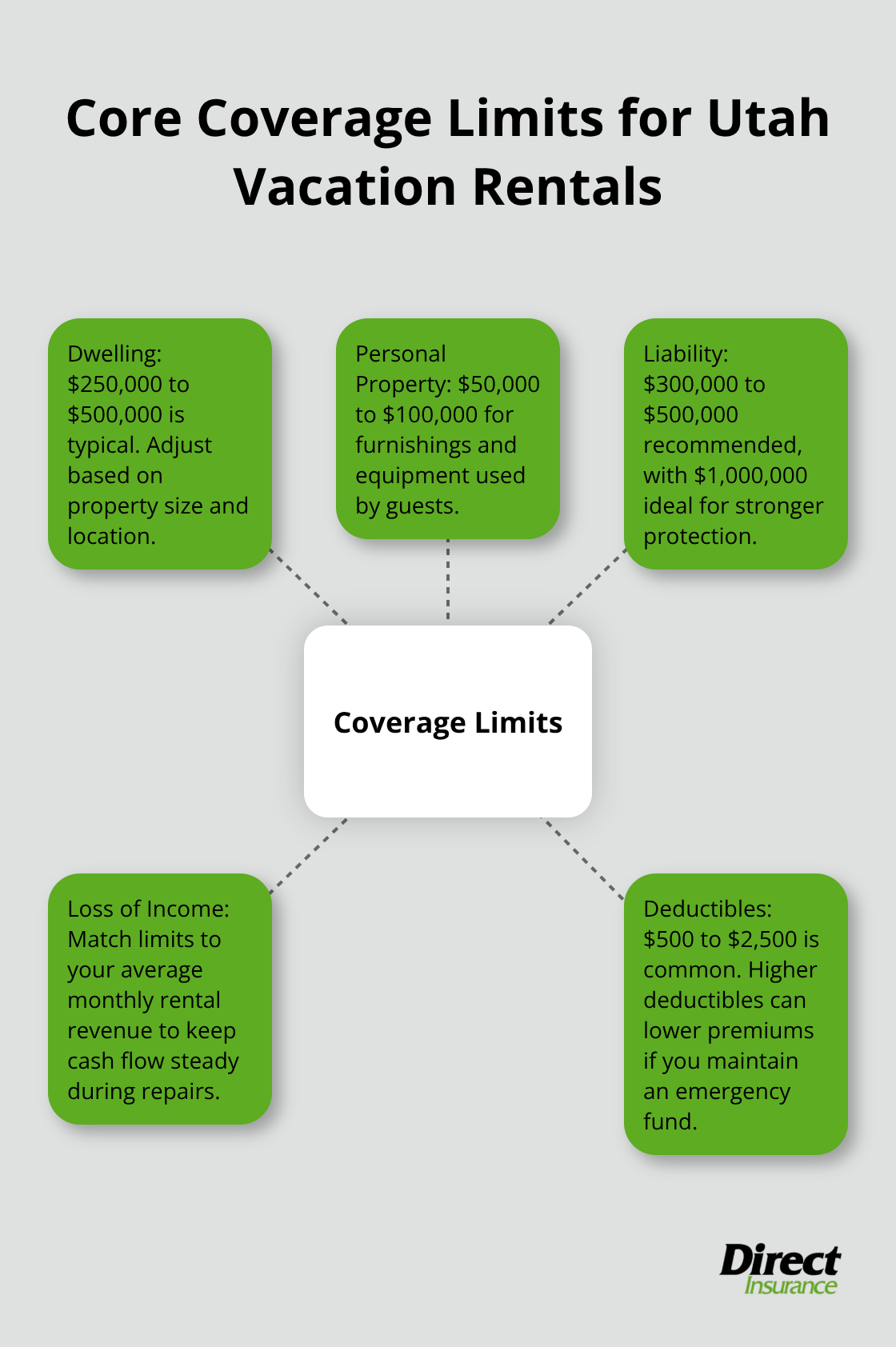
Loss of rental income protection functions as income replacement during periods when your property generates zero revenue due to damage or required repairs. If a kitchen fire forces you to close for three months while contractors rebuild, you lose roughly 25 percent of your annual rental income-assuming typical Utah vacation rental occupancy rates of 60 to 70 percent. Most vacation rental policies cover lost income for 6 to 12 months, which provides genuine financial protection during recovery periods.
Coverage Limits Determine Your Financial Protection
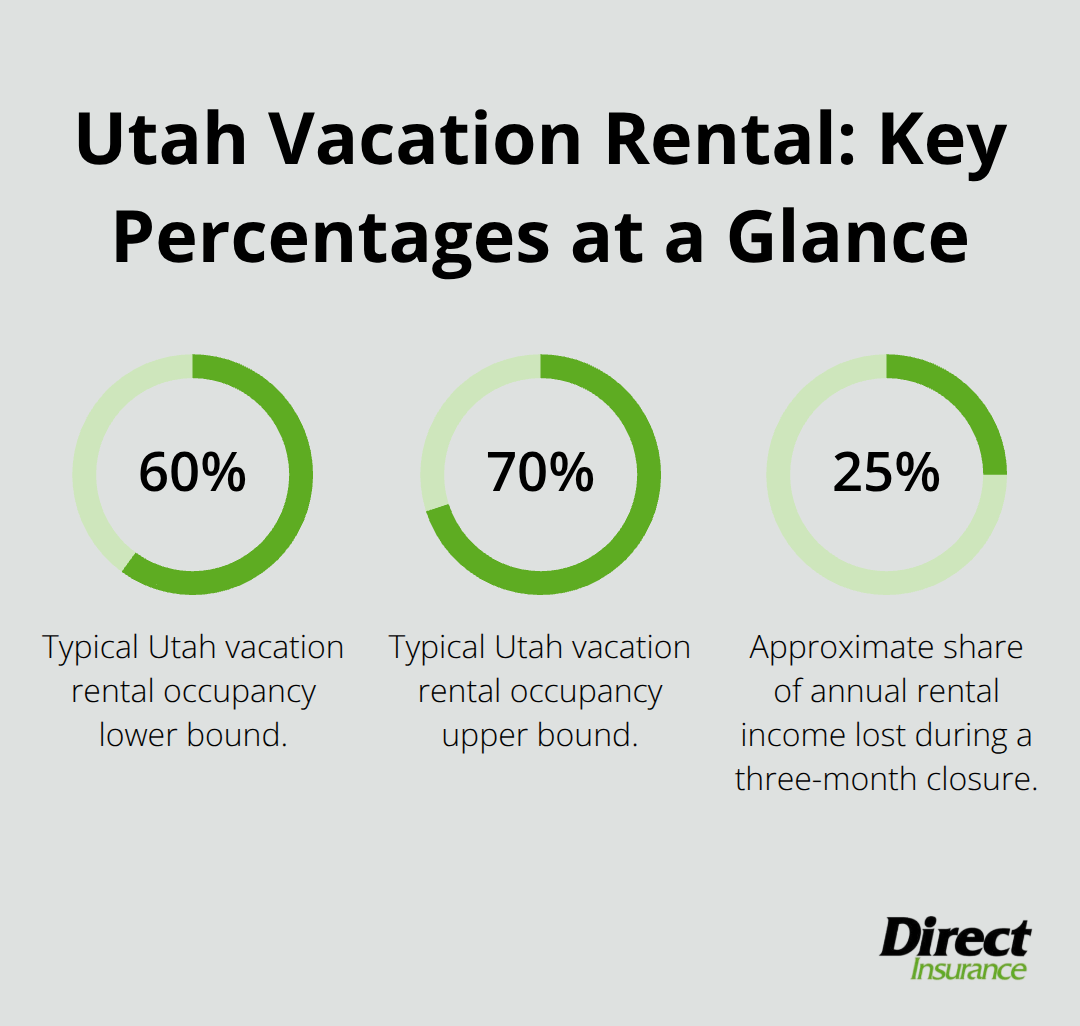
The specific coverage limits matter tremendously because underinsuring creates gaps that hit your wallet hard. Utah vacation rental owners typically need dwelling coverage between $250,000 and $500,000 depending on property size and location, personal property coverage of $50,000 to $100,000 for furnishings and equipment, liability limits starting around $300,000 to $500,000 (ideally $1,000,000), and loss of income coverage matching your average monthly rental revenue. Deductibles on vacation rental policies typically range from $500 to $2,500, and choosing a higher deductible reduces your premium substantially if you maintain an emergency fund for smaller claims.
Finding Carriers That Specialize in Vacation Rentals
Insurance carriers that specialize in vacation rental coverage throughout Utah offer policies designed specifically for short-term rental operations rather than policies retrofitted from standard homeowners templates. As an independent agency, Direct Insurance Services works with top-rated carriers to help you access the best coverage options for your specific situation. The right policy structure protects your investment far more effectively than attempting to patch together coverage from multiple standard policies.
How to Shop for Vacation Rental Insurance in Utah
Selecting vacation rental insurance requires a fundamentally different approach than standard homeowners coverage. Most Utah vacation rental owners make a critical mistake: they assume their current agent can simply add rental coverage to their existing policy. This rarely works because standard homeowners policies and vacation rental policies operate under completely different underwriting frameworks. We recommend starting your search with carriers that specialize exclusively in short-term rental coverage rather than attempting to retrofit coverage from traditional homeowners insurers. Specialized carriers understand the specific risks of vacation rentals-guest turnover, furnished property exposure, and loss of income scenarios-which means their policies actually address the gaps that standard coverage creates.
Compare Policies Beyond Premium Price
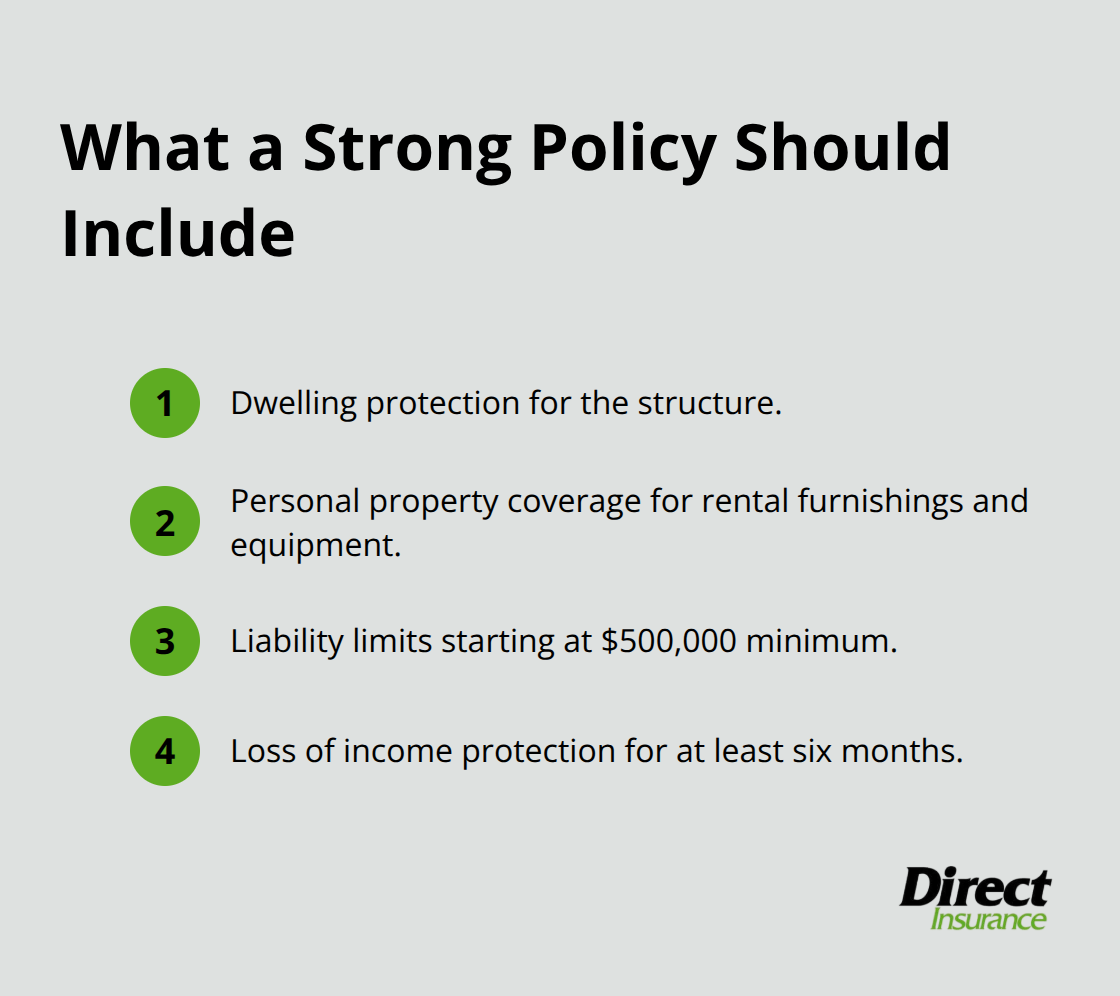
When comparing policies, ignore the temptation to choose based solely on premium price. A policy that costs 15 percent less but excludes furnished property damage or caps liability at $300,000 creates far more financial risk than paying slightly more for comprehensive coverage. The right policy should include dwelling protection for your structure, personal property coverage for rental-specific furnishings and equipment, liability limits starting at $500,000 minimum, and loss of income protection covering at least six months of average rental revenue.
Request detailed policy documents from at least three carriers before making your decision, and compare specific exclusions rather than just coverage names. Many carriers exclude damage from guest negligence or deny claims for properties listed on certain platforms, so these details matter tremendously when you actually file a claim.
Work with Independent Agents for Better Access
Working with an independent agent fundamentally changes your shopping experience because they access multiple carriers simultaneously rather than selling you one company’s policies. Independent agents negotiate directly with carriers on your behalf, which means you often qualify for discounts unavailable through direct online quotes.
Select Your Deductible Strategically
When selecting your deductible, most owners underestimate the financial impact of frequent claims. Vacation rentals with high guest turnover experience more damage claims than traditional rental properties-broken furniture, damaged appliances, and guest-caused structural damage occur regularly. Choosing a $500 deductible instead of $2,500 might cost an additional $300 to $400 annually, but that protection pays for itself after two moderate claims.
Document Your Property and Review Coverage Annually
Document your property’s replacement cost thoroughly before purchasing coverage, including detailed photos of furnishings, appliances, and fixtures. Insurance companies use this documentation to establish accurate coverage limits, which prevents underinsurance that would leave you exposed during a major loss. Ask your agent specifically whether your policy covers damage from guest negligence versus intentional guest actions, as this distinction determines whether expensive damages get covered or denied. Review your policy annually because vacation rental values, guest counts, and revenue streams change over time. Coverage that protected you adequately two years ago may leave significant gaps today if your business has grown.
Final Thoughts
Standard homeowners insurance leaves Utah vacation rental owners completely exposed to financial catastrophe. You now understand the coverage gaps, the specific protection types you need, and how to shop for policies that actually protect your investment. A single guest injury or property damage claim can eliminate years of rental income and force you to pay liability costs entirely out of pocket.
Review your current homeowners policy immediately and confirm whether it explicitly excludes rental activity. Contact your agent and ask directly whether your policy covers income-producing properties and guest-related liability. When you’re ready to purchase proper coverage, work with an independent agent who accesses multiple carriers rather than trying to retrofit coverage from a single traditional insurer, as this vacation rental insurance guide approach yields substantially better protection and rates.
Direct Insurance Services helps Utah property owners navigate vacation rental insurance by connecting you with top-rated carriers offering comprehensive coverage tailored to your specific situation. We work with you to establish appropriate coverage limits, select strategic deductibles, and identify any exclusions that might create gaps during a claim. Contact us today to review your current coverage and get a personalized quote for vacation rental insurance.
Disclaimer: The information provided in this blog is for general informational purposes only and does not constitute legal, financial, or insurance advice. Coverage options, terms, and availability may vary. Please consult with a licensed professional for advice specific to your situation


