Utah auto insurance rates: What Impacts Your Premiums

Utah auto insurance rates vary dramatically based on factors you can and cannot control. At Direct Insurance Services, we’ve seen firsthand how small decisions-like choosing your deductible or bundling policies-can save drivers hundreds of dollars annually.
This guide breaks down exactly what impacts your premiums and shows you practical ways to lower your costs without sacrificing coverage.
Factors That Directly Impact Your Utah Auto Insurance Rates
Your Driving Record Sets the Foundation
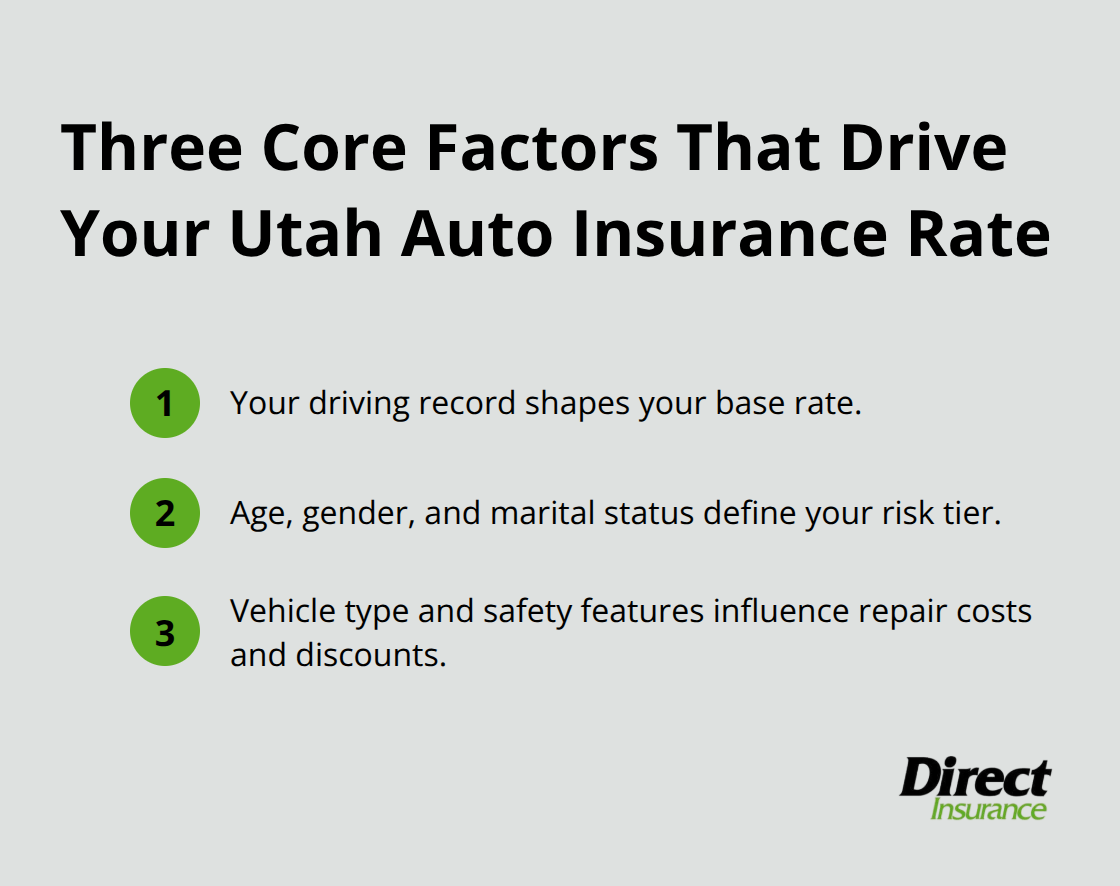
Your driving record stands as the single most predictive factor in how much you’ll pay for auto insurance in Utah. Insurance companies treat your history like a financial report-every accident, ticket, and claim becomes part of your risk profile. Utah drivers with clean records pay significantly less than those with incidents. If you’ve had violations, your rates won’t drop immediately after the incident expires from your record; most insurers keep the surcharge active for the full period regardless of your recent driving behavior. The best strategy remains straightforward: avoid violations and accidents at all costs, since one mistake can cost you thousands in extra premiums over several years.
Age, Gender, and Marital Status Shape Your Risk Profile
Drivers under 25 pay roughly 50% more than drivers aged 30 to 59, since younger drivers statistically file more claims. Teen drivers face the highest rates of all age groups. Conversely, drivers over 65 sometimes see rate increases again, though many insurers offer mature driver discounts. Your gender also influences your premium-male drivers typically pay more than female drivers in the same age bracket, reflecting different claim patterns across demographics. Marital status plays a smaller role than age or driving record, but married drivers typically receive discounts of 5% to 10% compared to single drivers, reflecting slightly lower claim frequencies in that demographic group.
Vehicle Type and Safety Features Matter More Than You Think
Your vehicle’s make and model matters tremendously because insurers analyze repair costs, safety ratings, and theft frequency for each vehicle. A Honda Civic costs less to insure than a Ford Mustang, not because one is better, but because repair parts and labor are cheaper and claim history differs. Vehicles with advanced safety features like automatic emergency braking and lane-keeping assist often qualify for discounts ranging from 5% to 15%. Utah’s terrain and weather patterns-including the Wasatch Front’s 60 inches of annual snowfall and elevation ranges from 2,180 feet to over 13,000 feet-mean that vehicles equipped for winter driving and high-altitude conditions reduce your risk profile. A vehicle’s weight, horsepower, and structural design all factor into how insurers calculate your premium, since these elements directly affect repair costs and accident severity.
Understanding these three core factors gives you a clearer picture of what drives your rate. However, where you live in Utah and how you structure your coverage create equally significant impacts on your final premium.
How Location and Coverage Choices Affect Your Premiums
Urban vs. Rural Areas in Utah
Where you live in Utah creates massive premium swings that most drivers overlook. The Wasatch Front, home to roughly two-thirds of Utah’s 3.5 million residents, carries significantly higher auto insurance rates than rural areas because concentrated urban traffic means more collision claims. Salt Lake City drivers pay more than drivers in Moab or Vernal, where accident frequency drops sharply due to lower traffic density. Rural Utah offers cheaper premiums, but that advantage disappears if your commute crosses mountain passes during winter months-the Wasatch Range’s heavy snow and winding roads push rates up regardless of where you live. Two drivers with identical records and vehicles can pay 20% to 35% different premiums based purely on location.
Deductible Selection and Your Monthly Costs
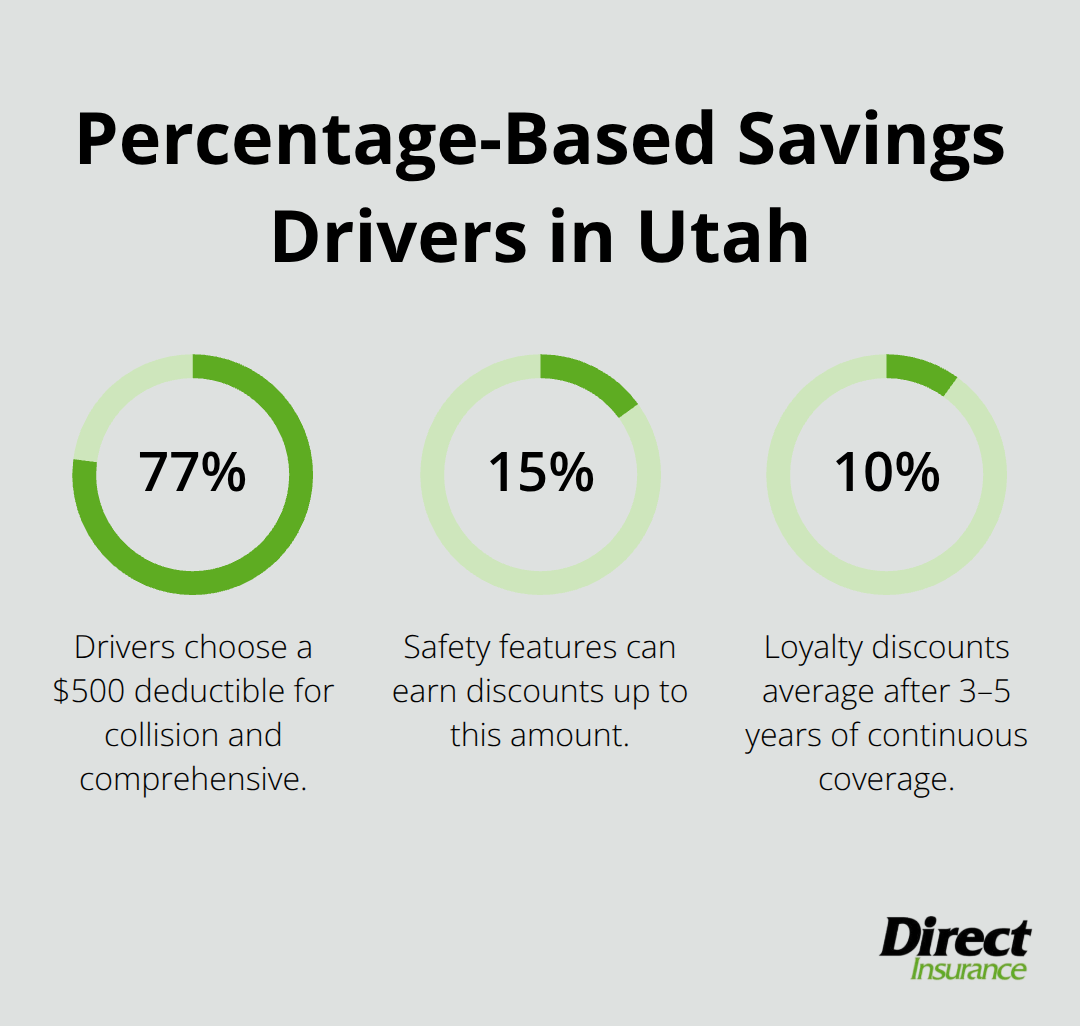
Your deductible choice impacts your premium far more dramatically than most people realize. 77 percent of drivers buy collision coverage with a $500 deductible for collision and comprehensive claims. The tradeoff is straightforward: you save money monthly but pay more out-of-pocket if you file a claim. Utah drivers in rural areas with minimal traffic exposure benefit most from higher deductibles, while Wasatch Front drivers navigating heavy urban traffic should weigh whether monthly savings justify the higher out-of-pocket risk.
Coverage Limits and Asset Protection
Your coverage limits matter equally-liability limits of 25/50/25 cost substantially less than 100/300/100, but that cheaper option leaves you dangerously exposed if you cause serious injury to multiple people. Utah’s median household income sits around $93,400, meaning most residents carry enough assets to warrant higher liability protection. An underinsured driver causing a severe accident faces potential wage garnishment and asset seizure that erases years of premium savings.
Optional Coverage Add-Ons for Utah-Specific Risks
Optional coverages like uninsured motorist protection and comprehensive add real costs but protect you against Utah-specific risks. Winter accidents, theft in high-theft neighborhoods, and damage from the state’s extreme weather events (temperatures reaching 118 degrees and winter inversions lasting weeks) all represent genuine threats to your vehicle. These add-ons provide protection that your basic coverage cannot deliver, making them worth serious consideration for Utah drivers.
How you structure your coverage directly determines what you pay each month, but your ability to lower costs extends far beyond these choices alone.
Ways to Lower Your Auto Insurance Costs in Utah
Stack Discounts Through Policy Bundling
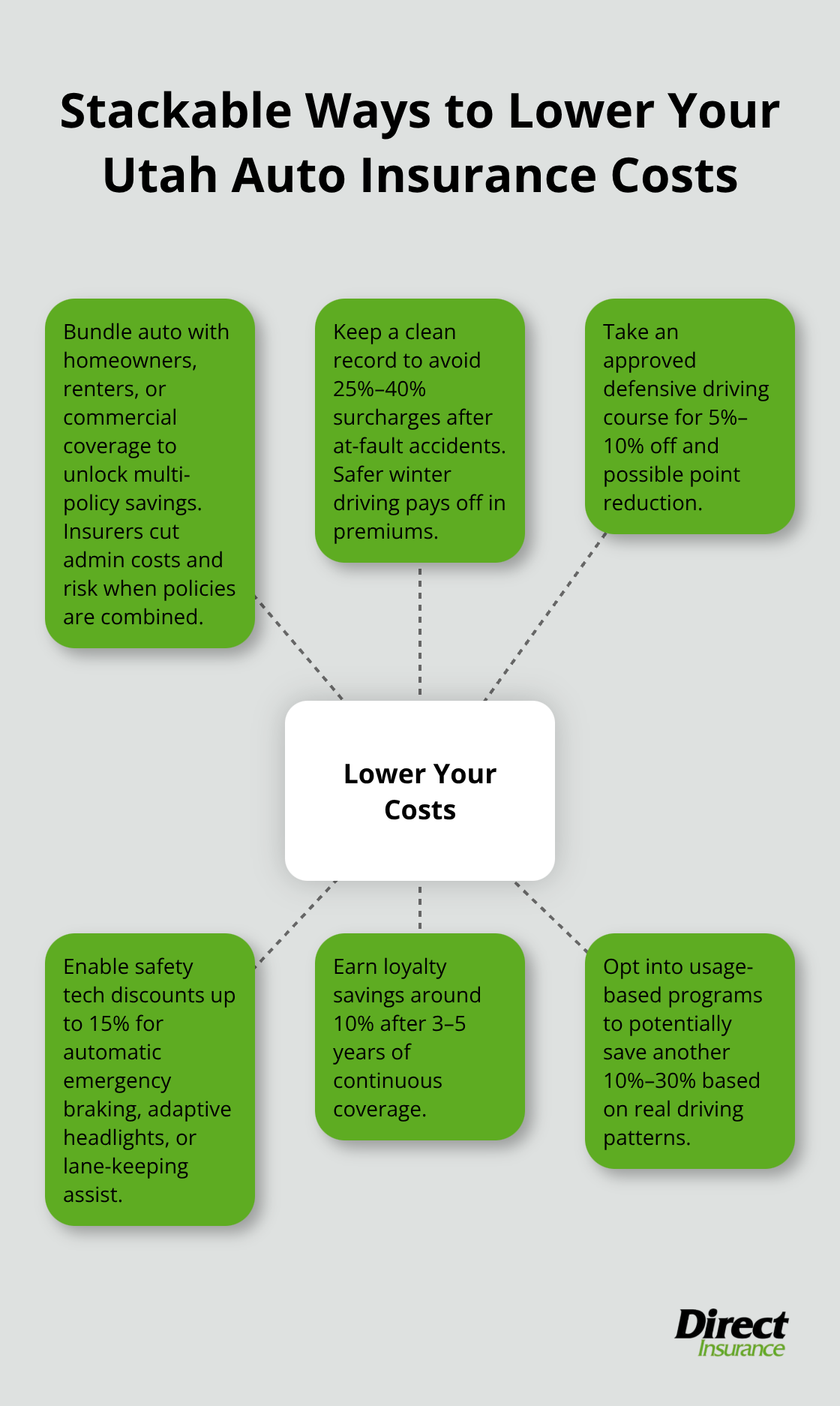
Combining your auto insurance with homeowners, renters, or commercial coverage remains one of the most effective ways to lower what you actually pay each month. Insurers offer significant savings when you combine policies, and clients save money annually through this single strategy. The math works because insurers reduce their administrative costs and lower their risk when they manage multiple policies for one household or business. If you currently have auto insurance through one company and homeowners through another, you’re leaving money on the table. Shopping with agencies that represent multiple carriers gives you the ability to compare rates across different insurers and find the combination that saves you the most.
Maintain a Clean Driving Record
Your driving record directly controls whether you qualify for the best rates available, but most drivers underestimate how long violations impact their premiums. A single at-fault accident can raise your rates by 25% to 40% for three to five years, depending on your insurer and the accident’s severity. Utah’s winter conditions on the Wasatch Front create additional hazard exposure, which means defensive driving becomes financially valuable beyond safety alone. Taking an approved defensive driving course can reduce your premium by 5% to 10% and, more importantly, removes points from your license in many cases, preventing future rate increases. If you’ve had violations in the past, focus entirely on clean driving going forward, since this is the one factor you control completely.
Activate Safety Features and Loyalty Discounts
Vehicles equipped with automatic emergency braking, adaptive headlights, or lane-keeping assist qualify for discounts as high as 15% because these features demonstrably reduce claim frequency. Beyond vehicle safety, insurers reward long-term customers with loyalty discounts averaging 10% after three to five years of continuous coverage. Some carriers also offer usage-based programs that monitor your actual driving patterns through smartphone apps, potentially saving safe drivers another 10% to 30%.
The key is asking your insurance agent specifically which discounts apply to your situation, since many drivers miss savings simply because they don’t inquire about programs that require activation rather than automatic application.
Final Thoughts
Your Utah auto insurance rates reflect decisions you make today and habits you build over time. Your driving record remains the most powerful factor you control-maintaining a clean history directly translates to lower premiums year after year. Strategic choices like bundling policies, selecting appropriate deductibles, and activating available discounts reduce your annual costs by hundreds of dollars without sacrificing the coverage you need.
Location matters significantly in Utah, with Wasatch Front drivers paying substantially more than rural counterparts due to traffic density and collision frequency. Your vehicle choice, safety features, and coverage limits all shape your final premium. Winter conditions across Utah’s diverse terrain mean that comprehensive and collision coverage warrant serious consideration, especially if you navigate mountain passes regularly.
Finding affordable coverage requires more than comparing quotes online-you need an agency that understands Utah’s unique driving conditions, from extreme temperature swings to heavy seasonal snowfall. Contact Direct Insurance Services to explore how bundling and available discounts can lower your Utah auto insurance rates.
Disclaimer: The information provided in this blog is for general informational purposes only and does not constitute legal, financial, or insurance advice. Coverage options, terms, and availability may vary. Please consult with a licensed professional for advice specific to your situation


