How To Find Affordable Auto Insurance Utah Without Sacrificing Coverage
Finding affordable auto insurance in Utah doesn’t mean settling for bare-bones coverage that leaves you vulnerable. Most drivers overpay because they don’t know which levers to pull or which discounts they actually qualify for.
At Direct Insurance Services, we’ve helped countless Utah drivers cut their premiums while keeping the protection they need. This guide shows you exactly how to do the same.
What Drives Your Auto Insurance Rates in Utah
Your driving record determines what you pay
Your driving record is the single most powerful factor determining what you pay for auto insurance in Utah. Insurance companies treat this like a financial report card. Filing a bodily injury claim of $2,000 or more results in a national average premium increase of 41.6 percent, according to data from insuranceQuotes.com. A DUI conviction hits even harder, typically raising rates by 50 to 100 percent for three to five years. Utah law allows insurers to pull your driving history back seven years, so even old violations still matter. Clean driving records get the best rates, period. If you’ve had accidents or violations, getting quotes from multiple carriers matters because some specialize in insuring drivers with blemished records and charge less of a penalty than others.
The vehicle you drive shapes your premium significantly
Insurance companies price based on repair costs, safety ratings, and theft rates. A 2024 Honda Civic costs less to insure than a 2024 BMW 3 Series because parts are cheaper and accident data shows lower claims. Older vehicles sometimes cost less because their actual cash value is lower, but some insurers charge more to cover the increased breakdown risk.
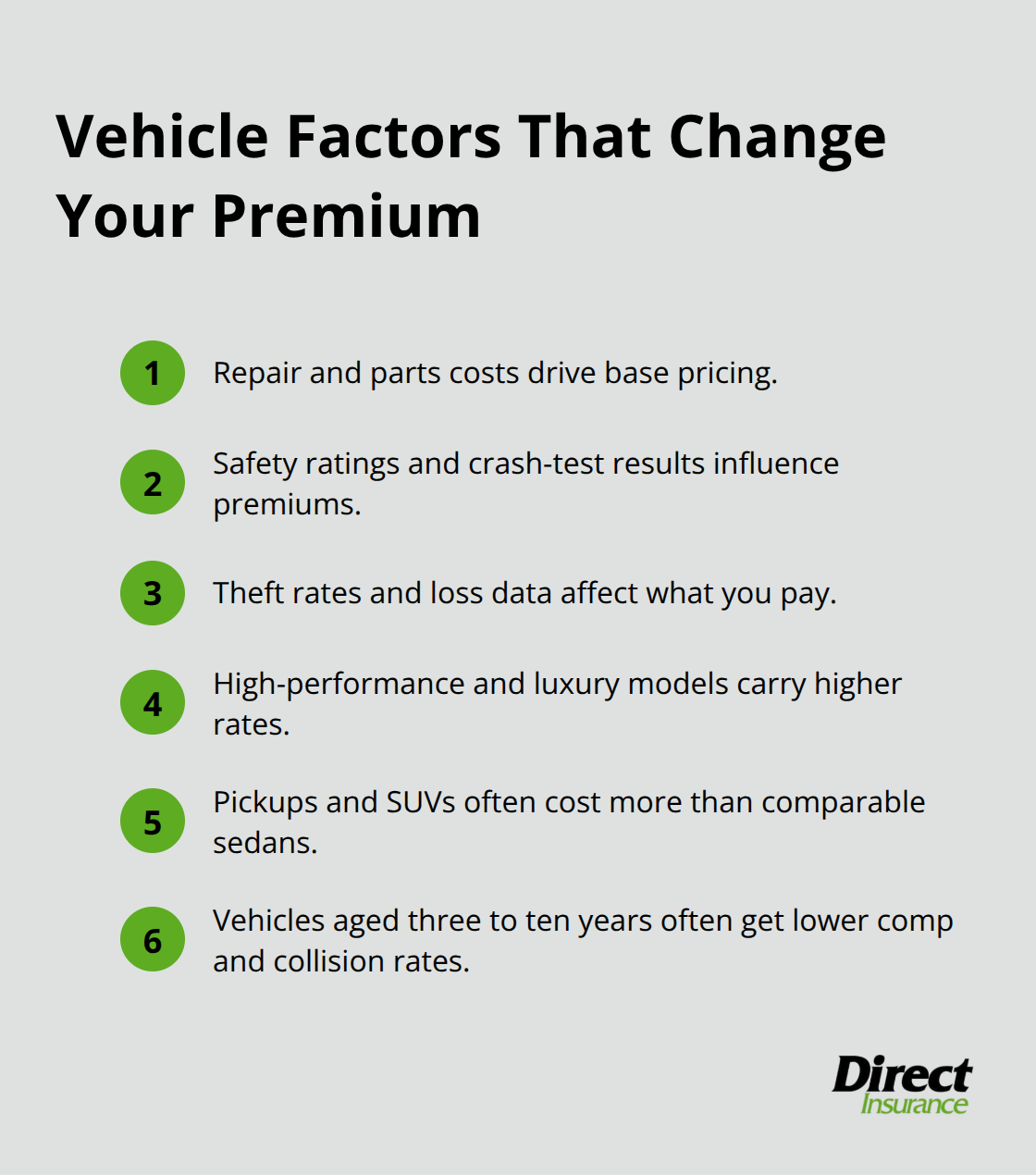
High-performance vehicles and luxury cars carry steep premiums. Pickup trucks and SUVs often cost more than sedans. The Insurance Institute for Highway Safety publishes crash test ratings that directly influence pricing, so checking those ratings before you buy a vehicle can save thousands in insurance costs over time. Your vehicle’s age matters too-most insurers offer the lowest collision and comprehensive rates on vehicles between three and ten years old.
Deductibles and coverage limits give you direct control
This is where you make real choices. Raising your deductible from $500 to $1,000 typically cuts your collision and comprehensive premiums by 15 to 30 percent. The trade-off is straightforward: you pay more out of pocket if you have a claim, but your monthly bill drops immediately. Utah requires minimum liability coverage of $25,000 for bodily injury per person and $65,000 per accident, plus $15,000 for property damage. Many drivers stop there and regret it later. One serious accident where you’re found at fault can exceed these limits in seconds. Try carrying at least $100,000 in bodily injury coverage and $50,000 in property damage, which usually costs only $10 to $20 more per month than state minimums. Uninsured and underinsured motorist coverage protects you when the other driver lacks adequate insurance-Utah has roughly 12 percent uninsured drivers on the road, making this coverage practical rather than optional.
Now that you understand what moves the needle on your rates, the next section shows you exactly which strategies actually work to lower what you pay each month.
How to Actually Cut Your Premiums Without Gaming the System
Bundle your home and auto policies for immediate savings
Bundling your home and auto policies with the same insurer remains one of the fastest ways to lower what you pay each month. The math is simple: insurers reward loyalty and reduced administrative costs by offering bundle discounts. You negotiate better rates across multiple lines of coverage, not just one policy. Most major carriers in Utah offer this discount automatically, but some require you to ask for it explicitly. Call three insurers and ask specifically what bundle discounts they offer before deciding where to move your business. The difference between carriers can easily reach $300 to $600 annually on bundled policies.
Claim the discounts you already qualify for
The discounts you already qualify for but haven’t claimed cost you real money every single month. Safe driver discounts, good student discounts (if you have teenage drivers), safety feature discounts for vehicles with anti-theft systems or advanced braking technology, and low-mileage discounts all stack up. Utah drivers who work from home or drive less than 7,500 miles yearly qualify for low-mileage programs that cut premiums by 10 to 15 percent. Ask your insurer about completion discounts for defensive driving courses-these typically save 5 to 10 percent and the course costs $20 to $50 online. Paperless billing discounts, automatic payment discounts, and claims-free discounts for going three to five years without filing a claim add another 5 to 10 percent in savings. Write down every discount you currently receive and then call your agent to ask which ones you’re missing. Most drivers leave 20 to 30 percent in unclaimed discounts on the table simply because they never asked.
Compare quotes across multiple carriers to find real savings
Comparing quotes from at least three different carriers reveals massive price variations for identical coverage. One driver might pay $1,200 annually with Company A while Company B charges $950 for the exact same limits and deductibles. These aren’t small differences-they’re the difference between affording coverage and cutting corners. Utah has roughly twenty major insurers competing for business, and their pricing models vary dramatically based on how they weigh your specific risk profile. Get quotes online from at least three carriers, then contact a local independent agent who represents multiple companies. An independent agent can shop your coverage across several carriers simultaneously, saving you hours of phone calls and ensuring you see all available options without the pressure of a single company’s sales pitch.
Now that you know which strategies actually lower your premiums, the next section reveals the mistakes that drive costs up-and how to avoid them.
Mistakes That Drain Your Budget
Minimum coverage leaves you exposed to massive liability
Selecting minimum coverage to save money upfront creates a false economy that backfires hard when you need it most. Utah’s state minimums of $25,000 bodily injury per person and $65,000 per accident sound adequate until a serious accident happens. A single collision where you’re found at fault can generate medical bills exceeding $100,000 in seconds, and you personally become liable for anything above your coverage limits. Wage garnishment and asset seizure follow judgments you can’t pay, which means minimum coverage doesn’t save money-it transfers risk directly to your wallet.
The difference between state minimums and $100,000 bodily injury coverage costs roughly $10 to $20 monthly. This small increase makes the jump to better protection one of the smartest investments you can make. Drivers who select minimums to save $15 per month end up paying thousands in legal fees and damages when accidents happen.
Annual policy reviews catch outdated coverage
Failing to review your policy annually means you pay for coverage that no longer matches your life. Your circumstances shift constantly: you move to a different neighborhood with different theft rates, your vehicle ages and depreciates, your commute shortens or lengthens, or you add teenage drivers to the policy. Insurance companies don’t automatically adjust your rates when these changes occur-you must tell them and request new quotes.
Reviewing your policy once yearly takes thirty minutes and typically reveals $200 to $400 in annual savings through updated discounts or better rates from competitors. Set a calendar reminder for your policy renewal date and spend that time getting fresh quotes from at least two other carriers. This simple habit pays for itself repeatedly over the years.
Unclaimed discounts cost you hundreds annually
Not asking about discounts you qualify for costs Utah drivers an estimated $300 to $600 annually per household. Work-from-home discounts, good student discounts, safety feature discounts, and defensive driving course discounts stack together but only if you claim them explicitly. Your current insurer won’t mention discounts you don’t ask about because they benefit from your inaction.
Call your agent today and ask which specific discounts apply to your situation (safe driver status, vehicle safety features, low mileage, defensive driving completion), then verify you’re receiving every single one on your bill. Most drivers leave 20 to 30 percent in unclaimed discounts on the table simply because they never asked. This conversation takes minutes and often saves hundreds.
Final Thoughts
The strategies in this guide work because they address the real reasons Utah drivers overpay for auto insurance. Your driving record, vehicle type, and coverage choices determine your rates, but you control the last two completely. Bundling policies, claiming every discount you qualify for, and comparing quotes across multiple carriers cuts premiums by hundreds of dollars annually without reducing your protection.
Your life changes, your vehicle ages, and new discounts become available each year. You should review your policy once yearly-this takes thirty minutes and typically reveals $200 to $400 in savings. Most drivers leave 20 to 30 percent in unclaimed discounts on the table simply because they never asked their agent about them.
Affordable auto insurance in Utah means finding the right balance between protection and cost by understanding what moves your rates and taking action on the levers you control. Direct Insurance Services helps Utah drivers find coverage that fits both their needs and budgets, working with top-rated carriers to show you all available options without pressure. Contact us today to get quotes and see how much you might be overpaying.
Disclaimer: The information provided in this blog is for general informational purposes only and does not constitute legal, financial, or insurance advice. Coverage options, terms, and availability may vary. Please consult with a licensed professional for advice specific to your situation


