Short Term Rental Policy: Understanding Your Vacation Rental Coverage

Your vacation rental generates income, but standard homeowners insurance won’t protect it. A short term rental policy fills the gaps that leave your property and income vulnerable when guests stay on your property.
At Direct Insurance Services, we’ve seen too many rental property owners discover coverage holes only after a claim. This guide walks you through the protection you actually need.
Why Standard Homeowners Insurance Won’t Protect Your Rental Income
Standard Policies Exclude Rental Activity
Standard homeowners insurance explicitly excludes rental activity. Your insurer views paying guests as a business operation, not personal use, and refuses to cover property damage, guest injuries, or lost income from that activity. If you file a claim without disclosing your rental activity, the insurer can deny the claim entirely, cancel your policy, or refuse to renew it. The Insurance Information Institute confirms that regular rentals require separate business coverage or a landlord policy because personal policies simply don’t account for the higher risk exposure that comes with transient guests.
The Real Cost of Unprotected Damage
Water damage from a guest-caused incident alone can cost $20,000 to $50,000 if multiple floors are affected, yet your standard policy treats this as your personal loss to absorb. A single guest injury lawsuit can reach six figures in liability costs, and your homeowners policy won’t touch it. Short-term rental policies exist specifically because the risk profile of a vacation rental-frequent turnover, strangers in your home, higher claim frequency-demands different protections than a primary residence.
How Coverage Gaps Appear in Real Situations
The gaps appear quickly when claims happen. You rent your property for 120 days and a guest damages the kitchen during a cooking accident. Your homeowners insurer denies the claim because you failed to disclose rental use. You lose $8,000 in repairs plus three weeks of bookings while fixing the damage. Alternatively, you purchase an endorsement to your existing policy, which typically costs $200 to $600 annually and caps your rental activity at 180 days per year. Cross that threshold by even one day, and your coverage vanishes.
Why Endorsements Fall Short for Active Rentals
For properties that generate $40,000 to $60,000 annually in rental income, losing coverage mid-season creates catastrophic exposure. Endorsements work for secondary rental activity, but they impose restrictions that serious rental operations cannot tolerate. Standalone policies remove the 180-day restriction entirely, making them suitable for year-round rentals or properties owned through a business entity.
The Three Essential Coverages You Need
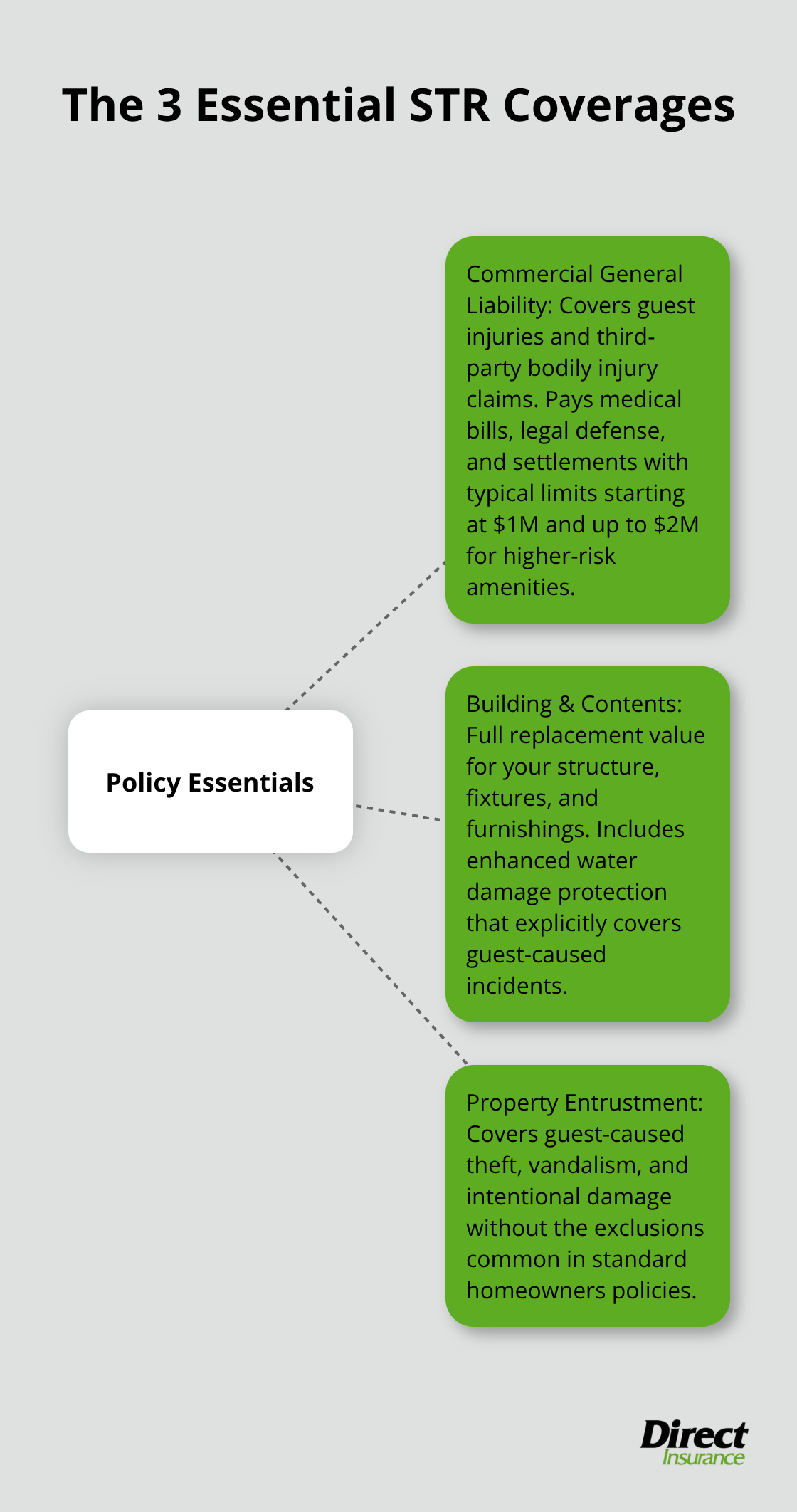
Short-term rental policies address these gaps with three essential coverages: Commercial General Liability with at least $1 million in limits, Building and Contents protection with full replacement value, and Property Entrustment coverage that handles guest-caused theft and vandalism without exclusions. The cost difference between an endorsement and a standalone policy reflects the actual risk you transfer to the insurer. Understanding which type fits your operation determines whether you have adequate protection or face another coverage disaster when the next claim arrives.
What Coverage Actually Protects Your Rental Property and Income
Three Essential Layers of Protection
Short-term rental policies deliver three distinct layers of protection that standard homeowners insurance refuses to touch. Commercial General Liability covers guest injuries and third-party bodily injury claims, with minimum limits starting at $1 million and extending to $2 million for properties with higher-risk amenities like pools or hot tubs. This coverage pays medical expenses, legal defense costs, and settlement amounts if a guest is injured on your property and holds you responsible. A single personal liability lawsuit from a guest injury reaches six figures routinely, which is why the liability limit you select directly determines your financial exposure.
Building and Contents Protection
Building and Contents coverage protects the physical structure, fixtures, and your furnishings with full replacement value, including enhanced water damage protection that explicitly covers guest-caused incidents. Water damage from a guest-caused accident costs $20,000 to $50,000 when multiple floors are affected, and your standard homeowners policy will deny the claim if rental activity remains undisclosed. Property Entrustment and Guest Damage Coverage handles theft, vandalism, and intentional damage by guests without the exclusions that plague standard policies. Unlike endorsements that cap rental activity at 180 days annually, standalone policies remove this restriction entirely, making them mandatory if you rent year-round or own the property through a business entity.
Matching Coverage to Your Property
The coverage limits and deductibles you select should reflect your property value and occupancy rate-a $400,000 home with 60% annual occupancy requires different protection than a $1.2 million property rented nearly every week. Loss of income coverage calculates payouts based on the fair market value of rentals in your area, including long-term rentals. This protection runs continuously without time limits, which separates legitimate rental policies from inadequate endorsements that terminate coverage once you exceed 180 rental days. If a guest causes damage requiring three weeks of repairs, your policy covers the lost bookings during that period rather than forcing you to absorb $3,000 to $5,000 in lost revenue depending on your nightly rate.
Deductibles and Platform Requirements
Deductibles for short-term rental policies typically range from $500 to $2,500 per claim, and your choice affects both premiums and out-of-pocket costs when claims occur. Higher deductibles lower annual premiums but increase your personal liability when damage happens, so align this decision with your cash reserves and risk tolerance. Platform requirements from Airbnb, Vrbo, and similar services often mandate proof of insurance, and lacking proper coverage can trigger suspension or lost bookings before you even know a gap exists.
Finding the Right Policy for Your Operation
Specialized STR insurance brokers can provide quotes within 24 hours and identify coverage gaps faster than traditional agents unfamiliar with rental operations. The cost difference between an endorsement at $200 to $600 annually and a standalone policy reflects the actual protection you receive-standalone policies cost more because they remove restrictions and cover the full spectrum of rental activity without artificial limitations. When you work with an independent agency, you gain access to multiple carriers and personalized guidance that matches your specific rental operation to the right coverage structure. The next step involves assessing your property’s unique risk profile and comparing the specific limits and exclusions that separate adequate protection from dangerous gaps.
Choosing the Right Policy for Your Rental Operation
Calculate Your Rental Days and Income
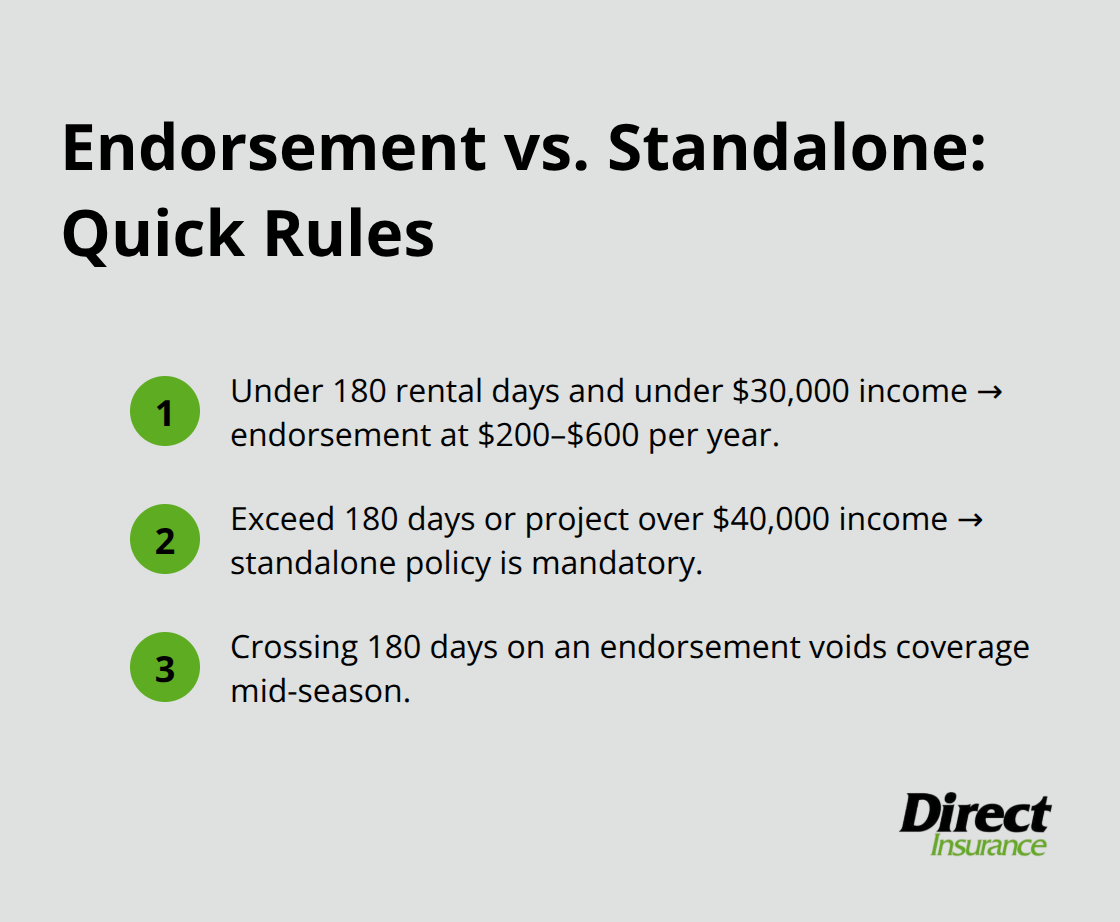
Start by calculating your actual rental days and annual income, because these numbers determine whether an endorsement or standalone policy fits your situation. If you rent fewer than 180 days annually and your property generates under $30,000 in yearly rental income, an endorsement to your existing homeowners policy at $200 to $600 per year makes financial sense. However, if you exceed 180 rental days or project annual income above $40,000, a standalone policy becomes mandatory-crossing the 180-day threshold with an endorsement voids your coverage mid-season, leaving you completely unprotected.
Match Coverage to Property Value and Amenities
The second critical factor is your property value and amenities. A $300,000 home with standard furnishings requires different liability limits than an $800,000 oceanfront property with a pool and hot tub. Properties with pools, hot tubs, or other high-risk features should carry minimum liability limits of at least $1 million, because these amenities increase guest injury exposure significantly.
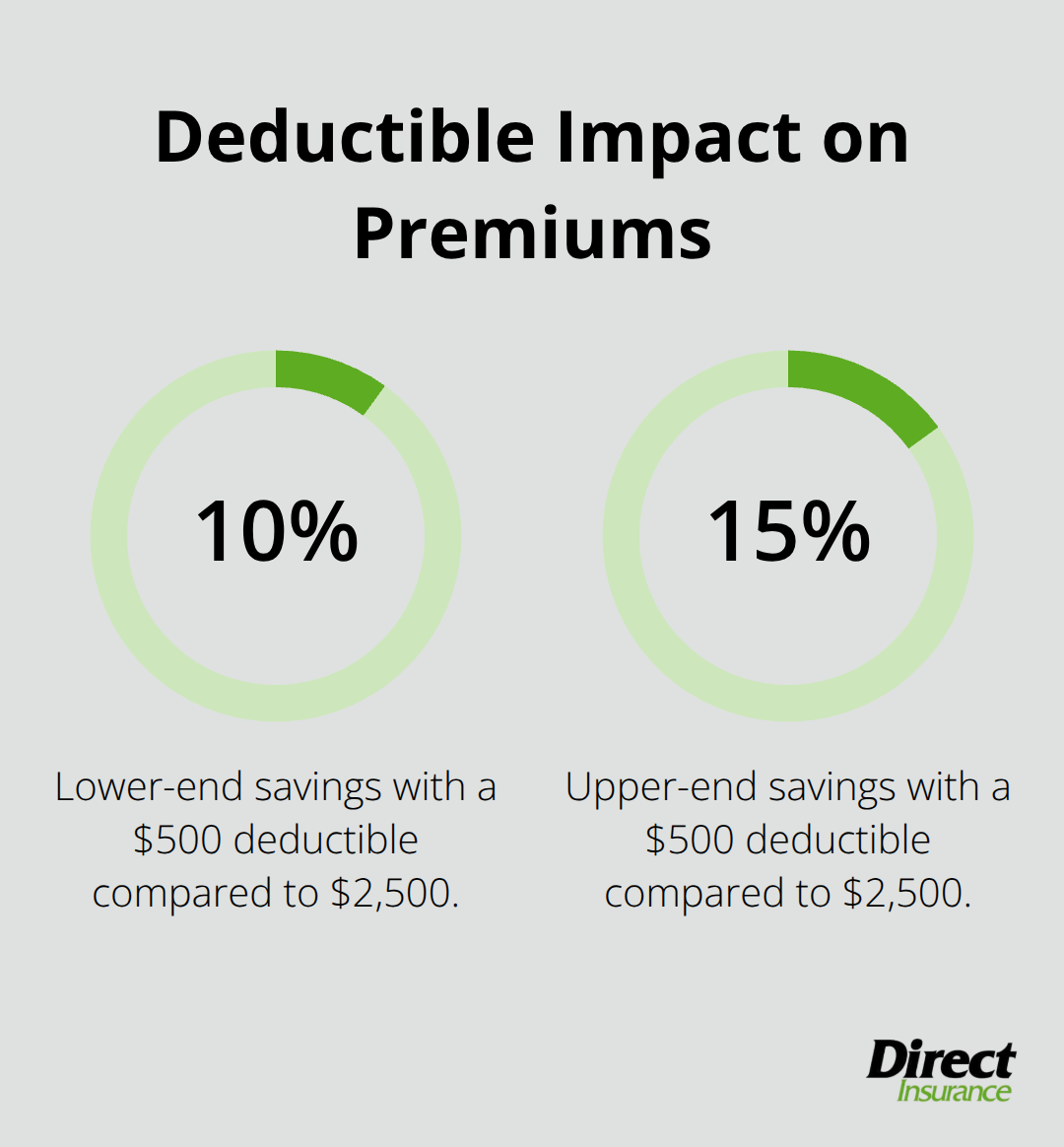
Your deductible choice directly impacts both your premium and out-of-pocket costs when claims happen. A $500 deductible saves roughly 10-15% on annual premiums compared to a $2,500 deductible, but it also means you pay $500 out of pocket for every claim regardless of size. If your property experiences one guest-caused damage incident per year on average, the lower deductible pays for itself immediately. Conversely, if you maintain excellent guest screening and have never experienced property damage, the higher deductible reduces your annual costs without meaningful risk.
Verify Platform Requirements and Coverage Details
Third, verify what your hosting platform actually requires before purchasing coverage. Airbnb and Vrbo mandate proof of insurance naming them as additional insured parties, and some policies exclude platform liability or communicable disease coverage that these platforms now require. Contact your potential insurer and confirm they cover your specific hosting platform and allow the platform to be added as an additional insured without restrictions.
Fourth, examine the specific exclusions that separate adequate policies from dangerous gaps. Ask your broker whether the policy covers intentional guest damage without exclusions, whether water damage covers guest-caused incidents explicitly, whether loss of income coverage runs continuously without time limits, and whether eviction costs and legal defense are included if a guest refuses to leave. Many policies cap loss of income at 30 or 60 days, which is insufficient if major repairs take eight weeks.
Compare Quotes and Work with Specialized Brokers
Specialized STR insurance brokers can provide quotes within 24 hours and identify coverage gaps that traditional agents miss entirely. Compare at least three quotes from different carriers, because premium differences for identical coverage can exceed $400 annually depending on the insurer’s appetite for rental risk in your specific location. An independent agency works with top-rated carriers to ensure you access the best coverage options without one-size-fits-all limitations.
Update Coverage as Your Operation Expands
Finally, update your policy annually when your property changes. Adding rooms, upgrading amenities, or expanding to additional platforms all increase your risk profile and may require higher liability limits or additional coverage riders. Policies that worked last year may create gaps this year if your rental operation expands.
Final Thoughts
Short-term rental policies protect what standard homeowners insurance refuses to cover, and your vacation rental income depends on guest safety, property protection, and continuous operation. Without proper coverage, a single water damage claim, guest injury lawsuit, or forced closure eliminates months of profit and leaves you financially exposed. The three essential coverages-Commercial General Liability, Building and Contents protection, and Property Entrustment coverage-address the specific risks that endorsements and standard policies ignore.
Your choice between an endorsement and a standalone short term rental policy depends on your rental days and annual income. If you exceed 180 rental days or generate more than $40,000 annually, a standalone policy becomes mandatory because endorsements terminate coverage mid-season. Liability limits of at least $1 million, full replacement value for your furnishings, and loss of income coverage without artificial time limits form the foundation of adequate protection.
The next step involves calculating your actual rental days, property value, and platform requirements, then comparing quotes from at least three carriers. Specialized STR insurance brokers provide quotes within 24 hours and identify coverage gaps that traditional agents miss, understanding the specific exclusions that matter-intentional guest damage coverage, water damage for guest-caused incidents, continuous loss of income protection, and eviction costs if a guest refuses to leave. Contact our team today to review your current coverage and identify gaps in your short-term rental policy.
Disclaimer: The information provided in this blog is for general informational purposes only and does not constitute legal, financial, or insurance advice. Coverage options, terms, and availability may vary. Please consult with a licensed professional for advice specific to your situation


