
Why Flood coverage homeowners Utah Matters for Your Homeowners Policy
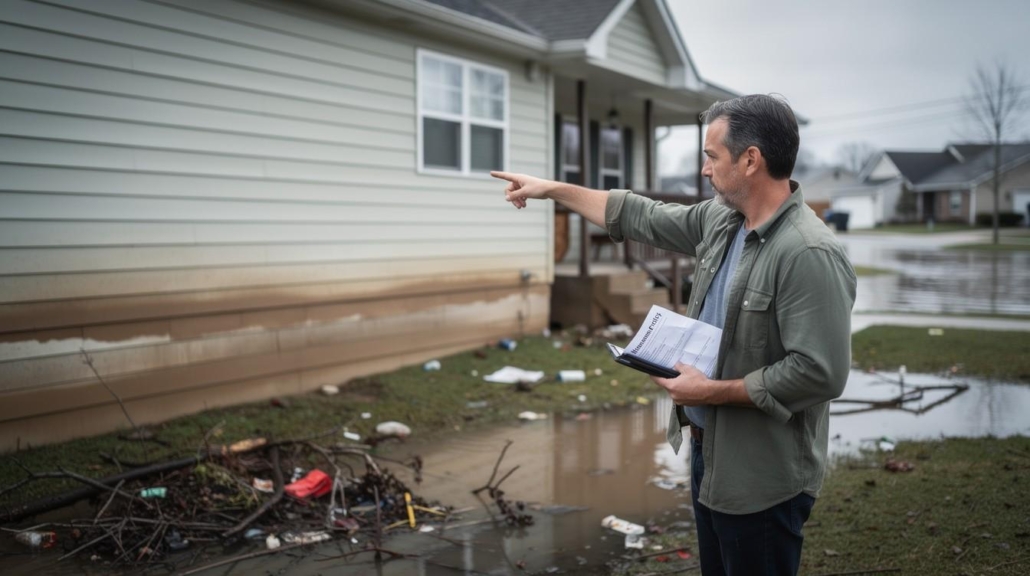
Most Utah homeowners assume their standard homeowners policy covers water damage from heavy rains and flooding. It doesn’t.
At Direct Insurance Services, we’ve seen too many families face devastating financial losses because they didn’t have flood coverage. Utah’s geography and weather patterns put your home at real risk, and waiting until a storm hits is too late.
Why Flood Risk in Utah Demands Dedicated Coverage
Utah’s climate and geography create serious flood exposure that most homeowners underestimate. The state experiences seasonal snowmelt from the Wasatch and Uinta mountains, intense spring thunderstorms that drop heavy rainfall in short periods, and flash flood events in narrow canyons and low-lying areas.
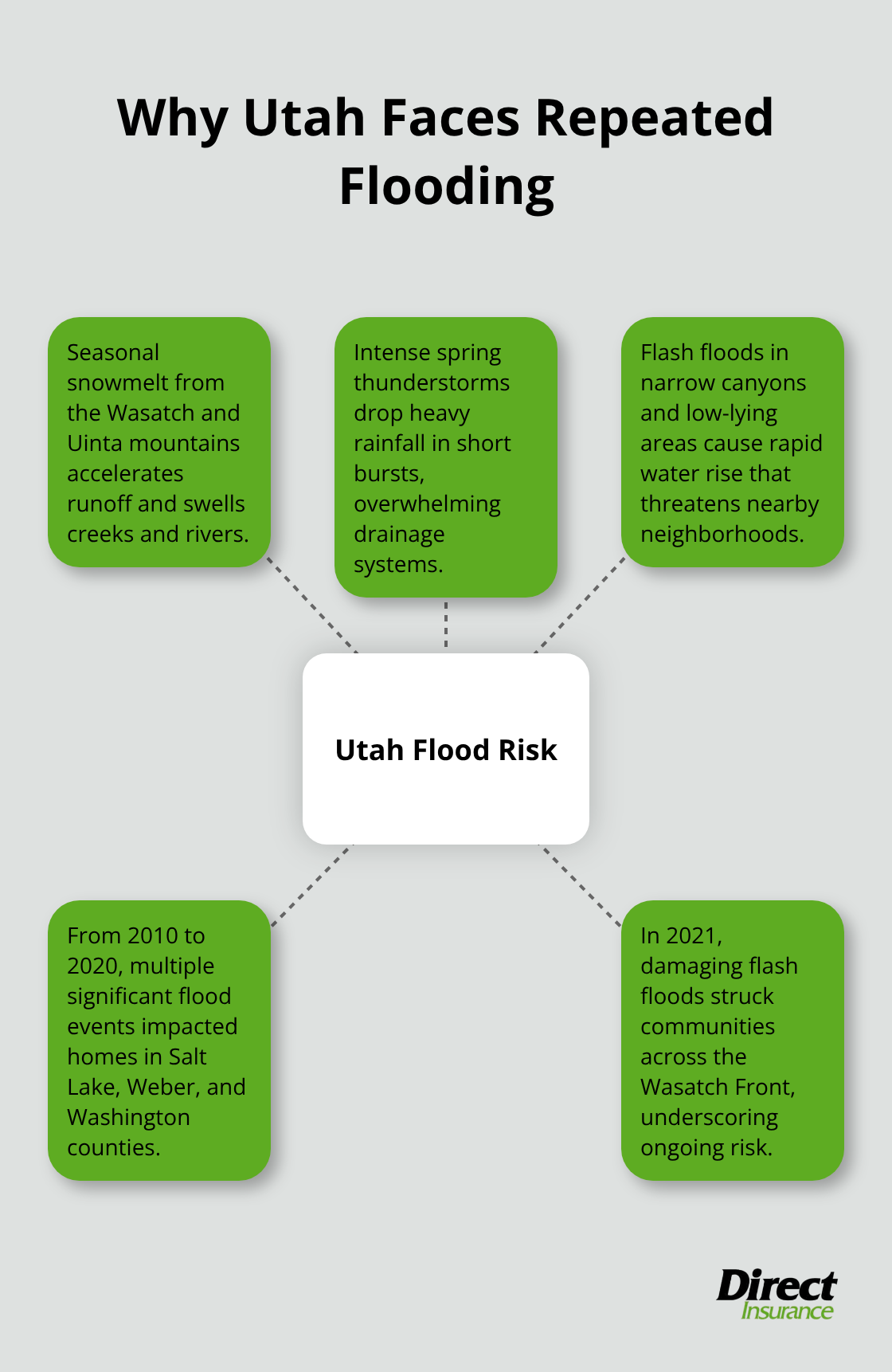
Between 2010 and 2020, Utah recorded multiple significant flood events affecting residential areas in Salt Lake County, Weber County, and Washington County. In 2021 alone, the state saw damaging flash floods across the Wasatch Front. These aren’t rare occurrences-they’re part of Utah’s weather cycle.
Standard Homeowners Policies Leave You Exposed
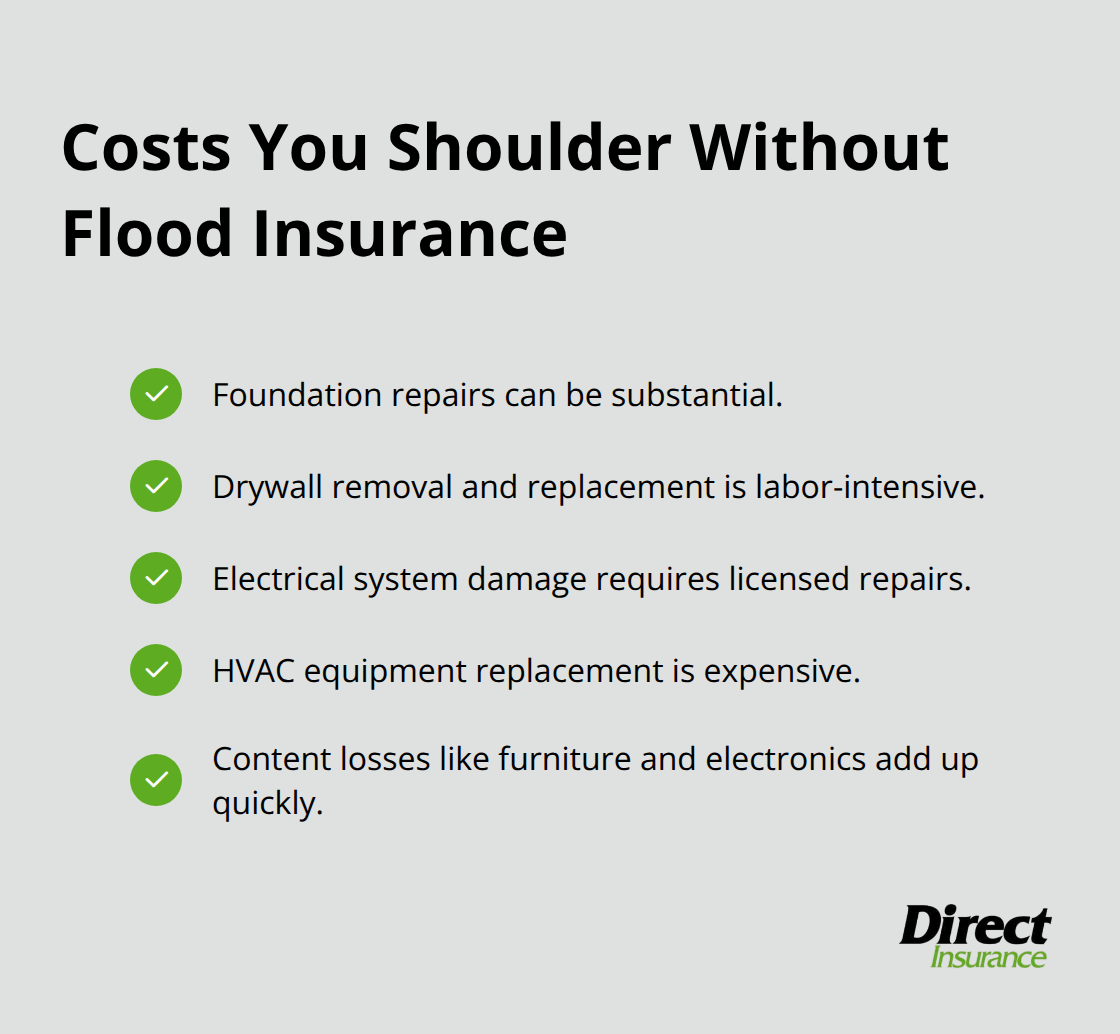
Your homeowners insurance policy covers many disasters, but water damage from flooding is not one of them. This exclusion applies regardless of whether the water enters your basement, crawls into your foundation, or saturates your ground floor. The National Association of Insurance Commissioners confirms that standard homeowners policies exclude flood damage as a matter of underwriting practice. This gap exists because flooding poses systemic risk across entire neighborhoods simultaneously, making it uninsurable through traditional homeowners coverage. If you live in a flood-prone area and don’t purchase separate flood insurance, you absorb 100 percent of repair and replacement costs yourself. That means foundation repairs, drywall replacement, electrical system damage, HVAC replacement, and content losses all fall directly on your shoulders.
The Real Cost of Flood Damage to Utah Homes
Flood damage expenses escalate quickly. Just one inch of water in an average size home can cause roughly $25,000 of damage. A typical basement flood (requiring foundation crack repair, water removal, mold remediation, and drywall replacement) runs $15,000 to $40,000 without insurance coverage. Add destroyed furniture, appliances, personal documents, and electronics, and homeowners frequently face $50,000 to $75,000 in total losses from a single event. Financing these repairs without insurance forces families into debt, home equity loans, or financial hardship that impacts their stability for years.
Why Flood Insurance Costs Far Less Than Flood Damage
Flood insurance through the National Flood Insurance Program starts at roughly $400 to $800 annually depending on your property’s elevation and flood zone designation. This modest premium protects you from absorbing tens of thousands of dollars in repair costs. When you compare annual premiums to the financial devastation a single flood event creates, the choice becomes clear. Your next step involves understanding what coverage options actually exist and how to select the right policy for your Utah home.
What Flood Insurance Actually Covers
Structural Protection for Your Home
Flood insurance through the National Flood Insurance Program covers direct physical damage to your home’s structure and the contents inside it. The structural coverage pays for foundation repairs, concrete slab damage, electrical and plumbing systems, HVAC equipment, built-in appliances, and walls or flooring destroyed by floodwater. If a flood cracks your foundation or saturates your basement, the NFIP policy handles those repairs rather than leaving you to finance them yourself. Coverage limits typically reach $250,000 for structural damage on residential properties, which addresses most single-family home losses.
Personal Property Coverage
Personal property coverage under flood insurance protects your furniture, electronics, clothing, and household items up to $100,000 in most policies. This matters because homeowners often overlook how quickly belongings accumulate value. A flooded basement containing a water heater, furnace, washer, dryer, and stored items easily reaches $15,000 to $30,000 in losses before you even count damaged drywall or flooring.
Comparing Premium Costs to Flood Damage Expenses
The financial reality is straightforward: one flood event without coverage forces you to choose between debt and years of financial strain, while a modest annual premium eliminates that risk entirely. A standard NFIP policy covering both structure and contents costs between $600 and $1,200 annually for properties outside high-risk zones, and even policies in elevated risk areas rarely exceed $2,000 per year. When a single inch of water causes $25,000 in damage and basement floods run $15,000 to $40,000, your premium pays for itself many times over if flooding occurs.
Private Flood Insurance as an Alternative
Private flood insurance options also exist and sometimes offer better rates or higher coverage limits depending on your property’s specific risk profile. An independent agent can evaluate your home’s elevation, flood zone designation, and replacement value to determine whether NFIP coverage or private options make more sense for your situation. Direct Insurance Services works with top-rated carriers to help you compare both NFIP and private flood insurance solutions tailored to your Utah home’s actual risk profile.
The key point is that flood insurance exists precisely because standard homeowners policies won’t help. The cost difference between having it and not having it determines whether a flood becomes an inconvenience or a financial catastrophe. Understanding your coverage options sets the stage for selecting the right policy-which requires knowing how to navigate the choices available to Utah homeowners.
Choosing Between NFIP and Private Flood Insurance
Understanding Your Two Main Options
The National Flood Insurance Program and private flood insurers offer different approaches to protecting your Utah home, and the right choice depends on your property’s specific characteristics. NFIP policies are government-backed, available in participating communities, and offer standardized coverage with limits of $250,000 for structural damage and $100,000 for personal property. Private flood insurance carriers often provide higher coverage limits, sometimes reaching $500,000 or more for structural protection, which matters if your Utah home’s replacement value exceeds NFIP maximums. Private policies also typically include coverage for additional living expenses if you need temporary housing during repairs, whereas NFIP policies exclude this protection.
How Premiums Differ Between NFIP and Private Carriers
The trade-off involves premium variability. Private insurance premiums vary significantly based on the carrier’s underwriting practices and your property’s individual risk assessment. NFIP rates follow a standardized formula tied primarily to your flood zone designation and elevation, making them more predictable but sometimes higher than private alternatives for properties with lower flood risk. An independent agent can run quotes from both NFIP and private carriers to show you actual premium differences for your address.
The Impact of Elevation on Your Costs
Your flood insurance premium depends on elevation, flood zone designation, and whether your property sits above or below the base flood elevation for your area. Homes outside high-risk zones typically pay $400 to $800 annually through NFIP, while properties in mapped high-risk flood zones pay substantially more, sometimes $1,500 to $3,000 per year. Elevation certificates prove your home’s height relative to the base flood elevation and often lower premiums significantly, sometimes by hundreds of dollars annually. If your home sits even two feet above the base flood elevation, your premium drops into a much lower risk category.
Many Utah homeowners overlook this detail and pay inflated premiums without checking whether an elevation certificate could reduce their costs. A surveyor charges $300 to $500 for an elevation certificate, but this investment pays for itself within one or two years through premium savings. Your property’s distance from rivers, creeks, and drainage areas also affects pricing, as does whether your foundation sits below ground level. Basement or crawl space homes pay higher premiums than those with elevated foundations because water reaches occupied spaces more easily.
Comparing Quotes Across Multiple Carriers
When comparing quotes, ask each carrier or agent how elevation certificates, foundation type, and distance from water features affect your specific rate.
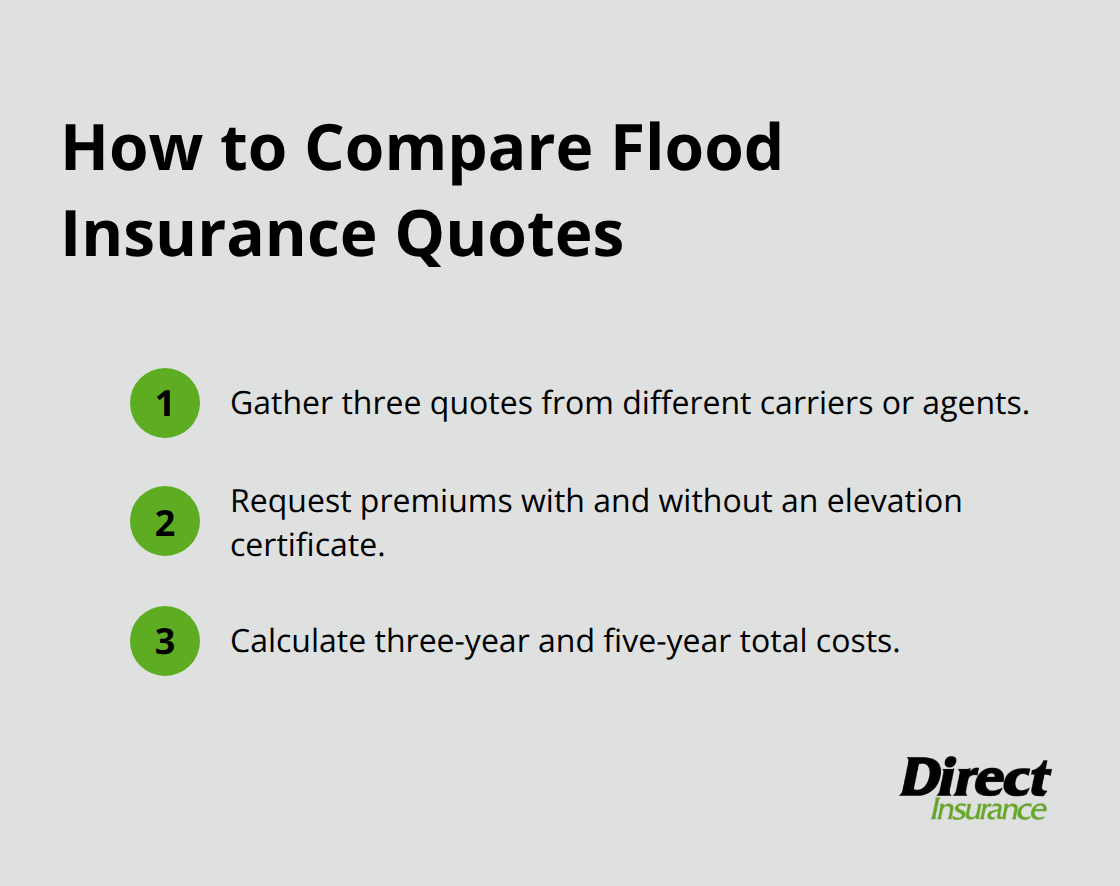
The most practical approach involves gathering three quotes from different carriers or agents, requesting premium quotes both with and without an elevation certificate, and calculating your three-year and five-year total costs. Over five years, choosing the lowest-cost option saves hundreds or thousands of dollars while maintaining the same coverage protection. Direct Insurance Services works with multiple top-rated carriers to help you compare both NFIP and private flood insurance solutions, allowing you to see genuine cost comparisons rather than facing pressure toward a single option.
Final Thoughts
Flood coverage for homeowners in Utah isn’t optional-it’s the difference between recovering from a disaster and facing financial ruin. Standard homeowners policies won’t protect you when water damage strikes, and Utah’s geography guarantees that flooding remains a genuine threat. One inch of water causes roughly $25,000 in damage, while a typical basement flood runs $15,000 to $40,000. Without flood insurance, you absorb every dollar of those costs yourself.
Annual premiums through the National Flood Insurance Program start around $400 to $800 for properties outside high-risk zones, while private carriers often provide competitive rates depending on your home’s elevation and flood zone designation. An elevation certificate costing $300 to $500 frequently saves hundreds of dollars annually in premiums, paying for itself within a year or two. When you compare that modest annual expense to the tens of thousands you’d owe after a single flood event, the choice becomes obvious.
Utah’s seasonal snowmelt, intense spring thunderstorms, and flash flood events create real exposure that affects Salt Lake County, Weber County, Washington County, and communities across the Wasatch Front. Contact Direct Insurance Services today to compare flood coverage for homeowners in Utah from multiple top-rated carriers without pressure toward a single solution. We work with you to identify the coverage that actually fits your situation and budget.
Disclaimer: The information provided in this blog is for general informational purposes only and does not constitute legal, financial, or insurance advice. Coverage options, terms, and availability may vary. Please consult with a licensed professional for advice specific to your situation


